Key takeaways
- MERV 8-11: Captures pollen, dust mites, mold spores, and large dust. Typical for basic 1-inch pleated filters. Does little for fine smoke or bacteria-sized particles.
- MERV 13-14: The premium sweet spot for whole-house filtration. Captures most fine particles including fine dust, smoke, and many bacteria carriers, without excessive pressure drop if the filter is 4 to 5 inches deep.
- MERV 15-16: Hospital-grade capture. Captures >95% of particles down to 0.3 microns. Requires a very large media area or electronic assistance to avoid choking airflow.
The best premium whole house air purification and hvac filtration systems for most homes are polarized-media or high-MERV extended-media systems like the Aprilaire 5000 and Lennox PureAir S for balanced filtration and low airflow resistance, and ultra-high-efficiency systems like Trane CleanEffects or IQAir Perfect 16 when you need MERV 16-level capture across the entire duct system without a portable unit in every room.
Our top picks
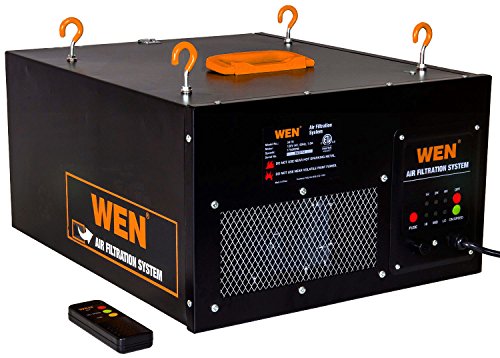

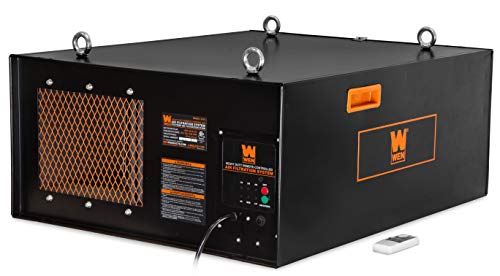
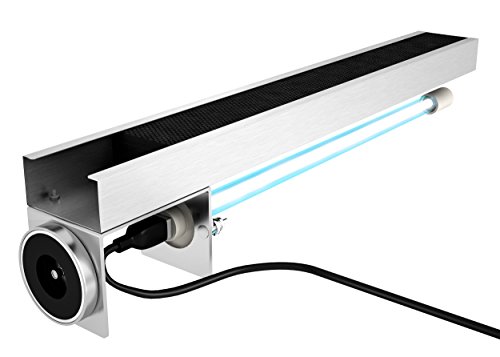
As an Amazon Associate we earn from qualifying purchases at no extra cost to you. Ratings are shown as listed on Amazon.
How Whole-House Purifiers Actually Differ From Standard HVAC Filters
A standard 1-inch furnace filter protects your equipment. A premium whole-house system is designed to clean the air you breathe while keeping your HVAC system efficient. The differences come down to five specifications that affect real-world performance.
1. MERV Rating Is Not the Whole Story
MERV (Minimum Efficiency Reporting Value) rates how well a filter captures particles from 0.3 to 10 microns on a scale of 1 to 16. Higher is more efficient, but only at its rated airflow.
- MERV 8-11: Captures pollen, dust mites, mold spores, and large dust. Typical for basic 1-inch pleated filters. Does little for fine smoke or bacteria-sized particles.
- MERV 13-14: The premium sweet spot for whole-house filtration. Captures most fine particles including fine dust, smoke, and many bacteria carriers, without excessive pressure drop if the filter is 4 to 5 inches deep.
- MERV 15-16: Hospital-grade capture. Captures >95% of particles down to 0.3 microns. Requires a very large media area or electronic assistance to avoid choking airflow.
For general information only, higher MERV means more particle capture, not guaranteed health benefits. If anyone in the home has respiratory concerns, talk to a healthcare professional and an HVAC professional together to choose an appropriate level.
2. Airflow Resistance (Pressure Drop) Determines If Your System Can Handle It
Every filter creates resistance, measured in inches of water column (in. w.c.). Your blower must work harder to push air through it. A 1-inch MERV 13 filter can create 0.30 to 0.45 in. w.c. of pressure drop when clean, which is often too high for many residential systems designed for a total external static pressure of 0.5 in. w.c.
Premium systems solve this with surface area. A 4-5 inch deep pleated media cabinet or a polarized-media panel has 15 to 30 times more surface area than a 1-inch filter, so a MERV 13-16 filter might only create 0.10 to 0.18 in. w.c. when clean. Electronic and polarized-media systems can be even lower, around 0.05 to 0.12 in. w.c., because they charge particles rather than relying solely on dense fibers.
3. Coverage, Bypass, and CADR vs. Whole-House Air Changes
Portable purifiers list CADR (Clean Air Delivery Rate) for one room. Whole-house systems are rated by how many times they filter all the air in the home per hour, which depends on your HVAC blower runtime and duct leakage. If your system fan runs only during heating or cooling, you get 3-4 air changes per hour while running, and zero when off. Premium setups often add a fan-circulation mode or a variable-speed blower that runs at low speed continuously to filter air even when not heating or cooling.
Effective coverage also depends on bypass. A filter cabinet that does not seal tightly to the ductwork lets unfiltered air slip around the edges. Premium cabinets use gasketed doors and filter frames to force all return air through the media.
Types of Premium Whole-House Systems Compared
Most premium options fall into three categories: extended-media cabinets, polarized-media/electronic systems, and integrated purification modules that add UV-C or photocatalytic oxidation (PCO) to a high-MERV filter.
| System Type / Example Model | Media Depth & Size Range | Rated MERV | Initial Pressure Drop (clean, at rated airflow) | Filtration Technology | Typical Maintenance Interval |
|---|---|---|---|---|---|
| Extended-Media Cabinet – Aprilaire 2410 / 4410 | 4-inch pleat, 16×25 or 20×25 inch cabinet | MERV 13 (MERV 11 on standard media) | 0.11 – 0.16 in. w.c. at 1200 CFM | Deep pleated synthetic media | Filter replacement every 9-12 months |
| Polarized-Media Electronic – Aprilaire 5000 / Trane CleanEffects | 5-inch panel, 20×25 inch cabinet with 24V power | MERV 15-16 equivalent (field-dependent) | 0.05 – 0.12 in. w.c. at 1200-2000 CFM | 24V polarized fibers + ion charging | Media replacement every 12-24 months, pre-filter vacuum every 3-6 months |
| High-Efficiency Media – IQAir Perfect 16 | Proprietary HyperHEPA-style cartridge, 20×25 inch housing | MERV 16 rated (tested to >95% at 0.3 microns) | 0.12 – 0.18 in. w.c. at 1000-1300 CFM | Ultra-dense microfiber matrix, very large surface area | Cartridge replacement every 18-36 months depending on runtime |
| Integrated Purifier + Filter – Lennox PureAir S | 5-inch MERV 16 carbon-coated pleat + UVA/ PCO insert | MERV 16 | 0.14 – 0.20 in. w.c. at 1200-1400 CFM | MERV 16 media + PCO for VOC and odor reduction + UVA for coil | MERV 16 filter every 12 months, PCO/UVA cartridge every 12-24 months |
| Electronic Air Cleaner – Carrier Infinity / Honeywell Home F300 | 4-5 inch electronic cell, 16×25 to 20×25 inch | MERV 13-15 equivalent | 0.08 – 0.15 in. w.c. | Electrically charged collection cells, washable pre-filters | Wash cells every 1-3 months, no disposable filter (cells last 5-7 years) |
Decision Matrix: Which System Fits Your Situation
Premium does not mean one-size-fits-all. Use your home’s constraints to narrow the choice before comparing brands.
| Your Situation | Best Fit Category | Why |
|---|---|---|
| New or variable-speed HVAC, you want lowest operating cost and simple maintenance | Extended-media MERV 13 cabinet (e.g., Aprilaire 2410 type) | Low pressure drop, one filter per year, no power needed, works well with continuous low fan speed |
| Allergy or dust concerns, older ductwork, want highest capture without upgrading blower | Polarized-media system (Trane CleanEffects / Aprilaire 5000 type) | MERV 16-level capture at a lower pressure drop than dense media alone, good for systems with marginal static pressure |
| Wildfire smoke, urban pollution, or workshop odors, and you run the fan many hours per day | Ultra-high-efficiency media (IQAir Perfect 16 type) or Lennox PureAir S type | Highest single-pass efficiency and large dust-holding capacity; PCO/carbon helps with gases and odors where particle filters alone do not |
| You want washable, reusable components and minimal consumable waste | Electronic air cleaner (Carrier Infinity / Honeywell Home F300 type) | No annual filter to buy, but requires regular washing and eventual cell replacement |
| Home over 3,500 sq ft or multi-zone system | Two cabinets or one large 20×25 + continuous fan mode | One 16×25 filter at MERV 16 is often undersized for 5-ton systems; airflow above 1400 CFM raises pressure drop sharply |
Installation Realities Premium Listings Often Omit
Whole-house systems install in the return air stream, not the supply. That matters for performance and cost.
- Cabinet size and transition: A 4-5 inch cabinet adds 7 to 10 inches of length to your return duct. In tight attics, closets, or horizontal air handlers, there may not be room without modifying sheet metal. Budget for 2 to 4 hours of labor for a straightforward replacement, or 4 to 8 hours if duct transitions are required.
- Electrical needs: Polarized-media and PCO systems need a 24V transformer or a dedicated 120V outlet within 4-6 feet. Electronic cleaners need line voltage for the power supply. Extended-media cabinets need no power.
- System compatibility: Before going above MERV 13, have static pressure measured. If your external static pressure is already above 0.6 in. w.c. with a clean 1-inch filter, a dense MERV 16 filter will reduce airflow, increase noise, and can freeze coils in summer or overheat furnaces in winter. A variable-speed ECM blower tolerates higher pressure better than a fixed-speed PSC blower.
- Sealing: Use mastic or foil tape on the cabinet joints and between the cabinet and the air handler. A premium filter with a leaky cabinet performs like a cheaper filter.
Maintenance and What Wears Out First
Premium systems reduce how often you touch a filter, but they add components that need attention.
- Extended media: The filter looks clean longer because it holds 12 to 20 grams of dust per square foot. Do not judge by color. Change on pressure or schedule, not appearance. Waiting too long lets the pressure drop rise to 0.35+ in. w.c. and starves the system.
- Polarized-media: The disposable polarized pad still loads up. Vacuum the pre-screen and wipe the ionizing wires gently every 3-6 months. Bent wires or coated emitters cut efficiency.
- Electronic cells: The most common failure is not cleaning often enough. Oily dust bakes onto plates, then arcing and ozone odors occur. Wash with warm water and mild detergent, dry completely before reinstalling.
- PCO/UV systems: The germicidal lamp dims over time even if it still glows. Output falls below effective levels after about 12 months of continuous use. Replace the lamp/cartridge on schedule even if it looks working. Avoid touching glass lamps with bare hands; skin oils shorten life.
- Common mistake: Turning the fan to ON to filter more, but leaving a restrictive 1-inch filter in place. You filter more hours but also pay more in fan energy and wear. Pair continuous fan with a low-resistance 4-5 inch media.
Operating Cost: A Worked 5-Year Calculation
Purchase price is not the full cost. Filters, power, and fan energy add up. Here is a general market-range comparison at 1,200 CFM and 2,000 blower hours per year, which is typical for a home that uses circulation mode part of the day.
| Cost Factor | MERV 13 Extended-Media (4-inch) | Polarized-Media MERV 16 Equivalent | MERV 16 Ultra-High-Efficiency Media |
|---|---|---|---|
| Initial installed cost range | $350 – $700 (cabinet + first filter) | $1,100 – $2,000 (cabinet + power supply) | $1,500 – $2,800 |
| Consumable cost per change | $45 – $85 per filter | $75 – $130 per polarized media pad | $180 – $320 per cartridge |
| Changes in 5 years (2,000 hrs/yr) | 5 filters (annual) | 3 pads (every 18-20 months) | 2-3 cartridges (every 20-30 months) |
| 5-year consumable total | $225 – $425 | $225 – $390 | $360 – $960 |
| Extra fan energy due to pressure drop (approx.) | ~$25 – $45 over 5 years | ~$15 – $30 over 5 years | ~$35 – $60 over 5 years |
| 5-year total owning cost (installed + consumables) | $600 – $1,170 | $1,340 – $2,420 | $1,895 – $3,820 |
Calculation notes: Fan energy estimate assumes ECM variable-speed blower at $0.15 per kWh and 0.10-0.18 in. w.c. added pressure. PSC blowers cost more to overcome resistance. Homes with pets, renovations, or 3,000+ fan hours per year will replace media 30-50% sooner.
The takeaway: MERV 13 extended-media is the lowest total cost for premium whole-house filtration. You pay more upfront for polarized or ultra-high-efficiency systems to get higher capture at lower resistance, not to save money on filters.
How to Choose Without Over-Filtering
For many homes, MERV 13 in a 4-5 inch cabinet with a blower set to run at 30-50% speed when heating and cooling are off gives the best balance of air cleaning, energy use, and equipment life. Move to MERV 16-level polarized or ultra-high-efficiency media if you have a clear need for finer particle capture and you can accommodate the larger cabinet and power requirements.
Before buying, ask your HVAC contractor to measure total external static pressure with your current filter, verify that your ductwork can support the new cabinet size, and confirm that your blower can provide continuous low-speed circulation. That one check prevents noise, hot and cold spots, and premature equipment wear better than any filter rating alone.
Frequently Asked Questions
Can I just put a MERV 16 filter in my existing 1-inch rack? Rarely. Most 1-inch MERV 16 filters are extremely restrictive and will raise pressure drop beyond what residential blowers are rated for. They also have low dust-holding capacity and load up in weeks. Use a properly sized 4-5 inch cabinet or a polarized system designed for MERV 16 performance.
Do UV and PCO systems replace a good filter? No. UV treats the coil and airstream for biological growth and some odors, and PCO can help reduce certain volatile organic compounds, but they do not capture dust or smoke. They are supplements to, not substitutes for, high-efficiency particulate filtration.
Will a whole-house system eliminate the need for portable purifiers? Not always. Whole-house systems filter air only when air passes through the central system. Rooms with doors closed, poor return paths, or limited ductwork get less cleaning. A portable unit can still help in a bedroom or home office where you spend long continuous hours.