Key takeaways
- Best overall gas for hills: Honda Nexite 4-in-1, rear-wheel drive, 200 cc Honda engine, 21-inch deck.
- Best traction on steep or rough ground: Husqvarna M21 AWD or Wild Badger Power 40V (all-wheel drive).
- Best rear-wheel-drive value: Toro Super Recycler 21564, 190 cc Briggs and Stratton, 21-inch deck.
- Best steel-deck durability on rough terrain: Husqvarna LC221RH, rear-wheel drive.
- Best battery with rear-wheel drive: EGO Power+ LM2135SP, but note it is not optimized for steep hills.
- Best wide-deck option for big, gently sloped lots: Toro TimeMaster 21199, 30-inch deck.
The best push mowers for hills and uneven terrain are rear-wheel-drive or all-wheel-drive self-propelled models: the Honda Nexite 4-in-1 and Husqvarna LC221RH for steady gas performance, the Husqvarna M21 AWD and Wild Badger Power 40V for the steepest, slipperiest slopes, and the Toro Super Recycler 21564 as the value pick. Front-wheel-drive mowers lose traction when the front lifts uphill, so for slopes, the drive type matters more than the engine or deck size.
This guide helps you match a walk-behind mower to the hill you actually have. It covers drive types (front, rear, all-wheel), wheel size and traction, handle ergonomics, and how to measure your slope so you know whether a push mower is safe at all.
Our top picks
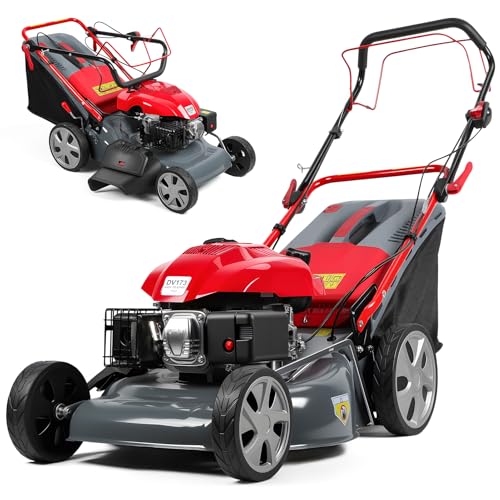
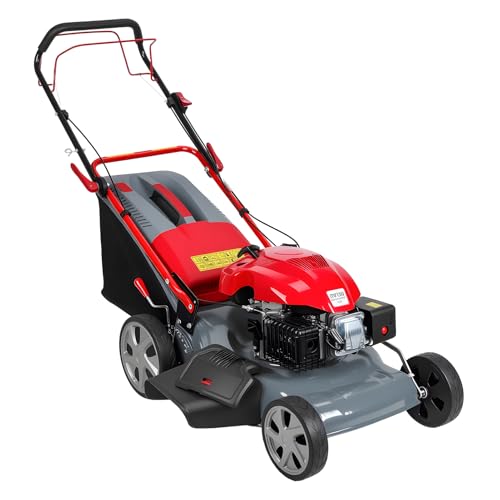
As an Amazon Associate we earn from qualifying purchases at no extra cost to you.
Quick Picks
- Best overall gas for hills: Honda Nexite 4-in-1, rear-wheel drive, 200 cc Honda engine, 21-inch deck.
- Best traction on steep or rough ground: Husqvarna M21 AWD or Wild Badger Power 40V (all-wheel drive).
- Best rear-wheel-drive value: Toro Super Recycler 21564, 190 cc Briggs and Stratton, 21-inch deck.
- Best steel-deck durability on rough terrain: Husqvarna LC221RH, rear-wheel drive.
- Best battery with rear-wheel drive: EGO Power+ LM2135SP, but note it is not optimized for steep hills.
- Best wide-deck option for big, gently sloped lots: Toro TimeMaster 21199, 30-inch deck.
How We Chose
This is a research-based guide. We compared manufacturer specifications and published model listings for self-propelled walk-behind mowers sold in the United States and read how drive type is described across multiple roundups. We did not run physical trials. Where a spec such as weight or wheel diameter could not be confirmed, we describe the mower by spec class instead of inventing a number.
- Drive type first. Rear-wheel drive or all-wheel drive only for real slopes.
- Traction. Larger, deeper-tread rear wheels grip better on uneven turf.
- Deck width of 21 inches as the default; wider decks increase weight and tip risk on a side slope.
- Power type. Gas for long runs and wet grass; battery for lighter weight and quieter operation, as long as the drive system is rated for slopes.
- Ergonomics. Adjustable handle height and a clear speed control you can reach on a grade.
Drive Types Explained for Hills
Front-wheel drive (FWD)
FWD pulls the mower forward from the front axle. It is easy to pivot, because you tip the front wheels slightly to turn. On a hill, though, weight shifts to the rear as you go up, so the front wheels lose grip. Guides generally rate FWD as the weakest choice for hills. As an example, the Toro SmartStow Recycler 22-inch is listed as front-wheel drive, so it is best kept for flat lawns.
Rear-wheel drive (RWD)
RWD pushes from the rear. On an uphill, weight shifts onto the drive wheels, which improves grip. This is the sweet spot for most hills and the reason RWD gets repeated recommendations for slopes. The compromise is turning: you may need to lift the front wheels slightly at the end of each pass.
All-wheel drive (AWD)
AWD drives all four wheels. It offers the strongest grip on wet, loose, or rutted slopes. It usually costs more and is heavier, and several experts say it is only worth it for truly rough terrain. If your slope is moderate and the grass is dry, RWD is typically enough.
Push Mowers for Hills Compared
| Model | Drive | Power | Deck | Hill-related notes |
|---|---|---|---|---|
| Honda Nexite 4-in-1 | Rear-wheel, variable speed | 200 cc Honda GCV200 | 21 in | Built for rugged terrain; large ball-bearing wheels |
| Honda HRX217 (gas, check availability) | Rear-wheel | Gas | 21 in | Held traction on a 15-degree slope in a published comparison |
| Toro Super Recycler 21564 | Rear-wheel, Personal Pace | 190 cc Briggs and Stratton | 21 in | High rear wheels; one reviewer found it hard to push uphill |
| Toro Recycler 21321 | Rear-wheel | 140 cc Briggs and Stratton | 21 in | 10-inch rear wheels; light but tricky on uneven ground |
| Toro TimeMaster 21199 | Rear-wheel, Personal Pace | 223 cc Briggs and Stratton | 30 in | Wide deck for big, gently sloped lawns |
| Husqvarna LC221RH | Rear-wheel | Gas | 21 in | Durable steel deck, traction on uneven ground |
| Husqvarna M21 AWD | All-wheel | Gas | 21 in | Grips where rear-drive mowers can slip |
| Wild Badger Power 40V | All-wheel | 40V, 4 Ah brushless | 21 in | Four-wheel drive handles slopes |
| EGO Power+ LM2135SP | Rear-wheel | 56V, 7.5 Ah | 21 in | Not optimized for hills |
Measure Your Slope Before You Buy
This is the information-gain step most buying guides skip. Walk-behind mower manuals commonly warn against mowing steep slopes, and a common manufacturer limit is around 15 degrees. Rather than guess, measure.
Step-by-step slope check
- Lay a straight 10 to 12-foot board on the slope, with one end on the ground at the bottom.
- Hold the other end level using a carpenter’s level.
- Measure the vertical distance from the raised end of the board to the ground.
- Divide rise by run (board length), then multiply by 100 to get percent grade.
Worked example
A 12-foot board is level, and the high end is 3 feet above the ground. Rise over run is 3 divided by 12, or 0.25, a 25 percent grade. That is about 14 degrees (the tangent of 15 degrees is about 0.27, or 27 percent). You are right at the edge of what most manuals allow, so a rear-wheel or all-wheel-drive mower is the minimum, and you should avoid mowing it when the grass is damp.
| Slope grade | Approximate angle | Suggested mower approach |
|---|---|---|
| Under 10% | Under about 6 degrees | Any self-propelled; FWD is acceptable |
| 10 to 20% | About 6 to 11 degrees | Rear-wheel drive with larger rear wheels |
| 20 to 27% | About 11 to 15 degrees | Rear-wheel or all-wheel drive; mow dry; take extra care |
| Over 27% | Over about 15 degrees | Do not mow with a walk-behind; consider a string trimmer, ground cover, or professional help |
Our Top Picks in Detail
Honda Nexite 4-in-1
Spec line: Rear-wheel drive · variable-speed drive · 200 cc Honda GCV200 engine · 21-inch deck · large ball-bearing wheels · 4-in-1 cutting
Best for: Homeowners with moderate to steep slopes who want smooth, steady power and a drive that keeps pace with your walking speed.
Skip if: You want a lightweight mower or a lower-cost alternative.
- Pros: Rear-wheel drive, a robust Honda engine, and a design intended for rugged ground.
- Cons: Weight and cost are higher than basic mowers; weight was not confirmed in the sources we reviewed.
Honda HRX217 (gas)
Spec line: Rear-wheel drive · gas engine · 21-inch deck
Best for: Slopes where you want a proven traction reputation.
Skip if: You cannot find one in stock. One review says Honda replaced the gas HRX217 with the battery-powered HRX-BV, while other 2026 guides still list the gas version, so check availability before planning around it.
- Pros: In one published comparison on a 15-degree slope, it kept steady traction without spinning a wheel.
- Cons: Availability and pricing vary widely by seller.
Husqvarna M21 AWD
Spec line: All-wheel drive · gas · 21-inch deck
Best for: Steep or loose slopes, wet-prone hillsides, and ruts where a rear-drive mower might spin.
Skip if: Your slope is gentle; AWD adds cost and weight that RWD would avoid.
- Pros: Four driven wheels maximize grip when you are going up and across a grade.
- Cons: Heavier and costlier than RWD models.
Wild Badger Power 40V
Spec line: All-wheel drive · 40V battery, 4 Ah · brushless motor · 21-inch deck
Best for: Slopes where you want AWD without a gas engine, and who prefer lower noise and no fuel.
Skip if: Your slope-heavy yard needs a long run time, since a 4 Ah pack is modest; plan on a second battery for larger lawns.
- Pros: Four-wheel drive handles hills well in published roundups, battery power avoids starting and fuel.
- Cons: Run time depends on grass height and slope; battery size is smaller than many alternatives.
Husqvarna LC221RH
Spec line: Rear-wheel drive · gas · steel deck · 21-inch cut
Best for: Uneven, rough lawns where deck durability matters.
Skip if: You need all-wheel drive for wet, steep slopes.
- Pros: Durable steel deck, rear-wheel traction.
- Cons: Engine displacement and weight were not confirmed in the sources we reviewed.
Toro Super Recycler 21564
Spec line: Rear-wheel drive · Personal Pace system · 190 cc Briggs and Stratton · 21-inch deck · high rear wheels
Best for: Value-minded owners with moderate slopes who like speed control that follows your pace.
Skip if: You mow very steep or wet hills regularly. One reviewer found it hard to push uphill.
- Pros: RWD, a bigger engine than Toro’s smaller Recycler, and Personal Pace control.
- Cons: Less traction margin than AWD on difficult terrain.
Toro Recycler 21321
Spec line: Rear-wheel drive · 140 cc Briggs and Stratton · 21-inch deck · 10-inch high rear wheels
Best for: Lightweight handling on gentle slopes.
Skip if: Your yard has real hills or rough ground; one roundup notes it is hard to maneuver on uneven ground.
- Pros: Light, 10-inch rear wheels, RWD.
- Cons: Smaller engine and limited power for steep use.
Toro TimeMaster 21199
Spec line: Rear-wheel drive · Personal Pace · 223 cc Briggs and Stratton · 30-inch deck
Best for: Large lawns with gentle, rolling grades where a wide deck saves time.
Skip if: Your slopes are steep or tight; a 30-inch deck is heavier and harder to control on a side slope.
- Pros: Fewer passes, large engine, RWD.
- Cons: Heavier and wider than 21-inch mowers; hill performance was not specifically noted.
EGO Power+ LM2135SP
Spec line: Rear-wheel drive · 56V, 7.5 Ah battery · 21-inch deck
Best for: Gentle slopes where you want strong battery performance.
Skip if: Your hill is steep. One roundup says it is not optimized for hills.
- Pros: Quiet, RWD, no fuel.
- Cons: Run time falls on slopes and thick grass.
Wheel Size and Traction
Larger rear wheels roll over ruts and tufts instead of dropping into them, and a deeper tread bites into damp turf. If you mow bumpy ground, prioritize larger rear wheels, which are common on the Toro Recycler line (10-inch high rear wheels on the 21321). Ball-bearing wheels, as on the Honda Nexite, reduce friction and wear. Always ensure the wheels are the same height setting; uneven wheel heights tilt the deck.
Handle Ergonomics on a Slope
- Adjustable handle height lets you keep your wrists neutral when the mower tilts.
- Controls within thumb reach help you slow or stop without letting go of the bar.
- A drive bar that releases the drive when you let go lets you stop quickly if you slip.
- Folding handles help storage, but check that the fold locks are sturdy after a few seasons.
Slope Safety for Walk-Behind Mowers
- Follow your owner’s manual; it overrides every general tip here.
- Mow across a slope (side to side) with a walk-behind mower, not up and down, so the mower cannot roll back toward you.
- Wear sturdy shoes with grip, and never mow in sandals.
- Do not mow wet grass on a slope. You are more likely to slip, and the mower can slide.
- Pick up sticks, rocks, and toys first, because objects can be thrown from the deck.
- Turn slowly at the end of each pass and keep your footing downhill of the mower.
- If a slope feels unsafe to walk, it is unsafe to mow. Consider a ground cover or professional service.
How to Choose: Decision Matrix
| Your terrain | Recommended drive | Models to start with |
|---|---|---|
| Gentle slope, dry grass | Rear-wheel | Toro Recycler 21321, EGO LM2135SP |
| Moderate slope, varied turf | Rear-wheel | Toro Super Recycler 21564, Husqvarna LC221RH, Honda Nexite |
| Steep or wet-prone slope | All-wheel | Husqvarna M21 AWD, Wild Badger Power 40V |
| Large lawn with gentle grades | Rear-wheel, wide deck | Toro TimeMaster 21199 |
| Over about 27% grade | Not a walk-behind job | Ground cover, trimmer, or professional help |
Gas vs Battery on Hills
Gas mowers, such as the Honda Nexite and Husqvarna LC221RH, hold steady power regardless of grass height and slope, and refuel in a minute. Battery mowers are lighter to start, quieter, and need no fuel, but climbing slopes and cutting thick grass drains the pack faster. For a hill, the drive system matters more than power type: a battery AWD mower such as the Wild Badger Power 40V outperforms a front-drive gas mower on a grade.
Verification Notes
Drive types, engine sizes, and deck widths come from published model listings and 2026 roundups. Weight and wheel diameters were not confirmed for most models, so we omit them. The Husqvarna LC221RH and M21 AWD engine details were not confirmed. Honda HRX217 availability varies, so confirm the exact model before buying. Manufacturer slope limits differ by model, so always read the manual for your mower.
Frequently Asked Questions
What drive type is best for a hilly lawn?
Rear-wheel drive is the best choice for most hills, because weight shifts to the drive wheels as you climb. All-wheel drive helps on steep, wet, or loose slopes.
Front-wheel drive is easiest to turn but tends to lose grip going uphill.
Is all-wheel drive worth it for a push mower?
Only for rough, steep, or slippery terrain. For moderate slopes with dry grass, rear-wheel drive is usually enough and costs less.
AWD models such as the Husqvarna M21 AWD and Wild Badger Power 40V are the safest picks for the worst slopes.
How steep is too steep for a push mower?
Many manuals warn against mowing slopes steeper than about 15 degrees, which is roughly a 27 percent grade. Check your own mower manual for its limit.
If you cannot walk the slope comfortably, a walk-behind mower is not the right tool.
Should I mow up and down or across a slope?
With a walk-behind mower, mow across the slope (side to side). That keeps the mower from rolling back toward you if you slip.
Riding mowers are the opposite, so follow the guidance for the type of mower you own.
Do bigger wheels help on uneven ground?
Yes. Larger rear wheels roll over ruts and bumps and grip better in loose turf. The Toro Recycler 21321, for example, uses 10-inch high rear wheels.
Wheel size is only part of the equation; drive type still matters most on a hill.
Can a battery push mower handle hills?
Yes, if it has a drive system built for slopes, such as the all-wheel-drive Wild Badger Power 40V. Not every battery mower is optimized, though.
The EGO Power+ LM2135SP is rear-wheel drive but is noted as not optimized for hills.
Can I mow wet grass on a slope?
No. Wet grass is slippery for you and for the wheels, which raises the chance of sliding. Wait until the lawn is dry.
If you must mow damp turf, choose all-wheel drive and take extra care.
What should I do if my slope is too steep?
Switch to a string trimmer, plant a ground cover that needs no mowing, or hire a professional with equipment designed for slopes.
Terracing or installing a retaining wall can also reduce slope severity in the long term.