Key takeaways
- Toughest all-rubber, long service life: Continental Premium Rubber (EPDM, 100 ft class)
- Rubber with metal couplings in a 50 ft run: Dramm ColorStorm 5/8 in.
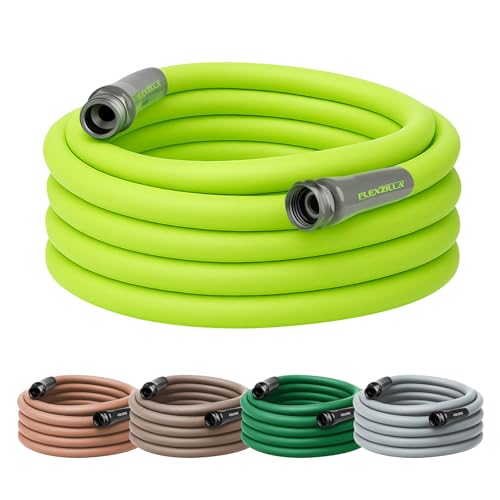
- Best light hybrid for daily dragging: Flexzilla 5/8 in. (hybrid polymer)
- High burst rating at low weight: Teknor Apex Zero-G 5/8 in.
- Brass-coupled commercial feel: Gilmour Pro Commercial
- Kink resistance on a budget-minded hybrid: Teknor Apex NeverKink heavy duty
- Contractor-style hose: FITT Force Pro Commercial Grade
The best heavy duty rubber garden hoses are the Dramm ColorStorm and the Continental Premium Rubber hose for true rubber durability, the Flexzilla 5/8 inch and the Teknor Apex Zero-G for lighter hybrid-polymer handling, and the Gilmour Pro Commercial for brass-coupled, commercial-style punishment. Pick true rubber if you need hot-sun and cold-snap flexibility and can live with the weight; pick a hybrid if you drag the hose every day and want it light and kink-resistant.
The word “rubber” is used loosely in hose marketing. Some hoses are all rubber (usually EPDM), some are a hybrid polymer that behaves like rubber but weighs far less, and some are reinforced vinyl with a rubber-like feel. This guide separates them, explains how diameter, couplings, pressure ratings and temperature behavior actually affect daily use, and ends with a worked weight and capacity calculation so you can match a hose to your yard before buying.
Our top picks


As an Amazon Associate we earn from qualifying purchases at no extra cost to you.
Quick picks
- Toughest all-rubber, long service life: Continental Premium Rubber (EPDM, 100 ft class)
- Rubber with metal couplings in a 50 ft run: Dramm ColorStorm 5/8 in.
- Best light hybrid for daily dragging: Flexzilla 5/8 in. (hybrid polymer)
- High burst rating at low weight: Teknor Apex Zero-G 5/8 in.
- Brass-coupled commercial feel: Gilmour Pro Commercial
- Kink resistance on a budget-minded hybrid: Teknor Apex NeverKink heavy duty
- Contractor-style hose: FITT Force Pro Commercial Grade
How we chose
This is a research-based guide. We compared manufacturer specifications with published reviewer findings and recurring owner feedback across independent roundups, not our own use of the hoses. We kept hoses that remain on sale, described each by material class, and used exact numbers only where multiple sources agreed or the maker states them. Where sources disagreed or gave no figure, we say so and describe the spec class instead. Always check the label on the specific length and diameter you plan to buy, because burst and working pressure can vary by size and by production run.
Rubber, hybrid polymer and vinyl: what you are actually buying
All-rubber (usually EPDM)
True rubber hoses stay flexible in cold weather, resist cracking in sustained summer sun, and tolerate hot water well. They are also heavy. A 100 ft rubber hose can weigh close to 20 lb dry, before water. Their weight is part of why they lie flat and resist kinking, but it also makes them tiring to drag around a large yard.
Hybrid polymer
Hybrid polymers blend rubber-like and plastic materials to give a hose that stays flexible, resists kinks and weighs much less. Flexzilla is the best-known example. The trade-off is that low-temperature and high-heat behavior depends on the compound, and a hybrid generally will not match the lifespan reputation of thick EPDM rubber in extreme climates.
Reinforced vinyl
Vinyl is the cheapest and stiffest option. It kinks more, hardens in cold and degrades faster in UV. Most “heavy duty” vinyl hoses add braided reinforcement and brass couplings to compensate. These can be a fair value but do not belong in a rubber-versus-rubber comparison, so we focus on rubber and hybrids here.
Comparison table
| Hose | Material class | Diameter and common length | Reported burst and working pressure | Couplings | Handling |
|---|---|---|---|---|---|
| Continental Premium Rubber | EPDM rubber | 100 ft class | 130 psi working | Metal couplings | Heavy, about 19 lb |
| Dramm ColorStorm | Premium rubber | 5/8 in. x 50 ft | 130 psi working, about 518 psi burst | Nickel-plated, crush-proof | Heavy but flat-lying |
| Flexzilla | Hybrid polymer | 5/8 in. x 50 ft and 100 ft | Maker states 150 psi working; burst figures reported in the several-hundred psi class | Anodized aluminum | Light, stays supple in cold |
| Teknor Apex Zero-G | Lightweight hybrid | 5/8 in. x 50 ft | About 600 psi burst | Crush-proof | About 4.5 lb for 50 ft |
| Gilmour Pro Commercial | Reinforced rubber and vinyl | 50 ft class | About 400 psi burst | Heavy-duty brass | Heavier, stiffer |
| Teknor Apex NeverKink heavy duty | Triple-frame hybrid | 5/8 in. and 3/4 in. versions | Check label | Metal | Flexible, kink-resistant |
| FITT Force Pro Commercial Grade | Commercial hybrid | 5/8 in. x 50 ft | Check label | Metal | Contractor oriented |
Burst pressure is a stress-test figure, not a working limit. Residential taps usually deliver roughly 40 to 80 psi, so burst ratings above 300 psi are about safety margin and durability rather than something you will ever approach.
Heavy duty rubber garden hoses, reviewed
Continental Premium Rubber
Spec line: EPDM rubber · 100 ft class · 130 psi working · about 19 lb · metal couplings · lifetime warranty reported
Best for: Permanent installations, long runs, hot summers and freezing winters where you want a hose to last for many seasons.
Skip if: You are moving the hose daily around a large yard, or you have limited strength or mobility.
- Pros: Real EPDM construction, flexible in cold, tolerates sun, lies flat and resists kinking, long warranty reported.
- Cons: Heavy, awkward on a small reel, and a full-length run is bulky to store.
Dramm ColorStorm 5/8 in.
Spec line: Premium rubber · 5/8 in. x 50 ft · 130 psi working · about 518 psi burst · nickel-plated crush-proof couplings · lifetime guarantee reported
Best for: Gardeners who want a rubber hose in a manageable 50 ft length for beds, nurseries and greenhouse work.
Skip if: You need more than 50 ft without a second hose, or you prefer the lightest possible hose.
- Pros: Rubber durability, strong couplings, good reputation among growers, colors that are easy to spot in a garden.
- Cons: Heavier than hybrids, and joining lengths adds extra coupling points that can leak.
Flexzilla 5/8 in.
Spec line: Hybrid polymer · 5/8 in. · 50 ft and 100 ft · anodized aluminum fittings · rated drinking-water safe by the maker
Best for: Daily dragging, tight corners and cold mornings, where a light hose that keeps its shape matters more than maximum lifespan.
Skip if: You want a true all-rubber hose, or need brass-heavy couplings that shrug off being dropped on concrete.
- Pros: Light, stays supple in cold, resists kinks, widely recommended in independent roundups.
- Cons: It is a hybrid rather than rubber, aluminum fittings can dent if run over, and pressure ratings in the market vary by listing, so confirm the label.
Teknor Apex Zero-G 5/8 in.
Spec line: Lightweight hybrid · 5/8 in. x 50 ft · about 600 psi burst · crush-proof couplings · about 4.5 lb · long warranty reported
Best for: A high safety margin without the weight, particularly for anyone who handles the hose every day.
Skip if: You specifically want rubber, or you need lengths well beyond 50 ft in one piece.
- Pros: Very light, high burst rating, flexible, regularly appears at the top of 2026 roundups.
- Cons: Not true rubber, and a light hose can whip or move around more under pressure than a heavy one.
Gilmour Pro Commercial
Spec line: Reinforced rubber and vinyl · 50 ft class · about 400 psi burst · heavy-duty brass couplings
Best for: Rough use around gravel, pavers and equipment, where tough brass couplings and a reinforced body matter.
Skip if: You want the lightest hose or the best cold flexibility.
- Pros: Brass fittings, a robust body, and a commercial style that suits repetitive use.
- Cons: Heavier and stiffer than hybrids, and in cold weather the vinyl component stiffens.
Teknor Apex NeverKink heavy duty
Spec line: Triple-frame construction · 5/8 in. and 3/4 in. versions · metal couplings · burst figure varies by size, check the label
Best for: Yards where kinking is the main frustration, especially at corners and around beds.
Skip if: You want an all-rubber hose or a published burst figure before buying.
- Pros: Strong kink resistance, flexible, available in a 3/4 in. size for higher flow.
- Cons: Not all rubber, and spec details vary across the line.
FITT Force Pro Commercial Grade
Spec line: Commercial-grade hybrid · 5/8 in. x 50 ft · metal fittings · burst figure not confirmed
Best for: Landscaping, contractor and farm-style tasks that put the hose under repeated abuse.
Skip if: You want published specs to compare before purchase, since the figures we found were incomplete.
- Pros: Commercial positioning, metal fittings, a common choice at farm and tractor retailers.
- Cons: Fewer independent reviews to cross-check, and heavier than consumer-oriented hybrids.
How to choose: the criteria that matter
5/8 inch versus 3/4 inch
A 5/8 inch hose is the standard homeowner size and is lighter and easier to coil. A 3/4 inch hose moves more water, which helps with large sprinklers, long runs and filling tanks, but it is heavier and not every reel or nozzle is designed for it. Choose 3/4 inch only when you run a high-flow sprinkler or water at a long distance.
Couplings
Solid brass and nickel-plated couplings tolerate being stepped on, dropped or cross-threaded better than thin aluminum or plastic. Look for a hex or crush-proof collar around the female end, and replace the washers in the female coupling each spring. Most leaks at the tap come from a worn washer, not from the hose.
Burst and working pressure
Home water pressure is commonly well below 100 psi. A hose rated at 130 psi working pressure covers typical homes with margin. A higher burst rating shows construction strength and gives margin against pressure spikes when you shut a nozzle quickly, but it does not make a hose last longer in sun on its own.
Hot sun and winter flexibility
Rubber and good hybrids hold flexibility better than vinyl as temperatures drop. In sustained heat, a hose left lying in full sun can get hot enough to scald a hand, so let it run for a moment before using it on plants or pets, and do not use a standard garden hose to fill drinking water for people or animals unless it is labeled drinking-water safe.
Weight
Weight matters daily. A heavy hose stays put but is tiring to pull around corners. Add the weight of water inside, which is substantial on longer hoses. The next section shows how to estimate it.
Worked example: how heavy is the hose when it is full?
Assume the inside diameter roughly equals the nominal size, and work with a 100 ft hose, which is 1,200 inches long.
- 5/8 inch hose: radius 0.3125 in., cross-section area about 0.307 square inches, volume about 368 cubic inches.
- Convert to gallons: 368 divided by 231 equals about 1.6 gallons, and at roughly 8.3 lb per gallon that is about 13 lb of water.
- 3/4 inch hose: radius 0.375 in., area about 0.442 square inches, volume about 530 cubic inches, which is about 2.3 gallons or about 19 lb of water.
- Add dry weight: an all-rubber 100 ft hose around 19 lb dry becomes roughly 32 lb when filled in the 5/8 inch size, and about 38 lb in a comparable 3/4 inch size.
The result: moving a filled 100 ft rubber hose means pulling a load comparable to a loaded suitcase. If you will drag it daily, two 50 ft lengths or a lighter hybrid will save effort. If it stays mostly in place, rubber’s durability advantage is worth the weight.
Decision matrix
| Your situation | Best choice | Why |
|---|---|---|
| Hot summers, cold winters, hose left out | All-rubber EPDM (Continental, Dramm) | Best flexibility range and sun tolerance |
| Daily dragging around corners | Hybrid (Flexzilla, Zero-G) | Light, low kinking |
| Gravel, equipment, rough use | Brass-coupled (Gilmour Pro Commercial) | Couplings survive abuse |
| Large sprinkler or long run | 3/4 inch version | Higher flow, accept more weight |
| Small beds near the tap | 50 ft 5/8 inch | Easy to handle |
Care that doubles hose life
- Drain the hose and disconnect it from the tap before a freeze.
- Coil in wide loops and store out of direct sun when you can.
- Replace coupling washers each spring.
- Avoid dragging a pressurized hose around sharp corners, which causes kinks and fatigue.
- Use a hose guide or stake at corners to protect plants and the hose.
Frequently asked questions
Is a rubber garden hose better than a hybrid hose?
Rubber usually lasts longer in sun and cold, while hybrids are much lighter and easier to handle. The better one depends on climate and how often you move it.
For a hose that stays outdoors in extreme weather, rubber is the safer pick. For daily dragging, a hybrid is easier on your back.
Should I buy a 5/8 or 3/4 inch hose?
Choose 5/8 inch for most yards because it is lighter and fits standard reels. Choose 3/4 inch for high-flow sprinklers or very long runs.
A 3/4 inch hose carries about 44 percent more cross-section area than 5/8 inch, but a filled 100 ft length also weighs roughly 6 lb more in water alone.
What burst pressure should a heavy duty hose have?
Look for at least a few hundred psi burst and a working pressure of 130 psi or more. Home taps rarely exceed 80 psi.
Burst ratings show construction strength rather than lifespan. Couplings, UV exposure and kinking usually end a hose’s life before pressure does.
Are rubber hoses safe for drinking water?
Only if the hose is labeled drinking-water safe. Many standard garden hoses are not intended for drinking.
If you need potable water, choose a hose explicitly marked for it, and flush it first after sitting in the sun.
Why does my rubber hose leak at the tap?
Almost always the female coupling washer has worn out or the coupling is cross-threaded. The hose body is rarely the cause.
Replace the washer, hand-tighten the coupling and add a quarter turn. If the coupling is dented, replace it or the hose.
How do I keep a rubber hose from cracking?
Avoid leaving it pressurized in full sun, drain it before freezes and store it coiled in shade. Rubber resists cracking far better than vinyl, but heat and UV still age it.
A simple hose hanger or reel keeps the hose off hot pavement and prevents sharp bends.
Are brass couplings worth the extra cost?
Yes if the hose is used hard. Brass survives drops, vehicles and cross-threading better than thin aluminum or plastic.
For light residential use, anodized aluminum is adequate, but replace damaged couplings promptly because a bent collar leaks and can hurt your hand.
How long should a heavy duty rubber hose last?
With reasonable care, a true rubber hose can last many seasons, often longer than vinyl or low-end hybrids, though lifespan depends on climate, storage and use.
Warranty length is a rough signal: several rubber hoses carry long or lifetime warranties, but read the terms for what is excluded.