Key takeaways
- A starter fertilizer supports seedling roots. Look for a middle number (P) that is higher than the first or last number, such as 10-18-10 or 20-27-5.
- Apply it at planting or just after seeding, then switch to a normal lawn fertilizer later (check the label for timing).
- Standard weed-and-feed and most pre-emergent products can stop seed from sprouting. Use a seeding-safe product if you want weed control.
- Match the bag size to your lawn area: a 5,000 sq ft bag treats one 5,000 sq ft area at the label rate.
- For overseeding, a starter fertilizer is optional but helpful on thin lawns with poor soil.
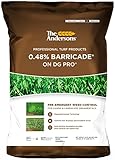
The best starter fertilizer for grass seed is a granular formula with a higher middle number (phosphorus) than a regular lawn food, applied at the same time you spread the seed. For most homeowners, Scotts Turf Builder Starter Food for New Grass is the easiest all-round choice, The Andersons Premium New Lawn Starter 20-27-5 suits people who want a stronger phosphorus ratio, and GreenView Starter Fertilizer 10-18-10 is the small-lawn bargain. This guide compares seven starter products plus four extras, and explains how to match one to your lawn size, grass type, and season.
Our top picks


As an Amazon Associate we earn from qualifying purchases at no extra cost to you.
Key takeaways
- A starter fertilizer supports seedling roots. Look for a middle number (P) that is higher than the first or last number, such as 10-18-10 or 20-27-5.
- Apply it at planting or just after seeding, then switch to a normal lawn fertilizer later (check the label for timing).
- Standard weed-and-feed and most pre-emergent products can stop seed from sprouting. Use a seeding-safe product if you want weed control.
- Match the bag size to your lawn area: a 5,000 sq ft bag treats one 5,000 sq ft area at the label rate.
- For overseeding, a starter fertilizer is optional but helpful on thin lawns with poor soil.
Best Starter Fertilizer for Grass Seed: Quick Comparison
| Pick | Best for | Key specs | Price tier |
|---|---|---|---|
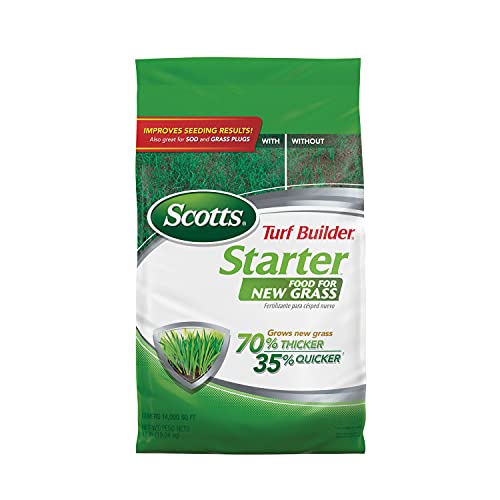
| Scotts Turf Builder Starter Food for New Grass | Most home seeding jobs | 3 lb covers 1,000 sq ft; 15 lb covers 5,000 sq ft; 42 lb size listed | Mid |
| The Andersons Premium New Lawn Starter 20-27-5 | High-phosphorus formula | 18 lb bag covers up to 5,000 sq ft | Mid to premium |
| GreenView Starter Fertilizer 10-18-10 | Small lawns and budget | 8 lb covers 2,500 sq ft | Budget |
| Jonathan Green Veri-Green for Seeding and Sodding | Slow-release feeding | 1,500 and 5,000 sq ft sizes; 25% slow-release listed | Mid |
| Lawn Synergy Starter 15-20-10 | Large lawns, bulk buyers | 50 lb bag; high phosphorus | Premium bulk |
| Scotts Turf Builder Triple Action Built for Seeding | Seeding with weed control | Fertilizer plus weed preventer for new lawns; 4.3 lb and 17.2 lb sizes | Mid |
| Jonathan Green Green-Up 12-18-8 | Large areas, sod and seed | 12-18-8; 15,000 sq ft bag listed | Premium bulk |
1. Scotts Turf Builder Starter Food for New Grass: Best for Most Home Seeding Jobs
- Granular starter food for newly planted seed, sod, and bare spots
- 3 lb bag covers 1,000 sq ft; 15 lb bag covers 5,000 sq ft (per the listings)
- 42 lb bag also listed, labeled as a good match for sod
- Widely sold in sizes from small patch jobs to full yards
Best for: homeowners seeding a typical yard who want a familiar product in a size that fits the job.
Skip if: you want a stronger phosphorus ratio than the standard starter food, or a high-volume bag for a very large lawn.
Pros:
- Sized from a 1,000 sq ft bag up to larger bags, so you can buy to match the lawn
- Easy to find and works in a standard broadcast or drop spreader
- Made for seed, sod, and bare-spot work
Cons:
- Not a weed preventer, so weeds can still come in
- Small bags cost more per square foot than bulk sizes
2. The Andersons Premium New Lawn Starter 20-27-5: Best for a High-Phosphorus Ratio
- 20-27-5 formula (nitrogen, phosphorus, potassium)
- 18 lb bag covers up to 5,000 sq ft per the listing
- Granular product from a company known for turf and professional lawn products
- Check the label for how long it feeds and when to repeat
Best for: people who want a higher phosphorus ratio for root development and a premium-grade product.
Skip if: you are in an area that limits phosphorus on lawns, or you prefer a basic budget bag.
Pros:
- High middle number supports seedling roots
- One 18 lb bag treats a 5,000 sq ft area at the label rate
- Professional reputation
Cons:
- Higher cost per bag than basic starters
- Strong nitrogen can burn if overapplied, so calibrate your spreader
3. GreenView Starter Fertilizer 10-18-10: Best for Small Lawns and Tight Budgets
- 10-18-10 NPK formula, described as ideal for newly seeded lawns and bare spots
- 8 lb bag covers 2,500 sq ft per the listing
- Larger 16 lb and 48 lb bags are listed under the GreenView Solutions name
- Granular starter for seed, bare-spot repair, and new areas
Best for: small and medium lawns or patch jobs where the price per bag matters.
Skip if: you want slow-release nitrogen features or a larger bag for a big lawn.
Pros:
- Low entry cost and a handy 2,500 sq ft bag size
- A simple formula with a higher middle number
- Larger bags available for bigger lawns
Cons:
- Less brand detail on nutrient release than premium bags
- Check bag sizes carefully, since the listing names vary by size
4. Jonathan Green Veri-Green Fertilizer for Seeding and Sodding: Best for Slow-Release Feeding
- Granular starter lawn food for all grasses, per the listing
- Sold in 1,500 sq ft and 5,000 sq ft sizes
- Listing mentions 25% slow-release nitrogen
- For use with both seeding and sodding
Best for: homeowners who want a gentler feeding pattern and a product labeled for all grass types.
Skip if: you need a very large bag or a weed preventer built in.
Pros:
- Slow-release portion helps reduce the risk of a growth surge
- Small and mid sizes match typical yards
- Suits both seed and sod
Cons:
- Smaller bag sizes cost more per square foot
- Less widely stocked in stores than the largest brands
5. Lawn Synergy Starter Fertilizer 15-20-10: Best for Large Lawns and Bulk Buyers
- 15-20-10 formula described as high phosphorus for fast root growth
- 50 lb bag size
- For new grass seed and sod
- Check the label for the coverage rate and application guidance
Best for: large lawns, multiple seeding projects, or people who seed in more than one season.
Skip if: you have a small lawn, or you cannot store a 50 lb bag dry.
Pros:
- One large bag covers many small jobs
- Good phosphorus ratio for seedlings
- Lower cost per square foot at the bulk size
Cons:
- A 50 lb bag is heavy and needs dry storage
- Higher upfront cost
6. Scotts Turf Builder Triple Action Built for Seeding: Best When You Also Want Weed Control
- Combination weed preventer and fertilizer for new lawns, per the listing
- Sold in 4.3 lb and 17.2 lb bags (check the listing for coverage)
- Designed to be used when seeding, unlike most weed-and-feed products
- Check the label for the weed list, rates, and the time to wait before mowing
Best for: homeowners with a weedy history who want to seed and feed in one pass.
Skip if: you prefer a plain starter and plan to treat weeds later, or you have sensitive plants near the lawn edge.
Pros:
- One step for feeding and weed prevention while seeding
- Made for newly seeded areas
- Available in a small and a large size
Cons:
- Not suitable for every grass type; read the label
- Costs more than a plain starter
7. Jonathan Green Green-Up Lawn Food 12-18-8: Best for Large Areas of Seed or Sod
- 12-18-8 formula for seeding and sodding
- 15,000 sq ft bag listed
- Granular lawn food for newly planted lawns
- Confirm application rates on the label
Best for: large new lawns, landscaping projects, or sod installation.
Skip if: your lawn is small, since you will pay for far more product than you use.
Pros:
- Big coverage per bag
- Balanced starter ratio with a high middle number
- Works with seed or sod
Cons:
- Large bag and large upfront cost
- Two Jonathan Green items appear here, so compare them with care before ordering
Also Consider
- Espoma Turf-Tone Lawn Starter (natural and organic): an organic starter with a nitrogen, phosphorus, and bio-tone formula per the listing. A fit for people who prefer organic feeding, though check the label for the feeding speed and coverage.
- GreenView Solutions Starter Fertilizer, 16 lb and 48 lb bags: bigger bag sizes of the GreenView range for bare spots and medium to larger lawns.
- Scotts Turf Builder Liquid Starter Lawn Food, 7-12-15: a 32 fl oz liquid starter for small areas or spot-feeding. Scotts already has two main picks above, so this one stays here in the extras list.
- Scotts EZ Seed Patch and Repair: a mulch, seed, and fertilizer blend for patching bare spots, not a stand-alone fertilizer, but a shortcut for small repairs.
How We Chose
This is a research-based roundup. We did not personally use the products. We started from product listings for starter fertilizers sold for new lawns, kept formulas with a higher phosphorus number or an explicit new-lawn label, and checked bag sizes against typical yard areas. We avoided duplicating brands (two per brand at most), left out renewed or bundled listings, and skipped products that read as generic fertilizer. Nutrient numbers and coverage come from the listings and should be confirmed on the bag. We do not quote prices, so we use price tiers instead.
Starter Fertilizer Buying Guide
Read the three numbers
The N-P-K numbers on a bag are percentages of nitrogen, phosphorus, and potassium by weight. For new seed, the middle number matters most because phosphorus supports early root growth. Starters usually carry a middle number from about 18 to 27, while a standard lawn food often has a lower middle number or none. Compare 10-18-10 with 20-27-5: both are starters, but the second is a more concentrated and more strongly phosphorus-weighted formula.
Match the bag to the lawn
Measure the area to be seeded in square feet. A worked example: a 40 by 60 ft back lawn is 2,400 sq ft, so a bag labeled for 2,500 sq ft covers it with a little left. A 4,000 sq ft overseeding job fits a 5,000 sq ft bag, with the leftover saved for the next bare spot. Large lawns of 10,000 sq ft or more often save money with a bulk bag.
Choose granular, liquid, or a combination
- Granular: the standard choice. Spread with a broadcast or drop spreader and water in.
- Liquid: good for patches and small areas, but covers a lot less ground per bottle.
- Seed, mulch, and fertilizer blends: handy for spot repairs, not for whole lawns.
Weed control while seeding
Most pre-emergent herbicides stop grass seed from sprouting, so a regular crabgrass preventer should wait until after the new lawn is mowed several times (check the label for the interval). A product built for seeding, such as the Scotts Triple Action option above, is the exception. Read the weed list and the restrictions for your grass type.
Phosphorus rules and soil
Some regions limit phosphorus on established lawns, though the rules often allow it for new seeding. Check local guidance. If you can, get a soil analysis from a local extension office to see if phosphorus is already high. If it is, you may be able to use a lower-phosphorus lawn food.
Spreader and rate
Use the spreader setting printed on the bag. A drop spreader gives precise edges; a broadcast spreader covers ground faster but can scatter product onto driveways. After spreading, water lightly so the granules settle onto the soil. Sweep any granules off hard surfaces.
Bag size by lawn area: a quick worked table
| Area to seed | Example | Bag that fits | Bags needed |
|---|---|---|---|
| 500 sq ft | Two or three bare patches | Scotts 3 lb (1,000 sq ft) or Jonathan Green 1,500 sq ft | 1 |
| 2,400 sq ft | 40 by 60 ft back lawn | GreenView 8 lb (2,500 sq ft) | 1 |
| 4,500 sq ft | Overseeding a front and side yard | Scotts 15 lb or Andersons 18 lb (5,000 sq ft each) | 1 |
| 9,000 sq ft | Full-yard renovation | Two 5,000 sq ft bags, or one larger bag if the label allows | 2 |
| 14,000 sq ft | Large lot or new build | Jonathan Green Green-Up (15,000 sq ft) or Lawn Synergy 50 lb | 1 bag of the large size |
Round up when the area is close to a bag’s limit, because overlapping spreader passes and uneven walking speed use more product than the math suggests.
How to apply starter fertilizer at seeding, step by step
- Prepare the soil. Mow low, rake out dead grass and debris, and loosen the top of bare soil so seed touches dirt. On compacted lawns, core aeration before overseeding helps.
- Set the spreader. Use the setting printed on the fertilizer bag for your spreader brand. If your spreader is not listed, start with a low setting and do a trial pass on a driveway tarp to see the pattern.
- Spread in two directions. Apply half the product walking north-south and half walking east-west for even coverage. Lock the spreader closed when you turn or stop.
- Seed. Spread grass seed at the label rate, either before or after the fertilizer. Rake lightly or use a roller to improve contact with the soil.
- Clean up. Sweep granules off sidewalks, driveways, and patios so they do not wash into storm drains.
- Water. Water lightly right away, then follow the seed’s watering schedule. Keep the top inch of soil moist until seedlings are up.
- Mark your calendar. Note the date and plan the next feeding according to the product label.
Common mistakes with starter fertilizer
- Using a pre-emergent that blocks seed. Check that the product says it is safe for newly seeded lawns.
- Applying too much. More fertilizer does not speed growth. Excess nitrogen can burn seedlings.
- Skipping calibration. Spreader settings drift between brands and models. Do a small check on a tarp first.
- Fertilizing on a hot, dry day. Heat increases the risk of burn and lost seed. Pick a mild day and water in.
- Forgetting the follow-up. Starter fertilizer is not a permanent plan. Switch to a regular lawn food on the label’s schedule.
New lawn or overseeding: which job are you doing?
| Situation | Starter fertilizer? | Notes |
|---|---|---|
| Bare soil, new lawn | Yes | Apply at planting; seedlings have no existing roots to feed from |
| Sod installation | Yes, per label | Starter helps roots grow into the soil |
| Thin lawn overseeded in fall | Often helpful | Time it with seeding for autumn fall lawn care |
| Healthy lawn with a light overseed | Optional | A regular fall lawn food may be enough |
| Bare spots only | Yes, small bag or liquid | A patch kit with mulch and seed can save a step |
Timing by season and grass type
| Grass type | Best seeding window | Starter fertilizer timing | Follow-up |
|---|---|---|---|
| Kentucky bluegrass, fescue, ryegrass (cool-season) | Late summer to early fall; spring is the second choice | At seeding | Fall lawn food on the label schedule |
| Bermudagrass (warm-season) | Late spring to early summer, once soil is warm | At seeding | Regular nitrogen through the summer growing season |
| Zoysia (warm-season) | Late spring to early summer | At seeding | Slow growth, so go light and follow the label |
| Centipede (warm-season) | Late spring to early summer | At seeding, using a product labeled for it | Low-nitrogen approach; read the label |
If you are shopping in autumn for a cool-season lawn, work backward from the first expected frost: you want about six to eight weeks of mild weather for seedlings to establish.
Starter fertilizer for Bermuda and zoysia seed
Warm-season lawns are seeded in late spring or early summer when soil is warm, not in autumn. Starter fertilizer helps, but bermudagrass is a heavy feeder, so follow with regular nitrogen according to the label once it is established. Zoysia seed is slow, so be patient; check the product label for the grass types it covers.
Autumn and fall lawn care
For cool-season lawns, early fall is a prime time for overseeding. Use a starter at seeding, then follow with a fall lawn food according to the product label. Seeding in September to early October gives seedlings time to establish before winter in many regions.
Frequently Asked Questions
What is the best starter fertilizer for grass seed?
The best choice depends on lawn size and goals. Scotts Turf Builder Starter Food for New Grass is the easy all-round option, The Andersons 20-27-5 suits a high-phosphorus formula, and GreenView 10-18-10 is a budget option for small areas.
When should I apply starter fertilizer?
Apply at planting or right after spreading seed, then water in lightly. The exact timing is on the label.
Do I need starter fertilizer when overseeding?
It is not mandatory, but thin lawns with weak soil benefit. If the lawn was fertilized recently, you may not need the extra.
Can I use regular lawn fertilizer on new grass seed?
You can, but starter fertilizers are formulated for seedlings with extra phosphorus. Avoid weed-and-feed products unless the label says they are safe for seeding.
How long until I can switch to regular fertilizer?
Many labels suggest several weeks after seeding or after the first few mowings. Check your product label for the exact interval.
Is there a good starter fertilizer for Bermuda grass?
A starter formula works for seeding bermudagrass in warm soil. Once the lawn is established, bermudagrass needs regular nitrogen during the growing season, so plan on a follow-up feeding.
Can starter fertilizer burn new grass?
Yes, if overapplied or left in clumps on wet blades. Calibrate your spreader, follow the label rate, and water it in.
Which One Should You Buy?
- Typical yard, easy choice: Scotts Turf Builder Starter Food for New Grass.
- High-phosphorus ratio: The Andersons Premium New Lawn Starter 20-27-5.
- Small lawn or patch job on a budget: GreenView Starter Fertilizer 10-18-10.
- Slow-release approach: Jonathan Green Veri-Green for Seeding and Sodding.
- Large lawn: Lawn Synergy 15-20-10 or Jonathan Green Green-Up 12-18-8.
- Seed and weed control in one pass: Scotts Turf Builder Triple Action Built for Seeding.
Sources
- Manufacturer product pages and listing specifications for each product named
- University extension lawn establishment guides (general seeding and fertilizer guidance)
- Seed and fertilizer label directions from the product bags
- Local state fertilizer and phosphorus rules from state agriculture departments
Last updated: November 2026
FAQ
What is the best starter fertilizer for grass seed?
When should I apply starter fertilizer?
Do I need starter fertilizer when overseeding?
Can I use regular lawn fertilizer on new grass seed?
How long until I can switch to regular fertilizer?
Is there a good starter fertilizer for Bermuda grass?
Can starter fertilizer burn new grass?
More from Amazon
Programs that pair well with the guide above. Offers and eligibility are set by Amazon and may change.
Collect the home and kitchen items you want in one registry that guests can shop from.
Create a wedding registrySet up recurring deliveries of everyday items on eligible products. Terms and savings are set by Amazon.
Explore Subscribe & SaveFree shipping on eligible items, Prime Video and more. Eligible new members can start with a free trial.
Start a Prime free trialAudiobooks and podcasts to listen to on the go. Eligible new members can start with a free trial.
Try Audible freeAs an Amazon Associate we earn from qualifying purchases.