Key takeaways
- Find the best garden forks for digging, turning and loosening soil. Compare five sturdy four and five tine forks with wood, fiberglass and steel handles.
A good digging fork does work a spade cannot. Its tines slide into soil, lift it, and break it apart without cutting through every root in the bed, so it is the right tool for turning a vegetable plot, loosening compacted ground, lifting potatoes, and moving compost. The best forks pair sharp, strong tines with a handle that lets you put your weight over the head instead of fighting the tool.
Forks differ more than they look: tine count changes how much soil each lift moves, handle length changes how upright you stand, and handle material changes how much shock reaches your hands. This guide compares five digging and spading forks now listed for sale, from a premium ergonomic model to budget four and five tine options, so you can match the fork to your soil and your body.
As an Amazon Associate, we earn from qualifying purchases.
Quick Answer
For most gardeners, the Fiskars Ergonomic Garden Fork is the strongest all-around pick, with a long fiberglass shaft, boron steel tines, and a handle shaped to reduce wrist strain. The VNIMTI fork is a solid mid-range choice with a hardwood handle and stainless steel tines. For a lower spend, the GSBLUNIE five tine fork moves more per lift, while the Zeluga 10-151 suits smaller beds.
Fiskars Ergonomic Garden Fork

Fiskars builds this fork around an ergonomic handle and a long shaft, a combination that suits gardeners who dig often or feel strain in their wrists and lower back. The handle keeps your hands in a natural position, and the shaft is long enough to let you work more upright than a short D-handle fork allows. The head is boron steel, a hard alloy that holds a sharp edge and resists bending when a tine meets a stone or a thick root.
At 48.43 inches long, this is the longest fork in this guide, and the extra length is a real advantage in a large vegetable plot, where you take many lifts in a row. The four tines pierce soil cleanly rather than scooping it, so the fork is at its best turning beds, breaking up clods, and lifting root crops. At 4.6 pounds it feels solid in the ground but light enough for a long session without tiring your arms quickly.
The fiberglass shaft needs little care: it does not absorb water or splinter, and it shrugs off the damp of a tool shed. No warranty length is stated. This is the premium pick here, and the fork most likely to stay comfortable through a full afternoon of digging.
Specs
| Spec | Detail |
|---|---|
| Tines | 4, boron steel |
| Handle | Ergonomic, fiberglass shaft |
| Overall length | 48.43 inches |
| Weight | 4.6 pounds |
| Model number | 1001413 |
| Value group | Premium |
VNIMTI Garden Fork

The VNIMTI Garden Fork takes the classic route: stainless steel tines on a one-piece hardwood handle. Hardwood gives a warm, solid feel and absorbs some of the shock when a tine strikes a stone, while stainless steel tines resist rust and slide through soil cleanly. At 45.7 inches it is a full-size fork that suits most adults, and the 4.7 pound weight sits in the middle of this guide.
This is the best all-rounder for a gardener who wants a traditional tool without paying a premium for an ergonomic handle. The four tines suit turning beds, aerating lawns, lifting potatoes and perennials, and moving mulch. The D-shaped grip gives a secure hold with gloves on, and the single piece of wood runs through the socket, the construction that holds up best under leverage.
The listing is ranked as a best seller in its category. The hardwood handle needs a little more care than fiberglass: keep it dry and rub in oil now and then to stop it cracking.
Specs
| Spec | Detail |
|---|---|
| Tines | 4, stainless steel |
| Handle | Hardwood, D-grip |
| Overall length | 45.7 inches |
| Weight | 4.7 pounds |
| Category rank | Number one Best Seller in Pitchforks |
| Value group | Mid-range |
wangyanhao 4-Tine Digging Fork

The wangyanhao fork is the lightest full-size fork in this guide at 3.5 pounds, and that low weight changes how it feels in use. A lighter fork is easier to lift out of the soil and less tiring over a long session. The trade is that it carries less momentum into hard ground, so it suits beds that are already workable rather than ground that has never been broken.
The head is alloy steel with four tines, and the steel handle has an ergonomic grip that gives several hand positions. At 44 inches it is a touch shorter than the two forks above, which suits shorter gardeners and smaller beds. The listing describes it for digging, turning soil, loosening ground, and lifting plants, and the four tine layout pierces cleanly and lifts a useful amount of soil without clogging the way a wider head can.
This is a mid-range fork from a lesser-known brand: the published specs are clear on length, weight, and materials, but no warranty length is stated. Buy it for its weight and handle shape, and keep it clean and dry.
Specs
| Spec | Detail |
|---|---|
| Tines | 4, alloy steel |
| Handle | Steel with ergonomic grip |
| Overall length | 44 inches |
| Weight | 3.5 pounds |
| Model number | 2103-TYPE |
| Value group | Mid-range |
GSBLUNIE 5-Tine Pitch Fork

Five tines instead of four is the GSBLUNIE fork’s whole pitch. The extra tine means each lift moves more soil, compost, or mulch, and the wider head spreads the load so the fork is less likely to twist. That makes it a good choice for turning a compost heap, moving mulch, and loosening a wide bed quickly. Head and handle are both steel, and the whole tool is built for heavy work rather than finesse.
At 41 inches and 6.18 pounds, this is the shortest and heaviest fork in this guide. The shorter length gives more leverage for prying up a stubborn clod, and the extra weight helps the tines sink into firm ground. The trade is that a heavier fork tires your arms sooner, and the shorter handle means you bend more than you would with a 48 inch fork.
The five tine layout is less suited to delicate work around shallow roots. Use it where you want volume and power: compost turning, mulch moving, and breaking up a bed before planting. It is the budget pick here.
Specs
| Spec | Detail |
|---|---|
| Tines | 5, steel |
| Handle | Steel |
| Overall length | 41 inches |
| Weight | 6.18 pounds |
| Model number | GSBLUNIE-5Tines-Pitchfork |
| Value group | Budget |
Zeluga 10-151 Garden Fork
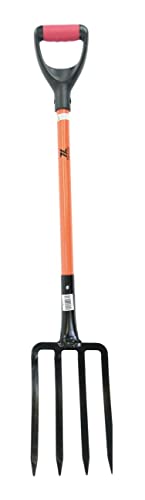
The Zeluga 10-151 is a compact fork built around a fiberglass shaft and a D-grip handle. Fiberglass is the practical choice for a tool that lives in a damp shed: it does not rust, rot, or splinter, and the D-grip gives a firm hold even with wet gloves. The head is stainless steel with four tines, so it resists rust and cleans up with a quick rinse.
The maker describes the total length as about 40 inches, which makes this the most compact full-size fork here and a good fit for smaller beds, raised beds, and gardeners who find a 48 inch fork unwieldy. It is also the easiest fork here to store. The four tine head handles the usual digging jobs: turning soil, loosening a bed before planting, lifting root crops, and working compost into the top layer.
One caution: the listing’s dimension field reads 7.25 by 7.25 by 10 inches, which looks like a packed size, so trust the maker’s stated length of about 40 inches. Weight is not stated.
Specs
| Spec | Detail |
|---|---|
| Tines | 4, stainless steel |
| Handle | Fiberglass shaft, D-grip |
| Overall length | About 40 inches, per maker description |
| Weight | Not stated |
| Model number | 10-151 |
| Value group | Budget |
How to choose
Start with your soil. Heavy clay and ground that has never been dug call for strong tines and a handle you can lean on, which points to the Fiskars or the VNIMTI fork. Loose or well-worked soil is kinder to a tool, so a lighter fork like the wangyanhao or the Zeluga is enough.
Next, match the length to your height and your beds. A fork around 48 inches lets a taller gardener stand upright, while one around 40 to 44 inches suits shorter gardeners and raised beds. If you turn compost or move mulch in volume, a five tine head like the GSBLUNIE moves more per lift.
Handle material is the last big choice. Hardwood feels warm and absorbs shock but needs oil and dry storage. Fiberglass needs almost no care and never splinters. Steel handles are the strongest and heaviest, and they suit rough work where the fork may strike stone.
Who should skip
Skip a full-size digging fork if your garden is mostly containers and shallow raised beds: a hand fork or a border fork will do the same jobs with far less effort. Skip the heavy five tine GSBLUNIE if you have wrist or shoulder trouble, since its 6.18 pound weight adds up fast; the lighter wangyanhao will suit you better.
Skip stainless steel tines if you dig in ground full of brick and stone, since a hard alloy head like the Fiskars boron steel holds up better to impacts. And check your shed before buying: many gardeners already own a fork with a loose head that a new socket pin would put right.
Frequently Asked Questions
How many tines should a digging fork have?
Four tines suit most digging jobs: turning beds, loosening soil, and lifting root crops. Five tines move more per lift and suit compost turning and mulch moving, but the wider head is clumsier around shallow roots.
Is a digging fork better than a spade for turning soil?
A fork is better for turning and loosening because its tines break soil apart without cutting through roots. A spade is better for cutting a clean edge, slicing turf, and digging a straight-sided hole.
What handle length should I choose?
Match the fork to your height. A fork around 48 inches suits taller gardeners and lets you work upright. One around 40 to 44 inches suits shorter gardeners and raised beds. If you are between sizes, buy the longer fork: you can choke down on the shaft.
How do I keep a garden fork in good condition?
Clean soil off the tines after each use, dry the tool before storing it, and keep it out of standing water. Oil a hardwood handle now and then to stop it drying and cracking. Check the socket where the head meets the handle each spring, since a loose head is the most common failure on an old fork.
Final verdict
The Fiskars Ergonomic Garden Fork is the pick for most gardeners: its long fiberglass shaft, boron steel tines, and ergonomic handle make long digging sessions easier on the back and wrists. The VNIMTI fork is the best traditional choice, with stainless steel tines and a hardwood handle at a mid-range spend. The wangyanhao fork is the lightest full-size tool, the GSBLUNIE five tine fork moves the most material per lift on a budget, and the Zeluga 10-151 is the low-maintenance compact option for smaller beds. Pick by your soil, your height, and how much you dig.
FAQ
How many tines should a digging fork have?
Is a digging fork better than a spade for turning soil?
What handle length should I choose?
How do I keep a garden fork in good condition?
More from Amazon
Programs that pair well with the guide above. Offers and eligibility are set by Amazon and may change.
Collect the home and kitchen items you want in one registry that guests can shop from.
Create a wedding registrySet up recurring deliveries of everyday items on eligible products. Terms and savings are set by Amazon.
Explore Subscribe & SaveFree shipping on eligible items, Prime Video and more. Eligible new members can start with a free trial.
Start a Prime free trialAudiobooks and podcasts to listen to on the go. Eligible new members can start with a free trial.
Try Audible freeAs an Amazon Associate we earn from qualifying purchases.