Key takeaways
- Tennis balls bounce through practice and match play in pressurized, pressureless, and training designs. Compare can counts, felt types, and court uses.
As an Amazon Associate we earn from qualifying purchases.
A fresh can of tennis balls can change how a whole session feels. Pressurized balls arrive lively and quick off the strings, while pressureless designs trade some of that pop for a bounce that stays steady through weeks of drills. Add in felt types built for hard courts or softer surfaces, pack sizes that range from a single can of three to full cases, and low-bounce training balls for newer players, and the simple act of picking a ball turns into a handful of real decisions.
This guide lines up five proven options across those categories: two pressurized match balls from Wilson and Penn, a pressureless practice bag from GAMMA, a low-bounce training set from Franklin Sports, and a wool-felt training ball from Kevenz. Each entry sticks to what the manufacturer prints on the listing, covering pack counts, felt and core construction, and the court uses each ball is made for.
Whether you are stocking up for league nights, feeding balls through a machine, or handing a beginner something easier to track, one of these five should fit the way you play. Pack sizes and variations differ between listings, so check the product page for the exact count and version you want before ordering.
Disclosure: This article may contain affiliate links. If you buy through these links, we may earn a small commission from Amazon.
Wilson US Open Tennis Balls – Extra Duty, Single Can (3 Balls)

Wilson’s US Open ball carries one of the strongest pedigrees in the sport. According to the listing, every point at the US Open has been scored with a Wilson US Open tennis ball for more than forty years, and the ball is described as a benchmark for consistency and performance when a match is on the line. This single-can version holds three balls in the Extra Duty build, the variation aimed at hard courts.
The listing describes a premium woven felt over the core, and the line also comes in Regular Duty and High Altitude variations for players on softer courts or at elevation. The can format keeps the balls pressurized until you crack the seal, which suits players who open a fresh can for match day rather than burning through balls in practice. If your tennis revolves around scored sets on outdoor hard courts, this is the most match-focused pick in the group.
Specs
- Pack: 1 pressurized can with 3 balls
- Style: Extra Duty, with Regular Duty and High Altitude variations in the same line
- Felt: premium woven felt, per the manufacturer’s description on the listing
- Material type: rubber
- Player level: adult
- Tournament tie-in: ball of the US Open for 40+ years, per the listing
Penn Championship Tennis Balls – Extra Duty Felt, 24 Cans, 72 Balls

Penn calls the Championship the standard by which other tennis balls are measured, and the listing backs that up with league credentials: it is the official ball of USTA Leagues and carries USTA and ITF approval. This listing is the bulk case, with 24 cans and 72 balls total, though the line is sold in several smaller case sizes as well. For clubs, teams, and players who go through cans quickly, the case format keeps a fresh supply on hand.
Inside the ball, Penn lists a natural rubber core for consistent feel, interlocked wool fiber for longer wear, and deep-elastic seams. A controlled fiber release keeps the nap even across the felt. The Extra Duty felt on this version is made for hard courts; the same Championship line also offers regular duty felt for softer courts such as clay and grass, plus an extra-duty high altitude version for courts well above sea level. Pick the pack size that matches your court time on the product page, since counts vary across the line.
Specs
- Pack: 24 cans, 72 balls total; smaller case sizes also listed
- Type: pressurized, Extra Duty felt for hard courts
- Core: natural rubber
- Felt: interlocked wool fiber with controlled fiber release
- Seams: deep-elastic seams, stitched construction
- Approvals: USTA and ITF approved; official ball of USTA Leagues
GAMMA Pressureless Tennis Ball Bag – Bag of 12

GAMMA’s pressureless balls skip the sealed can entirely. Because there is no gas pressure inside to leak away, the listing says these balls maintain their bounce and hold up through repeated practice sessions, which makes them a natural fit for lessons, coaching, and ball machine work. They come in a reusable bag rather than cans, in pack sizes of 10, 12, 18, and 20, so you can match the count to how many balls your drills burn through.
The listing describes a polyester outer material over a rubber build and notes the balls work on any court surface, hard or soft, clay or cement. Colors go beyond the usual optic yellow, with options that include blue and the signature yellow felt, which can help balls stand out against different backgrounds. For players whose tennis is mostly practice rather than scored matches, this bag format removes the ritual of opening fresh cans every few sessions.
Specs
- Pack sizes: 10, 12, 18, or 20 balls per bag; this listing covers the bag of 12
- Type: pressureless, no internal gas pressure to lose
- Materials: polyester and rubber; outer material listed as polyester
- Bag: reusable carry bag included
- Uses per listing: lessons, practice, coaching, and ball machines
- Courts: hard, soft, clay, and cement surfaces per the listing
Franklin Sports Pressureless Tennis Balls – 12 Pack with Mesh Carry Bag

Franklin Sports aims this pressureless set squarely at training. The listing describes a low pressure, low bounce design that gives beginners a ball that is easier to track and hit while they build their strokes, and the official-size ball measures 2.6 inches in diameter. Because the balls are pressureless, that calmer bounce stays consistent from session to session instead of fading the way an opened can does.
The set includes twelve balls plus a mesh carry bag, and the construction is listed as polyester. Franklin positions the balls for all court surfaces, indoors or out, and the line also comes in smaller three-ball packs and an eighteen-ball version if you want a different count. For junior programs, first lessons, and relaxed rally practice where control matters more than pace, this is the gentlest ball in the lineup.
Specs
- Pack: 12 balls plus 1 mesh carry bag; 3-ball and 18-ball versions also in the line
- Type: pressureless, low pressure and low bounce design
- Size: official size, 2.6 inch diameter
- Construction: polyester
- Color: yellow
- Courts: all court surfaces, per the listing
Kevenz Green Advanced Training Tennis Balls – 12 Pack
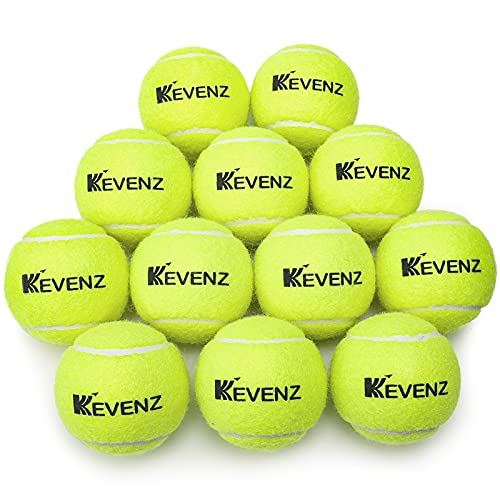
Kevenz builds its training ball around a classic recipe: a standard rubber core wrapped in a woolen felt cover, with interlocked wool fiber named in the product title. That wool felt gives the ball a traditional surface feel during drills, and the listing presents the 12-pack as an advanced training and practice ball for adult players.
The green color is the other headline feature. Against the usual yellow, a green ball changes the visual picture during practice, which can help when you are running drills that mix ball types or simply want practice balls that are easy to tell apart from your match cans. Each ball measures 2.5 by 2.5 by 2.5 inches per the listing, and the dozen comes as a single pack, so it slots neatly into a ball hopper or bag for feeding drills.
Specs
- Pack: 12 balls
- Construction: standard rubber core with woolen felt cover; interlocked wool fiber
- Color: green
- Ball dimensions: 2.5 x 2.5 x 2.5 inches, per the listing
- Player level: adult
- Use: advanced training and practice, per the listing title
How to Choose
Pressurized or pressureless. Pressurized balls, like the Wilson US Open and Penn Championship above, ship in sealed cans that hold their internal pressure until opening. They deliver the livelier bounce that matches and league play call for, but as GAMMA’s listing points out, gas-pressured balls lose pressure over time once the can is open. Pressureless balls get their bounce from the core itself, so the bounce stays steadier across many practice sessions, which is why coaches and ball machine users lean toward them.
Match the felt to your court. Penn’s listing lays out the split plainly: extra duty felt is made for hard courts, regular duty felt suits softer courts such as clay and grass, and high altitude versions exist for courts thousands of feet above sea level. Wilson’s US Open line follows the same three-way split. Buying the felt that matches your home court keeps the cover working as intended.
Pick a pack size for how you play. A single can of three suits a player who opens fresh balls for one match at a time. Cases like the Penn 24-can pack serve league players and clubs. Bags of 12 to 20 pressureless balls fit drilling, lessons, and machine sessions where you feed ball after ball. Most of these lines offer several counts, so choose the size on the product page rather than assuming one standard pack.
Consider training-specific balls. Low-bounce designs like the Franklin set slow the game down for beginners, while distinct colors like the Kevenz green help separate practice balls from match balls in a shared hopper. If you coach or practice with mixed groups, having one visibly different training ball in the mix keeps sessions organized.
FAQ
How long do pressurized tennis balls stay lively after the can is opened?
The listings do not promise a set lifespan, and GAMMA’s pressureless listing notes that gas-pressured balls lose pressure over time. In practice, an opened can plays its liveliest tennis early on, then gradually softens with use and storage. Keeping opened balls out of heat and using them regularly for practice once match day has passed is the common approach.
What is the difference between extra duty and regular duty felt?
Per Penn’s listing, extra duty felt is designed to perform best on hard courts, while regular duty felt is better suited to softer courts such as clay and grass. Both brands in this guide also list high altitude variations for courts at elevation. The core of the ball stays similar; the felt is what changes to suit the surface.
Are pressureless balls a good choice for scored matches?
The listings position pressureless balls for lessons, practice, coaching, and ball machines rather than tournament play. Their bounce stays consistent over many sessions, which is exactly what drilling calls for. For scored matches and league nights, the pressurized options here, the Wilson US Open and Penn Championship, are the ones their listings describe for that job.
How many balls should I buy for regular practice sessions?
That depends on how you practice. Solo serving and machine work go smoother with a bag of 12 or more, like the GAMMA and Franklin sets, so you are not chasing balls every few swings. Rally practice with a partner can run on far fewer. Each line above offers multiple pack sizes, so pick the count on the product page that matches your routine.
Conclusion
The right tennis ball depends on where your hours on court actually go. Match players on hard courts are well served by the Wilson US Open single can or the Penn Championship case, both pressurized with extra duty felt. Practice-heavy players get more mileage from the GAMMA pressureless bag, beginners benefit from the calmer bounce of the Franklin Sports set, and the Kevenz green training balls add a wool-felt option that stands out in any hopper. Check the product page for the current pack size and variation before you order, and your next session is covered.
More from Amazon
Programs that pair well with the guide above. Offers and eligibility are set by Amazon and may change.
Collect the home and kitchen items you want in one registry that guests can shop from.
Create a wedding registrySet up recurring deliveries of everyday items on eligible products. Terms and savings are set by Amazon.
Explore Subscribe & SaveFree shipping on eligible items, Prime Video and more. Eligible new members can start with a free trial.
Start a Prime free trialAudiobooks and podcasts to listen to on the go. Eligible new members can start with a free trial.
Try Audible freeAs an Amazon Associate we earn from qualifying purchases.