Key takeaways
- Compare the best garden edging in steel, plastic and rubber, with no-dig and trench options, kit lengths, heights and install notes for tidy beds.
A clean border is what makes a flower bed look finished instead of accidental. Garden edging draws a firm line between lawn and bed, keeps mulch and gravel from migrating into the grass, and gives the mower or trimmer a defined edge to follow. The kits below cover the main material families: galvanized steel, weathering steel, flexible plastic coils, a recycled-plastic terrace board, and recycled rubber sections.
The right pick depends less on looks than on how you want to install it and how your beds are shaped. Long straight runs favor rigid steel or a coiled board set in a trench, while curving beds are easier with flexible no-dig strips or short interlocking sections. Heights, lengths and gauges below are stated by each maker, so confirm the current listing details before ordering.
As an Amazon Associate, we earn from qualifying purchases.
Quick answer
For a permanent, crisp line, choose a steel kit such as the Coyote TerraEdge Home Kit or the hammer-in Edge Right strips. For the fastest install with no trench, the EasyFlex No-Dig kit and the EcoBorder rubber sections sit on the surface and pin down with stakes. The Master Mark Terrace Board coil suits long, budget-friendly runs set into a shallow trench.
How to choose garden edging
Start with the install method, because it decides how much digging the weekend involves. No-dig edging has a flat foot or L-shaped profile that sits on the soil surface and is pinned with spikes, so it works best on level ground where the bed edge is already defined. Trench-installed edging, such as steel strips and terrace board coils, is set into a narrow slit trench so most of its height sits below grade; it takes more effort but holds a straighter, longer-lasting line. Hammer-in steel is a middle path: the strips are driven into the ground with a mallet, with no separate trench dug first.
Height matters more than many buyers expect. A low profile around 1.5 inches tall mostly separates mulch from lawn visually, while edging in the 4 to 6 inch range puts more barrier below the surface against grass roots and shifting soil. Every height, length and material gauge in this guide is stated by the maker only, and listings sometimes list a nominal size that differs slightly from the piece you measure, so check the maker’s stated dimensions against your bed before buying.
Material sets the look and the lifespan. Galvanized steel stays bright and rigid, weathering steel develops a rust-brown patina, plastic coils flex easily around curves but can heave in freeze and thaw cycles, and recycled rubber sections are forgiving to shape and gentle on mower blades that stray. Whatever you choose, plan the run first: measure the bed outline with a hose or rope, then add a little extra for overlap at joints and cuts, as most makers advise.
Two safety points apply to nearly every kit. Before digging a trench or driving stakes, check for buried utilities and irrigation lines; makers advise calling your local utility-marking service first so lines are flagged before any digging starts. And when handling cut metal edging, wear gloves, as maker guidance notes that trimmed steel edges can be sharp.
The best garden edging kits
1. Coyote TerraEdge Steel Home Kit, Galvanized

Coyote Landscape Products builds this kit for homeowners who want a permanent steel border without ordering contractor-length strips. Each kit holds five pieces of galvanized steel edging, each about 4 inches tall and 94 inches long, giving roughly 39 linear feet of coverage once the joints are overlapped. The top edge is rolled, which the maker presents as a safer profile than a raw cut edge, and 15 plated edge pins are included to pin the pieces down.
The steel is rigid enough to hold a straight line along a driveway or sidewalk, yet the maker says it flexes enough to form gentle curves. It installs in a shallow trench so the rolled top sits just above the soil. If you want one material that reads as a deliberate, long-term border and you are comfortable trenching, this is the anchor pick of the guide.
Specs
- Material: galvanized steel, per the maker
- Height: 4 inches, per the maker
- Piece length: 94 inches; 5 pieces per kit, about 39 linear feet total
- Included hardware: 15 plated edge pins
- Top profile: rolled top edge
- Install method: trench installation
2. Edge Right Hammer-in Landscape Edging, COR-TEN Steel

Edge Right takes a different approach: instead of digging a trench, you hammer each strip straight into the ground. The strips are made from COR-TEN weathering steel, which the maker describes as a heavy 16-gauge material with a rounded top. Each strip is 48 inches long and 6 inches deep, and the five-strip pack covers about 20 linear feet. Over time the surface develops the rust-toned patina typical of weathering steel, which blends into mulch and soil.
The maker points to the teeth-like grip below grade as the reason the strips stay seated without separate stakes. This is a strong choice for straight runs and gentle curves where you want a tall, sturdy barrier and minimal excavation, and the deep profile suits beds that border sloped lawns. Wear gloves during installation, as the maker’s guidance for cut steel applies here too.
Specs
- Material: COR-TEN weathering steel, per the maker
- Gauge: 16-gauge, as stated by the maker
- Strip size: 48 inches long, 6 inches deep
- Pack coverage: 5 strips, about 20 linear feet
- Top profile: rounded top
- Install method: hammer-in, no trench required
3. EasyFlex No-Dig Landscape Edging Kit, 40 Foot

The EasyFlex kit from Dimex is the classic no-dig coil. The plastic edging stands 1.5 inches tall with a straight top profile, unrolls to 40 feet, and secures with the included anchoring spikes through tabs along its flat foot, so there is no trench to dig. The flexible coil follows curved beds easily and can be trimmed with snips or a utility knife to fit the run.
That low profile makes it a tidy visual divider between lawn and mulch rather than a deep root barrier, and it is a sensible pick for renters or anyone who may rework the beds later. The maker lists this kit as model 3000-40C-4 in black, and longer kit lengths exist in the same line if 40 feet is not enough for your yard.
Specs
- Material: plastic, per the maker
- Height: 1.5 inches, per the maker
- Kit length: 40 feet
- Model: Dimex EasyFlex 3000-40C-4, black
- Included hardware: anchoring spikes
- Install method: no-dig, surface-mounted with spikes
4. Master Mark Terrace Board Landscape Edging Coil, 40 Foot

Master Mark’s Terrace Board is a coiled plastic edging with a woodgrain texture, made from recycled HDPE plastic according to the maker. The coil runs 40 feet and stands 4 inches tall, and this kit includes 10 stakes to anchor it. Unlike the no-dig design above, Terrace Board is typically set into a shallow trench so the top edge sits near soil level, which gives it a more built-in look along paths and beds.
The coil flexes around curves and corners, and the maker sells couplers and additional stakes for longer or more complex layouts. Choose this one when you want the coverage of a long coil, a taller profile than most no-dig strips, and a textured finish that reads a little less like plain plastic from a distance.
Specs
- Material: recycled HDPE plastic, per the maker
- Height: 4 inches, per the maker
- Kit length: 40 feet
- Finish: woodgrain texture, black
- Included hardware: 10 stakes
- Install method: shallow trench installation
5. EcoBorder Black Recycled Rubber Lawn Edging, 6-Pack
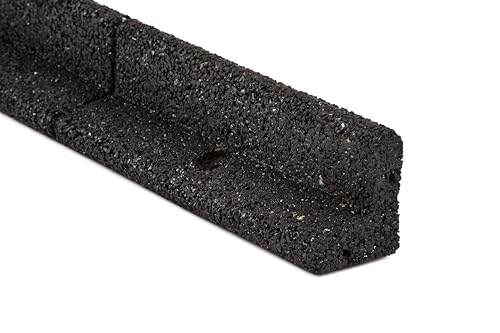
EcoBorder sections are molded from recycled rubber, giving them a heft and flexibility that thin plastic lacks. Each piece is 4 feet long and about 3 inches tall, and the box of six covers 24 feet. The L-shaped profile includes a mower edge, so a mower wheel can ride along the border, and the pieces connect and pin down with the included connector pins and stakes, with no digging required.
Rubber flexes around curves, can be cut with a sturdy knife or saw per the maker’s guidance, and will not become brittle the way some plastics do in cold weather. The black finish and low, rounded profile suit front-yard beds where you want the border to disappear under the plants. Because the pieces are short, this kit is easiest to manage on smaller beds or on layouts with several corners.
Specs
- Material: recycled rubber, per the maker
- Height: about 3 inches, per the maker
- Piece length: 4 feet; 6 pieces per box, 24 feet total
- Profile: L-shaped with mower edge
- Included hardware: connector pins and stakes
- Install method: no-dig, surface-mounted
How the main alternatives compare
Beyond these five kits, the edging shelf includes a few other approaches worth knowing about. Aluminum strip edging is lighter than steel and resists rust, but it is usually sold through landscape suppliers rather than in homeowner kits. Brick, stone and concrete pavers make a wide, mow-over border with no digging depth to speak of, though they take more pieces and more leveling work per foot. Plastic paver edging is a specialized, low L-shaped restraint meant to hold patio pavers in place rather than to border planting beds, so it is not a substitute for the kits above. Living edges, cut with a spade and maintained through the season, cost nothing in materials but need regular re-cutting to stay sharp. For most homeowners, the real decision remains the one in this guide: flexible no-dig kits for speed and curves, or steel set in the ground for a straighter, longer-lasting line.
FAQ
How much of the edging should sit below ground?
Makers generally suggest burying roughly half to two-thirds of a trench-installed strip so the top sits just above the soil and mulch line. No-dig kits are the exception: their foot sits on the surface and only the spikes go below grade. Follow the depth in your kit’s instructions, since the stated heights assume a particular installed position.
Can metal edging be cut to fit a shorter run?
Yes, makers of steel edging typically describe cutting pieces with tin snips or a hacksaw to fit corners and end points. Wear gloves when handling cut metal, since trimmed edges can be sharp, and file or cover raw ends where the maker recommends it. Plastic coils and rubber sections cut more easily, usually with heavy scissors, snips or a saw as the maker directs.
Will grass roots grow under landscape edging?
Taller edging set deeper gives grass roots a longer path to cross, which is why 4 to 6 inch trench-installed steel is the usual pick where aggressive turf meets a bed. Shallow no-dig borders mainly stop mulch migration and define the mowing line, so some root creep underneath is normal and is handled by periodic trimming along the edge.
How do I measure how much edging to buy?
Lay a garden hose or rope along the planned border, then measure its length. Add a small allowance for overlap at joints and for cuts, as makers advise, and round up to the next kit size. For sectioned kits, divide your total by the piece length to see how many boxes the run needs.
Final verdict
Pick the Coyote TerraEdge Home Kit if you want a permanent galvanized steel line and do not mind trenching, or the Edge Right strips if you would rather hammer steel in and skip the trench altogether. The EasyFlex No-Dig kit is the easiest weekend install for curved beds, the Master Mark Terrace Board covers long runs from a single coil set into the ground, and the EcoBorder rubber sections bring a recycled, mower-friendly profile to smaller beds. Measure carefully, mark utilities before you dig, and any of the five will leave your beds looking deliberately finished.
Product and ASIN Reference
| Product | ASIN |
|---|---|
| Coyote Landscape Products TerraEdge Steel Home Kit, Galvanized | B0158F082Q |
| Edge Right Hammer-in Landscape Edging, COR-TEN Steel, 5 Pack | B07LB5X64K |
| EasyFlex No-Dig Landscape Edging Kit, 40 Foot, Black | B00HF4VLWK |
| Master Mark Terrace Board Landscape Edging Coil, 40 Foot | B00FJ3PQW0 |
| EcoBorder Black Recycled Rubber Lawn Edging, 6-Pack | B09Z7SL3F2 |
FAQ
How much of the edging should sit below ground?
Can metal edging be cut to fit a shorter run?
Will grass roots grow under landscape edging?
How do I measure how much edging to buy?
More from Amazon
Programs that pair well with the guide above. Offers and eligibility are set by Amazon and may change.
Collect the home and kitchen items you want in one registry that guests can shop from.
Create a wedding registrySet up recurring deliveries of everyday items on eligible products. Terms and savings are set by Amazon.
Explore Subscribe & SaveFree shipping on eligible items, Prime Video and more. Eligible new members can start with a free trial.
Start a Prime free trialAudiobooks and podcasts to listen to on the go. Eligible new members can start with a free trial.
Try Audible freeAs an Amazon Associate we earn from qualifying purchases.