Key takeaways
- Tight new-build budget: Ryzen 5 7500F. A six-core AM5 option for players who want high frame rates and a modern platform while keeping the CPU cost down. It typically needs a separate graphics card and a separately budgeted cooler.
- Best value for most players: Ryzen 5 7600. Its strong gaming performance, bundled basic cooler, and AM5 compatibility make it a balanced starting point. A tower cooler is optional, but can reduce noise.
- Best for high-refresh competitive play: Ryzen 7 7800X3D. Its large cache can improve gaming performance and lows in CPU-limited situations. It costs more, so it makes most sense with a powerful GPU and a 240Hz or faster display.
- Best if you already own an Intel board: Core i5-14400F. A practical choice for a compatible LGA1700 system. It is less compelling as a new platform purchase because LGA1700 has fewer forward upgrade options than AM5.
- Best premium upgrade: Ryzen 7 9800X3D. A higher-end AM5 gaming CPU for buyers seeking top-tier performance and planning to pair it with a fast graphics card. It is excessive for a budget build or a 60–144Hz target.
Best CPU for Valorant: High FPS Picks for Every Budget
For most players, the best CPU for Valorant is the AMD Ryzen 5 7600: it delivers excellent 1080p competitive-setting frame rates, strong 1% lows, and a current AM5 upgrade path without requiring an expensive cooler. Choose the Ryzen 5 7500F to save money, the Ryzen 7 7800X3D for a high-refresh gaming build, or Intel’s Core i5-14400F if you already have a compatible LGA1700 motherboard.
How to choose for Valorant
Valorant can run at very high frame rates, so CPU performance matters most when you’re using a fast graphics card, lowering visual settings, and aiming for a high-refresh monitor. Average FPS indicates typical throughput; 1% lows give a better sense of how smooth demanding moments feel. Both vary with the GPU, map, game version, memory, background processes, and test method—so treat the figures below as planning ranges, not guaranteed results.
Our top picks
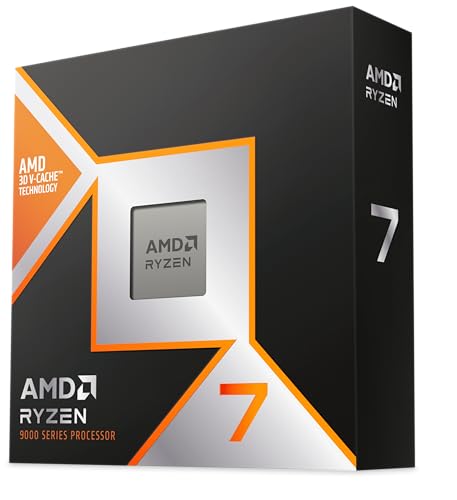


 AMD Ryzen™ 5 9600X 6-Core
- Pure gaming performance with smooth 100+ FPS in…
- 6 Cores and 12 processing threads, based on…
- 5.4 GHz Max Boost, unlocked for overclocking, 38…
As an Amazon Associate we earn from qualifying purchases at no extra cost to you.
The estimates assume 1080p competitive settings, a capable discrete graphics card, dual-channel memory, and a system without heavy background tasks. They are broad ranges drawn from the behavior of these CPU tiers in CPU-limited esports gaming; published results differ, and a slower GPU can reduce or erase the gaps.
Best CPU picks by budget and situation
- Tight new-build budget: Ryzen 5 7500F. A six-core AM5 option for players who want high frame rates and a modern platform while keeping the CPU cost down. It typically needs a separate graphics card and a separately budgeted cooler.
- Best value for most players: Ryzen 5 7600. Its strong gaming performance, bundled basic cooler, and AM5 compatibility make it a balanced starting point. A tower cooler is optional, but can reduce noise.
- Best for high-refresh competitive play: Ryzen 7 7800X3D. Its large cache can improve gaming performance and lows in CPU-limited situations. It costs more, so it makes most sense with a powerful GPU and a 240Hz or faster display.
- Best if you already own an Intel board: Core i5-14400F. A practical choice for a compatible LGA1700 system. It is less compelling as a new platform purchase because LGA1700 has fewer forward upgrade options than AM5.
- Best premium upgrade: Ryzen 7 9800X3D. A higher-end AM5 gaming CPU for buyers seeking top-tier performance and planning to pair it with a fast graphics card. It is excessive for a budget build or a 60–144Hz target.
1080p competitive-settings comparison
| CPU | Indicative average FPS | Indicative 1% low FPS | Socket | Cooler and ownership notes |
|---|---|---|---|---|
| AMD Ryzen 5 7500F | 350–550 | 220–330 | AM5 | Budget tower cooler recommended; cooler availability in the box varies by listing and region. |
| AMD Ryzen 5 7600 | 380–600 | 240–360 | AM5 | Basic boxed cooler commonly included; a roughly $20–$40 tower cooler is an optional noise and temperature upgrade. |
| Intel Core i5-14400F | 330–520 | 210–320 | LGA1700 | Boxed cooler commonly included; a roughly $25–$45 tower cooler can improve acoustics under sustained load. |
| AMD Ryzen 7 7800X3D | 500–800 | 330–500 | AM5 | No bundled cooler; budget roughly $30–$60 for a capable air cooler. |
| AMD Ryzen 7 9800X3D | 550–900 | 360–560 | AM5 | No bundled cooler; a quality air cooler around $35–$70 is a sensible starting point. |
These ranges are not a promise that every system will reach the top end. Differences between CPUs shrink when the graphics card is the bottleneck, while a busy or poorly configured system can pull down 1% lows. To compare benchmark results fairly, check that the test used the same game version, GPU, memory configuration, and settings.
What the numbers mean for your monitor
For a 144Hz monitor, a Ryzen 5 7500F or 7600 is generally enough to pursue high and consistent frame rates with an appropriate GPU. At 240Hz, stronger 1% lows become more valuable, making the 7600 a good mainstream choice and the 7800X3D a worthwhile step up for players who prioritize competitive smoothness. A 360Hz display is where premium CPUs can make more sense—but only if the rest of the system can feed it.
Do not buy a top-tier CPU based on average FPS alone. If the average is far above your monitor’s refresh rate but 1% lows dip sharply, check memory settings, temperatures, drivers, and background applications before spending more. A CPU upgrade cannot fix stutter caused by shader compilation, a nearly full or failing drive, or unrelated software problems.
Socket compatibility and the real build cost
The CPU’s sticker price is only part of the decision. A motherboard, memory, and cooler can change which pick is best value. Ryzen 7000 and 9000 desktop processors use AM5 and DDR5 memory. The Core i5-14400F uses LGA1700 and supports DDR4 or DDR5 depending on the motherboard; those memory types cannot be mixed on a single board.
- Building new with room to upgrade: AM5 is the clearer long-term platform choice among these picks. Confirm that the motherboard’s BIOS supports the selected CPU before assembly.
- Reusing an LGA1700 motherboard or DDR4 memory: The Core i5-14400F may reduce total cost, but verify the board model, BIOS version, and memory type first.
- Comparing cooler costs: A boxed cooler can be adequate for basic operation, but may be louder than an aftermarket tower cooler. Check the exact product listing: included accessories can differ by region and retailer.
- Checking fit: Confirm cooler height against the case limit and check RAM clearance. For liquid coolers, confirm radiator size and mounting support rather than assuming one is needed for a gaming CPU.
A practical way to set your budget
Suppose you’re choosing between a Ryzen 5 7600 and a Ryzen 7 7800X3D. If the 7600 costs about $180–$230 and you add an optional $20–$40 cooler, the CPU-and-cooling total is roughly $200–$270. If the 7800X3D costs about $350–$450 and needs a $30–$60 cooler, its equivalent total is roughly $380–$510—about $180–$240 more before motherboard or memory costs.
That premium is easiest to justify if you have a powerful GPU, play at very high refresh rates, and value the stronger potential 1% lows. If you play at 144Hz or your graphics card already limits performance, put the difference toward a better GPU, monitor, or a reliable power supply instead. Prices move frequently, so use these as broad market ranges rather than current quotes.
Before you buy
- Check your motherboard socket and CPU support list; a matching socket alone does not guarantee BIOS compatibility.
- Match memory to the platform: AM5 requires DDR5, while LGA1700 boards vary between DDR4 and DDR5.
- Budget for a cooler if one is not included, and make sure it fits your case.
- Pair the CPU with a GPU suited to your resolution and refresh rate; Valorant FPS is not determined by the processor alone.
- Enable the correct memory profile in BIOS after assembly, then monitor temperatures and frame-time consistency during play.
For most new builds, the Ryzen 5 7600 is the sensible balance of cost, high-FPS performance, and platform flexibility. Pick the 7500F when every dollar matters, the 7800X3D when you’re targeting very high refresh rates, and the Core i5-14400F when reusing compatible LGA1700 parts.