Key takeaways
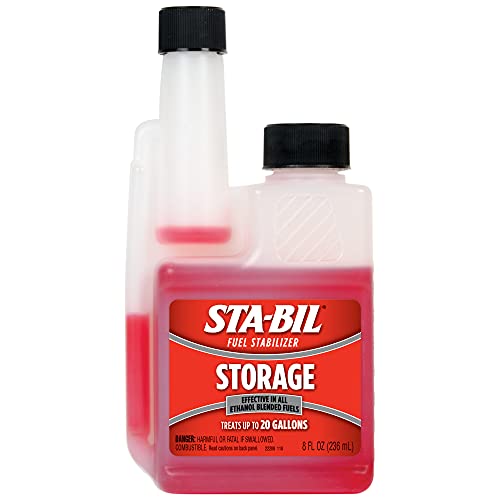
- Best Overall Stabilizer: STA-BIL Storage Fuel Stabilizer, 32 oz, with a published dose of 80 gallons per bottle.
- Best for Ethanol Fuel Worries: Ethanol Shield Fuel Stabilizer, 24 oz two-pack.
- Best Concentrated Value: Star Tron Enzyme Fuel Treatment, 32 oz, listed to treat up to 512 gallons.
- Best Multi-Purpose Additive: Sea Foam Motor Treatment, 16 oz four-pack, for fuel and oil.
- Best Oil for Single-Cylinder Mowers: Lucas Oil Lawn Mower Motor Oil SAE 30.
- Best Synthetic Blend Oil: STP Premium Synthetic Blend 4 Cycle Small Engine Oil, SAE 10W-30.
- Best Degreaser for the Deck and Engine: WD-40 Specialist Machine and Engine Degreaser Foaming Spray.
The best fuel stabilizer for lawn mowers is the one you will actually add before you park the mower for winter, and for most owners that means STA-BIL Storage Fuel Stabilizer, which is made for exactly this job. If you run a lot of ethanol-blended gasoline, an enzyme treatment such as Star Tron or an ethanol-focused product such as Ethanol Shield are the main alternatives. This guide gives you seven products across the whole maintenance routine, from stabilizer to engine oil to degreaser, plus a step-by-step winter storage procedure and the arithmetic for dosing.
A fair warning up front: no additive can promise that an engine will start in spring. Stale fuel, a dirty carburetor, a worn spark plug and a tired battery are all common causes of a no-start, and an additive only addresses the first. This article is research-based, drawn from the maker’s labels and listing details and published maintenance guidance. We did not personally use these products, and where a figure is not listed we say so. Always follow the dose on the bottle and the instructions in your mower’s manual.
Our top picks



As an Amazon Associate we earn from qualifying purchases at no extra cost to you.
Top Picks at a Glance
- Best Overall Stabilizer: STA-BIL Storage Fuel Stabilizer, 32 oz, with a published dose of 80 gallons per bottle.
- Best for Ethanol Fuel Worries: Ethanol Shield Fuel Stabilizer, 24 oz two-pack.
- Best Concentrated Value: Star Tron Enzyme Fuel Treatment, 32 oz, listed to treat up to 512 gallons.
- Best Multi-Purpose Additive: Sea Foam Motor Treatment, 16 oz four-pack, for fuel and oil.
- Best Oil for Single-Cylinder Mowers: Lucas Oil Lawn Mower Motor Oil SAE 30.
- Best Synthetic Blend Oil: STP Premium Synthetic Blend 4 Cycle Small Engine Oil, SAE 10W-30.
- Best Degreaser for the Deck and Engine: WD-40 Specialist Machine and Engine Degreaser Foaming Spray.
Quick Comparison Table
| Product | Job | Key specs (as listed) | Watch for | Price tier |
|---|---|---|---|---|
| STA-BIL Storage Fuel Stabilizer 32 oz | Winter and long-term storage | Treats 80 gallons; keeps fuel fresh up to 24 months per label | Best case claim; plan for a year | Budget |
| Ethanol Shield 24 oz (2 pack) | Ethanol-blend fuel protection | Listed to prevent corrosion; dose per label | Dose per gallon not in the title | Mid-range |
| Star Tron Enzyme Fuel Treatment 32 oz | Stabilizing and moisture control | Treats up to 512 gallons; concentrated formula | Very small dose; measure carefully | Mid-range |
| Sea Foam Motor Treatment 16 oz (4 pack) | Fuel and oil conditioning | Cleans fuel systems, stabilizes stored fuel (listing) | Dose differs by use; read the label | Mid-range |
| Lucas Oil SAE 30, 1 qt | Oil for mowers | SAE 30 single-grade | Check your manual for grade | Budget |
| STP Synthetic Blend 10W-30 | Oil for mixed temperatures | 4 cycle small engine oil, 10W-30 | Not for 2-stroke engines | Budget |
| WD-40 Specialist Engine Degreaser | Cleaning deck, engine fins and housing | Foaming spray, 18 oz | Keep away from belts and electrical parts | Budget |
What a Fuel Stabilizer Does and Does Not Do
Gasoline degrades as it ages. Lighter components evaporate, oxygen causes gum and varnish to form, and ethanol blends can absorb moisture from humid air. A stabilizer slows the oxidation, and some products add anti-corrosion agents for the tank and carburetor. What it cannot do is turn a year-old can of gas back into fresh fuel, repair a gummed carburetor jet or fix a bad spark plug. Think of it as insurance for the weeks and months a machine sits idle.
The two situations to separate are storage and in-season protection. Storage products are designed for fuel that will sit for more than about 30 days. In-season products, which clean injectors and carburetors while you mow, are a different category and are usually dosed in smaller amounts. The 8 oz STA-BIL Fast Fix and STA-BIL In-Season products on the market are the second kind; they are covered in the Also Consider section.
1. STA-BIL Storage Fuel Stabilizer 32 oz: Best Overall
- Listed to treat 80 gallons from a 32 oz bottle
- Keeps fuel fresh for up to 24 months during storage (maker claim)
- Intended for gasoline engines stored more than 30 days
- Maker states it works in ethanol blends up to E-85 and is alcohol-free
Best for: anyone with a push mower, riding mower, generator or string trimmer that sits idle for a season. Skip if: you need a product for two-stroke premix or for in-season cleaning; use a product labeled for that.
The dosing rule on the label is 1 oz for every 2.5 gallons of fuel. A 32 oz bottle therefore treats 80 gallons, which for a typical mower with a one-gallon tank is dozens of seasons of storage. The simplest habit is to put the correct dose in your gas can when you fill it, so every machine that draws from that can gets treated automatically. A can of gas that sits in the shed all winter then lasts into the next season as well.
The 24 month figure is a best-case claim on the label. Industry guidance and engine makers still generally advise using treated fuel within about a year, so plan around a season, not two. Our advice is to use the 24 month claim as a safety margin, not a target.
Pros: widely available; clear dose rule; works with ethanol blends per the label; simple. Cons: storage-focused; does not clean a dirty carburetor; claim is best case.
2. Ethanol Shield Fuel Stabilizer 24 oz Two-Pack: Best for Ethanol Fuel
- 24 oz bottles, two-pack
- Listed as a fuel stabilizer that prevents corrosion and protects the fuel system
- Dose per gallon: not listed in the title, read the label
Best for: owners who run pump gas with ethanol and want corrosion protection in tanks and carburetors. Skip if: you only want the lowest cost per dose of a generic storage product.
Ethanol is the reason many small-engine shops see problems in spring. It can attract water, and the resulting phase separation leaves a watery layer at the bottom of the tank. Products aimed at ethanol, like this one, pitch corrosion protection and moisture handling in addition to oxidation control. The two-pack is useful because you can keep one bottle for the mower and one for the other equipment, or share between households.
As with all additives, mixing is only half the job: run the engine for a few minutes so the treated fuel reaches the carburetor, then shut off and store. Use the manufacturer’s specified dose, because adding extra does not improve protection and may foul plugs.
Pros: ethanol-focused; corrosion protection; two bottles. Cons: mid-range cost; dosing details not in the listing title.
3. Star Tron Enzyme Fuel Treatment 32 oz: Best Concentrated Value
- Concentrated formula, 32 oz
- Listed to treat up to 512 gallons
- Listing says it stabilizes gasoline and helps prevent moisture buildup and phase separation
Best for: people with several machines or a boat or generator who want one bottle to cover everything. Skip if: you dislike measuring very small doses.
The 512 gallon figure means the dose is tiny, on the order of an ounce for a large amount of fuel. That is a benefit in cost per gallon treated and a risk if you pour carelessly. The bottle works out to about 1 oz for 16 gallons, so for a one-gallon mower tank you are measuring a small fraction of an ounce, and many people instead dose a five-gallon gas can in one go. A small measuring cup or syringe is useful.
This is a popular choice across marine and powersports use, so you can buy once and use it across the garage. If you prefer simplicity, a stabilizer with a straightforward 1 oz per 2.5 gallon rule may be easier to get right.
Pros: concentrated; low cost per treated gallon; moisture and phase separation focus. Cons: very small dose is easy to get wrong; label reading needed.
4. Sea Foam Motor Treatment 16 oz Four-Pack: Best Multi-Purpose Additive
- 16 oz bottles, pack of 4
- Listing says it cleans fuel systems, stabilizes stored fuel and treats oil
- Dose depends on use; not listed in the title
Best for: mixed-engine households that want one additive for fuel and crankcase use. Skip if: you want a single-purpose product with a one-line dose rule.
Sea Foam is positioned as a general-purpose petroleum-based conditioner. It can be added to fuel for storage, to the crankcase before an oil change per the label, or to fuel when an engine runs rough. That flexibility is why it is a staple in many garages. The drawback is that each use has its own dose, so read the label before adding it to your mower.
The four-pack makes sense for larger households. If you only own one push mower, a single bottle of a dedicated stabilizer is likely enough.
Pros: multi-use; four bottles; familiar brand. Cons: several dose rules; jack-of-all-trades positioning.
5. Lucas Oil Lawn Mower Motor Oil SAE 30: Best Oil for Single-Grade Engines
- 1 quart bottle
- SAE 30 viscosity
- Listing says it is made for push and riding mowers and reduces engine wear
Best for: small air-cooled single-cylinder mowers whose manual calls for SAE 30. Skip if: your manual specifies 10W-30 or a synthetic grade.
Many push mowers still call for SAE 30 in warm weather. It is a straight single-weight oil, so it does not have the cold-start flexibility of a multi-grade. Always check the manual: an engine that asks for 10W-30 or 5W-30 should get that grade. Changing the oil once a year, or after the maker’s hour interval, is the single most valuable engine maintenance step, ahead of any additive.
A typical push mower takes roughly 15 to 20 oz of oil, so a 1 quart bottle is enough for one change with some left over, but verify your own engine’s capacity in the manual.
Pros: correct grade for many walk-behind mowers; easy to buy; modest cost. Cons: single grade limits cold-weather use; check capacity.
6. STP Premium Synthetic Blend 10W-30: Best Multi-Grade Oil
- 4 cycle small engine oil, SAE 10W-30, synthetic blend
- Marketed for lawnmowers, generators, tractors and snow blowers
- Bottle size: see listing
Best for: owners who start mowers early in cool spring weather or share one oil across a mower, generator and snow blower. Skip if: your engine specifies a different grade or a full synthetic only.
A multi-grade oil flows better in the cold, which can help easier starts in early spring, while still protecting at operating temperature. Because it is a synthetic blend, it sits between conventional and full synthetic in cost and film strength. Never put 4-cycle oil into a two-stroke engine or the reverse; they are not interchangeable.
Pros: multi-grade; serves multiple machines; budget-friendly. Cons: not a full synthetic; must match the manual.
7. WD-40 Specialist Machine and Engine Degreaser: Best for Cleaning Before Storage
- 18 oz foaming spray
- Marketed as industrial strength for machines and engines
- Rinse and drying instructions: follow the can
Best for: cleaning caked oil and grass from engine fins, the deck underside and the mower housing before winter storage. Skip if: you only need a light wipe-down; soap and water works for light dirt.
A clean mower stores better. Grass buildup holds moisture against metal and fuels rust, and oil-caked cooling fins run hotter. Foaming degreasers cling to vertical surfaces, which is useful on a deck underside. Keep spray away from the air filter, spark plug wire boot, any belts and electrical connectors, then rinse and dry the machine fully before storage. Take care with run-off and follow the label on disposal.
Pros: foam clings to surfaces; useful on caked-on grease. Cons: must keep off belts and electrical parts; adds a rinse step.
Winter Storage Steps for a Gas Lawn Mower
- Run the tank low or fill it. The two schools are draining the fuel or filling the tank to about 95 percent with treated fuel to reduce condensation. Follow your manual; both are accepted, but do not leave a half-empty tank of untreated fuel.
- Add stabilizer at the label dose. For STA-BIL, that is 1 oz per 2.5 gallons. For a mower with a 1.5 gallon tank, that is about 0.6 oz. When in doubt, dose the gas can instead of the tank.
- Run the engine for about five minutes. This pulls treated fuel through the carburetor and fuel lines.
- Change the oil while the engine is warm. Warm oil drains more completely. Use the grade in the manual.
- Clean the deck and engine fins. Scrape the underside, spray degreaser where needed, rinse and dry.
- Service or replace the spark plug and air filter. These are cheap, and a fresh plug helps spring starting.
- Sharpen the blade. Do this with the spark plug wire disconnected, using the manufacturer’s blade-handling steps.
- Store dry and covered. Keep the mower in a dry shed or garage, and remove or maintain any starter battery according to its instructions.
Worked Example: Dosing for a Mower and a Gas Can
| Scenario | Fuel amount | STA-BIL dose (1 oz per 2.5 gal) |
|---|---|---|
| Push mower, 0.5 gal tank | 0.5 gal | 0.2 oz |
| Riding mower, 2 gal tank | 2 gal | 0.8 oz |
| 5 gal gas can for all machines | 5 gal | 2 oz |
| Two 5 gal cans | 10 gal | 4 oz |
Because a 32 oz bottle treats 80 gallons, a household that stores ten gallons of fuel each fall would use under two bottles in a decade. Cost per season is a handful of coins, which is why skipping stabilizer is rarely a sound saving. For Star Tron at roughly 1 oz per 16 gallons, the same ten gallons would need about 0.6 oz. Always confirm the exact dose on the bottle you buy, since formulas change.
Spring Start-Up Checklist
When you pull the mower out in spring, check the fuel first. If the fuel was treated and is less than a year old it is usually fine to use; if it smells sour or looks dark, drain it into an approved container and dispose of it properly. Then check the oil level, inspect the air filter, confirm the spark plug is clean and tight, and look over the blade and deck. Prime or pull the starter as the manual directs. If the engine runs rough for the first few minutes, a small engine treatment can help clean light deposits, but persistent rough running points to a carburetor or ignition issue that needs service.
Also Consider
- STA-BIL Fast Fix Small Engine Treatment, 8 oz: a restore-and-clean product listed to treat 20 gallons for engines running rough, not a storage product.
- Gunk Engine Degreaser: an alternative degreaser spray for engine and housing cleaning before storage.
- Briggs and Stratton 100074 Full Synthetic 5W-30, 32 oz: for owners whose manual allows a full synthetic.
- Stens Shield SAE 30 4-cycle engine oil, 48 oz: a larger bottle for people who change oil on several SAE 30 machines.
How We Chose
We selected products from the retail catalog behind this site that match each task in a mower maintenance routine, then compared the labels, listing details and published maintenance guidance, including NAPA and the stabilizer makers’ own instructions. We did not personally use these products and we did not measure outcomes such as starting performance. We avoided price claims, did not promise that any product prevents engine problems, and stayed with products whose purpose is stated clearly in the listing. Specs not given in a listing are marked “not listed” or “read the label”.
Buying Guide
Stabilizer versus fuel system cleaner
A stabilizer is for fuel that will sit. A fuel system cleaner or small engine treatment is for running engines or those already misbehaving. Do not expect a storage stabilizer to remove varnish that is already there. If your mower ran poorly last fall, use a cleaner or have the carburetor serviced first, then stabilize.
Ethanol content matters
Most pump gas in many regions contains up to 10 percent ethanol. Higher blends like E15 are not approved for most small engines, so check your manual. If you use ethanol fuel regularly, a stabilizer that mentions ethanol on the label is the sensible choice, and ethanol-free fuel, where sold, is the cleanest option for rarely used machines.
Fresh fuel first
Stabilizer works best when added to fresh gasoline. Adding it to year-old fuel will not undo the aging. Buy fuel in small quantities, keep it in an approved, tightly sealed container, and date the can.
Oil grade and capacity
Match viscosity and API service class to the manual. Look at both the grade (SAE 30, 10W-30, 5W-30) and the capacity. Overfilling can cause smoke and fouled plugs; underfilling risks wear. Use the dipstick, not guesswork.
Safe handling
Fuel is flammable. Work outdoors, away from ignition sources, let hot engines cool before refueling, and store fuel in approved containers. Dispose of used oil and degreaser run-off at a proper collection point, never down the drain.
Common Mistakes
- Adding stabilizer to old fuel and expecting it to recover.
- Doubling the dose “to be safe”.
- Adding stabilizer to the gas can but then filling the mower from a different, untreated can.
- Skipping the five-minute run so the carburetor still holds untreated fuel.
- Using the wrong oil grade or mixing up 2-stroke and 4-stroke oil.
Frequently Asked Questions
What is the best fuel additive for riding lawn mowers?
For storage, a dedicated stabilizer such as STA-BIL Storage is a sound choice, dosed at the label rate. For a rough-running riding mower, use a small engine treatment or fuel system cleaner during the season and have the carburetor checked if symptoms persist.
Do I need a gas treatment if I use ethanol-free fuel?
Ethanol-free fuel still ages, so a stabilizer is still useful for fuel that will sit more than a month. The ethanol-related moisture issue is smaller, but oxidation continues.
How much stabilizer do I put in a lawn mower?
Follow the label. For STA-BIL it is 1 oz per 2.5 gallons, so a 1 gallon tank needs about 0.4 oz. Many people dose the gas can instead of the tank for simplicity.
Can I use a degreaser on my mower engine?
Yes, with care. Use a product labeled for engines, keep it off belts, the air filter and electrical parts, rinse thoroughly, and let it dry fully before storage.
What is the best engine oil for lawn mowers?
The one specified in your manual. Many walk-behind mowers use SAE 30 in warm weather or 10W-30 across seasons. Check the grade and capacity before you buy.
Should I drain the fuel or add stabilizer for winter?
Either approach can work. Draining avoids stale fuel entirely; adding stabilizer and running the engine protects fuel that stays in the system. Follow your manual, and do not leave untreated fuel sitting.
Can a fuel stabilizer fix a mower that will not start?
Not reliably. A stabilizer protects fuel but does not repair a gummed carburetor or a worn plug. If the mower will not start, check fuel freshness, the plug, the air filter and the carburetor, or take it to a qualified technician.
Which One Should You Buy?
For most mower owners, buy STA-BIL Storage Fuel Stabilizer in the 32 oz size, a quart of the oil grade your manual lists, and a can of degreaser for the deck. If you worry about ethanol fuel, add Ethanol Shield or Star Tron. If you want one bottle for many jobs, Sea Foam is the generalist. Whatever you choose, the winning routine is the same: fresh fuel, label dose, five-minute run and a clean, dry storage spot.
Sources
- STA-BIL manufacturer product labels and dosing information
- Star Brite Star Tron product information
- Ethanol Shield product information
- Sea Foam product information
- NAPA Know-How Notes, how to use fuel stabilizer
Last updated: October 2026