Key takeaways
- Webcam: 1080p is the floor now; 1440p or 5MP sensors visibly sharpen your image. Look for an IR sensor if you want Windows Hello face login, and a physical shutter or kill switch for privacy.
- Microphones: Dual mics are fine in a quiet room, but triple or quad arrays with software noise suppression (often labelled Studio Effects or AI noise removal) matter if you call from a kitchen, garden office, or shared space.
- Speakers: Upward- or front-firing speakers beat down-firing ones for voice clarity. Quad-speaker setups are rare but noticeable.
- Battery life: Video calls drain power fast — roughly 20–30% more than browsing. A laptop rated at 15+ hours will typically give you 8–10 hours of continuous calls.
- Connectivity: Wi-Fi 6E or Wi-Fi 7 plus Wi-Fi sensing isn’t necessary, but a laptop that handles band congestion well drops fewer calls.
- Privacy: A camera shutter, mic-mute indicator light, and a dedicated mute key are the details you’ll use daily.
The best laptops for Skype in 2026 combine a 1080p webcam, a multi-microphone array with noise reduction, upward-firing speakers, and at least 10 hours of real-world battery life — and for most people, the sweet spot sits between $800 and $1,400. Below you’ll find our criteria, situation-based picks, and a comparison table to narrow it down.
Our top picks
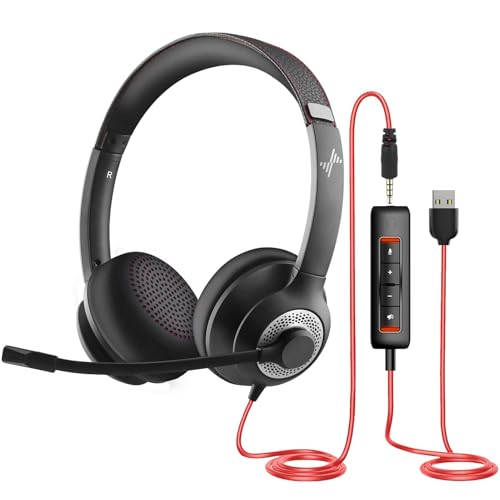 JIAMQISHI USB Headset with Microphone for PC
- ✅【Outstanding Noise cancelling Microphone】 The headphones with unidirectional…
- ✅【All-Day Comfort for All Head Shape】 Eaglend always…
- ✅【Enhanced sound performance & 40mm audio driver】:Corded phone…
 CMTECK USB Computer Microphone G009
- 【Crystal Clear Audio Quality】Our Omnidirectional pattern condenser microphone…
- 【Active Noise-Cancelling】Come in CMTECK CCS2.0 SMART CHIP with…
- 【Convenient Mute Button with LED Indicator】You can quickly…
| Product | Key specs | |
|---|---|---|
| JIAMQISHI USB Headset with Microphone for PC | ✅【Outstanding Noise cancelling Microphone】 The headphones with unidirectional… ✅【All-Day Comfort for All Head Shape】 Eaglend always… ✅【Enhanced sound performance & 40mm audio driver】:Corded phone… | Check price |
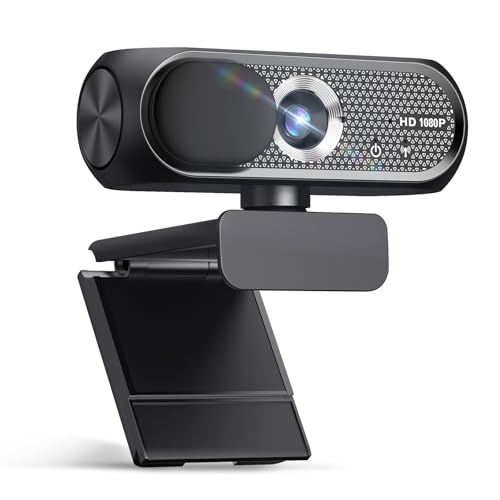 1080P HD Webcam with Microphone 1080P HD Webcam with Microphone | 22 43 1 | Check price |
| CMTECK USB Computer Microphone G009 | 【Crystal Clear Audio Quality】Our Omnidirectional pattern condenser microphone… 【Active Noise-Cancelling】Come in CMTECK CCS2.0 SMART CHIP with… 【Convenient Mute Button with LED Indicator】You can quickly… | Check price |
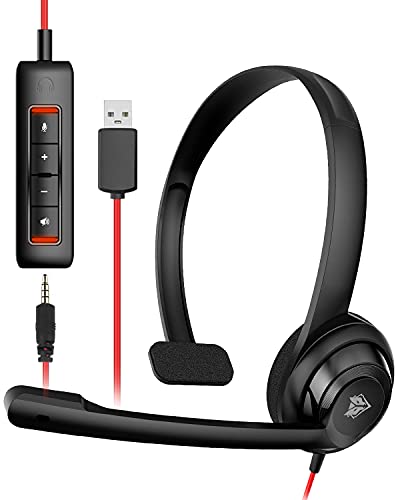 NUBWO HW02 USB Headset with Microphone Noise NUBWO HW02 USB Headset with Microphone Noise | NUBWO PC Headset with Mic, 3.5mm/USB Computer Headset… Enhanced Audio, With the enhanced Digital Signal sound… Crystal-Clear Conversation,Featuring an adjustable boom microphone for clear… | Check price |
As an Amazon Associate we earn from qualifying purchases at no extra cost to you.
What Actually Matters for Skype and Video Calls
Raw processor speed barely matters for video meetings — even mid-range chips handle 1080p calls easily. What separates a good calling laptop from a frustrating one is the hardware around the camera, and how the machine behaves on battery for hours at a stretch.
- Webcam: 1080p is the floor now; 1440p or 5MP sensors visibly sharpen your image. Look for an IR sensor if you want Windows Hello face login, and a physical shutter or kill switch for privacy.
- Microphones: Dual mics are fine in a quiet room, but triple or quad arrays with software noise suppression (often labelled Studio Effects or AI noise removal) matter if you call from a kitchen, garden office, or shared space.
- Speakers: Upward- or front-firing speakers beat down-firing ones for voice clarity. Quad-speaker setups are rare but noticeable.
- Battery life: Video calls drain power fast — roughly 20–30% more than browsing. A laptop rated at 15+ hours will typically give you 8–10 hours of continuous calls.
- Connectivity: Wi-Fi 6E or Wi-Fi 7 plus Wi-Fi sensing isn’t necessary, but a laptop that handles band congestion well drops fewer calls.
- Privacy: A camera shutter, mic-mute indicator light, and a dedicated mute key are the details you’ll use daily.
Our Picks by Situation
Best overall: Apple MacBook Air 15-inch (M4)
The M4 MacBook Air remains the default recommendation for a reason: a 12MP Center Stage camera that keeps you framed if you move, a three-mic array with directional beamforming, and battery life that survives a full day of back-to-back meetings (realistically 10+ hours of mixed calling). The six-speaker system is the clearest in this class. Expect pricing around $1,200–$1,500 depending on configuration.
Best Windows option: Lenovo Yoga Slim 7i / Slim Pro series
Lenovo’s Yoga line pairs a 1080p IR webcam with a physical privacy shutter and dual mics that handle keyboard clatter well. Battery life on recent Intel and Snapdragon versions lands between 12 and 17 hours rated, translating to roughly 7–9 hours of calling. Typical pricing: $900–$1,300.
Best for frequent travelers: Microsoft Surface Laptop (Snapdragon X models)
ARM-based Surface Laptops deliver the longest real call endurance we’ve seen claimed in this segment — rated over 20 hours, which means a full workday of Teams and Skype on one charge. The 1080p Studio Camera supports Windows Studio Effects for auto-framing and background blur processed on the NPU, saving battery. Around $1,000–$1,600.
Best budget pick: Acer Aspire or HP Pavilion 14–15 inch
Under $600, you compromise on camera sharpness (usually 720p–1080p) and mic noise reduction, but mainstream budget lines have closed the gap considerably. Prioritize any model listing a 1080p webcam and dual-array mics; skip anything still shipping 720p in 2026. Budget $450–$650.
Best for a premium calling setup: Lenovo ThinkPad X1 Carbon or HP EliteBook
Business flagships justify their cost partly through calling hardware: quad-mic arrays, Dolby Voice tuning, FHD+IR cameras with shutters, and keys that mute the mic at firmware level. If you’re on calls six hours a day, this is where the money goes. Usually $1,400–$2,000.
Comparison at a Glance
| Laptop | Webcam | Mics | Rated battery (hrs) | Screen | Weight (lbs) | Privacy | Typical price |
|---|---|---|---|---|---|---|---|
| MacBook Air 15 (M4) | 12MP Center Stage | 3-mic array | ~18 | 15.3″ | 3.3 | OS indicators only | $1,200–$1,500 |
| Surface Laptop (Snapdragon) | 1080p + Studio Effects | Dual Studio Mics | ~20+ | 13.8″/15″ | 2.9–3.6 | Mic/cam software controls | $1,000–$1,600 |
| Lenovo Yoga Slim 7i | 1080p IR | Dual array | ~15 | 14″/15.3″ | ~3.0 | Physical shutter | $900–$1,300 |
| ThinkPad X1 Carbon | FHD+IR | Quad array | ~14 | 14″ | 2.4 | Shutter + mic kill key | $1,400–$2,000 |
| HP Pavilion / Acer Aspire | 720p–1080p | Dual | ~10 | 14″/15.6″ | 3.2–4.0 | Varies by model | $450–$650 |
Decision Matrix: Match Your Situation
| Your situation | Recommended | Why |
|---|---|---|
| Calls 4+ hrs/day from home office | ThinkPad X1 Carbon / EliteBook | Quad mics and dedicated mute keys pay off daily |
| Mixed calls + travel, battery-critical | Surface Laptop (Snapdragon) | Longest call endurance, on-device camera effects |
| General use, wants simplest experience | MacBook Air | Best camera + speaker combo with zero setup |
| Budget under $650 | HP Pavilion / Acer Aspire 1080p model | Adequate for weekly calls; add a $50 external webcam if needed |
| Calls from noisy/shared spaces | Any NPU-equipped model (Copilot+ PC or Apple Silicon) | On-device noise removal beats software-only suppression |
Cost Per Use: Is Premium Worth It?
A quick worked example. If you take one hour of video calls per workday, that’s roughly 250 call-hours a year. Over a realistic 4-year lifespan:
- $550 budget laptop → about $0.55 per call-hour
- $1,300 mid-range → about $1.30 per call-hour
- $1,800 business flagship → about $1.80 per call-hour
The premium gap narrows fast if calls are your income — a muffled mic on a client call costs more than the hardware difference. For a weekly family Skype chat, the budget tier is honestly enough, optionally paired with an external webcam.
Setup Tips and Ownership Realities
- Camera angle beats camera quality: Raise the laptop 15–20cm so the lens sits near eye level. A $10 laptop stand improves your image more than a $500 spec bump.
- Update camera firmware: Lenovo, Microsoft, and Apple all ship webcam improvements via OS updates; first-year updates often add noise reduction features.
- What wears first: Battery capacity drops noticeably after 500–800 charge cycles — expect call runtime to shrink ~20% by year three. Mic grilles collect dust; a soft brush keeps the array working.
- Common mistake: Buying a laptop with a 720p camera and planning to fix lighting. Add light and check the spec sheet — 720p is still hiding in budget listings in 2026.
- Privacy habit: Prefer a physical shutter over software toggles; also check the mic-mute LED actually glows during calls.
FAQ
Do I need 5G or LTE built in for Skype?
No — it’s a convenience, not a quality factor. A stable Wi-Fi 6 connection outperforms cellular for call reliability in almost every home setting.
Is 16GB of RAM necessary?
For calls alone, 8GB suffices. Buy 16GB if you keep many browser tabs open during meetings or plan to keep the laptop 4+ years.
Skype vs. Teams on these laptops?
Microsoft has been consolidating consumer calling into Teams; the hardware requirements are identical, so any pick above handles either platform equally well.