Key takeaways
- Five live plants and flowers sized for large outdoor planters, from tropical hibiscus to lavender, with zone, sun and watering guidance for each pick.
A large outdoor planter changes the buying decision completely. Small annuals that look fine in a window box get lost in a wide, deep container, and thirsty plants dry out fast in the extra sun a big patio pot collects. What actually matters is mature size, root volume, and how much water the plant will pull from a big block of soil every hot day.

This guide is for patio and porch owners filling statement planters, gardeners in warm zones who want tropical color, and northern growers who need perennials that return every spring. Every pick below is a live plant, bulb set, or plant start sold on Amazon, chosen from the names, sizes, and growing details on its product page.
Quick Picks
As an Amazon Associate we earn from qualifying purchases
| Product | Best for | Key spec from title |
|---|---|---|
| Costa Farms Live Hibiscus Plant, Red | Tropical color on a sunny patio | 1 gallon grower pot, 16 inches tall |
| Endless Summer BloomStruck Hydrangea | Big reblooming flower heads in cooler zones | 2 gallon live shrub, zones 4-9 |
| Knock Out Double Rose, 2 Gal | Season-long blooms with minimal spraying | 2 gallon shrub, double red blooms |
| Elephant Ears (Colocasia) 3 Bulbs | Oversized foliage that fills a wide pot fast | 3 bulbs, large arrow-shaped leaves |
| L+ Grosso Lavender, 16 Plants | Fragrant edging around a centerpiece plant | 16 live plants in 4-inch pots, zones 5-9 |
How to Choose
Match Mature Size to the Planter’s Soil Volume
A large planter holds far more soil than a standard pot, and that volume is the whole point: roots stay cooler, moisture lasts longer, and a shrub-sized plant can actually reach its listed mature size. Check the plant’s expected height and spread on its listing, then picture it at year two, not at delivery. A 2-gallon shrub that matures at three to four feet across will fill a wide planter on its own, while pint-sized starts only work in groups. Buying one correctly sized plant beats crowding three small ones that compete for the same root space.
Read the Sun Requirement Against Your Patio
Listings state sunlight exposure plainly, and a large planter is hard to move once it is filled and watered, so the match has to be right before planting. Full-sun flowering shrubs such as hibiscus, roses, and lavender want six or more hours of direct light and will sulk in a shaded corner. Hydrangeas prefer morning sun with afternoon relief in hot zones. Elephant ears tolerate partial shade and reward it with larger leaves. Walk the spot at midday and again at four in the afternoon before you order, because the planter will live with that light pattern all season.
Plan Water Around a Big Block of Soil
Deep soil in a large planter dries from the top down, so the surface can look parched while roots below are still wet, or the reverse after a heavy rain. Plants differ sharply here: colocasia bulbs are water lovers that thrive in consistently moist soil, while lavender rots in soggy mixes and demands sharp drainage. Group plants with similar thirst in the same container, confirm the planter has drainage holes, and use a free-draining potting mix rather than garden soil, which compacts in containers and holds water against crowns that need air.
Check Your Zone and the Winter Plan
Every live plant listing here carries a USDA zone range, and a planter narrows that range because roots in a container sit above ground and freeze harder than roots in a bed. Hardy perennials such as Grosso lavender (zones 5-9) and BloomStruck hydrangea (zones 4-9) can overwinter in a sheltered spot in much of the country. Tropical hibiscus and elephant ears are warm-zone plants; in colder areas treat them as seasonal centerpieces, lift the bulbs for storage, or wheel the planter into a garage before the first hard frost arrives.
The 5 Best Options
Costa Farms Live Hibiscus Plant, Red
If the planter sits in full sun and you want flowers the size of saucers, this tropical hibiscus is the natural centerpiece. It ships as a live plant in a 1-gallon grower pot at about 16 inches tall, so it drops straight into a larger decorative container and starts filling out from there. The listing highlights real summer flowers for patio, deck, and garden use, plus a bonus for wildlife gardeners: the blooms attract hummingbirds and butterflies. In warm zones it keeps flowering through the season; elsewhere it earns its keep as a summer statement and moves indoors before frost.
Specs
- Live tropical hibiscus plant, red blooms
- Ships in a 1-gallon grower pot
- Approximately 16 inches tall on arrival
- Listed for patio, deck, and garden decor
- Noted as a hummingbird and butterfly attractor
- Manufacturer part number CO.3QTHBQS.13.REDPK1
Best for: Sunny patios in warm zones that want nonstop tropical color
Watch out for: It is a tropical plant, so cold-climate buyers need an indoor winter plan
ASIN: B07DG29MD9
Endless Summer BloomStruck Hydrangea, 2 Gallon
BloomStruck is the pick when the planter lives in a cooler climate and you still want oversized flower heads. This is a reblooming bigleaf hydrangea, sold as a live shrub in a 2-gallon container, and the listing notes it thrives in USDA zones 4-9. Blooms open in mixes of purple, blue, and pink, and because it flowers on new growth as well as old, a hard winter does not cancel the whole season. The 2-gallon starting size matters in a large planter: the root ball is substantial enough to establish quickly and hold its own in a big volume of soil.
Specs
- Live reblooming hydrangea shrub, 2-gallon container
- Botanical name: Hydrangea macrophylla ‘PIIHM-II’ PP25,566
- Bloom colors listed as purple, blue, and pink
- Thrives in USDA zones 4-9 per the listing
- Deciduous; may ship dormant from mid-fall to mid-spring
- Sold by Baucom’s Nursery under the Endless Summer brand
Best for: Large planters in zones 4-9 that need a hardy, repeat-blooming shrub
Watch out for: A November order may arrive dormant and leafless, which is normal for this shrub
ASIN: B0861DCSF8
Knock Out Double Rose, 2 Gal
For a planter that has to look good from spring to frost without a spray schedule, the Double Knock Out is the workhorse. This listing is the 2-gallon size with double red blooms, a generous starting plant that anchors a large container immediately rather than after a season of growing out. The Knock Out family is bred for disease resistance and continuous flowering, so the maintenance routine is mostly watering, deadheading when you feel like it, and a spring prune. Give it the sunniest planter you own and pair it with a lower filler around the rim to hide the bare lower stems.
Specs
- Live shrub rose in a 2-gallon container
- Double red blooms
- Sold under Baucom’s Nursery
- UPC 093474132100
- Manufacturer part number: Double Red
Best for: Low-fuss, season-long color in the sunniest large planter
Watch out for: Confirm the 2-gallon size at checkout, since this rose is sold in several container sizes
ASIN: B085B3YD2G
Elephant Ears (Colocasia) 3 Bulbs
Some large planters need foliage, not flowers, and nothing fills a wide container faster than elephant ears. This set includes three colocasia bulbs, and the listing describes a perennial herb that can grow up to nine feet tall with large, arrow-shaped leaves in warm conditions; even in a container you can expect dramatic, oversized leaves within the first season. Bulbs are also the forgiving option for timing, since they store dry until you are ready to plant. Set them in rich, consistently moist soil, keep the planter watered through hot spells, and the leaves will shade out the soil surface and reduce evaporation.
Specs
- 3 live colocasia bulbs per set
- Produces large, arrow-shaped leaves
- Expected plant height up to 9 feet per the listing
- Perennial herb growth habit
- UPC 665613634440
Best for: Bold tropical foliage that makes a wide planter look full in one season
Watch out for: Bulbs need warm soil to sprout, and cold-zone growers should lift them before winter
ASIN: B07CG24GH2
L+ Grosso Lavender, 16 Live Plants
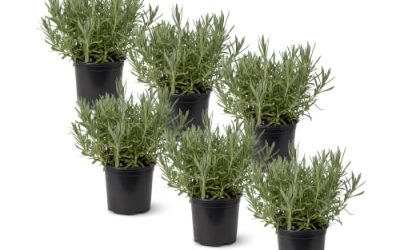
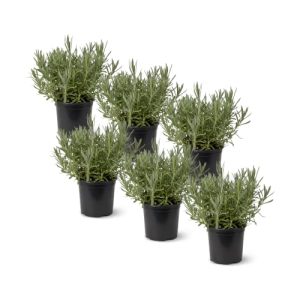
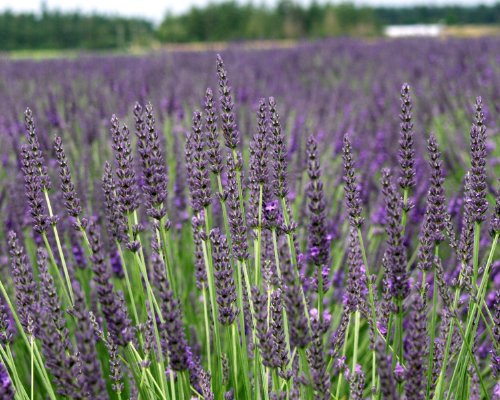
A single lavender plant disappears in a large planter, which is exactly why this listing sells sixteen. The set contains 16 live Grosso lavender plants in 4-inch pots, grown in Sequim, Washington, and sixteen starts are enough to ring the rim of a big container, fill a planter entirely on their own, or split across two planters flanking a door. Grosso is a Lavandula x intermedia hybrid with deep violet flowers, listed as fragrant, bee-friendly, drought resistant, and deer resistant, with a wide zone range of 5-9. Once established, it asks for sun, sharp drainage, and restraint with the watering can.
Specs
- 16 live lavender plants in 4-inch pots
- Lavandula x intermedia ‘Grosso’
- Deep violet flowers; fragrant and bee-friendly
- USDA zones 5-9
- Full sun, 6 or more hours daily
- Wants well-drained, neutral to slightly alkaline soil
- Listed as drought and deer resistant
Best for: Fragrant, low-water edging or a full lavender planting in one large pot
Watch out for: Lavender fails in heavy, wet soil, so drainage matters more than feeding
ASIN: B00AXF5O6M
Which One Fits Your Situation
A Sunny Patio That Needs One Big Statement
Start with the Costa Farms hibiscus as the centerpiece and ring it with several Grosso lavender starts from the 16-plant set. Both want full sun, the hibiscus delivers height and huge red blooms through summer, and the lavender fills the rim with violet flowers and scent. The pairing works because their watering needs are close enough in a free-draining mix, and the planter reads as designed rather than planted at random.
A Cooler-Climate Porch With Afternoon Shade
The BloomStruck hydrangea is built for this spot: hardy to zone 4, comfortable with morning sun and afternoon relief, and generous with flower heads that carry a large planter on their own. Elephant ears are the foliage alternative for the same light pattern, since their leaves grow larger out of harsh midday sun. Either choice returns or stores well, so the planter does not need replanting from scratch each spring.
A Hot, Dry Deck Where Watering Is a Chore
Grosso lavender is the honest answer here. All sixteen starts in one wide planter make a mound that, once established, tolerates missed waterings that would wilt a hibiscus in two days. The Knock Out rose is the second choice for the same deck: it needs regular water while establishing, then settles into a tougher rhythm. Skip the elephant ears in this situation, because their thirst is the opposite of what the spot offers.
A Matching Pair Flanking the Front Door
Split the lavender set eight and eight for instant symmetry, or put one 2-gallon Knock Out rose in each planter for matching height and a long bloom season. Buying two of the same plant at the same size is what makes a pair look intentional; the listings above sell in sizes large enough that both planters start even and stay even, rather than one side racing ahead of the other.
Common Mistakes
- Filling a large planter with small bedding plants that never reach the scale the container needs, leaving mostly visible soil all season.
- Ignoring the zone range on the listing, then losing a tropical hibiscus or elephant ear planting to the first hard frost.
- Using garden soil instead of potting mix, which compacts in containers and suffocates roots in a deep planter.
- Mixing a water-loving colocasia with drought plants like lavender in the same pot, so one of them is always unhappy.
- Forgetting that a filled large planter is extremely heavy, and positioning it after planting instead of before.
Frequently Asked Questions
How many plants do I need for one large outdoor planter?
It depends on starting size. One 2-gallon shrub such as the hydrangea or Knock Out rose fills a large planter alone. Smaller starts work in groups: the lavender set exists because a single 4-inch plant would vanish in a big pot. Bulbs sit in between; three elephant ear bulbs give a full clump by midsummer.
Can these plants stay in the planter over winter?
The hardy perennials can, within their listed zones: BloomStruck hydrangea is rated for zones 4-9 and Grosso lavender for zones 5-9, though a sheltered position helps since container roots freeze harder than ground roots. Tropical hibiscus and elephant ears need protection in cold zones, either indoors or by lifting and storing the bulbs.
When will a live plant ordered in November arrive, and in what condition?
Nurseries ship live plants on their own schedules, and deciduous shrubs such as the BloomStruck hydrangea may ship dormant, without leaves or blooms, from mid-fall to mid-spring. Dormant is a shipping state, not a dead plant; pot it up, water it in, and growth resumes in spring. Tropical plants may be held by the seller during cold snaps.
Are bulbs a worse choice than potted plants for a planter?
No, they are a different trade-off. Elephant ear bulbs arrive as dormant, easy-to-store pieces and grow extremely fast once warm soil triggers them, often outpacing potted tropicals by midsummer. Potted shrubs such as the rose and hydrangea give instant structure on day one. Many large planters use both: a shrub for permanence and bulbs for seasonal bulk.
FAQ
How many plants do I need for one large outdoor planter?
Can these plants stay in the planter over winter?
When will a live plant ordered in November arrive, and in what condition?
Are bulbs a worse choice than potted plants for a planter?
More from Amazon
Programs that pair well with the guide above. Offers and eligibility are set by Amazon and may change.
Collect the home and kitchen items you want in one registry that guests can shop from.
Create a wedding registrySet up recurring deliveries of everyday items on eligible products. Terms and savings are set by Amazon.
Explore Subscribe & SaveFree shipping on eligible items, Prime Video and more. Eligible new members can start with a free trial.
Start a Prime free trialAudiobooks and podcasts to listen to on the go. Eligible new members can start with a free trial.
Try Audible freeAs an Amazon Associate we earn from qualifying purchases.