Our Top Picks
 PowerSmart EasyCut 18-Inch Gas Lawn Mower18 Inch-144cc-5 Heights27.2 x 14.3 x 20.1 inches58.4 PoundsCheck on Amazon
 LawnMaster LMRM1801 Push Reel Lawn Mower 18-Inch 5-Blade18-Inch24.6 x 10.62 x 18.11 inches28.5 PoundsCheck on Amazon
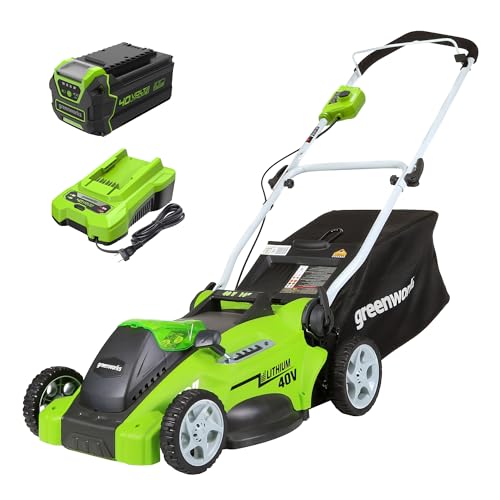 Greenworks 40V 16in Push Lawn Mower16" Cordless (4.0Ah)50.79 x 18.9 x 38.98 inches37.5 PoundsCheck on Amazon
 American Lawn Mower 1304-14GC 14" 5-Blade Reel Mower14" 5 Blade, Grass Catcher43 x 11 x 20 inches18 PoundsCheck on Amazon
 BILT HARD 21 Inch 201cc 4-Cycle Engine Push21 Inch, Hand Push62.5 x 26.3 x 41 Inches81.89 PoundsCheck on Amazon
The best push lawn mowers for most homeowners come down to one early choice: do you want an engine, a battery, or nothing but muscle power? This guide sorts ten listings across all three categories, from compact reel mowers to a 21-inch gas model, so you can narrow the field by yard size and effort level before you compare details.
Every comparison below rests on what each listing’s own title says. We have not handled any of these mowers, so where a detail is missing from a title, we say “check the listing” instead of guessing. Use the table to shortlist, then read the matching sections.
Top picks at a glance
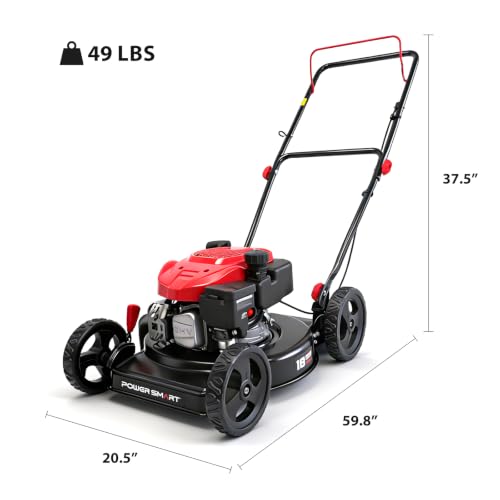
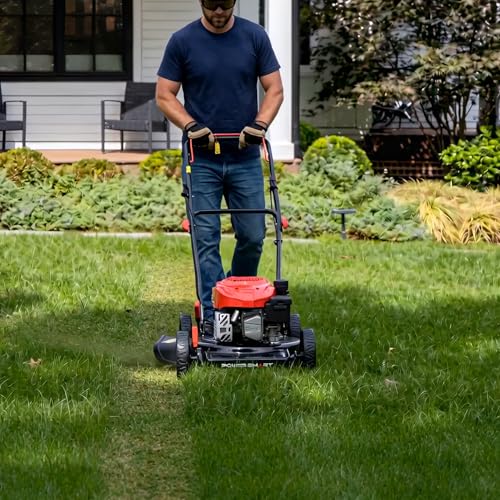
PowerSmart EasyCut 18-Inch Gas Lawn Mower, 144cc 4-Cycle Engine, Walk-Behind Push Lawn Mower, Side Discharge, 5-Position Height Adjustment, Ideal for Small Yards


As an Amazon Associate we earn from qualifying purchases. Product prices and availability are accurate as of the date/time indicated.
LawnMaster LMRM1801 Push Reel Lawn Mower 18-Inch 5-Blade


As an Amazon Associate we earn from qualifying purchases. Product prices and availability are accurate as of the date/time indicated.
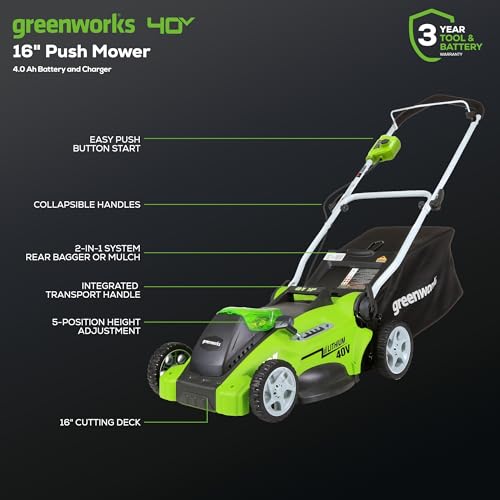
Greenworks 40V 16in Push Lawn Mower, 4.0 Ah Battery and Charger | Quiet walk-behind mower with push-button start; gas-free operation eliminates fumes and pull starts


As an Amazon Associate we earn from qualifying purchases. Product prices and availability are accurate as of the date/time indicated.
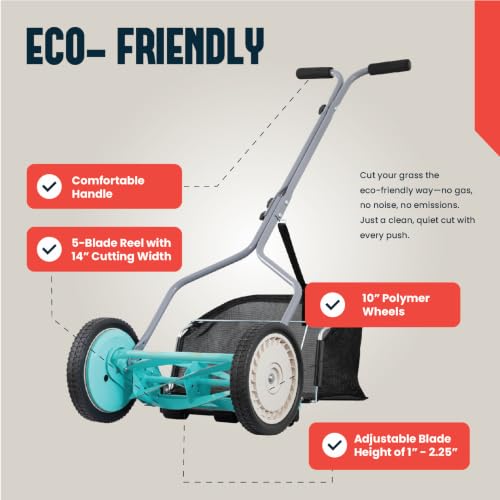
American Lawn Mower 1304-14GC 14" 5-Blade Reel Mower with Grass Catcher



As an Amazon Associate we earn from qualifying purchases. Product prices and availability are accurate as of the date/time indicated.

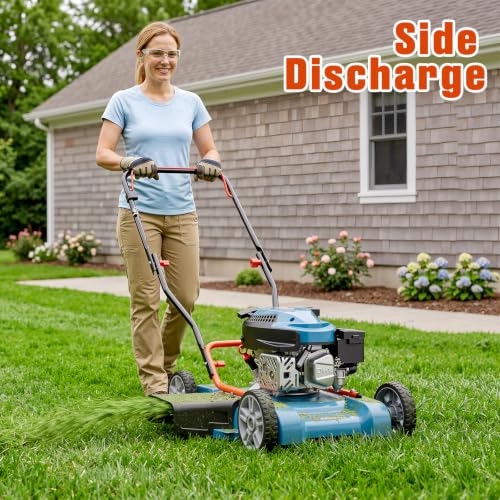
SENIX Gas Lawn Mower, 18" 144 cc Push Mower | Light-weight Design Push Mower,Ergonomically Designed Handle, 4-Cycle Engine, 3 Levels Height Adjustment for 1/4 Acre Yard




As an Amazon Associate we earn from qualifying purchases. Product prices and availability are accurate as of the date/time indicated.
BILT HARD 21 Inch 201cc 4-Cycle Engine Push Lawn Mower, 3-in-1 Gas Lawn Mower with Bagging, Mulching and Side Discharge, Easy Start with Adjustable 8-Positions Cutting Height for Lawn, Yard, Garden


As an Amazon Associate we earn from qualifying purchases. Product prices and availability are accurate as of the date/time indicated.

BILT HARD Gas Lawn Mower 20 inch, 144cc 4-Cycle OHV Engine Lawnmower, 8 Adjustable Cutting Heights Push Mowers for Lawn, Yard and Garden


As an Amazon Associate we earn from qualifying purchases. Product prices and availability are accurate as of the date/time indicated.

Cordless Lawn Mower, 17-Inch Walk Behind Lawn Mower for Garden | 6-Position Height, 50L Grass Bag, 2×4.0Ah Batteries, Up to 40-Min Runtime, 1200W Max Brushless Power


As an Amazon Associate we earn from qualifying purchases. Product prices and availability are accurate as of the date/time indicated.

LawnMaster LMRM1401 Push Reel Lawn Mower 14-Inch 5-Blade


As an Amazon Associate we earn from qualifying purchases. Product prices and availability are accurate as of the date/time indicated.
| Model | Key point from the title | Price tier | Best for |
|---|---|---|---|
| PowerSmart EasyCut 18-Inch | Gas, 144cc 4-cycle, side discharge, 5 height positions | Mid-range | Small yards that want an engine |
| MZK 40V 16-Inch 2-in-1 | Brushless cordless, dual batteries, 5 height positions | Mid-range | Quiet, fuel-free mowing |
| LawnMaster LMRM1801 | 18-inch 5-blade push reel | Budget | Small, even lawns, no engine |
| Greenworks 40V 16-inch | 4.0 Ah battery and charger included, push-button start | Premium | Brand-conscious cordless buyers |
| American Lawn Mower 1304-14GC | 14-inch 5-blade reel with grass catcher | Budget | Tiny lawns, narrow spaces |
| SENIX 18-inch Gas | 144cc 4-cycle, lightweight design, 3 height levels | Mid-range | Quarter-acre claim, lighter gas option |
| BILT HARD 21-Inch 201cc | 3-in-1 bag, mulch, side discharge, 8 heights | Premium | Larger lawns, flexible clippings |
| BILT HARD 20-Inch 144cc | 4-cycle OHV engine, 8 cutting heights | Mid-range | Mid-size lawns, simple gas setup |
| Casince 17-Inch Cordless | 2×4.0 Ah batteries, 50L bag, up to 40 minutes claimed | Budget | Bagging on small to mid lawns |
| LawnMaster LMRM1401 | 14-inch 5-blade push reel | Budget | Very small, flat lawns |
Price tiers are relative inside this set only. Prices change, so check the current listing before you decide.
What is changing in push mowers
Push mowers used to be a simple split between gas engines and old-fashioned reels. That picture has widened. Cordless models running on lithium-ion battery platforms have become a common sight, and many listings now advertise brushless motors, which manufacturers generally say run cooler and waste less energy than brushed designs. That is a manufacturer-side claim worth keeping in mind, not a guarantee.
Listings also lean heavily on convenience language: push-button start, no pull cord, no fuel mixing, quiet operation. Those points matter to buyers with small yards or close neighbors, and they explain why battery models take up a large share of search results for this keyword.
Meanwhile, gas mowers remain popular where grass is thicker, lawns are bigger, or buyers do not want to manage battery capacity. Four-cycle engines, which keep oil and fuel separate and need no pre-mixed fuel, show up on most gas listings here. Reel mowers occupy a smaller but loyal niche: low noise, no emissions at the mower, and no engine to maintain, in exchange for more effort and a narrower range of grass conditions.
Another quiet shift is the multi-function deck. Several titles promise bagging, mulching and side discharge in one machine, or a “2-in-1” layout. The exact options differ by model, and titles often leave out which modes ship ready to use. Treat that language as a prompt to read the product page, not as a settled feature list.
Buyer reviews on listings like these tend to circle the same themes: how easy the mower is to start, how well the clippings are handled, how heavy it feels, and how support responds when a part is missing. Those are the questions to carry into each product page.
Finally, many sellers now list claimed runtime or recommended yard size in the title. These are seller claims, usually stated for favorable conditions. They are useful for ranking one listing against another, but poor predictors of how your own lawn will go. A sensible approach is to buy for your yard with a margin to spare.
How we picked these
This list is built from published specifications, manufacturer documentation and buyer reviews, read through the lens of each listing’s title. We looked for variety across power source and deck size, so every shopper type has at least one fit. Nobody on the team used or measured these units.
Where a title makes a spec claim, we repeat it as a claim. Where it is silent, we say so. Rankings in this guide are use-case matches, not performance scores.
The ten push mowers, one by one
PowerSmart EasyCut 18-Inch Gas Lawn Mower
The title describes an 18-inch walk-behind push mower with a 144cc 4-cycle engine, side discharge and five height positions, and calls it ideal for small yards. That makes it a straightforward gas option for owners who want an engine without a very wide deck.
Use scenario: a suburban lot with a few thousand square feet of lawn, where a 14-inch deck feels slow but a 21-inch deck feels bulky to store.
- Pro: engine-driven cutting suits thicker or damp-edged patches better than a manual reel.
- Pro: five height positions give some room to adjust through the season.
- Con: gas means oil checks, fuel handling and seasonal storage.
Check the listing: whether a bag or mulch kit ships with it (the title mentions only side discharge), the weight, and the warranty terms.
Ask before buying: would a smaller yard be better served by a quieter battery model?
MZK 40V 16-Inch 2-in-1 Cordless Push Mower
This listing says it is a brushless cordless push mower with five height positions and dual batteries, aimed at yards and home lawns. The “2-in-1” wording suggests two clipping modes, but the title does not say which, so confirm on the product page.
Use scenario: a townhouse-style lawn where noise and storage space matter and a second battery gives you a swap for longer sessions.
- Pro: a pair of batteries lowers the chance of stopping partway through a mow.
- Pro: no fuel or pull-cord starting.
- Con: 16 inches means more passes than an 18 to 21 inch deck.
Check the listing: battery capacity in amp-hours, charge time, whether a charger is bundled, and which two modes the “2-in-1” refers to.
Ask before buying: does this battery platform match anything else you already own?
LawnMaster LMRM1801 18-Inch Push Reel Mower
This one is a push reel mower with an 18-inch width and five blades, per the title. It has no engine or battery named, which fits how reel mowers generally work: your forward motion turns the blades.
Use scenario: a flat, small lawn mown weekly, where quiet matters more than speed.
- Pro: no fuel, no charging, little to maintain beyond blade care.
- Pro: usually quieter than powered options.
- Con: reel mowers generally struggle with tall, weedy or damp grass, so frequent mowing helps.
Check the listing: the cutting-height range, weight, and what the maker says about twigs and thick stems.
Ask before buying: are you mowing often enough to keep grass short, which reel mowers prefer?
Greenworks 40V 16-Inch Push Lawn Mower
The title gives a 16-inch deck, a 4.0 Ah battery and charger, push-button start, quiet walk-behind operation and gas-free running. It is the most expensive cordless entry in this set by tier, so the question is what you are paying for beyond the spec line.
Use scenario: a small to mid lawn, an owner who wants minimal fuss, and a garage where fumes are unwelcome.
- Pro: battery and charger are included per the title.
- Pro: push-button start and no fuel to store.
- Con: a single battery means recharging between big jobs.
Check the listing: deck material, mulching or bagging options, and the warranty period.
Ask before buying: will one 4.0 Ah battery cover your lawn in a single session?
American Lawn Mower 1304-14GC 14-Inch Reel Mower
A 14-inch, five-blade reel mower with a grass catcher, per the title. It is the narrowest deck here, which makes it a space-saver for compact lawns, patios with grass patches, and storage-limited garages.
Use scenario: a courtyard lawn or small front yard where maneuverability beats speed.
- Pro: a grass catcher is named in the title, so clippings can be collected.
- Pro: compact footprint.
- Con: a 14-inch width means many passes on anything bigger than a small plot.
Check the listing: catcher capacity, height settings, and assembly details.
Ask before buying: is your lawn small and flat enough for a reel at this width?
SENIX 18-Inch 144cc Gas Push Mower
The title highlights a lightweight design, an ergonomic handle, a 4-cycle engine and three height levels, and says it suits a quarter-acre yard. That quarter-acre figure is a seller claim; with an 18-inch deck, the real time for that area is long, as the worked example below shows.
Use scenario: an owner who wants gas power but values a lighter machine to push and turn.
- Pro: ergonomic handle and lighter build are named in the title.
- Pro: engine power for denser grass.
- Con: only three height levels give less fine-tuning than the 8-position BILT HARD listings.
Check the listing: actual weight, bagging or mulching options, and how the handle folds for storage.
Ask before buying: does a quarter-acre claim match how long you are willing to mow?
BILT HARD 21-Inch 201cc 3-in-1 Gas Mower
This is the biggest deck and largest named engine in the group: 21 inches, 201cc, 4-cycle, with bagging, mulching and side discharge and eight cutting heights. It also sits in the top price tier.
Use scenario: a larger, open lawn where fewer passes save real time, and where you want to bag in spring and mulch in summer.
- Pro: 3-in-1 clipping handling and eight height positions give flexibility.
- Pro: widest deck here for faster coverage.
- Con: heavier and bulkier to store and turn, which may bother small-yard owners.
Check the listing: whether it is self-propelled (the title says push), weight, and bag size.
Ask before buying: do you have the storage space and the lawn size to justify a 21-inch machine?
BILT HARD 20-Inch 144cc Gas Mower
A 20-inch deck, 144cc 4-cycle OHV engine and eight adjustable cutting heights, as the title puts it. It sits between the compact 18-inch gas models and the 21-inch 3-in-1 sibling.
Use scenario: a mid-size lawn where the owner wants wider coverage than 18 inches without the heavier engine.
- Pro: the eight-height range gives more fine adjustment than most listings here.
- Pro: a wider deck than the 18-inch gas models.
- Con: unlike its sibling, the title does not state bagging or mulching modes.
Check the listing: clipping options, weight and warranty.
Ask before buying: do you need bagging, or is side discharge enough?
Casince 17-Inch Cordless Walk-Behind Mower
The title itself leaves out the brand name, but the listing sits under the Casince brand. It describes a 17-inch cordless walk-behind mower with six height positions, a 50L grass bag, two 4.0 Ah batteries, up to 40 minutes of runtime and 1200W max brushless power. The “1200W max” figure reads like a peak rating, not continuous output, so ask what it really means.
Use scenario: a small to mid lawn where you want to bag clippings and swap batteries instead of waiting on a charge.
- Pro: bag and two batteries both named in the title.
- Pro: budget tier within this set.
- Con: “up to” runtime is a best case; thick grass will shorten it.
Check the listing: battery voltage (not in the title), charger details, and what is included in the box.
Ask before buying: who handles support and spare parts for this seller?
LawnMaster LMRM1401 14-Inch Push Reel Mower
The smaller sibling of the 18-inch LawnMaster, this one is a 14-inch five-blade push reel. It overlaps with the American Lawn Mower 14-inch listing, though that one names a grass catcher and this one does not.
Use scenario: a postage-stamp lawn, a rental yard, or a back-up mower for edges.
- Pro: light, quiet and easy to tuck into a closet.
- Pro: no fuel, no charging.
- Con: narrow deck and manual effort limit it to small lawns.
Check the listing: whether a catcher is included, height range, and assembly requirements.
Ask before buying: would the 18-inch version save enough time to be worth the extra width?
Push mower buying guide
Choose a power source first
Gas, battery and reel mowers solve different problems, so decide this before looking at deck widths.
- Gas: runs as long as the tank holds fuel, usually suits thicker grass and bigger lawns. In exchange, expect oil checks, fuel handling and a pull start unless the listing says otherwise.
- Battery: quiet, no fuel, simple start. Runtime is the limit, so estimate the mowing time for your lawn before trusting a claim.
- Reel: cheapest to run and the quietest, but best for small, flat, frequently mown lawns.
The gas versus electric question matters most. If you value low noise and little upkeep and your lawn is under roughly 5,000 square feet, a battery model is a sensible default. If your lawn is large or the grass tends to run tall, an engine gives you margin.
Gas versus cordless, in plain terms
The practical difference shows up in three places. First, noise: battery and reel mowers are generally quieter than engines, which matters in dense neighborhoods and early weekend mornings. Second, upkeep: a gas mower asks for oil checks, fuel management, spark plug and air filter attention as described in its manual, while a battery mower mostly asks you to charge it and keep the deck clean. Third, endurance: an engine can be refueled in a minute, while a battery needs either a spare or a charging break.
None of this makes one type universally better. A cordless mower on a small lawn is easy to live with, and a gas mower on a larger or rougher lawn gives you headroom. Reels trade effort for simplicity. Choose the failure mode you can tolerate: a flat battery, a stale tank of fuel, or tired arms.
Match deck width to your space
Deck width runs from 14 to 21 inches in this set. A wider deck cuts fewer passes but weighs more, turns more slowly and takes up more space in storage. Narrow side yards, gates and tight beds favor 14 to 17 inches. Open, regular lawns favor 18 to 21 inches. Note that the listed width is the deck width; the effective cut can be a little narrower.
Reading battery listings
Cordless titles in this set mention 40V platforms, 4.0 Ah packs and dual batteries. Voltage and amp-hours together hint at stored energy, but the title rarely tells you how the mower draws on it. Look for whether a charger is included, how long a full charge takes, and whether the battery can be shared with other tools from the same brand. If you plan to expand into trimmers or blowers later, a shared platform can lower total cost, though you should verify compatibility on the maker’s page instead of assuming.
Check the height range
Cutting-height adjustment is how you adapt through the seasons. Three positions, as on the SENIX, give coarse control; eight positions, as on the BILT HARD listings, give finer steps. Taller settings help when grass is stressed or you are cutting a long lawn for the first time in spring.
Clippings: bag, mulch or side discharge
Side discharge throws clippings to the side and is the simplest design. Mulching returns finely cut clippings to the lawn, and bagging collects them. Multi-mode decks (the BILT HARD 21-inch is described as 3-in-1) let you switch with the season, but extra modes mean extra parts to store.
Worked example: mowing time on a 5,000 square foot lawn
Assumptions, all estimates: a walking pace of about 2.5 miles per hour (roughly 13,200 feet per hour), and an effective efficiency of about 70 percent to allow for overlap, turning and stops. Effective coverage per hour equals deck width in feet times 13,200 times 0.7.
- 14-inch deck (1.17 ft): about 10,800 square feet per hour, so roughly 28 minutes for 5,000 square feet.
- 18-inch deck (1.5 ft): about 13,900 square feet per hour, so roughly 22 minutes.
- 21-inch deck (1.75 ft): about 16,200 square feet per hour, so roughly 18 minutes.
For a battery model claiming up to 40 minutes, a 22 to 28 minute mowing job leaves a margin, but thick or damp grass can shorten real runtime. For a quarter-acre (about 10,890 square feet), the same math roughly doubles those times, so the SENIX 18-inch would take roughly 47 minutes and the 14-inch reels about an hour. That is why a quarter-acre claim on an 18-inch deck deserves a second look.
| Spec concept | What to look for | Why it matters |
|---|---|---|
| Deck width | 14 to 17 inches for tight yards, 18 to 21 for open lawns | Controls passes, speed and storage size |
| Power source | Gas, battery or manual reel, matched to lawn size | Sets noise, upkeep and mowing range |
| Battery runtime | Claim at least 30 percent above your estimated mowing time | Claims are best-case figures |
| Height range | 5 to 8 positions for more adjustment | Helps with seasonal changes and stressed grass |
| Clippings mode | Bag, mulch or side discharge, as you prefer | Affects cleanup and lawn feeding |
| Weight and handle | Ergonomic handle, fold-down option | Affects pushing comfort and storage |
Handles, weight and comfort
A mower you dislike pushing is a mower you will skip using. Look at the handle design, whether it folds, and the stated weight on the product page. Ergonomic handle wording, as on the SENIX listing, is a design intention rather than a comfort rating. If you have a bad back, shoulders or knees, favor lighter decks and shorter mowing sessions, and consider whether a self-propelled design from a different listing might help. All ten listings here are described as push models.
Safety and upkeep
Follow the manufacturer’s instructions and local codes for fuel handling, battery charging and storage. Wear closed-toe shoes, eye protection and hearing protection around powered mowers, clear sticks and stones before mowing, and keep children and pets away. Never refuel a hot engine, and stop the blade before clearing a clog. For maintenance, a quick routine matters: keep blades sharp per the manual, clear clippings from the deck, and for gas models change oil as directed. Our lawn mower guides for small-yard battery mowers go deeper on battery choices.
Mistakes buyers make with push mowers
- Buying the widest deck by default. A 21-inch machine is a poor fit for a narrow side yard.
- Trusting “up to” runtime. Treat it as a ceiling. Thick grass, slopes and low heights cut it down.
- Ignoring storage. Measure your garage or shed space. A foldable handle can help.
- Reading engine size as a performance score. 144cc and 201cc suggest differences, but deck design and blade quality count too.
- Choosing a reel for tall grass. Reels prefer short, regularly mown lawns.
- Skipping the accessories check. Bags, chargers and batteries are sometimes sold separately, so read the box contents.
- Mowing wet grass. Wet clippings clump, clog decks and make footing slippery. Most manuals advise waiting for dry grass.
- Cutting too short. Dropping to the lowest setting can stress turf. Raising the deck a notch or two is often kinder to the lawn, especially in hot weather.
Verdict by use case
- Small yard, minimal fuss: the MZK 40V or Greenworks 40V cordless models fit best on paper, with Greenworks in the premium tier and MZK in the mid tier.
- Tiny, flat lawn: the LawnMaster 14-inch and 18-inch reels, plus the American Lawn Mower 14-inch with its catcher, keep it simple.
- Thicker grass, bigger lawn: the BILT HARD 21-inch gas listing offers the widest deck and flexible clippings handling.
- Balanced gas choice: the PowerSmart, SENIX or BILT HARD 20-inch listings cover mid-size lawns.
- Budget bagging: the Casince 17-inch cordless names a 50L bag and two batteries.
If you are still undecided, see our guide to the best battery-powered lawn mowers for small yards, or read about choosing mowers for hills if your lawn slopes.
Frequently asked questions
Is a gas or cordless push mower better for a small yard?
Neither wins outright. A cordless model is quieter, needs no fuel mixing and starts with a button, which suits small, tidy yards. A gas model runs until the tank is empty, so it suits thicker grass or a larger lawn without a spare battery. Match the choice to your yard size, storage space and tolerance for engine upkeep, and check each listing for the details the title leaves out.
Are reel mowers a good choice for a push mower?
They can be, on small, flat lawns with fairly even grass. A reel mower has no engine or battery, so it is light, quiet and low-maintenance, but it relies on your pushing power and generally copes less well with tall, thick or weedy grass. If your lawn is a few thousand square feet and you mow often, a reel is worth considering. Otherwise a powered push mower is the safer pick.
What does a 144cc or 201cc engine size actually tell me?
Engine displacement is a rough indicator of potential power, not a guarantee of cutting performance. A larger engine often pairs with a wider deck, as with the 21-inch listing here, but deck design, blade shape and grass conditions matter too. Treat the figure as one input. Check the listing for the manufacturer’s stated specs, and compare deck width and height range alongside engine size.
How much runtime do I need from a cordless push mower?
Work backwards from your lawn. Estimate how long one mow takes at a normal walking pace, then add a margin of at least 30 percent for thick patches, slopes and turning. If a listing claims about 40 minutes, treat that as a best case under light load. Two batteries, as some listings here include, give you a way to swap mid-job instead of waiting on a charger.
How do I store a gas push mower safely?
Follow the manufacturer’s instructions first. In general, let the engine cool, keep fuel in an approved container away from heat sources and pilot lights, and store the mower in a ventilated space. If the manual recommends it, use fresh fuel or a stabilizer before long storage. Never refuel a hot engine, and keep children and pets away from the mower and fuel.
Do I need to buy the widest deck available?
Not necessarily. A wider deck covers more ground per pass, but it is heavier, harder to turn around beds and trees, and harder to store. For narrow side yards, gates and tight corners, a 14 to 16 inch deck can be easier to live with. For open, regular lawns, an 18 to 21 inch deck usually means fewer passes and a shorter mowing session.