Key takeaways
- Quantity: 2 pieces
- Use: winter cover for raised beds and planters
- Water handling: listed as waterproof
- Dimensions: not stated in the listing name, so confirm the cover size against your bed
If you want one pick to turn a raised bed into a covered bed, start with the Sobana split-zipper winter cover. It is the only cover in this group whose listing names a specific bed size (48 x 24 x 30 inch elevated wood planter box), and a cover that actually fits is the single biggest factor in whether it stays put through wind, sleet and snow. It suits gardeners with an elevated planter box who want the soil and the frame protected through the cold months. For people who grow through winter or fight birds and insects in summer, the better answer is a hoop-and-netting system: the 36-piece 8 ft hoop set gives the most flexible all-round coverage, while the 60-piece WYRJXYB kit suits big, multi-bed gardens. Below you will find the full list ranked in order, a side-by-side table, how each type works, and a decision guide so you can match a product to your bed size, climate and the pests you are actually dealing with.
Top 3 Picks
Best overall: Sobana Split-Zipper Winter Cover. The listing calls out a waterproof, heavy-duty build and a split zipper, and it names a 48 x 24 x 30 inch elevated planter box as the target size. The zipper matters: it lets you open one section to check soil or harvest a hardy crop without removing the whole cover. Best for elevated wood planters that need off-season protection.
Best for value and flexibility: the 36-piece 8 ft garden hoop set. Hoops are the building block for nearly every protection job, from bird netting in spring to frost cloth in fall. A set this size is usually enough for several beds, and the same hoops can be reused year after year because the listing describes a greenhouse-style grow tunnel format. Best for gardeners who want one system for all seasons.
Best for large gardens: WYRJXYB 60-piece wide hoop kit. With 60 pieces of 8 ft rust-free fiberglass support hoops, this kit covers many beds or long rows without a second purchase. It is the pick when you have a whole row of raised beds and want a consistent look and setup process across all of them.
Quick Comparison
| Product | Best for | Key specs (from listing) |
|---|---|---|
| Gulfmew 2-Pack Winter Cover | Off-season soil protection on two beds or planters | 2 pieces, waterproof, outdoor winter use |
| Outdoor Winter Raised Bed Cover (planter beds cover) | Simple seasonal covering of an empty bed | Winter-use cover for raised planter beds |
| YTJ Raised Bed Bird Netting | Keeping birds off vegetables, fruit and flowers | Pest barrier screen, UV-resistant netting |
| Plant Covers Garden Bird Netting | Custom-cut netting over beds of different sizes | Netting for raised-bed bird and pest protection |
| Greenhouse Hoops, 6 Sets of 8 ft | First small grow tunnel over one or two beds | 6 sets, 8 ft long, rust-free fiberglass hoops |
| yqlbgprj 2-Pack Pop-Up Crop Cage | Fast, tool-free protection of small plantings | 2 pieces, pop-up plant protector cage |
| Sobana Split-Zipper Winter Cover | Elevated wood planter boxes | Waterproof heavy duty, split zipper, sized for 48 x 24 x 30 inch planter |
| WYRJXYB 60-Piece Hoop Kit | Multi-bed gardens and long rows | 60 pieces, 8 ft rust-free fiberglass hoops |
| 36-Piece 8 ft Hoop Set | Mid-size gardens, mixed use with netting or fabric | 36 pieces, 8 ft, grow-tunnel hoops for netting |
| Jungda Winter Cover | Waterproof off-season cover | Outdoor, winter, waterproof raised bed cover |
How We Chose
We built this list by comparing what each listing states about size, material, construction and intended use, then weighing those details against how raised beds are actually protected in cold, wet and pest-heavy conditions. The criteria were fit and adjustability (does the product name a size or work with a range of bed widths), weather suitability (waterproof covers for dormant beds, breathable support for growing ones), build details such as zippers, UV resistance and rust-free hoop material, and how many beds a purchase can realistically cover. We also considered the pest side of the job, because birds, moths and squirrels call for different barriers than frost does. We did not run our own trials, and where a listing does not state a dimension or fabric weight we say so and tell you to confirm it on the product page before you buy. Standard horticultural guidance on row covers, mesh size and hoop spacing informed the buying advice in the later sections.
1. Gulfmew 2-Pack Winter Bed Covers – Best for Off-Season Soil Protection
As an Amazon Associate we earn from qualifying purchases at no extra cost to you.

The Gulfmew set is the choice for gardeners with two similar beds or planters that they want to close up for winter. The listing describes two outdoor raised garden bed covers for winter, waterproof, for planters. Buying two pieces means one product can finish a pair of beds at the same time, which keeps the look consistent and avoids ordering twice. Dormant beds benefit from a cover because bare soil loses structure and nutrients to winter rain and snowmelt, and a waterproof layer keeps rain from pounding the surface, washing out compost and compacting the top few inches.
- Quantity: 2 pieces
- Use: winter cover for raised beds and planters
- Water handling: listed as waterproof
- Dimensions: not stated in the listing name, so confirm the cover size against your bed
The strengths of this set are straightforward. A two-piece pack suits a pair of 4 x 4 or 4 x 8 style beds when sizes line up, and waterproof construction means you can leave it on through a wet season. A tight cover also blocks leaf litter and weed seed from landing on cleaned-out soil, which saves a spring cleanup job. Remember that a waterproof cover traps humidity, so choose a dry day to put it on, pull it taut so water sheds instead of pooling, and weigh the edges down with bricks, boards or the cover’s own tie system.
Think about timing when you use a pair of solid covers. The best moment to close a bed is after you have pulled spent plants, cut cover crops down, spread a layer of finished compost or shredded leaves, and watered the surface once so the soil is lightly moist but not saturated. Covering at that point locks in a stable condition for the whole winter. Check the beds on a mild day every month or so: lift one corner, look for slugs, mold on the wood or standing water, and let air in for an hour. In spring, remove the covers a couple of weeks before planting so the soil can warm and dry, then rake the surface and plant as usual.
It also helps to label each cover with its bed number using a permanent marker, so the pair goes back on the same beds next year and any wear patterns stay consistent.
Pros
- Two covers in one pack for paired beds
- Waterproof design for rain and snowmelt
- Keeps leaves, debris and weed seed off empty soil
- Simple to install without hoops or tools
Cons
- Listing does not give dimensions, so fit must be checked
- Not suitable over living crops because it blocks light
- No split zipper mentioned for quick access
Compared with the Sobana cover, the Gulfmew pair is a better fit when you have two plain raised beds and want to cover both; the Sobana is more specific for an elevated planter and offers zipper access. Compared with the Jungda cover, which is also a waterproof winter cover, the main edge here is the two-piece quantity. Always confirm dimensions and whether the cover includes tie-downs before ordering, since wind is the main reason covers fail.
2. Outdoor Winter Raised Bed Cover (Planter Beds Cover) – Best for Simple Seasonal Covering
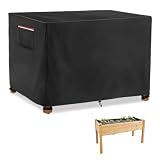
This listing is a plain outdoor raised garden bed cover for winter, labeled for planter raised beds. It suits the gardener who wants the simplest possible approach: drape a cover over an empty bed in late fall, secure it, and uncover it in spring. It is not trying to be a greenhouse, and that simplicity is a feature for people who do not want to manage hoops, clips or ventilation through the cold season.
- Use: winter cover for raised planter beds
- Setup: cover-over style, no hoops described
- Size and material weight: not stated in the listing name; confirm on the product page
- Best season: late fall through early spring
A winter bed cover earns its keep in a few ways. It protects soil structure, which helps if you topped up beds with compost in fall and do not want it leached out. It keeps rodents and cats from using loose soil as a bathroom, and it keeps weed seed from blowing in. If you are planning a no-dig bed, leaving a layer of mulch or leaf mold under the cover lets soil life keep working through the winter. When sizing, measure the outer length, width and any frame lip, then add enough overhang to anchor the edges. A cover that only just reaches the top of the bed is a cover that flaps loose in the first strong wind.
A one-piece cover is also handy in shoulder seasons. If a late spring storm is forecast after you have already direct-sown peas or lettuce, you can pull a cover over the bed for a night or two, as long as the sown seed has not yet emerged and the cover will not sit directly on seedlings. For bare soil, a solid cover raises the surface temperature on sunny days, which can help seeds germinate earlier, but it can also overheat if left on under strong sun, so lift it in the morning.
When comparing generic covers, look at the stitching or hem, whether grommets or ties are mentioned, and whether the shape is a flat sheet or a box shape with sides. A box-shaped cover hangs better over a deep bed, while a flat sheet needs more overhang and more weights.
Pros
- Simple one-piece approach with nothing to assemble
- Good fit for empty beds in the off-season
- Reduces erosion, compaction and weed seed arrival
- Easy to store folded in a closet or shed
Cons
- Listing offers limited detail on size and material thickness
- Does not provide growing space for winter crops
- Needs weights or ties to stay in place in wind
Next to the Gulfmew pair, this single cover is the more modest choice and makes sense if you have only one bed. Next to the Jungda cover, the differences are mostly in branding and unlisted details, so compare the stated dimensions, tie-down features and fabric descriptions carefully. If your goal is to keep winter greens alive rather than put the bed to sleep, skip this style and go to the hoop kits further down the list.
3. YTJ Raised Bed Bird Netting – Best for Bird Protection

The YTJ garden netting is designed as a pest barrier screen for raised beds, described as UV-resistant and intended to protect vegetables, fruit and flowers. It suits gardeners who lose strawberries, blueberries, seedlings or lettuce to birds and want a lightweight cover that still lets sun and rain through. Unlike the winter covers, netting is a growing-season product: you put it on when seedlings emerge or fruit begins to ripen and take it off when the threat passes.
- Type: raised bed netting and pest barrier screen
- Material note: UV-resistant, per the listing
- Use: protects vegetables, fruit and flowers
- Sizes and mesh opening: confirm on the product page before purchase
Mesh opening is the number to check. Bird netting with openings around half an inch to three quarters of an inch blocks most songbirds, while finer insect mesh is needed for cabbage moths and similar small pests. The listing gives you a general pest barrier, so verify what kind of opening it provides. Netting works best when it is supported above the plants on hoops so birds cannot peck through to the leaves. Keep netting taut and clear of the ground, because loose folds can entangle birds, lizards or snakes; check beds regularly and release any trapped animal gently.
Timing and placement decide whether netting works. Birds go after seedlings as soon as the first true leaves appear and again when berries start to color. Put the net on before either of those moments, because once a bird learns a bed is a food source, it keeps testing the edges. Raise the net at least 6 to 8 inches above the tallest foliage so beaks cannot reach through, and skirt the bottom edge down to the frame or soil so nothing can walk underneath.
Wildlife safety matters. Netting with larger openings can trap birds and small reptiles, and a loose bottom edge is the usual culprit. Choose the smallest practical mesh opening, keep it tensioned, and walk the beds every day or two during fruiting season. Roll up and store netting once the crop is done, since leaving it out all winter shortens its life.
Pros
- UV-resistant material suited to repeated seasonal use
- Lets light, air and water through to the plants
- Lightweight and easy to cut to size
- Covers fruit and vegetables as well as flower beds
Cons
- Needs hoops or a frame to hold it off the foliage
- Does not help with frost or heavy rain
- Mesh size should be confirmed for small insect pests
Compared with the other netting product on the list, the Plant Covers bird netting, the YTJ listing puts more emphasis on UV resistance and the pest barrier role. If you already own netting, a hoop set such as the 36-piece 8 ft kit completes the system. If you want something already structured, the pop-up crop cage skips the support work.
4. Plant Covers Garden Bird Netting – Best for Custom-Cut Coverage

This second netting option is a garden protection bird netting for raised beds, sold under a plant covers label. It suits anyone with beds of different sizes who prefers to cut netting to fit instead of buying a cover for each bed. Netting is forgiving: you can trim it, overlap it, and fold it around corners, which makes it a practical choice for odd-shaped beds, trellised crops and raised beds that have a frame, lip or pergola nearby.
- Type: garden bird netting for raised beds
- Use: plant protection from birds and similar pests
- Sheet size and opening: not stated in the name, so confirm
- Pair with: support hoops or stakes
Netting is also a cheaper way to protect a crop than building a hard-sided cage, but it is only as good as its anchoring. Fasten the edges to the bed frame with clips, staples that you can remove or clothespin-style clamps, and bury or weight the ground edges if you are covering low crops such as lettuce. Leave a gap on one side during pollination for crops that need visits from bees, such as squash, then close it as fruit sets. If you grow brassicas, remember a bird net will not stop moths, so a fine insect mesh over the same hoops is the right layer for that job.
A cut-to-fit sheet is more adaptable than it seems. You can drape one sheet over a double row of beds, use smaller pieces over trellised peas, or wrap a blueberry container. A few practical tips: cut with sharp scissors and melt or tie the cut edges so they do not unravel, label the sheet with its dimensions so you can plan next year, and use a bright marker or ribbon on the net edges so you do not trip on it in the evening.
Because the listing gives few specs, treat the first season as a trial run. Note how well the net holds shape in wind, whether it snags on rough wood, and whether the openings suit the birds in your area. If small songbirds still get through, switch to a finer mesh over the same hoops.
Pros
- Cut-to-fit flexibility for different bed shapes
- Light enough to lift for watering and harvesting
- Works with any hoop or frame system
- Reusable across seasons if stored dry
Cons
- Limited detail in the listing on mesh and size
- Can tangle and snag if stored carelessly
- Offers no frost or rain protection
The nearest alternative is the YTJ netting. Choose the Plant Covers listing if the sheet size matches a bed you own; choose YTJ if UV resistance is the specification you care about most. Either one works best combined with the 8 ft fiberglass hoops, which lift the net and give it an even tent shape.
5. Greenhouse Hoops Grow Tunnel, 6 Sets of 8 ft – Best for a First Small Tunnel
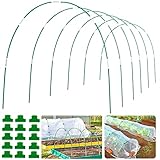
If you want to try season extension without committing to a large kit, this six-set pack of 8 ft rust-free fiberglass garden hoops is the gentlest starting point. The listing describes the hoops as a frame for garden netting and plant shelter over raised beds. Fiberglass hoops are springy and light, they will not rust, and they bend easily into an arch that spans a typical 3 to 4 ft wide raised bed.
- Quantity: 6 sets (confirm how many hoops a set contains)
- Length: 8 ft per hoop
- Material: rust-free fiberglass
- Pairs with: netting, row cover fabric or plastic sheeting
The common spacing is a hoop every 2 to 3 feet along the bed, closer in wind or snow country. On a 4 x 8 ft bed that means four to five hoops, so six sets handle one full bed and part of another. Push each end 6 to 10 inches into the soil or into pipe sleeves on the bed frame so the arch holds its shape. The arch height depends on bed width: an 8 ft hoop over a bed about 4 ft across gives roughly 2 feet of headroom, enough for leafy greens, onions, garlic and young brassicas.
A starter hoop pack is also a chance to learn how your garden behaves. Try one tunnel with row cover and compare it with an uncovered bed through the first frost. Keep a simple log of overnight lows, whether the cover held, and how the plants look the next morning. After a season you will know whether you need heavier fabric, closer hoops, or a taller profile.
Fiberglass rods can splinter at the cut ends, so wear gloves when installing, and avoid bending them past their natural curve. If a hoop kinks or cracks, replace it, because a damaged rod can fail in the next gust. Slip pieces of foam pipe insulation or tape over the tips to stop them from tearing the cover.
One more practical point: before you commit, lay the hoops on the lawn and count them against your bed plan. If the pack contains fewer pieces than you need, note whether the seller offers a larger quantity of the same hoop, since mixing brands can leave you with slightly different stiffness along one bed.
Pros
- Rust-free fiberglass for repeated use
- Lightweight and easy to bend by hand
- Works with netting, fabric or plastic
- Small pack size suits first-time users
Cons
- Sets are not defined in the title, so count the pieces before planning
- Covers only one or two beds
- Does not include the cover material itself
Compared with the 36-piece set, this pack is smaller and better for trying the tunnel idea on a single bed. If you quickly outgrow it, the 36-piece and 60-piece kits scale up without changing the system. Whatever you add on top, make sure the cover can shed snow: hoops spaced too far apart will sag under wet snow, so clear heavy accumulation promptly.
6. yqlbgprj 2-Pack Pop-Up Crop Cage – Best for Fast, Tool-Free Protection

The yqlbgprj two-piece set is a pop-up raised garden bed cover and plant protector crop cage. It suits gardeners who value speed over customization: a pop-up cage opens, sits over the plants and is done, with no hoops to bend or netting to measure. That is useful for renters, for gardeners with limited mobility, and for anyone who wants to protect new seedlings for a few weeks while they establish.
- Quantity: 2 pieces
- Type: pop-up crop cage with a cover
- Typical purpose: shield young plants from birds, pests and wind
- Dimensions and mesh: confirm on the product page
Pop-up designs usually use a flexible spring-steel or wire frame wrapped in mesh, and they fold into a flat disc for storage. Because the exact frame material and size are not spelled out in the listing name, check them before buying. The format is best on one small bed, a patio planter, or a group of crops such as lettuce, strawberries or peppers. Press the base into the soil or weigh it down, and keep a way to open it for watering and harvest. Do not expect it to protect from a hard freeze unless the cover material is described as insulating.
Where pop-up cages shine is in short, specific problems. They work well over a new transplant of lettuce, a pot of strawberries, or a young pepper for the first weeks. They are useful over a bed that is directly sown with carrots to keep birds and cats from scratching the surface, and they are easy to lift for watering. They are less helpful for tall crops such as tomatoes or beans, which outgrow the dome quickly.
To keep the cage tidy, collapse it according to the maker’s twist-fold instructions, which usually involve folding the frame into a flat circle. Doing so without forcing the wire avoids kinks that weaken the shape. Store it in the included pouch if there is one, and keep it dry to prevent rust if the frame is metal.
Before buying, compare the cage footprint with the planting area. A dome that is a few inches too small leaves leaves poking through the mesh, where birds and insects can still reach them, while an oversized one catches wind. Anchoring pegs or a few stones on the base make a noticeable difference on breezy days.
Pros
- Very quick setup and takedown
- Two pieces per pack
- Folds flat for storage
- Good for small beds and new seedlings
Cons
- Fixed size does not adapt to long beds
- Details such as frame material need to be confirmed
- Less sturdy under heavy snow than a hoop system
The closest alternative is the Plant Covers netting paired with hoops, which takes longer to set up but covers a bed of any length. Pick the pop-up cage if convenience matters most and your beds are small enough for a fixed-size cover. Pick hoops if you want to scale up or switch between netting and fabric through the year.
7. Sobana Split-Zipper Winter Cover – Best for Elevated Planter Boxes

The Sobana cover is the most clearly specified cover in this roundup. The listing describes an outdoor raised garden bed winter cover with a split zipper, waterproof and heavy duty, for a 48 x 24 x 30 inch elevated wood planter box. That measurement means you can compare it directly to your own planter before ordering, which removes the biggest source of returns with generic covers. It suits owners of waist-height elevated planters, the kind with legs and a wooden box on top, who want to protect both the soil and the wood from winter weather.
- Fits: 48 x 24 x 30 inch elevated wood planter box (per listing)
- Construction: waterproof, heavy duty
- Access: split zipper
- Season: winter and wet-weather protection
The split zipper is the practical standout. With a drape-over cover, the only way to look at the soil is to untie and lift everything. With a zipper you can open a section to check moisture, pull weeds, or harvest hardy herbs on a mild day, and then close it again. For an elevated planter, a full-height cover also shields the legs and underside from splashing, which can extend the life of untreated wood. Measure your own planter first, including any handles, shelf or trellis, because a cover sized for a particular box will not suit a different layout.
Preparing an elevated planter for winter starts before the cover goes on. Empty any pots resting on top, remove loose items such as trellises or sprayers, and check that drainage holes are clear so melting snow does not saturate the soil. Add a layer of mulch to blunt freeze-thaw cycles. If you grow perennial herbs like thyme or sage in the box, leave a small ventilation gap by keeping the lower zipper section slightly open during mild spells, which lets moisture escape.
Measure the planter in three places before ordering: outer length and width at the top rim, the overall height to the top of the box, and the leg height. Differences between the box and the cover of even a couple of inches can make zipping difficult. If your planter differs from the stated size, look for a larger cover that can drape and cinch rather than forcing a tight fit.
Pros
- Named size makes fit easy to verify
- Split zipper allows access without removal
- Waterproof, heavy-duty description
- Protects soil and wood in the off-season
Cons
- Specific to a certain planter size
- Blocks light, so unsuitable for living crops over a long period
- Zippers can stick if ice builds up
Compared with the Gulfmew and Jungda waterproof covers, the Sobana wins on fit certainty and access, but it is the narrowest in terms of which beds it fits. If your beds sit on the ground and are a different size, the Gulfmew pair or a hoop-and-fabric system may serve you better. Wipe the zipper track and apply a silicone-based lubricant before the first freeze to keep it moving.
8. WYRJXYB 60-Piece Hoop Kit – Best for Multi-Bed Gardens

The WYRJXYB kit is the biggest in the group: 60 pieces of 8 ft rust-free fiberglass support hoops, described as a greenhouse hoop grow tunnel kit for raised beds, with plant cloth, row cover or netting. It suits market-garden style layouts, community plots, or home gardens with six or more raised beds. When you cover many beds at once, a bulk pack is far more practical than buying small sets and risking mismatched hoop thickness.
- Quantity: 60 pieces
- Length: 8 ft each
- Material: rust-free fiberglass
- Pairs with: plant cloth, row cover or netting (sold separately)
At five hoops per 4 x 8 ft bed, 60 hoops cover twelve beds. At four hoops per bed with tight spacing relaxed, you can reach fifteen. That makes this kit overkill for a single bed but excellent value per bed for larger gardens. One system also makes seasonal changes easy: bird netting in spring, shade cloth in summer, insect mesh for brassicas in fall, and frost cloth or clear plastic in winter, all on the same frames. Store hoops indoors during the off-season to protect against UV brittleness, and inspect them for splinters or fine cracks before bending them each year.
With a large kit, organization matters. Group hoops in bundles of 5 or 10 so you can grab exactly what each bed needs. If your beds are different lengths, make a note of hoop count per bed in a garden journal. Consider installing permanent PVC or metal sleeves along the inside of bed frames: you can slide hoops in and out of sleeves in seconds, and the sleeve holds the base of each hoop securely against wind.
A multi-bed system also benefits from a consistent cover approach. Choose one width of fabric or netting that works across beds so you can swap covers between them. Roll covers on a tube between uses, and store them in labeled bins by season: spring netting, summer shade, fall insect mesh and winter frost cloth.
For a purchase this large, check how the hoops are packed and whether the listing mentions spare pieces. It is also wise to bend one hoop right away on arrival to judge its stiffness before you plan the whole garden around it, and to keep the packaging for any return or exchange window.
Pros
- Large quantity covers many beds
- Rust-free fiberglass for multi-season use
- Supports netting, fabric and plastic
- Consistent size simplifies planning
Cons
- Too many pieces for a one-bed gardener
- Cover fabric or netting is not included
- Fiberglass can splinter, so wear gloves when handling
The nearest alternative is the 36-piece 8 ft set. If you have fewer than seven 4 x 8 ft beds, the smaller set is the more sensible choice; if you manage more, this one saves you from running short. Do check whether your beds are 3 ft or 4 ft wide, because wider beds need hoops with more bend and result in a lower arch.
9. 36-Piece 8 ft Hoop Set – Best for Mid-Size Gardens

The 36-piece set of 8 ft garden hoops is the middle option, described in the listing as greenhouse grow tunnel netting hoops and support hoops for raised garden beds and row cover. It suits a typical backyard garden of four to seven raised beds, or a mix of beds and in-ground rows. This is the pack most readers who already know they want a tunnel system should look at first.
- Quantity: 36 pieces
- Length: 8 ft each
- Use: supports row cover, netting or plastic over beds
- Material and clips: confirm on the product page
Thirty-six hoops at five per bed cover seven 4 x 8 ft beds, with one hoop spare. The flexible hoop approach lets you handle many problems without buying a new product each time. A light row cover (often described as frost cloth) can add a few degrees of protection on frosty nights, while heavier fabric adds more, but fabric weight is a property of the cover, not the hoops. Pair these hoops with the YTJ or Plant Covers netting for birds, or with a fine insect mesh for cabbage moths and flea beetles. Secure fabric with clips or clamps and anchor the edges with soil, boards or sandbags.
A mid-size hoop set is where mixed use really pays off. In early spring, use clear plastic over hoops to warm soil for early peas and spinach, venting on sunny days. In summer, swap to shade cloth for lettuce or to netting for fruiting crops. In fall, insect mesh protects late brassicas, and in winter, frost cloth keeps hardy greens producing. The hoops never change; only the covering does.
Plastic over hoops can overheat quickly, even in cold weather. On a sunny day at 40 degrees outside, the air under clear plastic can climb into the 80s, so open the ends or lift the sides by mid-morning. Floating row cover is more forgiving because it breathes, so use it when you cannot check the tunnel daily.
Because the title is long and partly truncated, read the full listing for details such as hoop diameter, any included clips or sleeves, and the stated hoop length. Those small specs decide whether the set works with the cover fabric you already own.
Pros
- Right-sized quantity for most home gardens
- Reusable framework for every season
- Works with netting, fabric or plastic sheeting
- Lightweight and easy to store
Cons
- Listing is truncated on some details, so confirm what is included
- Cover material not included
- Fiberglass can degrade after many seasons in sun
Compared with the 60-piece WYRJXYB kit, this one is the better fit if your bed count is under eight; compared with the 6-set starter pack, it is a better bet if you know you will expand. If your climate has heavy, wet snow, space hoops closer and shake off accumulation, because fiberglass bends before it breaks but can snap if overloaded.
10. Jungda Winter Cover – Best for Waterproof Off-Season Cover

The Jungda cover is another outdoor raised garden bed cover for winter, described as waterproof. It suits gardeners with an empty bed that needs protection from sleet, snow and heavy rain. Its listing does not include much more than that, so it is best treated as a straightforward waterproof tarp-style bed cover, to be matched carefully to your bed dimensions.
- Use: outdoor winter cover for raised garden beds
- Water handling: waterproof
- Dimensions: confirm on the product page
- Installation: drape and secure
Waterproof covers have one subtle risk: trapped moisture. If you cover wet soil and seal everything tight, condensation can form underneath and encourage mold or rot in wooden frames. The remedy is to cover on a dry day, leave a small gap for air at the corners if possible, and avoid sealing the cover directly onto wet mulch. The benefit is that rain and melting snow run off rather than flooding the bed, which is helpful in regions with heavy winter rain that would otherwise leach nutrients out of the top layer.
The way you secure a waterproof cover affects how long it lasts. Lashing it with cord through grommets, if available, spreads the load better than stacking a single heavy brick on one corner. Where grommets are missing, wrap each corner around a small stone or wooden block and tie it off, which creates a reinforced anchor point without puncturing the material. Avoid sharp edges where the cover rubs against the bed frame; a strip of old garden hose split along its length makes a cheap edge guard.
At the end of the season, wipe the cover down, let it dry fully in the sun, and fold it along the same creases each time. Inspect seams and edges for small tears and patch them early with tape designed for outdoor fabric. A cover that is stored clean and dry can serve many winters.
Because the listing offers few specifics, ask whether the cover is a flat sheet or a fitted shape, and check whether sizes are offered for different beds. A fitted cover that matches your bed outline stays put better than a loose sheet that must be cinched.
Pros
- Waterproof construction for rain and snow
- Easy to drape and remove
- Helps reduce erosion and nutrient loss
- Compact to store
Cons
- Limited detail in the listing on size and thickness
- Not appropriate for growing crops
- Needs anchoring against wind
It sits closest to the Gulfmew pair and the Outdoor Winter Raised Bed Cover. Choose Jungda if the size listed on its product page matches your bed; choose Gulfmew if you have two beds; choose Sobana if you have the elevated 48 x 24 x 30 inch planter. If you intend to grow through winter, none of the three is the right tool and a hoop kit with breathable fabric is the better path.
How to Choose the Right Raised Bed Cover
The word cover covers four different products, and the right one depends on the job. Sort your needs into dormant protection, season extension, pest exclusion or quick temporary shielding, then match the product type.
Match the type to the job
Solid waterproof covers (Gulfmew, Jungda, Sobana, and the generic winter cover) are for empty beds. They block light, so any plant underneath will weaken within a couple of weeks. Their value is protecting soil structure from rain, sleet and compaction, and keeping the bed tidy. Hoop kits are for growing beds: the hoops hold a breathable layer, such as netting, row cover fabric or plastic, above the plants. Netting is for pests, not cold. Pop-up cages are for small, quick jobs.
Worked example: sizing a hoop-and-fabric tunnel
Say you have three beds, each 4 ft wide and 8 ft long, and you want a frost-protection tunnel over all three.
- Hoop spacing: use a hoop every 2 ft. For an 8 ft bed, that is hoops at 0, 2, 4, 6 and 8 ft, which means five hoops per bed.
- Total hoops: 3 beds x 5 hoops = 15 hoops. Add two spares for breakage, so 17. The 6-set pack falls short; the 36-piece set covers it with room to spare.
- Hoop length: the arch for a 4 ft span needs about 6.3 ft of hoop for a half circle (3.14 x 2 ft radius), leaving close to 1.7 ft of the 8 ft hoop to push into the ground, around 10 inches per side. That produces a tunnel roughly 2 ft tall at the peak. If you want a taller tunnel, the arch must be narrower, so a 3 ft wide bed will give more headroom.
- Fabric size: cover width must exceed the arch length plus anchoring, so around 8 to 9 ft wide. Cover length must exceed the bed length by at least 2 ft for end anchoring, so about 10 ft.
- Totals: 17 hoops, 3 pieces of fabric about 9 x 10 ft, plus clips (one per hoop per side, so about 34).
Those numbers are general planning figures, not product specifications. Always check the actual hoop diameter, listed length and whether the pack counts hoops or sets.
Know your cold and your fabric
Row cover fabrics are sold in weights. Light covers around half an ounce per square yard allow most sun through and add roughly a couple of degrees of frost protection. Mid weights around one ounce add a few more degrees, and heavy covers around one and a half ounces add more still but let less light through. Those are broad horticultural ranges, and exact performance varies by weave, wind and moisture, so treat them as guidance. For deep winter, the best protection is layering: a medium row cover directly on the plants and a clear plastic layer over the hoops on the coldest nights.
Mesh size and the pest you are fighting
Bird netting with openings around half an inch to three quarters of an inch is enough for songbirds. Squirrels can chew through plastic netting, so protect strawberries with hardware cloth if squirrels are persistent. For cabbage moths, flea beetles and leaf miners, use insect mesh with openings small enough to block the insect, usually around a millimeter. Put it on before the first adults arrive, since covering plants that already have eggs underneath simply traps the problem in with the crop.
Wind, snow and anchoring
Every cover is a sail. For ground-level beds, use stakes, ground staples, sandbags, bricks or lumber along the long edges. Hoops should sit 12 to 24 inches apart in windy locations and the ends should be tied or pinned. In snow country, pick a slick, sloped profile and clear snow from tunnels; heavy wet snow can exceed what light hoops carry.
Materials and longevity
Fiberglass hoops are springy and corrosion-proof but can degrade under constant UV exposure. Store them indoors in the off-season. UV-resistant netting lasts many seasons when kept dry and out of direct sunlight between uses. Waterproof covers last longer when you fold them clean and dry. Wash off soil and let them dry before storing, because mildew weakens seams.
Common mistakes to avoid
Gardeners most often run into the same handful of problems. They put a solid waterproof cover over a bed that still has living plants, which starves them of light. They leave netting loose on the ground, which traps wildlife. They space hoops too far apart, so snow collapses the tunnel. They skip anchoring, and the first gust turns the cover into a kite. And they buy based on the number of pieces without checking whether that number counts individual hoops or sets. Avoid these by measuring first, reading the listing carefully, and building in a spring and fall checklist: inspect, repair, re-anchor, and store.
Decision matrix
| Your situation | Best match |
|---|---|
| Elevated 48 x 24 x 30 inch wood planter, winter shutdown | Sobana Split-Zipper Cover |
| Two ground-level beds to put to bed for winter | Gulfmew 2-Pack Cover |
| One bed, simplest possible cover | Outdoor Winter Raised Bed Cover or Jungda Cover |
| Birds eating fruit and seedlings | YTJ or Plant Covers netting plus hoops |
| First experiment with a grow tunnel | Greenhouse Hoops, 6 Sets |
| Four to seven beds, season-long use | 36-Piece 8 ft Hoop Set |
| Eight or more beds or long rows | WYRJXYB 60-Piece Kit |
| Small bed, new seedlings, minimal fuss | yqlbgprj Pop-Up Crop Cage |
Frequently Asked Questions
Should I cover my raised bed in winter?
If the bed is empty, a cover helps protect soil structure from rain, sleet and compaction, and keeps weeds and debris off the surface. If you are growing hardy crops such as kale, spinach or garlic, use a breathable row cover over hoops instead of a waterproof sheet, because plants need light and airflow.
Can a waterproof cover harm the soil?
It will not harm it directly, but sealing wet soil under a tight cover can create condensation and encourage mold on wood. Cover on a dry day, leave some airflow at the corners if possible, and check under the cover occasionally during mild weather.
How far apart should garden hoops be?
A spacing of 2 to 3 feet works for most beds. In windy or snowy locations, reduce that to about 2 feet so the cover does not sag. Check each hoop pack to see whether the count is for individual hoops or sets.
Will bird netting keep out insects?
Standard bird netting has openings that are too large for small insects. For cabbage moths, flea beetles or aphids, use insect mesh with much smaller openings and install it before pests are present on the plants.
How much frost protection does a row cover give?
Light fabrics give only a few degrees of protection, and heavier fabrics give more, but results vary with wind, humidity and how well the edges are sealed. For a hard freeze, combine a row cover with a second layer such as clear plastic and bring in containers where possible.
Are pop-up crop cages strong enough for snow?
They are designed for light protection, not snow loads. Use them for pest and wind protection on small plantings and remove them before heavy snow, or switch to a hoop system with closer spacing for winter.
How do I keep covers from blowing away?
Anchor every edge. Use stakes, ground staples, boards, bricks or sandbags, and fasten covers to hoops with clips. Pull the cover tight so it does not flap, since flapping wears seams and loosens anchors.
How should I store hoops and netting?
Dry them fully, bundle hoops together, roll netting loosely around a tube to prevent tangles, and keep everything out of direct sunlight. A garage shelf or shed bin works well, and it keeps rodents from chewing the netting.
Final Recommendation
If you own an elevated 48 x 24 x 30 inch planter, buy the Sobana cover. If you have two ordinary beds to close for winter, the Gulfmew pair does the job. If you want to grow, protect and extend the season, start from a hoop system: the 6-set pack for one bed, the 36-piece set for most gardens, and the 60-piece kit for large plots, then add netting or fabric depending on whether the enemy is birds, bugs or frost. Measure your beds, confirm sizes on the product pages, and anchor everything well, and any of these choices will do its job.