Our Top Picks
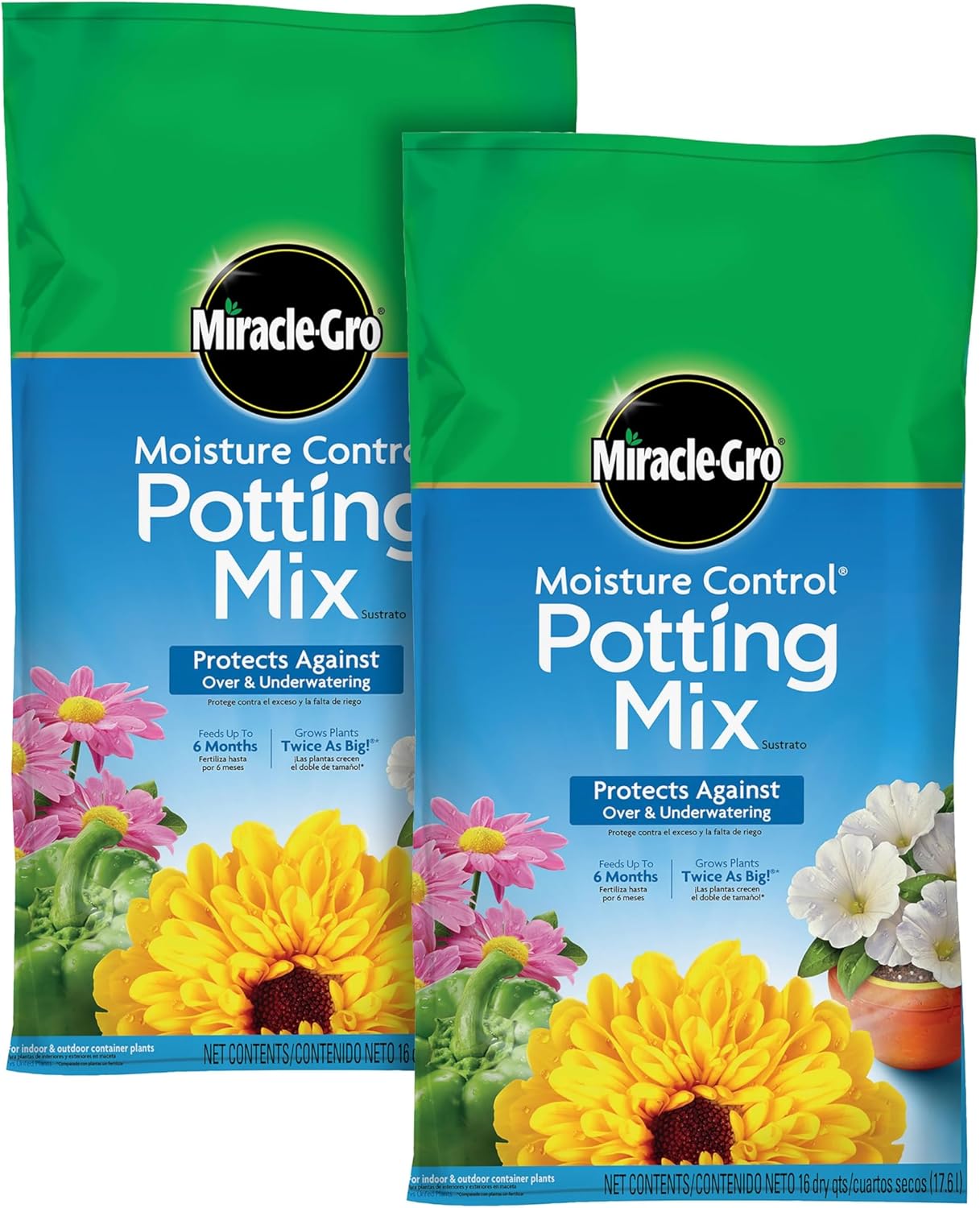 Miracle-Gro Moisture Control Potting MixMiracle-Gro - 75586300 - 2pk8 ounces1.2 cubic inchesCheck on Amazon
Pros & cons
- Feeds plants for up to six months per application
- Absorbs up to 33% more water than basic mixes
- Two-bag bundle covers two separate 12-inch containers
- Each bag only fills about one 12-inch pot
- Moisture-control formula may overwater plants that prefer drier soil
Pros & cons
- OMRI-listed formula suits organic growing standards
- Slow-release plant food feeds for up to three months
- Coconut coir helps retain moisture between waterings
- 9-quart bag fills only one or two containers
- Feeding benefit fades after roughly three months


The best soil for garden patch planters is a light, free-draining potting mix that holds moisture without staying soggy, carries enough nutrients to feed plants through the growing season, and stays loose enough for roots to spread in a shallow container. A garden patch planter is a small, contained growing space, often a raised bed or a compact planter box, and the soil inside it has to do more work than ordinary ground soil. There is no deep earth below for roots to explore, no surrounding soil to buffer watering mistakes, and no established ecosystem to supply nutrients over time. What you fill the planter with decides almost everything about how well your vegetables, herbs, and flowers will grow.
That is why ordinary soil dug from the yard is a poor choice for a patch planter. Garden soil compacts in a container, drains slowly, and can carry weed seeds and soil-borne problems into a space where plants have nowhere to escape them. A purpose-made bagged mix, by contrast, combines peat moss or coir, perlite or bark, and compost or slow-release plant food into a blend that stays open and airy while holding water where roots can reach it. The five mixes below cover the main ways gardeners fill a patch planter, from a general all-purpose blend to an organic mix, a moisture-control formula for forgetful waterers, and a rich premium blend for heavy feeders. Read the buying criteria first, then match a mix to what you plan to grow and how often you can water.
How to Choose
1. Drainage and aeration
Drainage is the first thing to check, because a patch planter has a limited depth and water has nowhere to go once the mix is saturated. A good mix contains perlite, bark, or coarse coir that creates air pockets between particles, so excess water drains away and oxygen reaches the roots. If a mix feels dense and muddy when wet, it will suffocate roots in a shallow planter, and plants will yellow and stall even when they are watered on schedule. Look for a mix described as light and aerated, and check that the bag lists perlite or bark among its ingredients.
2. Moisture retention
A patch planter dries out faster than an in-ground bed, because it is exposed to sun and wind on all sides and holds only a small volume of soil. The mix needs to hold water long enough for roots to drink between waterings, without turning into a sponge that never dries. Peat moss and coconut coir are the ingredients that do most of this work, absorbing water and releasing it slowly. Moisture-control formulas add water-absorbing material or extra coir for gardeners who water irregularly or garden in hot, sunny spots. If your planter sits in full sun or you can only water once a day, moisture retention matters as much as drainage.
3. Nutrients and feeding duration
Plants in a patch planter cannot send roots out to hunt for nutrients, so the mix must supply food from the start. Many bagged mixes include a charge of fertilizer that feeds plants for a set period, commonly up to two, three, or six months depending on the formula. A longer feeding window means less work for you and steadier growth for heavy feeders such as tomatoes, peppers, and squash. Organic mixes feed more gently, relying on compost, worm castings, and meals such as alfalfa or kelp to release nutrients as they break down. Either approach works, but you should know which one you are buying: a mix with a short feeding window will need supplementary feeding sooner, while a long-feeding mix can carry a full season of leafy greens and herbs without extra input.
4. Organic versus conventional ingredients
Some gardeners want a mix made entirely from natural and organic ingredients, especially when growing food. Organic mixes use compost, peat or coir, bark, perlite, and natural meals, and they are often listed by an organic certifier. Conventional mixes may use synthetic fertilizer to deliver a longer, more predictable feeding window. Neither is inherently wrong for a patch planter; the choice depends on your priorities. If you grow vegetables for the table and prefer to keep synthetic inputs out of your food beds, choose an organic mix and plan to top up with compost or a liquid feed as the season goes on.
5. Bag size and planter volume
Before ordering, work out how much soil your planter actually needs. A small patch planter may hold only a few quarts, while a larger raised patch bed can swallow a cubic foot or more. Bagged mixes are sold by volume, in quarts or cubic feet, and buying the right amount saves both hauling and waste. A 16-quart bag fills roughly one 12-inch container, so a modest patch planter with two or three planting pockets may need two bags, while a larger bed will need several. Measure the length, width, and depth of your planter, multiply the three numbers to get the volume, and then buy a little more than the calculation suggests, because loose mix settles once it is watered in.
6. Texture and what you plan to grow
Different plants want different textures. Leafy greens, herbs, and flowers do well in a fine, even mix that holds moisture close to shallow roots. Root vegetables such as carrots and radishes need a looser, deeper mix with no large chunks that can fork or stunt the roots. Heavy feeders such as tomatoes and squash want a rich mix with plenty of compost and a long feeding window. Seedlings and young transplants prefer a finer texture that keeps delicate roots in close contact with moisture. If you plan to grow a mix of vegetables, herbs, and flowers in one patch planter, choose an all-purpose blend with a medium texture that suits everything reasonably well.
7. Weight and handling
A filled patch planter is heavy, and the mix you choose affects how heavy it gets. A mix based on peat moss and perlite is light when dry and manageable to carry in bags, while a mix heavy with compost and dense organic matter weighs more and can make a raised planter harder to move. If your planter sits on a balcony, a deck, or a rooftop, weight matters for the structure beneath it as well as for your back. Lightweight mixes also make it easier to refresh the planter between seasons, since you can scoop out the old mix and carry in fresh bags without a wheelbarrow.
Top Picks
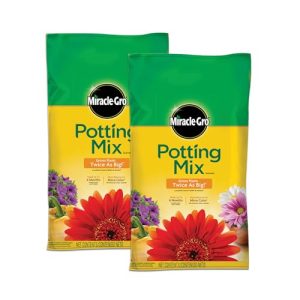
1. Miracle-Gro Potting Mix, 16 qt., 2-Pack

Miracle-Gro Potting Mix, 16 qt., 2-Pack
Miracle-Gro Potting Mix is the all-purpose workhorse of this list, and it suits most patch planters filled with a mix of flowers, vegetables, herbs, and shrubs. The blend is built from sphagnum peat moss, peat, perlite, compost, and fertilizer, giving it a light texture that drains well while holding enough moisture for container plants. Each 16-quart bag fills one 12-inch container, so the two-pack covers two mid-size pots or several smaller planting pockets in a patch planter. The maker states that the mix feeds plants for up to six months and grows plants twice as big as unfed soil, which makes it a strong choice for a full season of growth without frequent supplementary feeding.
Caveats: the formula uses synthetic fertilizer, so it is not the right choice for gardeners who want a fully organic bed for food crops. Some gardeners report that bags stored damp can arrive with a sour smell or fungus gnats, so store unopened bags in a dry place and inspect the mix before filling the planter.
Who it is for: general-purpose planters with mixed flowers, vegetables, and herbs.
2. FoxFarm Ocean Forest Potting Soil, 1.5 cu. ft.

FoxFarm Ocean Forest Potting Soil, 1.5 cu. ft.
FoxFarm Ocean Forest is a rich, ready-to-use potting soil built for container plants, and its 1.5-cubic-foot bag is the right scale for filling a larger patch planter or topping up several smaller ones in a single session. The blend is known for a light, aerated texture that holds moisture while letting excess water drain, and it is pH adjusted for nutrient uptake. Its ingredient list reads like a compost heap in a bag: earthworm castings, bat guano, fish meal, and crab meal, along with forest humus, sphagnum peat moss, and perlite. That richness makes it a natural fit for heavy feeders such as tomatoes, peppers, and squash, which reward a nutrient-dense mix with vigorous growth.
Caveats: the richness that makes Ocean Forest productive also makes it a strong mix for young seedlings, so some gardeners blend it with a lighter mix or extra perlite for very small transplants. The large bag is heavy when full, so plan for help carrying it to the planter, and use it promptly once opened because the organic ingredients perform best when fresh.
Who it is for: vegetable planters with heavy feeders such as tomatoes and squash.
3. Espoma Organic Potting Soil Mix, 16 qt.

Espoma Organic Potting Soil Mix, 16 qt.
Espoma Organic Potting Soil Mix is an all-natural blend designed for indoor and outdoor containers, including herbs and vegetables, and it is a solid organic choice for a food-growing patch planter. The 16-quart bag is a practical size for a single small to mid-size planter, and the mix includes earthworm castings, Myco-tone mycorrhizae, alfalfa meal, kelp meal, and feather meal, ingredients chosen to feed plants gently while supporting root growth. The texture is even and workable, holding moisture without compacting, and the formula is made for organic gardening, so it fits gardeners who want to keep their vegetable beds free of synthetic inputs.
Caveats: because the nutrients release as the organic ingredients break down, the feeding window is shorter and gentler than a synthetic long-feed mix, so heavy feeders may need a mid-season top-up of compost or an organic liquid feed. A single 16-quart bag covers only one modest planter, so filling a large patch bed will take several bags.
Who it is for: organic gardeners growing herbs and vegetables for the table.
4. Miracle-Gro Moisture Control Potting Mix, 16 qt., 2-Pack

Miracle-Gro Moisture Control Potting Mix, 16 qt., 2-Pack
Miracle-Gro Moisture Control Potting Mix is built for gardeners whose planters dry out between waterings. The formula absorbs more water than a standard mix and releases it as roots need it, which helps protect container plants against over- and under-watering. Each of the two 16-quart bags fills one 12-inch container, and the mix feeds plants for up to six months, so a two-pack covers a pair of planters or a larger patch bed with several planting pockets. The blend suits flowers, vegetables, herbs, and shrubs in outdoor containers, and it is particularly useful for planters in full sun, on windy balconies, or in spots that are hard to reach with a hose every day.
Caveats: in a shaded planter or a rainy climate, a moisture-holding mix can stay damp longer than plants prefer, so it is best matched to sunny, fast-drying spots rather than cool, sheltered ones. As with the standard Miracle-Gro blend, the formula uses synthetic fertilizer, so it is not the choice for a strictly organic food bed.
Who it is for: sunny, exposed planters and irregular watering routines.
5. Burpee Organic Premium Potting Mix, 9 qt.

Burpee Organic Premium Potting Mix, 9 qt.
Burpee Organic Premium Potting Mix is a coconut coir-based organic blend made for container gardens, and its 9-quart bag is sized for a small patch planter or for refreshing individual pockets in a larger bed. The mix is formulated with plant food and coconut coir to promote seed and root growth and healthy flower, vegetable, and herb plants, and the maker states that it feeds plants for up to three months. Coir gives the mix a light, spongy structure that holds moisture well while staying open, and the blend is peat-free, which suits gardeners who prefer to avoid peat moss.
Who it is for: small-space gardeners filling a compact patch planter, and anyone who wants a peat-free organic mix for herbs, leafy greens, and flowers in containers.
Caveats: at 9 quarts, one bag covers only a small planter, so larger beds need several bags. The feeding window is shorter than the long-feed mixes on this list, so heavy feeders will need supplementary feeding partway through the season.
Who it is for: small, peat-free planters with herbs and leafy greens.
Comparison Table
| Product | Bag size | Key ingredients | Feeding window | Best for |
|---|---|---|---|---|
| Miracle-Gro Potting Mix | 16 qt., 2-pack | Sphagnum peat moss, peat, perlite, compost, fertilizer | Up to 6 months | General-purpose patch planters |
| FoxFarm Ocean Forest Potting Soil | 1.5 cu. ft. | Earthworm castings, bat guano, fish and crab meal, peat moss, perlite | Rich organic blend | Heavy-feeding vegetables |
| Espoma Organic Potting Soil Mix | 16 qt. | Earthworm castings, Myco-tone, alfalfa meal, kelp meal, feather meal | Gentle organic release | Organic herb and vegetable beds |
| Miracle-Gro Moisture Control Potting Mix | 16 qt., 2-pack | Peat moss, coir, perlite, moisture-absorbing blend | Up to 6 months | Sunny, fast-drying planters |
| Burpee Organic Premium Potting Mix | 9 qt. | Coconut coir, plant food, organic blend | Up to 3 months | Small and peat-free planters |
Which One Is Right for You?
Start with what you are growing and where the planter sits. If your patch planter holds a bit of everything, flowers, herbs, and a few vegetables, and you want one bag that does the whole job with minimal fuss, the Miracle-Gro Potting Mix is the straightforward choice: it covers the common cases, feeds for a long season, and comes in a two-pack that fills two mid-size containers. If your planter is devoted to vegetables and you want the richest soil you can buy in a bag, choose FoxFarm Ocean Forest, especially for tomatoes, peppers, and squash that reward a nutrient-dense mix.
Gardeners who grow food and want a fully organic bed should pick between the Espoma Organic Potting Soil Mix and the Burpee Organic Premium Potting Mix. Espoma suits a standard-size planter and brings mycorrhizae and organic meals to the mix, while Burpee suits a smaller planter and is a peat-free, coir-based blend that is easy to handle. Both will need a mid-season top-up for heavy feeders, so keep a bag of compost on hand.
If watering is your weak point, or your planter bakes in full sun, the Miracle-Gro Moisture Control Potting Mix earns its place. Its water-holding formula forgives a missed watering day, which is the single most common reason container plants fail in summer. Match the mix to the sun and the watering routine first, and the plants will do the rest.
Frequently Asked Questions
Can I use regular garden soil in a patch planter?
You can, but it is not recommended. Garden soil compacts in a container, drains slowly, and can carry weed seeds and soil-borne problems into a small space where plants cannot escape them. A bagged potting mix is blended for containers, so it stays loose, drains freely, and gives roots the air and moisture balance they need in a shallow planter.
How much soil does a garden patch planter need?
Measure the inside length, width, and depth of the planter and multiply the three numbers to get the volume, then buy slightly more than the result, because loose mix settles once it is watered in. As a rough guide, a 16-quart bag fills one 12-inch container, so a small patch planter may need one or two bags while a larger raised patch bed may need several, including a 1.5-cubic-foot bag such as the FoxFarm Ocean Forest.
How often should I replace the soil in a patch planter?
Most gardeners refresh the mix at the start of each growing season. Scoop out the top few inches, add fresh mix and compost, and mix it through before planting. A full replacement every one or two seasons keeps the structure open and the nutrient levels up, since container soil loses structure and nutrients faster than ground soil.
Do I need to add fertilizer to bagged potting mix?
It depends on the mix and the plants. Long-feed mixes state a feeding window of up to six months, which can carry leafy greens and herbs through a season. Organic mixes release nutrients more gently and may need a mid-season top-up for heavy feeders such as tomatoes and squash. Watch the plants: pale leaves and slow growth are signs that a supplementary feed is due.
Disclosure: As an Amazon Associate, we may earn from qualifying purchases.
FAQ
Which One Is Right for You?
Can I use regular garden soil in a patch planter?
How much soil does a garden patch planter need?
How often should I replace the soil in a patch planter?
Do I need to add fertilizer to bagged potting mix?
More from Amazon
Programs that pair well with the guide above. Offers and eligibility are set by Amazon and may change.
Collect the home and kitchen items you want in one registry that guests can shop from.
Create a wedding registrySet up recurring deliveries of everyday items on eligible products. Terms and savings are set by Amazon.
Explore Subscribe & SaveFree shipping on eligible items, Prime Video and more. Eligible new members can start with a free trial.
Start a Prime free trialAudiobooks and podcasts to listen to on the go. Eligible new members can start with a free trial.
Try Audible freeAs an Amazon Associate we earn from qualifying purchases.