The best terrace garden decoration items for an elevated space are low enough to hug the deck, weighted or clamped enough to survive a gust, and light enough to leave plenty of headroom under your slab’s load rating — which rules out most of what looks good in a styled photo. Below are the three numbers to check first, a worked load example, then 11 weatherproof picks from roughly $15 to $400.
Our top picks
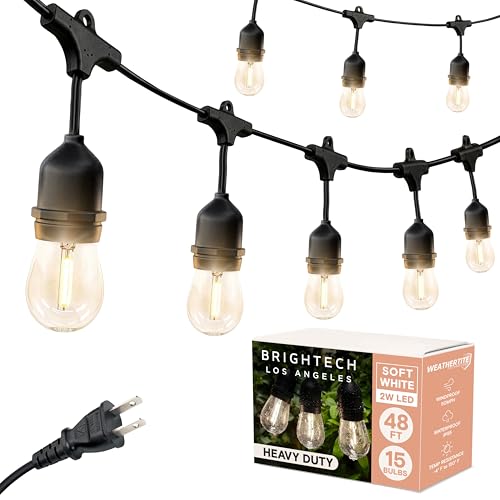


As an Amazon Associate we earn from qualifying purchases at no extra cost to you.
Check three numbers before you buy anything
Load limit. Most residential balconies are engineered for a distributed live load in the region of 200–300 kg/m² (about 40–60 lb/ft²), though figures vary by code, building age and construction — converted flat roofs can be rated far lower. Live load includes people and furniture, not just decor, so treat it as a shared budget. The figure lives in the building’s structural documents, or with the managing agent or landlord; for older roof terraces, a structural engineer’s sign-off is the safe route.
Wet soil weight. Moist peat-free potting mix weighs roughly 0.6–0.8 kg per litre, and fully saturated it can approach 1 kg/L — topsoil is heavier still at ~1.2 kg/L. So a 40 L trough carries 25–35 kg of damp soil before the pot’s own weight. A 60 cm terracotta trough runs ~15 kg empty, a fibre-clay equivalent 8–14 kg, and a resin one just 2–4 kg.
Wind load. Gusts at height run stronger than at ground level, and parapets create turbulence rather than shelter. Wind force roughly quadruples when wind speed doubles, and anything broad-faced — a canopy, a tall screen, an empty tall planter — behaves as a sail. A widely used rule of thumb: a freestanding parasol needs at least ~10 kg of base per metre of canopy diameter, doubled in exposed spots; 3 m cantilevers realistically need 80–120 kg.
A worked load check: a 3 × 2 m terrace
- Two 60 cm fibre-clay troughs, planted: ~80 kg total
- Three railing planters, filled: ~45 kg
- Half-parasol plus 50 kg filled base: ~56 kg
- Steel bistro set: ~24 kg
- Storage bench with cushions inside: ~30 kg
- Rug and lanterns: ~10 kg
Total ≈ 245 kg, or about 41 kg/m² across 6 m² — roughly a fifth of a 200 kg/m² rating, leaving the margin for people. Keep the troughs along the wall edge where the slab is supported, not at the free or cantilevered edge, and the loading stays healthy even with guests.
Planters that won’t tip or overload the slab
1. Fibre-clay trough planters (60–80 cm)
8–14 kg empty, ~40 kg planted, with a low centre of gravity and a footprint that sits flush against a wall. Frost-proof provided they drain, so raise them on pot feet to keep the hole clear. Typical price: $60–150.
2. UV-stabilised resin pots
Ranges like elho’s outdoor pots run 2–4 kg at 40 cm diameter in UV-stabilised polypropylene rated for 5+ years without chalking or fading. Add a 3 cm layer of pebbles at the base to drop the centre of gravity. Typical price: $20–70.
3. Self-watering planters
Lechuza-style reservoirs hold 5–12 L of water — that’s free ballast plus a week or more between waterings, which matters on a hot exposed terrace. Drain the reservoir before frost or the inner pot can split. Typical price: $40–120.
Shade, seating and storage
4. Fillable parasol base
8–15 kg empty, 50–100 kg filled — sand packs denser than water for the same volume. Size it to the canopy using the 10 kg-per-metre rule. Drain water-filled bases before winter; expanding ice splits HDPE. Typical price: $40–120.
5. Half-parasol or rail-clamp parasol
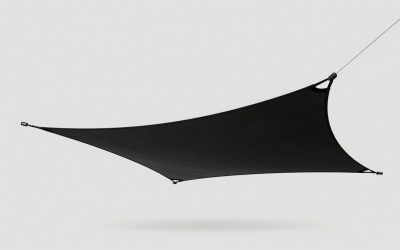
A 2–2.7 m flat-backed half canopy sits against the wall, presenting the smallest possible sail area. Clamp versions grip the railing (reversible and renter-friendly); otherwise use a flat 15–25 kg base. Standard polyester canopies show fade after ~500 sun hours — 2–3 summers — while a solution-dyed canopy roughly doubles that. Typical price: $60–180.
6. Powder-coated steel folding bistro set
Aluminium bistro chairs at 3–4 kg get pushed around by wind; steel equivalents at 5–8 kg per chair (18–28 kg a set) stay put and still fold flat for storms. Fermob sits at the premium end, with budget versions widely available. Touch up coating chips promptly before rust creeps under the powder coat. Typical price: $120–400.
7. Resin storage bench / deck box
Keter-style boxes of 270–450 L weigh 15–25 kg empty and swallow cushions overnight — the single biggest lifespan extender for fabrics. Check the stated seat-load (often 150–220 kg) if you plan to sit on it, and choose a lid that latches so it can’t become a sail. Typical price: $80–250.
Vertical and finishing touches
8. Railing planters with strap brackets
Balconera-style rail planters run 2–3 kg empty, roughly 10–15 kg filled. Keep each unit under ~15 kg, spread them along the rail rather than clustering, and check the railing’s own fixings before trusting it — corrosion on old brackets is the usual failure point. Typical price: $30–80.
9. Polypropylene outdoor rug
A 160 × 230 cm PP rug weighs 4–6 kg, hosed clean, and won’t mildew. The weak point is wind lift at the corners — solve it with a rug-grip pad plus a chair or table leg parked on two corners. UV-stabilised versions hold pattern for roughly 3–4 summers. Typical price: $40–120.
10. Weighted-base solar lanterns
Skip spike stakes and hanging hooks on a terrace; choose squat dome lanterns of 1.5–3 kg with IP44 minimum (IP65 for coastal sites). Expect 6–8 hours of light on a full charge, and plan on swapping the replaceable AA NiMH cell every couple of years. Typical price: $15–60 each.
11. Solution-dyed acrylic cushions
Cushions specified with Sunbrella-type solution-dyed acrylic carry colour through the fibre (Blue Wool scale 7–8) and resist fade for ~2,000 sun hours versus ~300–500 for printed polyester. Pair them with quick-dry reticulated foam — standard foam holds water and mildews long before the cover fades. Tie them on and store them in the deck box. Typical price: $60–200 per set.
The 11 picks at a glance
| Pick | Weight (empty) | How it stays put | Weather durability | Typical price |
|---|---|---|---|---|
| Fibre-clay trough (60 cm) | 8–14 kg | Low profile + ~30 kg wet soil | Frost-proof if drained; colourfast 5+ yrs | $60–150 |
| Resin pots (40 cm) | 2–4 kg | Pebble ballast + soil weight | UV-stable PP, 5+ yrs | $20–70 |
| Self-watering planter | 3–6 kg | 5–12 L reservoir ballast | Drain before frost | $40–120 |
| Fillable parasol base | 8–15 kg | Fills to 50–100 kg | HDPE; drain for winter | $40–120 |
| Half/clamp parasol | 4–6 kg | Rail clamp or 15–25 kg flat base | Poly canopy ~500 h UV; acrylic ~2,000 h | $60–180 |
| Steel bistro set | 18–28 kg | Mass; folds flat in storms | Powder coat; touch up chips | $120–400 |
| Storage bench (400 L) | 15–25 kg | Mass + stored items; latching lid | UV-stable resin | $80–250 |
| Railing planter | 2–3 kg | Strap/screw bracket to rail | UV-stable resin | $30–80 |
| PP outdoor rug | 4–6 kg | Grip pad + furniture on corners | Mildew-free; ~3–4 yrs UV | $40–120 |
| Solar lantern | 1.5–3 kg | Squat dome base | IP44+; battery swap ~2 yrs | $15–60 |
| Acrylic cushions (set) | 0.5–1 kg each | Ties; store in bench | ~2,000 h UV; quick-dry foam | $60–200 |
Match the kit to your terrace
| Your situation | Buy first | Skip | Key rule |
|---|---|---|---|
| Renter — no drilling allowed | Resin pots, clamp parasol, storage bench, rug, lanterns | Anything requiring wall or rail fixings | Everything freestanding or reversible-clamped |
| Exposed high floor or coastal | Fibre-clay troughs, 50 kg+ base, strapped rail planters, weighted lanterns | Tall parasols, hanging baskets, top-heavy urns | Nothing loose above rail height — clamp or strap it |
| Sheltered courtyard-style terrace | Self-watering planters, bistro set, rug, cushions | Little — full-size parasol is viable | Still close the parasol when you’re out |
| Balcony under 4 m² | Clamp parasol, rail planters, lanterns, cushions | Full troughs, three-piece sets | Decorate vertically: one rail, one wall |
| Weight-restricted or older roof terrace | Resin pots, rug, lanterns, cushions, half-parasol | Stone, concrete, water features | Verify documents; keep decor under ~50 kg/m² |
What wears out first (and how to stretch it)
Ownership realities differ from the spec sheet. Plan for these:
- Parasol canopies are the first casualty — stitching and printed polyester fade in 1–2 summers while solution-dyed fabric holds 5+. Closing the parasol whenever unattended prevents most structural failures, which usually happen in gusts, not steady wind.
- Cushion covers outlast their foam: standard foam stays wet for days and mildews; reticulated quick-dry foam drains in about an hour.
- Powder coat chips at contact points — keep a matching touch-up pen and treat chips before rust creeps underneath.
- Unglazed terracotta and cheap ceramic frost-crack once soil saturates; either empty them in autumn or choose frost-rated fibre-clay and resin.
- Water-filled bases and self-watering reservoirs must be drained before the first freeze or they split.
- Solar lantern batteries fade after ~2 years — a $3 NiMH cell restores full runtime.
- Common buying mistakes: clustering heavy pots at the cantilevered outer edge instead of the wall edge, drilling into railings or parapet waterproofing (voids warranties and leases), and buying tall candle lanterns that topple at the first gust.
FAQ
How do I find my terrace’s actual load limit?
Check the building’s structural drawings or ask the managing agent or landlord — the figure is a design document, not something you can estimate by eye. If it can’t be found, keep total decor under ~50 kg/m², place the heaviest items against the structural wall, and get an engineer’s assessment for converted flat roofs.
Can I fix things to the railing on a rented flat?
Clamp-on brackets and straps are usually fine since they’re reversible. Drilling into metal railings exposes bare steel to corrosion and often violates lease terms — always get written consent first, and never drill the parapet cap or waterproof membrane.
Is a gazebo or pergola safe on a roof terrace?
Generally not without engineered anchoring — a fixed canopy is a large sail, and wind uplift at height is severe. Most building rules prohibit them on elevated terraces without consent. A closable parasol on a heavy base is the compliant alternative.
Do I really need to bring cushions in every night?
Solution-dyed acrylic sheds rain, but the foam inside is the weak link. Even quick-dry foam lasts noticeably longer stored dry — which is why a latching deck box earns its footprint faster than almost any other item on this list.