Key takeaways
- Wind: spray in a steady 3–7 mph breeze moving away from ornamentals. Dead calm often means a temperature inversion that suspends droplets and lets them wander; above ~10 mph, don’t spray at all.
- Temperature: apply below about 85°F, ideally mid-morning after dew dries. Heat increases volatilization, and drought-stressed weeds absorb systemic sprays poorly.
- Buffer distance: with any breeze blowing toward the bed, keep a 10–15 ft no-spray gap — fine mist can travel 20 ft or more. On a still day with a shield, you can work within 6–12 inches of foliage safely.
- Droplet size: use a coarse cone or stream setting at the lowest effective pressure, nozzle held 6–12 inches above the weed and angled away from flowers. Mist is what drifts; large droplets fall straight down.
- Shield: a 12×18 inch piece of cardboard or thin plywood between the weed and the bed blocks both splash and stray droplets. Keep ornamental foliage a few inches behind the shield’s edge and leave it in place until the spray dries — roughly 30–60 minutes.
- Zero-distance option: for weeds taller than surrounding plants, use a wick applicator or a cotton glove worn over a rubber glove, dipped in solution and wiped across weed leaves. Drift risk is essentially nil.
The only weed spray for flower beds you can apply directly over ornamental plantings is a selective grass killer — products built on sethoxydim or fluazifop-P-butyl that kill grassy weeds and leave broadleaf flowers untouched. Every other option, glyphosate included, is “bed-safe” only if it never lands on your plants, which makes buffer distance, shielding, and technique the real buying criteria.
Here’s how the categories differ, which situations each one actually suits, and the numbers that keep herbicide on the weed and off the petunias.
Our top picks


As an Amazon Associate we earn from qualifying purchases at no extra cost to you.
Selective vs. non-selective: the line that matters
A truly selective herbicide is chemically blind to certain plant families — sethoxydim and fluazifop are labeled for use “over the top” of hundreds of listed ornamentals because they only attack grasses. A non-selective spray kills (or burns) whatever green tissue it touches; near flowers it’s safe purely through physical separation. A third group — residual “bare ground” products containing imazapyr — shouldn’t be used anywhere near beds at all.
| Type (examples) | Active ingredient | Selectivity | Visible kill | Soil residual | Plant-back wait | Typical 2026 price |
|---|---|---|---|---|---|---|
| Grass killer — Bonide Grass Beater, Monterey Grass Getter, Hi-Yield Grass Killer | Sethoxydim | Grasses only; labeled for over-the-top use on listed ornamentals | Yellows 7–10 days; dead 2–3 weeks | None–low | N/A — applied over beds | $20–30 per pint concentrate |
| Grass killer — Ornamec Over-The-Top, Fertilome Over The Top II | Fluazifop-P-butyl | Grasses only; broad ornamental label | 1–3 weeks | None | N/A | $20–35 per pint/quart |
| Sedge killer — SedgeHammer | Halosulfuron | Sedges only; limited ornamental label | 2–4 weeks | Low | Check label | $15–25 (makes several gallons) |
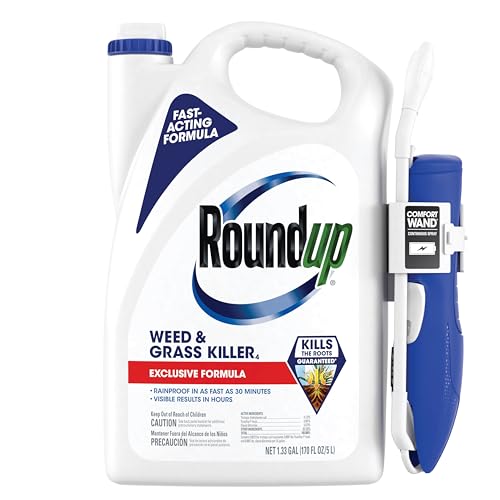
| Systemic spray — Roundup, Compare-N-Save 41% | Glyphosate | Kills almost anything green | 7–14 days | Binds soil; no root uptake | Often 1–3 days for flowers (label-dependent) | $12–18/gal RTU; $22–30/qt concentrate |
| Contact spray — Spectracide Weed & Grass Killer | Diquat | Burns what it touches; tops only | 24–48 hours | None | Days | $12–20/gal |
| “Natural” contact — Natria, Avenger, 20% horticultural vinegar | Fatty-acid soap / d-limonene / acetic acid | Burns tops; reliable only on seedlings | Hours–1 day | None | Same day–days | $15–40/gal |
| Residual bare-ground — Ortho GroundClear Year Long, RM43 | Imazapyr (± glyphosate) | Kills everything and keeps soil bare | 2–4 weeks | Up to ~12 months | Avoid entirely near beds | $15–25 |
Match the product to the situation
| Your situation | Best tool | Why / watch-out |
|---|---|---|
| Odd weeds poking through perennials and shrubs | Paint-on or wick-applied glyphosate, or hand-pull | Broadcast spraying here is how beds get killed; a wiped leaf is a zero-drift application |
| Crabgrass, bermuda or quackgrass inside groundcovers and shrub beds | Over-the-top sethoxydim or fluazifop plus the labeled crop oil/surfactant | Translocates to grass roots; confirm your ornamentals are on the label’s plant list first |
| Yellow nutsedge (triangular stem, outgrows the flowers) | Halosulfuron where the label permits, or repeated pulling | Sedges regrow from underground nutlets; expect a second round either way |
| Bindweed or vines threaded through plants | Unwind onto bare ground or cardboard, then paint glyphosate | Spraying in place coats your ornamentals |
| An empty bed you’re renovating | Broadcast glyphosate, wait 10–14 days, then plant | The one time blanket-spraying a bed is correct |
| Seedling weeds in mulch or gravel between beds | Fatty-acid soap or horticultural vinegar | Burns tops within hours and leaves no residue — but it still burns flowers it touches |
| “Keeps areas bare for a year” products | Never adjacent to beds | Imazapyr migrates in soil and can be taken up by ornamental roots well outside the spray zone |
Distance and drift rules that actually protect flowers
- Wind: spray in a steady 3–7 mph breeze moving away from ornamentals. Dead calm often means a temperature inversion that suspends droplets and lets them wander; above ~10 mph, don’t spray at all.
- Temperature: apply below about 85°F, ideally mid-morning after dew dries. Heat increases volatilization, and drought-stressed weeds absorb systemic sprays poorly.
- Buffer distance: with any breeze blowing toward the bed, keep a 10–15 ft no-spray gap — fine mist can travel 20 ft or more. On a still day with a shield, you can work within 6–12 inches of foliage safely.
- Droplet size: use a coarse cone or stream setting at the lowest effective pressure, nozzle held 6–12 inches above the weed and angled away from flowers. Mist is what drifts; large droplets fall straight down.
- Shield: a 12×18 inch piece of cardboard or thin plywood between the weed and the bed blocks both splash and stray droplets. Keep ornamental foliage a few inches behind the shield’s edge and leave it in place until the spray dries — roughly 30–60 minutes.
- Zero-distance option: for weeds taller than surrounding plants, use a wick applicator or a cotton glove worn over a rubber glove, dipped in solution and wiped across weed leaves. Drift risk is essentially nil.
The spot-spray routine, step by step
- Step 1: Pick a calm, dry morning with no rain forecast for at least 2–6 hours (check the label’s rain-fast window; some glyphosate formulas are rainproof in ~30 minutes, grass killers typically need ~1 hour).
- Step 2: Water the area the day before if it’s been dry — actively growing weeds take up systemic herbicide far better than wilted ones.
- Step 3: Position the shield, set the nozzle to coarse, and wet the weed’s leaves until they glisten — stop before runoff. Drips pool in soil and on neighboring foliage.
- Step 4: Mark treated clumps with a stake or chalk dot. Systemic sprays need 7–14 days; respraying early is the most common waste of product and adds needless exposure.
- Step 5: Remove shields once dry, and keep people and pets off treated foliage until then too.
Concentrate or ready-to-use: the math
A quart (32 oz) of 41% glyphosate concentrate, mixed at the common spot-spray rate of ~2.5 oz per gallon, yields about 13 gallons of working solution. At $22–30 per quart that’s roughly $1.75–$2.35 per gallon, versus $12–18 for a ready-to-use gallon — about six to nine times cheaper. A gallon of coarse spot spray “to wet, not dripping” covers roughly 300 sq ft of scattered weeds or several dozen individual plants.
The break-even point is around two gallons of spray per season: above that, concentrate pays for itself almost immediately; below it, a $10–12 quart trigger bottle treats a few dozen weeds with nothing to mix, measure, or store. Buy the smallest size you’ll realistically use within two or three seasons.
What actually kills flower beds: mistakes and upkeep
- Buying “extended control” formulas. Anything promising bare ground for months contains a soil sterilant like imazapyr or prometon. Ornamental roots absorb it, and damage can appear weeks after spraying.
- Reaching for lawn weed killer. 2,4-D, dicamba and triclopyr blends are selective for grass lawns — meaning they kill broadleaf plants like your flowers — and they volatilize and drift in heat. Only grass-only actives are bed-safe.
- A contaminated sprayer. Herbicide residue survives casual rinsing and can injure plants the next time you spray fertilizer or insecticide. Keep a dedicated, labeled pump sprayer ($15–25) for herbicides, or triple-rinse between uses.
- Spraying before rain or irrigation. If leaves get wet within the rain-fast window, the application is wasted — and the runoff goes where you didn’t intend.
- Expecting overnight results. Glyphosate and grass killers work over days to weeks. Green-looking weeds at day three isn’t failure.
- Skipping prevention. A 2–3 inch mulch layer plus a spring application of granular pre-emergent such as trifluralin (Preen, roughly 1 lb per 160 sq ft) removes most of what you’d otherwise be spraying all summer.
Frequently asked questions
Is weed spray safe for pets once it dries?
Most consumer labels direct you to keep people and pets off treated areas until the spray has fully dried — typically a few hours. That’s general guidance, not a guarantee; if a pet ingests treated foliage or shows symptoms, contact a veterinarian or poison control rather than waiting it out.
Will vinegar actually kill the weeds in my beds?
Horticultural vinegar (20–30% acetic acid) burns seedling tops within hours but perennials almost always resprout from the roots, and household 5% vinegar is too weak to bother with. It’s still non-selective — it will scorch flowers — and at 20%+ concentration it’s a genuine skin and eye hazard, so gloves and eye protection are non-negotiable.
Can I spray near dormant bulbs?
Glyphosate isn’t absorbed through roots, so dormant bulbs underground are not at risk — but any green shoot above the surface can take it up. Shield emerging foliage or stick to hand-pulling until the bed is fully dormant.