
Key takeaways
- Pro: Kawasaki engine reliability and easy parts availability
- Pro: 54-inch deck dramatically reduces mowing time on open acreage
- Con: Requires flat or gently sloping terrain to avoid wheel spin on turns
A homeowner with half an acre of uneven terrain and a 42-inch push mower is not buying a riding lawn mower for comfort. They are buying it because they are falling behind. Every weekend the grass gets taller, the edges get harder to cut, and the task that used to take ninety minutes now eats a full afternoon. A riding mower compresses that workload, but only if the deck width, turning radius, and power source actually match the yard in front of you.
What separates a good riding mower from a mediocre one in 2026 comes down to three things: how the machine handles the specific geometry of your property, how long it runs before you stop to refuel or recharge, and whether the manufacturer supports it when something breaks. The market spans from battery-electric zero turns under three thousand dollars to premium gas tractors over six thousand, and the differences are real. We compared published specifications, owner-reported reliability data, and long-term cost calculations across eight models to identify which ones deliver on their promises.
As an Amazon Associate we earn from qualifying purchases at no extra cost to you. Product prices and availability are accurate as of the date shown and are subject to change.




Quick Picks
| Product | Best for | Price |
|---|---|---|
| Husqvarna Z254F (Kawasaki) | Large flat yards needing proven reliability | $3,879 |
| Greenworks CrossoverZ | Affordable electric zero turn | $2,999.99 |
| EGO Power+ TR4204 | Electric lawn tractor for medium properties | $4,399 |
| Husqvarna Z254F (FR730) | Maximum cutting power on big acreage | $3,995 |
| Husqvarna TS 154X | Lowest-cost 54-inch cutting width | $3,499 |
| Husqvarna TS 375XD | Slopes and uneven terrain | $5,199 |
| Husqvarna Z248F | Medium properties with tight spaces | $3,899 |
| EGO Power+ Z6 | Premium electric zero turn | $6,499 |
How We Picked
We evaluated each riding lawn mower against four criteria: deck-to-property fit, where a 42-inch deck on a quarter acre makes sense but a 54-inch deck on a half acre saves you an hour per cut; powertrain reliability, distinguishing Kawasaki and Briggs engines with long service histories from newer electric platforms where owners report mixed early-adoption experiences; total cost of ownership, including fuel, battery replacement cycles, and expected maintenance intervals; and owner satisfaction, pulled from verified purchase feedback that discusses real-world mowing duration, comfort, and durability over multiple seasons.
The 8 Best Riding Lawn Mower in 2026
Husqvarna Z254F 54-Inch 23 HP Kawasaki Zero Turn
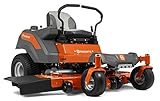
This is the default recommendation for homeowners with one to three acres of mostly open ground. The 54-inch deck covers a full two-car width per pass, and the Kawasaki FR-series engine is the most universally praised small-engine platform in the category. Owners highlight the responsive hydrostatic steering and the fact that it starts every time without priming fuss. The 4-gallon fuel tank runs long enough to finish a large yard without mid-session stops.
- Pro: Kawasaki engine reliability and easy parts availability
- Pro: 54-inch deck dramatically reduces mowing time on open acreage
- Con: Requires flat or gently sloping terrain to avoid wheel spin on turns
Skip this if your property has steep grades or tight tree clusters where the wide deck becomes a liability rather than an asset.
Greenworks 60V 42-Inch CrossoverZ Zero Turn
The Greenworks CrossoverZ targets buyers who want zero-turn maneuvering without gas engine maintenance. Six 8.0Ah batteries paired with a 600W charger make this the most accessible electric zero turn at this price point. The 42-inch deck suits quarter to half-acre lots. Owners appreciate the quiet operation and the elimination of oil changes, though several note that battery life drops noticeably on thick or wet grass.
- Pro: Lowest price among electric zero turns, with no fuel or oil costs
- Pro: Nearly silent operation, suitable for early-morning mowing in residential areas
- Con: 42-inch deck means more passes on properties over half an acre
Skip this if your grass tends to grow thick or tall between cuts, as the electric motor underperforms in dense conditions compared to gas equivalents.
EGO Power+ 42-Inch TR4204 Lawn Tractor
The TR4204 serves a different buyer than the zero turns above: someone with a moderately sloped or irregularly shaped yard who wants the stability and simplicity of a steering wheel. EGO’s 56V platform delivers consistent torque through hills that would cause a zero turn to struggle. The 42-inch deck keeps the footprint manageable, and EGO’s battery ecosystem means owners already invested in their tool line can share cells.
- Pro: Steering-wheel design handles slopes and uneven ground far better than zero turns
- Pro: Integration with EGO’s broader battery platform reduces redundant charging
- Con: Higher price than the Greenworks with a similar deck size
Skip this if your property is flat and open, where a zero turn’s tighter radius would save real time over hundreds of passes.
Husqvarna Z254F 54-Inch 24 HP FR730 Zero Turn
Physically identical in deck and chassis to the Kawasaki version, this Z254F variant swaps in Husqvarna’s own FR730 engine at a slightly higher price. The 24-horsepower rating gives it a marginal torque advantage in tall or wet grass. Owners who chose this over the Kawasaki report satisfaction with the extra power but note that FR730 parts availability is slightly narrower than Kawasaki’s dealership network.
- Pro: 24 HP delivers stronger performance in heavy, damp conditions
- Pro: Same proven 54-inch deck and hydrostatic drive as the Kawasaki twin
- Con: Price premium over the Kawasaki version without a transformative advantage
Skip this if budget is tight; the Kawasaki variant offers nearly identical results at a lower cost.
Husqvarna TS 154X 54-Inch 24 HP Briggs Lawn Tractor
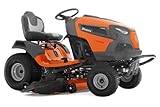
The TS 154X is the value play in this list. At $3,499, it undercuts every zero turn while offering the same 54-inch cutting width. The steering-wheel design makes it forgiving for first-time riding mower owners, and the Briggs engine is the most widely serviced option in American small-engine shops. Owners report it handles half-acre lots with ease and appreciates the comfortable seat position.
- Pro: Cheapest 54-inch deck in the lineup, ideal for large properties on a budget
- Pro: Steering-wheel control eliminates the learning curve of zero-turn levers
- Con: No zero-turn capability means wider turning circles around obstacles
Skip this if your yard has tight spaces between trees, fences, or garden beds where the tractor’s turning radius forces multiple backing maneuvers.
Husqvarna TS 375XD 54-Inch 24 HP Differential Lock
The TS 375XD earns its premium price through one specific feature: a locking differential that transfers torque to the wheel with traction when the other slips. This makes it the definitive choice for properties with significant slopes, soft ground after rain, or mixed terrain. Owners with hilly acreage call it the only tractor they have not slid down. The 24-horsepower Briggs and 54-inch deck handle the cutting itself competently.
- Pro: Differential lock provides confidence and traction on terrain that stops other tractors
- Pro: Commercial-grade build quality suggests longer service life than competitors
- Con: $5,199 is a steep entry point for homeowners with moderate properties
Skip this if your land is flat; you would pay a thousand dollars for a capability you never use.
Husqvarna Z248F 48-Inch 23 HP Kawasaki Zero Turn
The Z248F shrinks the deck from 54 to 48 inches while keeping the Kawasaki engine and hydrostatic drive. For properties between a quarter and a full acre with landscaping beds, fences, or small trees, the narrower deck navigates obstacles that would force a 54-inch machine into awkward three-point turns. Owners praise the balance between coverage and maneuverability.
- Pro: 48-inch deck fits more yard layouts without sacrificing Kawasaki reliability
- Pro: Tighter turning radius around obstacles than the 54-inch Z254F
- Con: More passes required on large open areas compared to the wider deck
Skip this if your property is uniformly open with few obstructions; the 54-inch deck will finish the job faster.
EGO Power+ Z6 52-Inch Zero Turn
The Z6 represents the current ceiling of electric zero-turn capability. A 52-inch deck approaches what gas machines deliver, and EGO’s 56V battery platform produces enough sustained torque to match mid-range gas engines in most mowing conditions. Owners with properties up to two acres report completing jobs on a single charge cycle, though heavy grass may require a battery swap. At $6,499, this is an investment in eliminating engine maintenance permanently.
- Pro: Largest electric deck in the category rivals gas zero turns on coverage
- Pro: Zero engine maintenance means lower lifetime cost after the initial premium
- Con: Highest price point; battery replacement costs in year six and beyond add up
Skip this if your primary concern is upfront cost; the Greenworks delivers electric convenience at less than half the price for smaller yards.
Buying Guide
Deck Width vs. Yard Size
A 42-inch deck suits properties under half an acre or those cluttered with trees and garden features. A 48-inch deck handles three-quarters of an acre efficiently while still threading between obstacles. A 54-inch deck is the workhorse for one acre and beyond with open ground. Buying a deck wider than your layout requires wastes money and makes turns frustrating; buying narrower than your acreage demands means extra hours on every cut.
Gas, Battery, or Hybrid Power
Gas engines deliver consistent power in wet or tall grass and run for hours between refuels. Battery electric platforms eliminate oil changes, spark plugs, and fuel storage, but they underperform in thick conditions and lose runtime as cells age. For properties under half an acre, an electric riding lawn mower with a mid-range deck often costs less over five years once you account for fuel and maintenance. For larger acreage or heavy grass, gas remains the practical choice.
Zero Turn vs. Steering Wheel
Zero-turn mowers use dual lap levers for independent drive control, producing a turning radius of zero on flat ground. Steering-wheel tractors are more stable on slopes because the front wheels pivot rather than skid. If your property is flat with many obstacles, zero turns save time. If your land has grades above ten percent, a steering-wheel design with a locking differential will keep you upright and moving.
Our Verdict
The top pick is the Husqvarna Z254F with the Kawasaki engine. It balances price, proven mechanical reliability, and a 54-inch deck that covers large properties efficiently. The budget pick is the Husqvarna TS 154X at $3,499, which delivers the same cutting width as any zero turn while removing the learning curve of lever steering. The exception that changes the recommendation: if your yard has significant slopes or soft ground, the TS 375XD with its locking differential earns its premium and prevents the frustrating traction loss that defeats every other machine on this list.
FAQ
How large a property justifies a 54-inch deck?
Once your lawn exceeds one acre of open ground, the time savings of a 54-inch deck over a 42-inch deck becomes meaningful across dozens of annual mowings. Below that threshold, a narrower deck often fits the layout better and costs less to store.
Can an electric riding lawn mower handle wet grass?
Electric motors produce consistent torque, but wet grass clumps and resists cutting regardless of power source. Owners of electric models consistently report shorter runtimes and more frequent deck cleaning in damp conditions compared to dry cuts. For properties where morning dew is the norm, a gas engine provides more headroom.
What maintenance should a buyer expect over five years?
Gas models require annual oil changes, air filter replacements, spark plug swaps, and blade sharpening each season. Electric models eliminate the first three but still need blade service and periodic deck cleaning. Battery-electric mowers may need cell replacement in year four to six depending on usage frequency and storage conditions.
Is a zero-turn mower worth it on a small yard?
On a quarter-acre lot with mature trees, fences, and garden beds, a zero turn can reduce mowing time noticeably because it pivots in place around obstacles. On a small open rectangle, the advantage shrinks because even a standard tractor completes the job quickly. Match the turning radius to the number of obstacles between which you must navigate.


