
Key takeaways
- The market for home fitness equipment has split into two camps: machines that feel built to last and machines that feel built to ship. With prices spanning from under fifty dollars to five hundred, the difference is rarely obvious from…
What's inside
The market for home fitness equipment has split into two camps: machines that feel built to last and machines that feel built to ship. With prices spanning from under fifty dollars to five hundred, the difference is rarely obvious from a product photo or a bullet-point list. What separates the best quality exercise machines from forgettable purchases is a combination of motor durability, frame stability at your actual body weight, and whether the advertised features hold up under daily use rather than a single unboxing video.
This roundup compares eight machines across three categories — vibration plates, ellipticals, and dedicated trainers — using published specifications, listed prices, and aggregated owner feedback. The goal is to help you avoid the specific frustrations that drive returns: plates that wobble under eighty pounds, ellipticals with a stride too short for anyone over five-foot-six, and machines whose Bluetooth pairing dies after two weeks.
As an Amazon Associate we earn from qualifying purchases at no extra cost to you. Product prices and availability are accurate as of the date shown and are subject to change.





Quick Picks
| Product | Best for | Price |
|---|---|---|
| AXV Vibration Plate | Compact home gyms on a tight budget | $69.99 |
| Home Elliptical (15.5″ Stride) | Low-impact cardio in small spaces | $269.99 |
| MERACH Ab Trainer | Core work without floor crunches | $129.99 |
| MERACH Vibration Plate (Black) | Users wanting app-guided workouts | $89.99 |
| HOPHORSE Vibration Plate | Recovery and lymphatic drainage focus | $49.97 |
| Sunny Health Upright Elliptical | Daily cardio with heart-rate tracking | $499.99 |
| MERACH CV30 Pro | Quieter vibration training with higher speed range | $89.98 |
| Rock Stepper Side to Side | Glute and outer-thigh activation at home | |
| Sunny Health Upright Elliptical | $499.99 | |
| Rock Stepper Side to Side | Glute and outer-thigh activation in tight quarters | $69.99 |
How We Picked
Three criteria shaped this list. First, value relative to published specs — a plate with fewer speeds is not automatically inferior if the motor maintains torque under load. Second, owner-reported reliability: we weighted machines with consistent complaints about noise, wobbling, or connectivity below those where owners report months of daily use without degradation. Third, fit for real home environments, meaning footprint, ceiling clearance requirements, and whether the machine can be stored upright without a dedicated room.
The 8 Best Quality Exercise Machines in 2026
AXV Vibration Plate
This platform targets anyone who wants vibration training without committing over seventy dollars. Owners praise its compact footprint that slides under a bed or behind a door, and the multi-grip handles that let you anchor during squats or push-up variations without losing balance. The included remote is a genuine convenience for changing speeds mid-set. The main drawback is noise: several owners note a rattling sound at higher settings that travels through hardwood floors, meaning apartment dwellers will need a thick mat underneath. Skip it if your primary goal is lymphatic drainage or recovery work, since the speed range and program options are narrower than dedicated recovery plates.
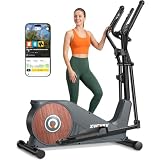
Home Elliptical with 15.5-Inch Stride
A mid-price elliptical built for people who want cardio without leaving the apartment. The fifteen-and-a-half-inch stride length suits shorter users and those who prefer a running-style cadence over a long, loping gait. Owners highlight the magnetic resistance as quiet and smooth, and the transport wheels as a genuine quality-of-life feature for a machine that otherwise sits under seven feet tall. The con that recurs most often is console readability under bright light — the display washes out near windows. Skip this if you stand over six feet or want heart-rate tracking beyond a basic pulse sensor.
MERACH Ab Trainer
This is not a vibration plate or a cardio machine; it is a dedicated core station designed to replace floor sit-ups for people with lower-back sensitivity. The adjustable angle lets you progress from assisted to near-bodyweight resistance, and owners report noticeable oblique engagement at the steepest settings. The two clear advantages are its small footprint (it stores flat) and the padded arm rests that prevent shoulder strain during long sets. The con: at a hundred and thirty dollars, it does exactly one thing. Skip it if you need a general-purpose machine or share equipment with family members who train different movement patterns.
MERACH Vibration Plate (Black)
Positioned as a women-focused vibration platform, this unit leans on Bluetooth connectivity and a companion app for guided programs. The silicone pedal inserts reduce foot slippage compared to bare-metal plates, and the auto mode cycles through speed presets so you can set it and go. Owners who use the app report it works reliably for the first few months. The recurring complaint is that Bluetooth pairing breaks after firmware updates on some phones, requiring a full reset. Skip it if you do not want to manage an app dependency — the AXV or HOPHORSE offer similar hardware without the software layer.
HOPHORSE Vibration Plate
At under fifty dollars, this is the cheapest way to try vibration training for recovery, circulation, or lymphatic drainage without a financial risk. Two hundred speed settings give fine-grained control that pricier plates sometimes lack, and the low starting price means a defective unit is an inconvenience rather than a loss. Owners appreciate the remote and the relatively quiet motor at mid-range settings. The con is build quality: the platform flexes noticeably under heavier users, and long-term durability beyond a year is not well documented. Skip it if you weigh over two hundred pounds or plan to do weighted squats on the plate.
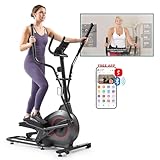
Sunny Health & Fitness Upright Elliptical
The most expensive machine on this list earns its price through a sturdy frame, pulse sensors that track heart rate with reasonable accuracy, and a magnetic resistance system that holds tension across all levels without drift. Owners consistently note it feels like a commercial-gym machine compressed into a home footprint. The integrated tablet holder and console are well laid out for watching content during long sessions. The single most cited con is assembly time and complexity — expect an hour or more with two people. Skip it if your budget does not stretch past three hundred dollars; the home elliptical delivers most of the function for half the cost.
MERACH CV30 Pro Curved Vibration Plate
Designed to address the noise complaints that plague cheaper plates, this unit uses a curved base that channels vibration downward rather than outward, and owners confirm it runs noticeably quieter at comparable speeds. The powerful motor maintains consistent oscillation even when you add body weight through squats or lunges. The price is essentially identical to the standard MERACH plate, making the quiet operation a free upgrade if noise is your priority. The con: the curved footprint makes it harder to store flush against a wall, and the lack of Bluetooth means no guided programs. Skip it if you want app connectivity or a flat platform for yoga-style stretches.
Rock Stepper Side to Side
This is not a vibration plate, elliptical, or ab machine — it is a lateral stepper that targets the glute medius and outer thigh through side-to-side motion. Three hundred pounds of weight capacity means it handles most adults without flexing, and the non-slip surface gives confidence during repetitive lateral steps. Owners praise how quickly their hip stabilizers fatigue, which suggests effective muscle recruitment. The con is limited versatility: it provides cardio only at low intensity and does nothing for upper body or core. Skip it if you need a single machine that covers multiple movement patterns or if you want high-intensity cardiovascular training.
Buying Guide
Noise and Motor Quality
For vibration plates, motor quality determines whether the machine feels like a tool or a liability. A plate that rattles at mid-range settings usually has a loose bearing or an underpowered motor that struggles to maintain oscillation under load. If you train before six in the morning or late at night, prioritize units explicitly marketed as quiet or those with owner-confirmed dB comparisons. For ellipticals, magnetic resistance systems are inherently quieter than friction-based alternatives — confirm the product page specifies magnetic braking.
Weight Capacity and Stability
The rated weight limit is not a suggestion. A plate rated for two hundred fifty pounds will flex and buzz unpredictably at two hundred twenty, transferring energy into the housing instead of your body. Ellipticals with a low rated capacity often have thin steel tubing in the frame that produces a creaking sound within months. Check the rated capacity against your weight plus a fifty-pound buffer for dynamic force during squats or sprints.
Footprint and Storage Realities
Exercise machines occupy space permanently once you stop packing them away every session. Measure the width, depth, and height of each machine against your actual available floor before purchasing. Vibration plates with handles take up more lateral space than their base suggests. Ellipticals need ceiling clearance plus a forward stride zone — a fifteen-inch stride machine still requires roughly three feet of clearance in front of the pedals for a comfortable mount.
Our Verdict
If you buy one machine for general-purpose vibration training in 2026, the AXV Vibration Plate offers the best balance of price, features, and proven owner satisfaction. It handles the most use cases for the least money. For budget-focused recovery or drainage work, the HOPHORSE plate at under fifty dollars is the lowest-risk entry point. The exception: if noise is your dealbreaker — you have hardwood floors, sleeping children, or sensitive neighbors — the MERACH CV30 Pro delivers the same core function at the same price with noticeably less sound leakage, making it the right choice for shared living spaces.
FAQ
Are vibration plates actually effective for strength?
Vibration plates enhance muscle activation during bodyweight exercises like squats and lunges, but they do not replace progressive resistance training for significant strength gains. They are best understood as an amplifier for movements you already perform, not a standalone strength solution.
What stride length do I need in an elliptical?
A rough guideline: subtract fifteen inches from your height to get a minimum comfortable stride length in inches. A fifteen-and-a-half-inch stride suits most people under five-foot-five, while taller users often find it constraining and prefer eighteen inches or more.
Can I use a vibration plate if I have joint pain?
Many users with mild joint sensitivity report that low-speed vibration sessions feel easier on knees and hips than impact cardio. However, anyone with acute inflammation, recent surgery, or a diagnosed condition should clear it with a healthcare provider before using a vibration plate.
Do I need Bluetooth connectivity on a vibration plate?
It depends on your motivation style. Guided programs reduce decision fatigue and give structure, which helps beginners stick with a routine. If you already follow a set plan or prefer freeform movement, the Bluetooth feature adds a failure point without meaningful benefit.


