
Key takeaways
- Pro: Automatic tamping eliminates the most common beginner error
- Pro: Built-in grinder means no separate purchase or counter clutter
- Con: Reduced manual control over puck preparation
What's inside
Buying a Breville coffee machine means choosing between a dozen models that look similar on a spec sheet but deliver wildly different experiences at home. A beginner who needs a reliable espresso with minimal fuss will be frustrated by a machine that demands manual tamping and grind calibration every morning, while a seasoned home barista who wants total control over extraction will feel boxed in by an automated touchscreen that locks in presets. The real question is not which machine has the most features but which ones match how much time and attention you actually want to spend making coffee.
We compared these eight Breville models across published specifications, current pricing, and aggregated owner feedback to sort the lineup by who should actually buy each one. The range spans a $299 compact espresso machine to a $1,200 touchscreen flagship, plus a drip option for people who decided espresso was too much commitment. What separates a worthwhile purchase from a regrettable one usually comes down to three things: how much hands-on skill the machine demands, whether it fits your kitchen counter footprint, and whether its price reflects features you will use weekly or just admire for a month.
As an Amazon Associate we earn from qualifying purchases at no extra cost to you. Product prices and availability are accurate as of the date shown and are subject to change.




Quick Picks
| Product | Best for | Price |
|---|---|---|
| Barista Express Impress (Stainless) | Beginners who want a real grinder without manual tamping | $649.95 |
| Barista Express (Stainless) | Home baristas learning manual puck prep | $699.95 |
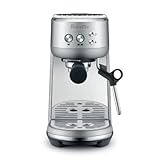
| Bambino (Stainless) | Small kitchens and tight budgets | $299.95 |
| Barista Touch (Stainless) | Families sharing one machine with different drink preferences | $987.99 |
| Barista Touch Impress (Stainless) | Those wanting full automation with guided workflows | $1199.95 |
| Luxe Brewer Thermal Carafe (Stainless) | Drip coffee lovers who want precision without espresso complexity | $349.95 |
| Barista Express Impress (Damson Blue) | Same machine, anyone matching kitchen color schemes | $649.95 |
| Barista Express (Black Truffle) | Manual prep with a darker aesthetic finish | $699.95 |
How We Picked
We evaluated each machine on four criteria: skill-level fit, because a machine mismatched to your willingness to learn produces either frustration or wasted potential; feature-to-price ratio, since several models here overlap in function at meaningfully different cost tiers; maintenance burden, drawn from how owners describe daily cleaning and descaling frequency in long-term reviews; and counter-space practicality, which matters more in real kitchens than any pressure rating suggests.
The 8 Best Breville Coffee Machines in 2026
Barista Express Impress (Brushed Stainless Steel)
This model solves the single biggest beginner complaint about the original Barista Express: inconsistent tamping. Its Impress puck system applies calibrated pressure automatically, producing even extractions without the user developing wrist technique. Owners consistently note that their early shots improved dramatically compared to hand-tamping models, and the integrated conical burr grinder keeps the workflow self-contained. The touchscreen-free design means fewer points of failure than the Touch variants. The main drawback is that it removes some tactile control that hobbyists enjoy, and the stainless housing shows fingerprints quickly. Skip this if you already have reliable tamping skills or if you prefer the ritual of manual adjustment over automated consistency.
- Pro: Automatic tamping eliminates the most common beginner error
- Pro: Built-in grinder means no separate purchase or counter clutter
- Con: Reduced manual control over puck preparation
Barista Express (Brushed Stainless Steel)
The original that made Breville a household name among home espresso drinkers still holds up well. It includes the same integrated conical burr grinder as the Impress but requires manual dosing and tamping, which rewards practice with genuine skill development. Owner feedback highlights its durability over multiple years of daily use, with many reporting that the machine ages gracefully as their technique improves. The trade-off is a steep learning curve in the first few weeks; shots often taste uneven until the user calibrates grind size, dose, and tamp pressure to their specific beans. Skip this if you want repeatable results from day one without a learning period, or if small countertop space is a hard constraint since its footprint is among the larger here.
- Pro: Develops real barista skills over time
- Pro: Proven long-term reliability per owner reports
- Con: Meaningful learning curve before consistent results
Bambino (Brushed Stainless Steel)
At $299.95, this is the lowest barrier to entry for real espresso from Breville. Its compact frame fits under most upper cabinets where larger models would not, and the single-thermoblock design heats quickly for back-to-back drinks. Owners praise its small footprint and straightforward operation for straight shots and macchiatos. The critical limitation is the absence of a built-in grinder, so budget must stretch to cover a separate burr grinder for quality results, which effectively raises the total cost close to the Impress line. Skip this if you have no counter space for a second appliance or if you plan to drink milk-based drinks frequently, since the steam wand is functional but less powerful than pricier siblings.
- Pro: Smallest footprint and fastest heat-up in this lineup
- Pro: Lowest price point for a Breville espresso machine
- Con: Requires a separate grinder, adding cost and space needs
Barista Touch (Brushed Stainless Steel)
This model targets households where multiple people drink different milk-based beverages. The color touchscreen stores drink preferences per user and automates texturing, letting a novice produce café-quality latte art without wand skills. The built-in grinder handles the full workflow from bean to finished cup. Owners note that the convenience is genuinely transformative for families with varied tastes, though some report that the software occasionally feels overprotective, limiting adjustments a more experienced user might want. At $987.99 it sits in a premium tier where automation must justify the price over simpler machines. Skip this if you are the sole coffee drinker in the household or if you prefer mechanical dials over a touchscreen interface for reliability.
- Pro: Per-user drink profiles ideal for shared households
- Pro: Automated milk texturing produces consistent results
- Con: Touchscreen software can restrict manual override options
Barista Touch Impress (Brushed Stainless Steel)
This is Breville’s most automated home espresso machine at $1,199.95, combining the Touch’s guided touchscreen workflow with the Impress tamping system. The result is a machine that produces a complete drink from bean to cup with minimal user intervention beyond selecting from the menu and pressing start. Owner feedback emphasizes that it is excellent for people who want café results without any skill acquisition, and the cleaning cycle guidance reduces maintenance anxiety. The drawback is price and the fact that automation at this level means less room to experiment as skills grow. Skip this if the total cost exceeds what you would spend on a quality grinder plus a mid-tier machine, or if you value hands-on involvement in the brewing process.
- Pro: Most complete automation from bean to finished drink
- Pro: Guided cleaning reduces long-term maintenance errors
- Con: Highest price in this lineup with diminishing returns for experienced users
Luxe Brewer Thermal Carafe (Brushed Stainless Steel)
Not everyone wants espresso, and this drip machine addresses the common frustration of bland or inconsistent filter coffee. It features programmable bloom phases and adjustable flow rate, letting users dial in extraction beyond what a standard auto-drip offers. The thermal carafe keeps coffee hot without the bitter scalding that a glass pot on a warming plate causes. Owners describe it as the most forgiving way to get excellent daily coffee with minimal skill or time investment. The con is straightforward: it produces no espresso and has no steam wand, so anyone wanting milk drinks or concentrated shots should look elsewhere. Skip this if your household prefers espresso-based beverages or if you already own a drip machine you are happy with.
- Pro: Adjustable bloom and flow for serious filter coffee results
- Pro: Thermal carafe preserves temperature without overcooking
- Con: Cannot produce espresso or steam milk
Barista Express Impress (Damson Blue)
Internally identical to the brushed stainless Impress at the same $649.95 price, this colorway exists purely for buyers matching their kitchen aesthetic. Owner feedback on the damson finish is split: some find it a welcome departure from the stainless-everything look, while others note it shows light scratches more readily than brushed metal. Performance, workflow, and maintenance are unchanged from the stainless version described above. Skip this if you are indifferent to color or if your kitchen gets heavy daily wear that would mar a glossy finish faster than a brushed one.
- Pro: Same excellent automated tamping as the stainless version
- Pro: Distinctive finish that stands out from typical appliances
- Con: Color finish may show wear more visibly than brushed stainless
Barista Express (Black Truffle)
Like its Damson Blue counterpart, this is the original manual Barista Express in an alternate finish at the same $699.95 price. It delivers identical grinding, tamping, steaming, and brewing performance to the brushed stainless version, with a darker housing that some owners prefer for reducing fingerprint visibility. The long-term reliability reports match the stainless model, confirming the color change does not affect internal components or build quality. Skip this if you want the automated Impress tamping system, since the core performance difference between these two models is far more consequential than finish color.
- Pro: Darker finish hides fingerprints and minor smudges better
- Pro: Proven manual workflow for developing espresso skills
- Con: Still requires tamping practice for consistent shots
Buying Guide
Automated vs. Manual Puck Preparation
The dividing line in this lineup is whether the machine handles tamping for you or expects you to develop that skill. Impress models apply calibrated pressure automatically, which means fewer bad shots from an uneven puck but also less opportunity to learn what pressure adjustments do to extraction taste. If you enjoy the hands-on process and want your skills to transfer to commercial machines, the non-Impress Barista Express remains a better teacher despite its steeper initial learning curve.
Built-in Grinder vs. Separate Grinder
Models with integrated conical burr grinders keep your counter clear and simplify workflow, but they commit you to one grind setting range. If you plan to experiment with different bean types, roast levels, or even switch to pour-over occasionally, a separate dedicated grinder offers more flexibility. The Bambino forces this choice at its price point; every other espresso model here includes its own grinder, trading some flexibility for convenience.
Touchscreen Interfaces and Long-Term Reliability
Touch models add per-user drink profiles and guided workflows that genuinely help households with varied preferences. However, touchscreen interfaces introduce a failure mode that mechanical dial machines do not have, and software updates can change behavior over a machine’s lifespan. If you prioritize a device that will operate identically in five years, the Impress and standard Barista Express models with physical controls offer more predictable long-term use.
Our Verdict
Our top pick is the Barista Express Impress in Brushed Stainless at $649.95. It balances automation where it matters most (tamping consistency) with enough manual control over grind and extraction to remain engaging, all at a price below the original manual model. For budget-conscious buyers, the Bambino at $299.95 is the best value if you already own a quality burr grinder or are willing to pair it with one. However, if multiple household members drink different milk-based beverages daily, the Barista Touch at $987.99 becomes the better investment despite its higher price, because its per-user profiles eliminate arguments about settings and milk texture.
FAQ
Can I use pre-ground coffee in the Barista Express Impress?
Yes, you can bypass the built-in grinder and dose pre-ground coffee directly into the portafilter basket. However, the Impress tamping system is calibrated around freshly ground coffee’s density, so you may need to adjust the dose slightly to achieve proper puck volume and avoid under-extraction.
How often do these machines need descaling?
Breville recommends descaling roughly every 2-3 months depending on water hardness, and most models have an indicator light that prompts you. Owner feedback suggests that using filtered water significantly reduces scaling frequency and extends time between maintenance cycles.
Is the Barista Touch worth the price jump over the Barista Express Impress?
For a single drinker with consistent preferences, likely not, since the Impress already handles tamping and grinding automatically. The Touch justifies its premium when multiple people need different drink profiles stored and recalled, or when automated milk texturing saves meaningful time and effort every day.
Do the color variants affect warranty or parts availability?
No. The Damson Blue and Black Truffle models share identical internal components, warranty terms, and service parts with their brushed stainless equivalents. The only difference is the exterior finish, so parts availability and repair costs remain the same regardless of color choice.


