
Key takeaways
- Pro: Works with multiple apps, so you are not forced into one ecosystem.
- Pro: Consistently strong owner ratings for connection speed and code accuracy.
- Con: Engine-focused; does not cover ABS, SRS, or TPMS systems.
What's inside
When your dashboard throws a check-engine light, the difference between a $200 tow truck ride and a five-minute DIY diagnosis often comes down to one small dongle plugged into your car’s OBD2 port. An iPhone-compatible OBD2 reader connects to the vehicle’s onboard computer, pulls stored trouble codes, and translates them into plain English right on your screen. The problem is that not every reader in this category works equally well: some connect reliably only with specific apps, others clear codes but cannot read advanced manufacturer-specific data, and a handful require subscriptions that quietly turn a one-time purchase into an ongoing expense.
What separates a great reader from a mediocre one comes down to connection stability, app compatibility on iOS specifically, breadth of system coverage beyond just the engine, and whether the hardware works the moment you plug it in. This comparison, assembled for the 2026 lineup, weighs published specifications, listed prices, and aggregate owner feedback across eight widely available options so you can match the right tool to your car and your mechanical confidence level.
As an Amazon Associate we earn from qualifying purchases at no extra cost to you. Product prices and availability are accurate as of the date shown and are subject to change.



Quick Picks
| Product | Best for | Price |
|---|---|---|
| Veepeak OBDCheck BLE | Best overall value | $31.98 |
| OBD2 Scanner Bluetooth 5.4 | Best budget wireless | $29.99 |
| ANCEL AD310 | Best standalone (no phone required) | $29.99 |
| FIXD | Best for beginners | $39.99 |
| BlueDriver | Best for deeper diagnostics | $94.95 |
| OBDLink MX+ | Best for advanced users | $139.95 |
| BlueDriver (premium) | Best for full-system coverage | $139.95 |
| Veepeak OBDCheck BLE+ | Best for extended coverage | $41.98 |
How We Picked
We narrowed this field by evaluating four criteria that matter most for iPhone users specifically. First, confirmed iOS compatibility with a dedicated app or broad app support, since not every Android-friendly reader plays well with Apple devices. Second, diagnostic breadth—whether the hardware reads only engine codes or extends to transmission, ABS, airbag, and tire-pressure systems. Third, the presence or absence of subscription requirements, which fundamentally changes the long-term cost of ownership. Fourth, connection reliability as reported by owners across a range of vehicle makes and model years.
The 8 Best Iphone Obd2 Reader in 2026
Veepeak OBDCheck BLE
This compact dongle earns its spot as the best overall value because it pairs reliably with both Veepeak’s own app and popular third-party options like Torque and Car Scanner on iOS, giving you flexibility without lock-in. Owners praise its instant Bluetooth connection and the clean interface that walks you through code interpretation step by step.
- Pro: Works with multiple apps, so you are not forced into one ecosystem.
- Pro: Consistently strong owner ratings for connection speed and code accuracy.
- Con: Engine-focused; does not cover ABS, SRS, or TPMS systems.
Skip it if your priority is diagnosing something beyond the engine or emissions monitor, such as an airbag warning or ABS fault.
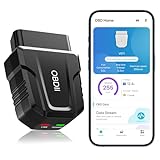
OBD2 Scanner Bluetooth 5.4
At $29.99, this reader delivers Bluetooth 5.4 connectivity—the newest standard in the group—at a price that barely clears the cheapest entry point. The faster Bluetooth generation means lower latency and a more stable link in electrically noisy environments like older cars with aftermarket accessories. Owners note the slim profile clears tight spaces under the dash without interfering with knee room.
- Pro: Bluetooth 5.4 provides the most current wireless standard in this lineup.
- Pro: Lowest listed price among wireless options here.
- Con: Limited published documentation on app compatibility depth compared to better-known brands.
Skip it if you want a mature support community or guaranteed compatibility with a specific app before purchase.
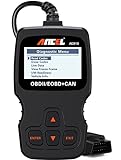
ANCEL AD310
The AD310 is the odd one out in a Bluetooth-heavy field: it is a standalone handheld unit with its own screen, no phone required. For iPhone users who dislike the friction of pairing, charging, and app-switching mid-diagnosis, this eliminates those steps entirely. It reads and clears engine fault codes on any OBD2-compliant vehicle from 1996 onward, and its rugged shell survives being tossed into a glove box.
- Pro: Zero dependency on a phone, Bluetooth stack, or app store updates.
- Pro: Physical screen and buttons work fine in bright sunlight where a phone display struggles.
- Con: No wireless connectivity, so you cannot log data or use live streaming graphs on a larger screen.
Skip it if you want real-time sensor graphs, data logging, or advanced bidirectional functions that only software-based apps provide.
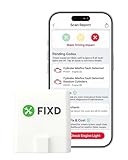
FIXD Bluetooth OBD2 Scanner
FIXD positions itself squarely at the owner who knows nothing about cars and wants the scanner to make the decision for them. Its proprietary app translates raw codes into plain-language explanations, severity ratings, and recommended repair actions. The hardware is small, the setup is genuinely plug-and-play, and the app design keeps you from drowning in technical data you do not need.
- Pro: Best-in-class plain-language reporting for non-mechanics.
- Pro: Severity color-coding tells you immediately whether a code is urgent or cosmetic.
- Con: Some diagnostic features and service reminders sit behind a subscription tier.
Skip it if you are a DIY mechanic who wants raw PIDs, freeze-frame data, and full control over what the scanner reports.
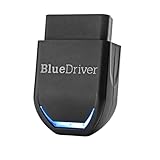
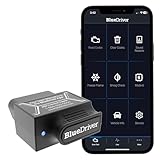
BlueDriver OBD2 Scanner (No Subscription)
This is the sweet spot for iPhone owners who want more than engine codes without paying flagship prices. BlueDriver reads and clears codes across ABS, SRS, and TPMS systems, and its Repair Assist feature suggests likely fixes ranked by probability. The no-subscription model means the listed price is the total price, and the iOS app receives regular updates.
- Pro: Covers ABS, SRS, and TPMS at a mid-range price with no ongoing fees.
- Pro: Repair Assist narrows diagnosis time dramatically for common faults.
- Con: Does not offer full-system bi-directional control found on pro-level tools.
Skip it if you need to actuate components, perform adaptations, or access manufacturer-private codes for European marques.
OBDLink MX+
The MX+ is built for enthusiasts who already know which third-party app they want and need hardware that will not bottleneck them. It supports proprietary protocols for Ford, Mazda, Lincoln, and Mercury vehicles, and its multi-protocol compatibility spans the widest range of car brands in this group. Owners in DIY forums consistently rate it the gold standard for power-user functionality on iOS.
- Pro: Extended protocol coverage including manufacturer-specific systems beyond generic OBD2.
- Pro: High polling rate keeps live data graphs smooth even with many PIDs displayed.
- Con: The highest listed price in this group, and it assumes you already know how to use advanced apps.
Skip it if you simply want to clear a check-engine light and do not plan to interact with your car’s systems beyond that.
BlueDriver OBD2 Scanner (Premium)
The premium-tier BlueDriver unit shares the same no-subscription philosophy as the base model but at a higher listed price. Owner reviews suggest the hardware is identical in function, with the price difference reflecting bundled accessories or retailer-specific packaging. If you are shopping purely on diagnostic capability, verify whether this listing includes extras that justify the premium over the lower-priced sibling.
- Pro: Full BlueDriver app ecosystem with ABS, SRS, and TPMS coverage, no subscription.
- Pro: Consistently positive iOS app reviews for stability and update cadence.
- Con: Priced at the same level as the OBDLink MX+ without matching its protocol breadth.
Skip it if you are paying a premium for packaging rather than hardware features—compare against the $94.95 listing before deciding.
Veepeak OBDCheck BLE+
The BLE+ variant upgrades the standard OBDCheck by adding extended diagnostic coverage, meaning it reaches systems the base model cannot touch while staying in the same compact form factor. For owners who liked the base Veepeak’s reliability and app flexibility but hit the ceiling of engine-only diagnostics, this is a direct step up without jumping into premium-tier pricing.
- Pro: Broader system coverage than the base OBDCheck while remaining affordable.
- Pro: Retains the well-reviewed multi-app compatibility that made Veepeak popular.
- Con: Slightly higher price than competitors with similar coverage at the budget end.
Skip it if you are confident the base model handles your needs, as the incremental cost may not justify coverage you will never use.
Buying Guide
Connection Type and iOS Compatibility
Bluetooth remains the dominant connection method for iPhone OBD2 readers, but the version matters less than actual pairing reliability reported by owners. iOS restricts background Bluetooth access more tightly than Android, so some readers that connect flawlessly on an Android phone will drop sessions or refuse to pair on an iPhone. Check that the product listing explicitly confirms iOS support and verify the companion app appears in the App Store with recent updates.
System Coverage Beyond the Engine
Every OBD2 reader handles generic engine and emissions codes, but that is only the surface layer. If your car has an ABS warning, a parked airbag light, or a TPMS fault, you need a scanner whose firmware can communicate with those separate control modules. Look for explicit mentions of ABS, SRS, or TPMS coverage in the product description; absence of those terms almost always means engine-only capability.
Subscription Requirements and Total Cost
A reader that costs $40 upfront but charges $10 monthly to access advanced features is functionally a $160 tool after one year. Several products in this category have free tiers, but the useful features sit behind paywalls. When comparing prices across listings, factor in whether the app requires an ongoing plan for the specific functions you need—particularly repair suggestions, service reminders, or extended system scans.
Our Verdict
The top pick is the BlueDriver OBD2 Scanner at $94.95: it delivers ABS, SRS, and TPMS coverage with no subscription, has one of the most stable iOS apps in the category, and its Repair Assist feature saves real diagnostic time for owners who want actionable guidance rather than raw code dumps. For the tightest budget, the OBD2 Scanner Bluetooth 5.4 at $29.99 offers the most modern wireless connectivity in the field, making it a compelling choice for someone who just needs reliable engine-code reading on their iPhone. If you already own or plan to invest in specialized apps like FORScan or Torque Pro and want hardware that will not be the limiting factor, the OBDLink MX+ earns its premium price through protocol breadth that no other option here matches.
FAQ
Will any OBD2 Bluetooth reader work with my iPhone?
No. iOS enforces stricter Bluetooth profiles than Android, so some readers that work on Android will either not appear in Bluetooth settings or will disconnect frequently. Always confirm the listing explicitly states iPhone or iOS compatibility before purchasing.
Can an OBD2 reader clear a check-engine light permanently?
Yes, it can erase the stored code and turn off the light. However, if the underlying fault persists, the light will return within a short drive cycle. Clearing without repairing is a temporary fix at best.
Do I need to buy a separate app, or does the hardware include everything?
Most readers ship with a companion app that covers basic code reading and clearing. Advanced features like live sensor graphs, freeze-frame data, or extended system scans may require a third-party app or a paid tier within the manufacturer’s own app.
Is an expensive scanner necessary for a typical daily-driver car?
For most owners, no. A mid-range scanner like the BlueDriver at $94.95 covers engine, ABS, airbag, and tire-pressure systems on nearly every make sold in the US. Premium tools shine mainly for enthusiasts who need manufacturer-specific protocols or bidirectional control of vehicle components.


