Key takeaways
- Leaving the pump plugged in during a freeze: Ice can block the intake, overheat the motor, or split the housing.
- Draining only the main bowl: Upper tiers, tubes, filters, and low points may still hold enough water to freeze.
- Using a tarp directly on the finish: Trapped condensation and abrasion can stain or scratch surfaces.
- Using salt or automotive antifreeze: These can harm plants, pets, wildlife, pumps, and masonry.
- Moving large sections alone: Dropped concrete or stone can cause serious injury and costly damage.
- Ignoring the electrical connection: A GFCI that trips repeatedly, a frayed cord, or a cracked plug needs attention before spring startup.
- Sealing damp parts in a bin: Moisture encourages corrosion, mildew, and odor.
Winterizing a garden fountain protects the pump, basin, finish, and plumbing from freezing weather. Water expands by roughly 9 percent when it turns to ice, so water trapped in a pump housing, tube, or narrow passage can split components or force fittings apart. Ice can also crack concrete, ceramic, terra-cotta, and some stone, while repeated freeze-thaw cycles may loosen decorative sections.
The safest approach is to stop using the fountain before a hard freeze, drain every water-holding area, clean away debris, and store or cover vulnerable parts. The exact procedure depends on whether you have a small tabletop fountain, a freestanding tiered model, or a pondless waterfall. Use the following process as a practical guide for preparing most residential fountains in 2026.
As an Amazon Associate we earn from qualifying purchases at no extra cost to you. Product prices and availability are accurate as of the date shown and are subject to change.


What You Need
| Item | Why | Optional? |
|---|---|---|
| Wet/dry shop vacuum or hand siphon | Removes water from basins, pump chambers, and low spots | Yes, but strongly recommended |
| Clean buckets | Catches drained water and helps rinse removable parts | No |
| Soft brush, sponge, and mild dish soap | Clears algae, leaves, mineral deposits, and sludge | No |
| Clean towels or microfiber cloths | Dries surfaces and electrical components before storage | No |
| Plastic storage bin with lid | Protects the pump, tubing, small fittings, and ornaments indoors | Yes |
| Breathable waterproof cover | Shields a fixed fountain from snow, rain, dirt, and sun | Yes |
| Foam pipe insulation or removable plugs | Helps keep residual water out of vulnerable tubing | Yes |
| Outdoor-rated electrical cord cover or labeled storage bag | Keeps the disconnected cord clean and easy to identify | Yes |
For large installations, add work gloves, a second person for lifting, and a small shop vacuum capable of handling water. Never use automotive antifreeze in a fountain. It is toxic to pets and wildlife and can damage pumps and finishes.
Step-by-Step
1. Choose the right time to shut it down (15 to 30 minutes)
Begin when nighttime temperatures are forecast to approach 32°F, or earlier if a severe freeze is expected. In mild regions, a fountain may run through much of winter if the manufacturer permits it and the water never freezes solid. In areas with repeated freezing weather, shutting down before the first hard freeze is safer than trying to keep up with ice.
Turn off the pump at the switch or GFCI outlet, then unplug it. Do not pull on the cord. If the fountain has lights, heaters, or a timer, disconnect each component according to its instructions and label cords before storage.
2. Remove leaves, algae, and decorative items (20 to 40 minutes)
Take out leaves, twigs, stones, floating ornaments, and removable spillway pieces. Scoop out sludge before draining so it does not clog the pump or plumbing. Set fragile pieces on a towel rather than directly on concrete.
For a large tiered fountain, photograph the arrangement before removing anything. This simple record helps you return bowls, finials, and tubing to the correct positions in spring. A detailed beginner’s guide to pumps, pondless waterfalls, stonework, and troubleshooting can also be useful if your installation has several connected sections.
3. Drain the basin completely (15 to 45 minutes)
Open the drain plug if the fountain has one. Otherwise, use a siphon or wet/dry vacuum. Empty the main reservoir first, then drain each upper bowl and spillway. Tilt removable basins only with help; a large concrete or composite section can weigh more than 50 pounds when dry and substantially more when holding water.
Do not assume that a dry-looking basin is empty. Run a hand or sponge along ledges, drain recesses, and decorative cavities. Even a few inches of trapped water can freeze and expand.
4. Remove and clean the pump (20 to 40 minutes)
Lift the pump out by its housing, not its power cord. Remove the intake screen or cover and rinse away grit. Use a soft brush to clean the impeller and surrounding chamber. If mineral scale is present, soak removable plastic parts in a solution of one part white vinegar to one part water, then rinse thoroughly. Do not soak electrical connections.
Inspect the impeller, rubber feet, seals, and cord for cracking, brittleness, or unusual wear. A pump that has been noisy, weak, or prone to clogging may not survive another season. Let the pump drain and air-dry completely before placing it in indoor storage.
5. Flush tubing and hidden water pockets (15 to 30 minutes)
Disconnect accessible tubing and hold it so water can run out. Use a wet/dry vacuum on the end of a tube if water remains trapped. Check elbows, check valves, filter boxes, and the lowest point in pondless waterfall reservoirs. Remove detachable nozzles and spray heads, rinse them, and store them with the pump.
Do not force compressed air through delicate tubing unless the manufacturer allows it. Excessive pressure can dislodge fittings or damage a check valve. Foam insulation can be placed around exposed lines, but insulation is not a substitute for draining.
6. Clean and dry the fountain surfaces (30 to 60 minutes)
Scrub the basin and tiers with warm water, mild dish soap, and a soft brush. Rinse until no soap remains. For stubborn white mineral deposits, use a manufacturer-approved descaler or a diluted vinegar solution on compatible surfaces. Avoid abrasive pads, wire brushes, bleach, and pressure washing unless the finish specifically permits them.
Dry the fountain with towels, then allow it to air-dry. Pay special attention to seams, drain openings, decorative recesses, and the underside of bowls. Water left behind is the primary freeze-damage risk.
7. Store removable components indoors (15 to 30 minutes)
Store the pump, tubing, nozzles, lights, small ornaments, and rubber parts in a dry location that stays above freezing. A lidded plastic bin works well, but leave components completely dry before closing it. Keep the pump away from gasoline, fertilizer, solvents, and direct sunlight.
Do not store a pump submerged in water over winter unless its instructions specifically require that method. Most seasonal fountain pumps are better protected dry, clean, and indoors.
8. Cover the fixed fountain (20 to 45 minutes)
Once the fountain is dry, cover it with a breathable, waterproof cover that reaches near the ground without sealing in moisture. A cover made for outdoor furniture is often suitable if it has ventilation. Avoid tightly wrapping concrete or stone in nonbreathable plastic; condensation can collect underneath and worsen staining or freeze damage.
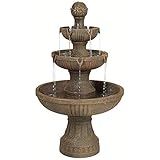
Use padded straps or sandbags to keep the cover from blowing away, but do not place heavy loads on thin bowls or finials. For a substantial freestanding model, such as an approximately 80-inch, four-tier fountain priced around $1,500 to $2,000, have another adult help with the cover and protect the highest decorative pieces from wind.
Mistakes to Avoid
- Leaving the pump plugged in during a freeze: Ice can block the intake, overheat the motor, or split the housing.
- Draining only the main bowl: Upper tiers, tubes, filters, and low points may still hold enough water to freeze.
- Using a tarp directly on the finish: Trapped condensation and abrasion can stain or scratch surfaces.
- Using salt or automotive antifreeze: These can harm plants, pets, wildlife, pumps, and masonry.
- Moving large sections alone: Dropped concrete or stone can cause serious injury and costly damage.
- Ignoring the electrical connection: A GFCI that trips repeatedly, a frayed cord, or a cracked plug needs attention before spring startup.
- Sealing damp parts in a bin: Moisture encourages corrosion, mildew, and odor.
How Often
Winterize once each year before sustained freezing weather. Check the cover after major storms, heavy snow, and high winds. If the fountain remains outdoors and exposed, inspect it monthly for standing water, displaced covers, cracks, and animal nesting.
In warm climates where temperatures briefly dip below freezing, monitor the forecast instead of automatically draining for the entire season. If the fountain is designed for year-round operation, a manufacturer-approved heater or freeze-protection system may be appropriate. Never improvise with an indoor heating pad or extension cord.
When to Call a Pro or Replace
Call a fountain or electrician professional if you find a cracked basin, shifted foundation, leaking underground line, damaged hardwired connection, or a GFCI that will not reset. A professional should also handle pumps or lighting connected to fixed household wiring, especially if water is near the electrical junction.
Replacement may be more practical when a pump is more than several seasons old, has seized bearings, repeatedly overheats, or costs nearly as much to repair as a new unit. Before buying, match the replacement pump’s flow rate, maximum head height, outlet size, wattage, and cord length. Small replacement pumps often cost about $25 to $100; larger fountain pumps commonly range from $100 to $400 or more.
FAQ
Can I leave water in a garden fountain over winter?
Usually, no. Even if the basin itself is frost-resistant, water trapped in the pump, tubing, drain, or decorative cavities can freeze and expand. Completely draining and drying the system is the lowest-risk option.
Should I bring a concrete fountain indoors?
Bring in removable concrete, ceramic, terra-cotta, and cast-stone pieces when practical. If a large fountain cannot be moved, drain it thoroughly, keep water from collecting in bowls, and use a breathable cover. Do not lift a large section without help or suitable equipment.
Can a pondless waterfall stay outside in freezing weather?
Yes, but shut off the pump and drain the vault, tubing, filter, and exposed spillway. Remove standing water from the reservoir as far as the design allows. Cover exposed equipment and check for low spots where water can collect.
When can I restart the fountain?
Wait until the risk of hard freezes has passed. Uncover the fountain, inspect for cracks and loose fittings, rinse the basin, reinstall the pump, and fill it with clean water. Run the system briefly while watching for leaks and listening for unusual noise before returning it to its normal schedule.