Key takeaways
- Prep the seedbed and spread your grass seed as normal.
- Apply the granules the same day — the label allows application before or after the seed goes down, so order doesn’t matter as long as it’s the same visit.
- For overseeding an existing lawn, mow first at your normal height, seed, then apply.
- Best windows: early spring once soil warms toward 55°F, or late summer into early fall for cool-season grasses — fall is usually the stronger choice because weed pressure is declining.
What's inside
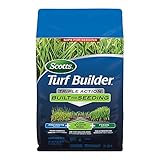
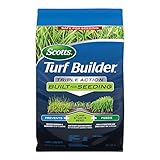
Scotts Turf Builder Triple Action Built for Seeding is a granular lawn food you can apply the same day you plant grass seed — it kills some existing weeds, prevents new crabgrass and other listed weeds while your seed germinates, and feeds the seedlings. The key trade-off: its weed-prevention window lasts weeks, not months, so it’s the right bag for seeding projects and the wrong bag for season-long crabgrass control on an established lawn.
As an Amazon Associate we earn from qualifying purchases at no extra cost to you.

What Makes It Different From Regular Triple Action
Both products carry the “Triple Action” name — kill weeds, prevent weeds, feed the lawn — but they use different chemistry to get there. Regular Scotts Turf Builder Triple Action relies on a conventional crabgrass pre-emergent plus standard broadleaf weed killers. A conventional pre-emergent doesn’t know the difference between a crabgrass seed and a Kentucky bluegrass seed: spread it at seeding time and it stops your new grass from germinating along with the weeds.
Scotts Triple Action Built for Seeding swaps that out for a seed-tolerant herbicide (mesotrione), which most common turf types — Kentucky bluegrass, tall fescue, perennial ryegrass — can germinate through. That’s the entire reason the product exists, and it drives every difference in the table below.
| Triple Action Built for Seeding | Regular Triple Action | |
|---|---|---|
| Apply the same day you seed | Yes — before or after seeding | No |
| Kills existing listed weeds | Yes — broadleaf and some grassy weeds | Yes — dandelion, clover, and more |
| Crabgrass prevention window | Roughly 4–6 weeks | Up to about 4 months |
| How long you must wait to seed after applying | No wait — seed the same day | Around 4 months (check current label) |
| Best role | New lawns, overseeding, patch repair | Established lawns not being seeded |
Which Bag Fits Your Situation
Because the two products solve different problems, picking between them is a decision about timing, not about which one is “better.”
| Your situation | Right choice | Why |
|---|---|---|
| Seeding a new lawn on bare soil | Built for Seeding | Feeds seedlings and blocks weeds during the vulnerable first weeks |
| Overseeding a thin existing lawn in spring or fall | Built for Seeding | Lets you prevent crabgrass without sacrificing the overseed |
| Fixing dog spots or small bare patches with seed | Built for Seeding (spot apply) | Seed-safe; one bag covers many repair sessions |
| Established lawn with dandelions and crabgrass history, no seeding planned | Regular Triple Action | Longer prevention window; cheaper per season of protection |
| You already applied a conventional crabgrass preventer this year | Wait to seed | Seeding into it fails; plan seeding for ~4 months after that application |
| Seed mix heavy in fine fescues or bentgrass | Check the label first | Some fine-textured grasses are more sensitive; a plain starter fertilizer may be safer |
How to Apply It Around Seeding
Timing relative to planting
- Prep the seedbed and spread your grass seed as normal.
- Apply the granules the same day — the label allows application before or after the seed goes down, so order doesn’t matter as long as it’s the same visit.
- For overseeding an existing lawn, mow first at your normal height, seed, then apply.
- Best windows: early spring once soil warms toward 55°F, or late summer into early fall for cool-season grasses — fall is usually the stronger choice because weed pressure is declining.
Spreader settings and calibration
Use a broadcast or drop spreader — never hand-broadcast a weed-and-feed product, because streaky application means streaky weed control. Scotts’ own broadcast/rotary spreaders have commonly been listed around setting 3½ on the bag’s settings chart; confirm the number printed on your specific bag, since settings get revised. For any other spreader brand, calibrate:
- The bag covers up to 4,000 sq ft, which works out to roughly 3 lb of granules per 1,000 sq ft.
- Measure out a 500 sq ft test area and weigh about 1.5 lb of product.
- Set the spreader low, walk the area at a steady pace, and check coverage. Adjust the dial until that 1.5 lb just covers the test strip.
- Walk at a consistent speed — granule output changes with pace, which is the most common cause of missed strips and over-applied burn lines.
Watering and first mowing
The watering schedule is driven by the seed, not the product: keep the top quarter-inch of soil consistently moist with light daily watering until germination. That routine also carries the granules into the soil where they work. Resume mowing once new grass reaches roughly 3–4 inches, and bag clippings the first few times.
Coverage and Cost Math
A standard bag treats up to 4,000 sq ft. Worked examples:
- 1,800 sq ft renovation: one bag, with about half left over for fall touch-ups.
- 6,000 sq ft overseed: two bags (or one bag plus careful calibration stretching coverage — but don’t stretch a weed-control product below label rate; under-dosing is how crabgrass gets through).
- At general lawn-and-garden price ranges for this product (typically mid-$20s to mid-$30s per bag), you’re paying roughly $6–9 per 1,000 sq ft for weed prevention plus fertilizer combined.
Compare that against the real alternative: buying a plain starter fertilizer plus a separate seed-safe preventer rarely costs less, and applying regular Triple Action by mistake can waste an entire seed purchase — at $40–80+ per bag of quality seed, that’s the expensive error to avoid.
What to Expect — and What Wears Out First
- Temporary whitening: New seedlings can show pale or whitish leaf color after application. That’s a known, temporary effect of mesotrione on plant pigments — affected grass typically greens back up within a week or two. It looks alarming; it isn’t fatal.
- Short residual: Expect about 4–6 weeks of weed prevention, not a whole season. The strategy is to get new grass dense enough to shade out weeds by the time protection fades. If you seeded very early in spring and crabgrass pressure is heavy, late-summer breakthrough is possible — plan a conventional pre-emergent the following spring once the lawn is established.
- Weaker on established weeds: It suppresses listed broadleaf weeds but won’t erase a badly infested lawn. If the area is overrun, deal with the worst weeds before your seeding date rather than relying on this product to do both jobs at full strength.
- Housekeeping: Sweep stray granules off driveways and patios, keep people and pets off until the lawn has been watered and dried per the label, and store the open bag sealed and dry — clumped product won’t meter through a spreader evenly.
When You Can Seed or Reseed
With Built for Seeding, there’s no waiting period — seed the same day, before or after application. If patches fail to take, you can spot-reseed them without waiting out a long interval, which is the product’s biggest practical advantage. The restriction runs the other direction: if a lawn has been treated with regular Triple Action or another conventional crabgrass preventer, hold off seeding for about four months (always verify against the current product label). And once your newly seeded lawn has been mowed three or four times, it’s established enough that standard lawn weed products become options again for future seasons.
FAQ
Can I use it on a lawn I’m not seeding?
You can — it’s a legitimate weed preventer and fertilizer — but you get a much shorter prevention window than regular Triple Action or a dedicated crabgrass preventer, so it’s usually not the economical choice for established turf.
Does it need to be watered in?
The daily watering you’re already doing to germinate the seed handles activation. If you’re applying it to an existing lawn without seed, water lightly after application per the label directions.
Will it kill my existing dandelions?
It has activity against listed weeds, including common broadleaves, but it’s gentler than a dedicated weed killer — expect suppression of young weeds rather than a complete cleanup of mature, established ones.
Is it safe around kids and pets?
As with any lawn herbicide product, follow the label: keep people and pets off the treated area until it has been watered in and the lawn surface is dry.