Key takeaways
- Check water before the reminder: fast-growing plants may use water sooner than the scheduled alert, particularly in warm, dry rooms.
- Follow the plant-food instructions: extra fertilizer does not compensate for weak lighting and can stress roots.
- Prune early: pinch basil and other vigorous plants before they form a dense canopy. This keeps light reaching smaller plants.
- Clean between crops: drain the reservoir, wash removable parts, and remove old roots and slime before starting new pods.
- Inspect the pump: mineral deposits and plant debris can reduce circulation. A blocked pump is a common cause of wilt despite a full reservoir.
- Replace consumables: grow sponges, seed pods, plant food, and occasionally pump components are ongoing ownership costs.
Best AeroGarden Hydroponic Systems for Fresh Herbs and Vegetables
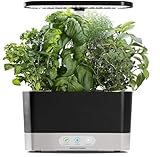
The best AeroGarden hydroponic system for most kitchens is the six-pod Harvest, while the nine-pod Bounty is the better choice for frequent cooking and a Farm model makes sense when you want a larger, dedicated indoor crop.
AeroGarden systems use a water reservoir, a small pump, pre-seeded or plant-ready grow pods, and an overhead LED light. The main buying decision is not simply how many plants fit: it is whether your counter can accommodate the light height, whether you will use enough herbs to justify the reservoir, and whether you are prepared to prune and refill the garden regularly.
Our top picks


As an Amazon Associate we earn from qualifying purchases at no extra cost to you. Ratings are shown as listed on Amazon.
Quick comparison of the main AeroGarden formats
| System type | Growing capacity | Approximate footprint and height | Light output | Best suited to | Typical maintenance |
|---|---|---|---|---|---|
| Harvest | 6 pods | About 17.4 x 6.25 x 10.5 inches at minimum height; taller with the light raised | 12-watt LED | Small kitchens, beginners, herbs | Top up water roughly weekly; add plant food on schedule; prune often |
| Harvest Elite | 6 pods | Similar narrow footprint to Harvest; adjustable light column | 12-watt LED, with added controls on some versions | Users wanting reminders or a more convenient control panel | Similar to Harvest, with less guesswork if reminders are enabled |
| Bounty | 9 pods | About 16.5 x 5.5 inches of base space and up to roughly 17 inches tall | Approximately 40-watt LED on Bounty models | Regular herb use and compact vegetables | More frequent pruning and larger water checks as plants mature |
| Farm | Typically 12 to 24 pods, depending on model | Wide, tall unit requiring dedicated floor or shelf space | Higher-output LED lighting than countertop models | Large harvests, multiple plants, and dedicated indoor growing | Frequent water monitoring, major pruning, and more extensive cleaning |
Dimensions and controls vary by generation and retailer bundle, so check the exact model’s specification sheet before buying. The figures above are useful for planning, but the required clearance above the light is just as important as the base footprint.
Which AeroGarden should you choose?
Choose Harvest for a narrow counter and everyday herbs
The Harvest is the simplest fit for basil, parsley, dill, cilantro, mint, and similar herbs. Six pods are enough to grow a useful selection without taking over the kitchen. Its narrow base is particularly helpful on a shallow counter, although the light column still needs vertical clearance as basil and other vigorous plants grow.
Its limitation is intensity rather than pod count. Six mature plants can crowd one another, and the 12-watt light is better matched to herbs and compact greens than to a large crop of fruiting tomatoes or peppers. Use it when your goal is a steady garnish and cooking supply rather than self-sufficient vegetable production.
Choose Harvest Elite for convenience features, not extra capacity
Harvest Elite occupies roughly the same category as Harvest: six plants in a compact countertop unit. The reason to select it is usually the control experience, such as a digital display, automatic reminders, or additional scheduling features on the particular version. Those features can make a difference if you travel, forget feeding dates, or prefer not to manage a separate calendar.
Do not buy an Elite model expecting more growing room. It remains a small herb garden, and its light height and reservoir still impose the same practical limits.
Choose Bounty when you cook with herbs several times a week
The Bounty is the strongest all-around choice for households that want more than a decorative herb garden. Nine pods provide room for several herbs plus leafy greens or compact vegetable varieties. Its higher-output light is better positioned for denser growth, and the adjustable height gives plants more headroom than a fixed, low-profile garden.
That capacity creates a trade-off: a crowded Bounty can become harder to manage than a Harvest. Basil, mint, and tomato plants may shade neighboring pods, so leave some spaces empty or use regular pruning. A Bounty is most successful when you plan the layout before planting rather than filling every opening immediately.
Choose a Farm model for harvest volume and a dedicated location
Farm systems are designed for people who want a substantial indoor growing station. Depending on the version, they hold approximately 12 or 24 pods and use a wider frame with more lighting coverage. They can support a mix of herbs, salad greens, and selected compact vegetables, but they are not a maintenance-free substitute for an outdoor garden.
A Farm unit needs a stable floor or heavy-duty shelf, convenient access to a power outlet, and enough room to remove the grow deck or reservoir. It is a poor fit for a narrow counter or a household that only uses a few sprigs of herbs each week. It becomes worthwhile when you will harvest frequently and can give the plants dedicated space.
Decision matrix: match the system to your routine
| Your situation | Best fit | Why | What to watch |
|---|---|---|---|
| Less than 18 inches of counter length | Harvest or Harvest Elite | Narrow countertop footprint | Measure vertical clearance and allow room for the power cord |
| First hydroponic garden | Harvest | Six pods are easier to space and prune | Do not let fast-growing basil shade every plant |
| Frequent cooking for two to four people | Bounty | Nine pods provide a more continuous supply | Expect more pruning and faster water use |
| Want reminders and more automated controls | Harvest Elite or an Elite Bounty | Convenience features reduce missed feeding or light schedules | Controls do not increase reservoir size or plant capacity |
| Want salads and several vegetable plants | Farm 12 or Farm 24 | More pod space and broader light coverage | Requires dedicated space and closer crop management |
| Use herbs only occasionally | Harvest | Lower initial commitment and less unused capacity | Buying seed pods repeatedly may cost more than occasional fresh herbs |
Capacity is not the same as harvest
A six-pod garden does not necessarily produce six equal-sized plants. A mature mint or basil plant can occupy the light and air space needed by two or three smaller herbs. Leafy greens can be harvested gradually, but fruiting crops take longer, grow taller, and may need support or hand pollination.
As a planning example, suppose each of six herb plants gives you two useful cuttings per month. That is roughly 12 cuttings monthly, but the result depends on plant size, light exposure, and whether harvesting encourages new growth. If you use only four cuttings per month, a large Farm model will add maintenance without improving convenience. Match capacity to consumption, not to the maximum number printed on the box.
Lighting, placement, and noise
LED lights should run on their programmed daily schedule, usually for many hours rather than continuously. Place the unit where the light will not shine into a bedroom or reflect off a television. The pump produces a low hum and periodic water movement; most people tolerate it in a kitchen, but a quiet office or sleeping area may make the sound more noticeable.
Keep the garden away from heat vents, direct midday sunlight, and splashing sinks. Sunlight can make the plants stretch toward a window while the built-in light remains the primary source, producing uneven growth. Leave space around the reservoir so it can be lifted or drained without moving the entire garden.
Maintenance realities and common mistakes
- Check water before the reminder: fast-growing plants may use water sooner than the scheduled alert, particularly in warm, dry rooms.
- Follow the plant-food instructions: extra fertilizer does not compensate for weak lighting and can stress roots.
- Prune early: pinch basil and other vigorous plants before they form a dense canopy. This keeps light reaching smaller plants.
- Clean between crops: drain the reservoir, wash removable parts, and remove old roots and slime before starting new pods.
- Inspect the pump: mineral deposits and plant debris can reduce circulation. A blocked pump is a common cause of wilt despite a full reservoir.
- Replace consumables: grow sponges, seed pods, plant food, and occasionally pump components are ongoing ownership costs.
The parts most likely to show wear are the pump, light column connections, grow-basket supports, and plastic reservoir components exposed to repeated cleaning. Avoid abrasive cleaners and excessive force when removing the deck. A routine rinse and periodic deeper cleaning are safer than allowing heavy mineral buildup to accumulate.
What to grow in each system
Harvest and Harvest Elite are well suited to basil, parsley, cilantro, thyme, chives, dill, and leafy greens. Bounty adds room for lettuce, kale, arugula, and selected compact pepper or tomato varieties, provided you prune and follow the pod spacing guidance. Farm models are the best match for mixed plantings, but choose varieties specifically described as compact or indoor-friendly.
Do not assume every seed pod is interchangeable with every crop. Large-rooted or tall plants can overwhelm a small reservoir and shade the rest of the garden. For a first planting, combine several herbs with one or two leafy greens instead of filling all openings with tall, fast-growing plants.
Bottom line
For most shoppers comparing the best AeroGarden hydroponic systems, the decision is simple: choose Harvest for the smallest practical herb garden, Harvest Elite for added reminders and controls, Bounty for a more productive countertop setup, and Farm when you have dedicated space and genuinely want a larger indoor harvest. Before ordering, measure both the base and the full raised-light height, estimate how often you cook with fresh plants, and budget for seed pods, plant food, cleaning, and eventual pump maintenance.