Key takeaways
- For a balcony or roof terrace: choose a 16–20 inch GFRC planter weighing roughly 20–45 pounds empty, with a built-in drainage hole and a wide, stable base.
- For a windy patio: choose a solid concrete or thick-walled GFRC planter weighing 70 pounds or more, provided the supporting surface is rated for the load.
- For a narrow entrance: use a tall, rectangular planter about 24–32 inches high and no more than 12–16 inches wide.
- For trees and large shrubs: look for an internal diameter of at least 24 inches and a depth of 20–28 inches, with adequate drainage and room for root growth.
- For frequent rearranging: choose a lightweight concrete planter, or place a heavy pot on a load-rated wheeled plant caddy before filling it.
- For a limited budget: a small molded concrete or fiber-cement pot usually costs about $30–$90; large architectural planters commonly cost $150–$600 or more.
The best concrete outdoor planters for most patios and gardens are fiber-reinforced concrete (GFRC) or lightweight concrete pots with drainage holes, rather than traditional solid cast concrete, because they deliver the same architectural appearance with substantially less weight and easier placement.
Our top picks
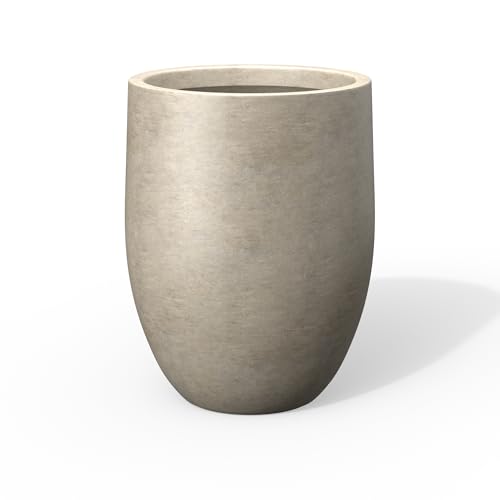


As an Amazon Associate we earn from qualifying purchases at no extra cost to you. Ratings are shown as listed on Amazon.
Quick picks by situation
- For a balcony or roof terrace: choose a 16–20 inch GFRC planter weighing roughly 20–45 pounds empty, with a built-in drainage hole and a wide, stable base.
- For a windy patio: choose a solid concrete or thick-walled GFRC planter weighing 70 pounds or more, provided the supporting surface is rated for the load.
- For a narrow entrance: use a tall, rectangular planter about 24–32 inches high and no more than 12–16 inches wide.
- For trees and large shrubs: look for an internal diameter of at least 24 inches and a depth of 20–28 inches, with adequate drainage and room for root growth.
- For frequent rearranging: choose a lightweight concrete planter, or place a heavy pot on a load-rated wheeled plant caddy before filling it.
- For a limited budget: a small molded concrete or fiber-cement pot usually costs about $30–$90; large architectural planters commonly cost $150–$600 or more.
Concrete planter materials compared
“Concrete planter” can describe several different constructions. Traditional cast concrete is the heaviest and usually the most stable. It tolerates wind and accidental knocks well, but it is difficult to move and can crack if water freezes inside saturated pores.
GFRC combines a cement-based mix with glass fibers. It can be molded into large, thin-walled shapes while weighing considerably less than conventional concrete. Quality varies: a well-made GFRC planter should have an even finish, reinforced corners, and a properly formed drainage opening rather than a hole that looks chipped or fragile.
Fiber cement and cement-composite planters are often lighter still. They can be practical for patios and covered outdoor areas, but thin products may show edge damage sooner and can be more vulnerable to repeated freezing and thawing. Resin planters with a concrete-look finish are the lightest option, though they are not concrete and may be less convincing close up.
Head-to-head comparison: size, weight, drainage, and durability
The figures below are useful planning ranges, not specifications for every planter. Wall thickness, shape, reinforcement, and whether the base is hollow can change the final weight substantially.
| Planter type and typical size | Approximate empty weight | Approximate soil capacity | Best use | Important limitation |
|---|---|---|---|---|
| Small round, 12 in diameter × 10 in high | 12–25 lb | 4–6 gal | Herbs, annuals, compact ornamentals | Can dry out quickly and may be less stable in wind |
| Medium round, 18 in diameter × 16 in high | 25–60 lb | 15–22 gal | Patio shrubs, ornamental grasses, seasonal displays | Too heavy for many balconies once filled |
| Large round, 24 in diameter × 20 in high | 60–140 lb | 35–50 gal | Small shrubs, dwarf fruit trees, substantial focal plants | Needs a firm, level base and careful moving |
| Rectangular, 30 × 12 × 16 in | 35–80 lb | 20–30 gal | Entrances, railings, privacy planting | Long thin walls can crack if poorly reinforced |
| Large rectangular, 48 × 18 × 20 in | 100–220 lb | 60–80 gal | Screening, commercial-style patios, multiple plants | Usually a permanent installation after filling |
To estimate the final load, add the planter’s empty weight to wet growing medium, the plant, and any drainage material. A gallon of water weighs about 8.3 pounds, and wet potting mix can weigh roughly 8–12 pounds per gallon. For example, a 24-inch planter holding 40 gallons of mix could contain 320–480 pounds of growing medium before adding the pot and plant. This is why a large container that feels manageable when empty can become effectively immovable after planting.
How to choose the right dimensions
Match the pot to the root system
For annual flowers and herbs, a 10–14 inch container is often sufficient. Many patio shrubs need a 16–22 inch diameter and at least 16 inches of depth. A dwarf tree or large woody plant generally needs 24 inches or more in diameter, although the plant’s mature size and root behavior matter more than a simple pot-size rule.
Do not buy a shallow planter solely because it looks sleek. A container less than 10 inches deep can dry rapidly, overheat in full sun, and offer little insulation from cold. Shallow troughs work better for succulents, shallow-rooted annuals, and low seasonal planting than for thirsty shrubs.
Check the outside dimensions, not just the advertised capacity
Measure the walkway, doorway, railing, and the space between furniture. Leave at least 18–24 inches of clear passage on a main walking route where possible. For a pair of entrance planters, measure the full width of each pot plus the gap between them; a visually balanced arrangement can still obstruct a door swing.
Drainage is the feature that protects the pot and the plant
Choose a planter with one or more drainage holes at the lowest point. A 16–20 inch pot should typically have at least one opening around 1/2–1 inch wide, while larger containers benefit from several holes or a larger central outlet. The exact size matters less than whether water can escape quickly without being blocked by compacted soil.
Place the planter on rubber feet, plastic risers, or non-staining pavers. This keeps the drainage opening clear and reduces trapped moisture against a patio surface. A saucer may protect paving, but outdoors it can also leave roots sitting in water after rain; use one only where overflow can be emptied.
Do not fill the bottom with a thick layer of gravel to “improve drainage.” It reduces the volume available for roots and does not fix a blocked hole. Use a high-quality container mix suited to the plant, and cover the drainage opening with mesh if you need to stop soil loss.
Finish, color, and weather resistance
Unsealed concrete develops a natural patina and may show mineral deposits, algae, or rain marks. That can be attractive in a garden, but it is not ideal beside pale stone or a clean-lined entrance. Sealed or painted finishes are easier to wipe clean, although coatings can fade, scratch, or peel before the concrete itself fails.
For freezing climates, choose a planter labeled frost-resistant and keep the drainage hole clear throughout winter. The main danger is not cold alone; it is water absorbed into the pot, freezing, expanding, and creating internal pressure. Raise the planter slightly, avoid leaving it in a permanently waterlogged location, and never allow a blocked pot to fill with ice.
Dark finishes absorb more solar heat and can make the root zone hotter on sunny paving. Light gray, beige, and natural cement colors are generally more forgiving in full sun. Hairline surface marks may be cosmetic, but widening cracks, bulging walls, or a loose base indicate that the planter should no longer carry a heavy load.
Moving heavy concrete pots safely
- Choose the final position first. Check level, drainage, sunlight, and clearance before adding soil.
- Move the empty planter with two people. Use a furniture dolly for large containers, keeping the load centered and strapped upright.
- Set it on permanent supports. Use several evenly spaced pads so the base is not resting on one pressure point.
- Add mix gradually. Fill in layers and water lightly as you go, checking that the planter remains level.
- Do not drag it after planting. Dragging can crack the base, scrape paving, or make a dolly tip. If movement is likely, install a sturdy, load-rated caddy before filling.
For a filled planter weighing several hundred pounds, do not attempt to lift it manually. Use a suitable dolly, pallet jack, or professional moving help, and verify that decks, balconies, and roof terraces can support the concentrated load.
Common ownership problems
- Staining: minerals from water and fertilizer can leave white deposits. Brush gently with water and a soft nylon brush; avoid aggressive acids that may damage finishes or nearby stone.
- Uneven watering: dense root balls can repel water while the outer soil looks wet. Water slowly until a little drains from the hole, then adjust frequency to weather and plant type.
- Cracked rims: impacts from tools, snow shovels, and furniture often damage thin edges first. Leave working space around the planter.
- Overplanting: several plants in one large pot may compete for water and eventually become crowded. Check mature spread, not just the plant’s size at purchase.
- Hidden overload: a large pot, wet soil, and stored water can exceed a balcony or deck’s safe load. Confirm structural limits before installation.
Bottom line
The best concrete outdoor planters balance the look you want with a realistic filled weight. Choose GFRC for large forms that may need occasional repositioning, solid concrete for maximum stability, and a lighter cement composite when access or structural load is the main constraint. Prioritize a genuine drainage opening, frost resistance where relevant, dimensions suited to the mature plant, and a permanent moving plan before the pot is filled. Those decisions matter more than a decorative finish or an extra few inches of height.