Key takeaways
- Door flanking: planter height ≈ one-third the height of the door or flanking column. For a standard 80-inch door, that’s 24–28 inches.
- Walkway edging: stay under 14 inches tall so boxes read as edging, not barriers, and keep at least 36 inches of clear walking path.
- Window boxes: length should equal the full window width including trim — short boxes look like an afterthought.
- Depth: minimum 8 inches front-to-back for annuals, 10–12 inches if you want shrubs or grasses to overwinter.
The front yard planter box ideas that actually boost curb appeal share three traits: a box scaled to roughly one-third the height of whatever it stands beside, a material — cedar, composite, or powder-coated metal — that survives a decade or more outdoors, and at least one 3/4-inch drainage hole per square foot of floor area. Nail those three variables and almost any of the 16 ideas below will look designed rather than improvised.
Our top picks

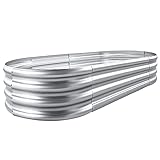
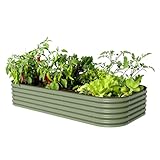
 Keter Urban Bloomer 12.7 Gallon Raised Garden
- Product Style: Urban Bloomer Planter
- Planter Form: Raised Bed
- Shape: Rectangular


As an Amazon Associate we earn from qualifying purchases at no extra cost to you.
Size the box to the porch and walkway first
Scale is the single biggest reason planter boxes disappoint. A box that reads “substantial” in a catalog photo vanishes next to a 7-foot entry door. Use these rules of thumb before you shop:
- Door flanking: planter height ≈ one-third the height of the door or flanking column. For a standard 80-inch door, that’s 24–28 inches.
- Walkway edging: stay under 14 inches tall so boxes read as edging, not barriers, and keep at least 36 inches of clear walking path.
- Window boxes: length should equal the full window width including trim — short boxes look like an afterthought.
- Depth: minimum 8 inches front-to-back for annuals, 10–12 inches if you want shrubs or grasses to overwinter.
| Placement | Height | Width / Length | Depth | Why it works |
|---|---|---|---|---|
| Flanking front door | 24–28 in | 16–22 in square | 16–22 in | One-third door height reads proportional |
| Porch corners / posts | 28–36 in | 12–16 in | 12–16 in | Tall, slim footprint doesn’t eat floor space |
| Walkway edging | 10–14 in | 24–48 in long | 8–12 in | Low line guides the eye to the door |
| Window box | 7–9 in face | = window width incl. trim | 8–10 in | Matches facade rhythm |
| Driveway / property line | 18–24 in | 48–72 in | 14–18 in | Acts as a low hedge |
Cedar vs. composite vs. metal: what actually lasts
Most buying guides stop at “cedar is natural, metal is modern.” Here’s what the spec sheets leave out — realistic lifespans, empty weights (which matter on porches and decks), and the failure point of each material.
| Material | Realistic outdoor lifespan | Weight, 24-in cube empty | Typical price range | What fails first |
|---|---|---|---|---|
| Cedar (unfinished) | 10–15 yrs with liner | 8–15 lb | $60–$200 | Bottom boards rot at the soil line |
| Composite / molded polyethylene | 15–25 yrs | 15–30 lb | $100–$300 | Cheap resins chalk and fade in UV |
| Powder-coated aluminum or steel | 10–20 yrs | 10–25 lb | $80–$350 | Rust at scratches, welds, and drilled holes |
| Corten (weathering) steel | 20+ yrs | 30–60 lb | $150–$500 | Nothing — but runoff stains concrete orange |
| Fiberglass / thin resin | 5–10 yrs | 5–12 lb | $40–$150 | UV brittleness, tip-over in wind |
| Cast stone / concrete | Decades | 60–120 lb | $100–$400 | Freeze cracks if left unsealed and waterlogged |
Two details listings rarely mention. First, drainage: many metal planters ship with no holes at all — you’ll need a 3/4-inch step bit and a few minutes per box. Composite boxes usually have knockouts; cedar you drill yourself. Second, heat: a dark steel box in a south-facing spot can push root-zone soil well past 110°F on summer afternoons, which cooks shallow-rooted annuals. Use a light color, a plastic liner as an air gap, or reserve metal for partial shade.
For composite and polyethylene, brands like Mayne and Veradek build double-walled boxes that insulate roots and hold their shape; for metal, Veradek and similar fabricators powder-coat properly rather than wet-paint. With cedar, construction matters more than species — look for screwed (not stapled) joints and a separate plastic liner.
16 front yard planter box ideas by placement
Frame the entry
- 1. Twin cubes flanking the door — 18–22-inch cedar or composite squares, identical plants, symmetric heights. The default that never fails.
- 2. Tall tapered column planters at porch posts — 28–32 inches high with a slim 12–14-inch footprint; composite keeps weight manageable on older porch floors.
- 3. Corten trough pair beside the steps — the rust patina suits brick and modern facades; set on gravel so runoff doesn’t stain the stoop.
- 4. Window boxes matched to window width — brackets rated for 50+ lb loaded weight; composite holds moisture far better than thin metal in full sun.
- 5. House-number planter — a tall narrow box with raised address digits on the face, positioned under the porch light. Functional curb appeal in one object.
Line the walkway and edges
- 6. Low modular edging boxes — 10–12-inch cedar boxes in 24–36-inch runs tracing the walkway; stagger them rather than building one rigid wall.
- 7. Long rectangle as a driveway hedge — a single 48–72-inch box, 18–24 inches tall, planted with ornamental grasses for a clean property-line divider.
- 8. Mailbox-post planter — a compact box at the base of the mailbox post softens a utilitarian object; keep it clear of carrier access.
- 9. Tiered corner box where the walk meets the drive — a stacked two- or three-level planter turns an awkward corner into a vertical display with trailing plants.
Use the porch itself
- 10. Railing saddle boxes — straddle porch rails for trailing petunias or ivy; check the brackets are rated for wind, since rail height catches gusts.
- 11. Planter with integrated trellis — a 24-inch box with a 48–60-inch trellis for clematis or jasmine flanking the entry; scent at the door is a curb-appeal cheat code.
- 12. Self-watering reservoir planter — 4–8-liter reservoirs cut watering to roughly weekly in summer. Still needs an overflow hole or the first storm drowns the roots.
- 13. Half-round flat-back planter — sits against the blank wall beside the door and saves floor space on narrow stoops.
Statement and special situations
- 14. One oversized statement cube — a single 24–30-inch box beats a mismatched pair when the door is off-center or the porch is asymmetric.
- 15. Lightweight planter on locking casters — fiberglass or thin resin for renters; wheel it inside for moves or storms.
- 16. Cast-stone urns at the path entrance — heavy enough to resist wind and casual theft; seal before winter in freeze climates.
Drainage math and a worked sizing example
The rule that keeps plants alive: at least one 3/4–1-inch hole per square foot of floor area, and elevate the box 1/2–1 inch on feet or a riser so holes can’t seal against the surface below. A 24 × 12-inch box (2 sq ft of floor) needs a minimum of two holes — four is better.
That same 24 × 12 × 12-inch box holds 3,456 cubic inches — exactly 2 cubic feet, or about 15 gallons of potting mix, roughly a bag and a half of the standard 1.5-cu-ft bags. Wet, that soil weighs 50–70 lb. Add the box and plants and a single door-flanker can top 100 lb, which is why tall boxes on older porch floors belong over joists, and why casters earn their keep on anything you’ll move seasonally.
- Cedar dies at the soil line. A plastic liner (or growing in a nursery pot inside the box) doubles its life. Never let soil touch the box walls directly.
- Metal rusts where it was drilled. After adding drainage holes, touch up the edges with exterior enamel or rust follows within a season.
- Double-potting kills more plants than drought. A decorative cachepot without holes waterlogs roots; drill it or drop in a holed nursery pot.
- Full saucers breed mosquitoes and rot roots. If you use a saucer, empty it after rain.
- Soil settles 1–2 inches. Fill to an inch below the rim at planting, top up after the first watering.
Pick by your situation
| Your situation | Best choice |
|---|---|
| Under ~$75 per box, willing to reseal | Cedar cube kit with a plastic liner |
| Want 15+ years, zero upkeep | Double-walled composite or powder-coated aluminum |
| South-facing entry, full sun | Light-colored composite; skip dark metal |
| Windy, open frontage | Cast stone or corten; avoid tall thin resin |
| Rental or likely move | Fiberglass/resin on locking casters |
| Shaded, damp entry | Composite or metal — cedar stays wet and rots early |
FAQ
How tall should a planter be next to a front door?
Around one-third the door height — 24–28 inches for a standard 80-inch door. Go taller only if the porch has high ceilings or tall flanking columns.
Do metal planters overheat roots?
Dark powder-coated steel in full sun can push soil temperatures past 110°F on hot afternoons. Choose lighter colors, add a liner for an insulating air gap, or plant heat-tolerant species like lantana and ornamental grasses.
How many drainage holes does a planter box need?
At least one 3/4-inch hole per square foot of floor area, and more is better. Elevate the box so water can actually escape, and never rely on gravel alone — it doesn’t replace holes.
Can planter boxes sit directly on grass or soil?
Yes, but put them on pavers or a gravel pad first. Direct ground contact wicks moisture into wood bases, stains metal and corten runoff into soil, and lets roots grow through drainage holes into the ground — making the box effectively permanent.