Key takeaways
- 24 gauge: Suitable for shallow beds up to about 12 inches deep when the panels are corrugated or strongly supported. Flat panels may bow when filled.
- 22 gauge: A reasonable middle ground for small and medium beds, especially when the design includes sturdy corner posts.
- 20 gauge: A better choice for beds around 18–24 inches deep or for gardeners who want several years of repeated use with less distortion.
- 17–18 gauge: Appropriate for large, deep beds and high soil loads, provided the frame also has cross braces or internal ties.
Best Metal Raised Garden Beds for Long-Lasting Growing
The best metal raised garden beds for long-term use are usually made from galvanized steel with a powder-coated or zinc-aluminum finish, at least 20 gauge (about 0.9 mm) for ordinary home gardens and a rolled, capped top edge for safer handling.
Metal beds are durable, resistant to rot and difficult for pests to chew through, but they are not all built alike. The most important differences are panel thickness, coating quality, bed depth, bracing, drainage design and the way the upper rim is finished. A cheap, shallow bed may work for salad leaves, while a deeper reinforced bed is a better investment for tomatoes, root crops and repeated seasonal use.
Our top picks
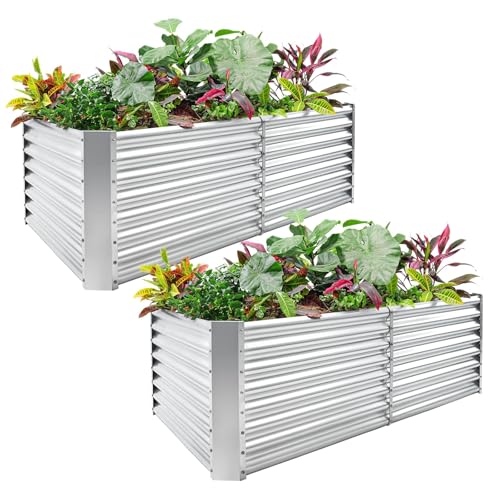
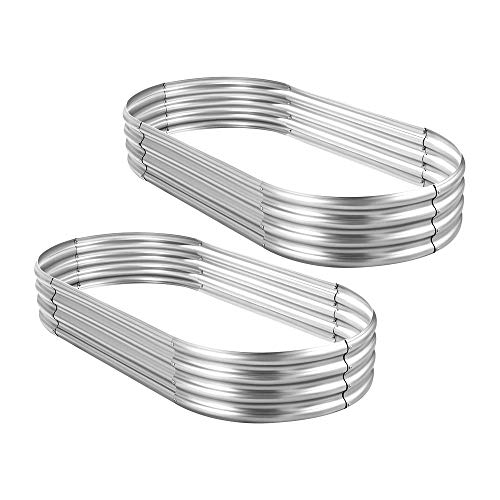
 Land Guard Galvanized Raised Garden Bed Kit
- Product Style: Garden
- Planter Form: Box
- Shape: Oval
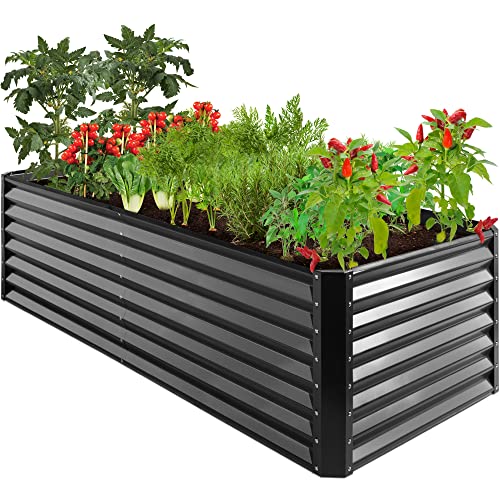
As an Amazon Associate we earn from qualifying purchases at no extra cost to you. Ratings are shown as listed on Amazon.
Quick comparison of durable bed types
| Bed type | Typical dimensions | Metal and finish | Approximate soil capacity | Best suited to |
|---|---|---|---|---|
| Compact galvanized steel | 2 × 4 ft × 8–12 in deep | 22–24 gauge steel, galvanized coating | 5.3–8 cubic feet | Balconies, patios and first-time growers |
| Standard rectangular steel | 2 × 6 ft × 17–24 in deep | 20–22 gauge steel, galvanized or powder-coated | 17–24 cubic feet | Vegetables, herbs and mixed planting |
| Large reinforced steel | 4 × 8 ft × 24–32 in deep | 17–20 gauge steel with cross braces | 64–85 cubic feet | Permanent beds and deep-rooted crops |
| Modular U-shaped bed | 6 × 3 ft × 24–32 in deep | 20–22 gauge steel, coated panels | 40–53 cubic feet | Accessible planting from several sides |
| Aluminum raised bed | 2 × 4 ft × 12–24 in deep | Approximately 1.2–2 mm aluminum | 8–16 cubic feet | Low-maintenance gardens where light weight matters |
Capacity estimates assume straight-sided beds. Tapered, corrugated or rounded designs hold somewhat less soil than the same outside dimensions suggest. Before ordering, check whether the listed dimensions are external measurements; usable planting space can be several inches smaller after corner posts and internal supports are installed.
How thick should the metal be?
Gauge numbers work in reverse: a lower gauge generally means thicker steel. For raised beds, 24 gauge is roughly 0.6 mm, 22 gauge is about 0.75 mm, 20 gauge is about 0.9 mm and 17 gauge is about 1.4 mm. The exact thickness varies by manufacturing standard and coating, so treat these as practical approximations rather than laboratory measurements.
- 24 gauge: Suitable for shallow beds up to about 12 inches deep when the panels are corrugated or strongly supported. Flat panels may bow when filled.
- 22 gauge: A reasonable middle ground for small and medium beds, especially when the design includes sturdy corner posts.
- 20 gauge: A better choice for beds around 18–24 inches deep or for gardeners who want several years of repeated use with less distortion.
- 17–18 gauge: Appropriate for large, deep beds and high soil loads, provided the frame also has cross braces or internal ties.
Thickness alone does not prevent failure. A 20-gauge panel with weak screws and unsupported corners can perform worse than a corrugated 22-gauge panel with properly engineered posts. Look for panels that remain rigid when held by one edge, corner posts that overlap the panel joints and fasteners that are corrosion-resistant and compatible with the coating.
Galvanized steel, powder coating or aluminum?
Galvanized steel is the most common choice because a zinc coating protects the underlying steel from moisture. It is usually affordable and strong, but cut edges, drilled holes and scratches deserve attention. A dull or mottled surface is not necessarily a defect; galvanized finishes naturally vary.
Powder-coated steel adds a colored polymer finish over the metal. It can look tidier in a visible garden and may reduce direct contact between soil moisture and the steel. Inspect the coating for complete coverage around bolt holes and bends. Chips should be cleaned, dried and touched up with a compatible exterior metal coating before they spread.
Aluminum is lighter and naturally corrosion-resistant, making it useful where beds must be moved or carried through a narrow access route. It is also easier to dent and can flex more than steel at the same thickness. Choose thicker panels or a framed design for deep beds.
For ordinary soil, metal raised beds are generally used for food gardening, but avoid products with an unspecified coating or an unknown recycled-metal composition. The manufacturer should identify the base metal and finish rather than simply describing the product as “rustproof.”
Choose dimensions by crop and available space
Width determines whether you can reach the center without stepping into the soil. A bed no wider than 4 feet is comfortable when accessible from both sides; against a wall, keep the width closer to 2 feet. Length is mostly a space and budget decision, although a 6-foot bed is easier to move and level than an 8-foot bed.
Depth should match the root system and your preferred soil volume:
- 8–12 inches: Lettuce, spinach, herbs, radishes and many annual flowers.
- 17–24 inches: Tomatoes, peppers, beans, cucumbers and most mixed vegetable beds.
- 24–32 inches: Carrots with long roots, perennial crops, improved accessibility and gardens built over compacted ground.
Deep beds cost more to fill. For example, a 2 × 6 foot bed that is 24 inches deep requires 24 cubic feet of finished soil. If bulk soil costs approximately $35–$70 per cubic yard, one cubic yard equals 27 cubic feet, so the initial soil cost is roughly $31–$62 before delivery. Filling a 4 × 8 × 24-inch bed requires 64 cubic feet, or about 2.37 cubic yards, making the soil cost approximately $83–$166 at the same range.
That calculation is why a slightly smaller deep bed can be more economical than a large bed chosen without considering fill volume. You can also reduce initial expense by filling the lower portion with approved organic bulk material, then placing high-quality planting soil in the upper root zone, while following local guidance for materials used around edible crops.
Assembly details that affect longevity
Assembly should leave the finished frame square and evenly supported. On uneven ground, soil pressure pushes harder against the low side and can twist corners over time. Level the site first, remove sharp stones, and place the bed on firm ground rather than loose mulch.
- Lay out every panel and identify corner posts, braces, bolts and protective caps before starting.
- Join panels loosely so the frame can be squared; tighten fasteners only after measuring the diagonals.
- Check that both diagonals are equal. A difference of more than about 1 inch on a 6-foot rectangle indicates the frame is out of square.
- Add internal braces before filling. Deep beds need supports that resist outward pressure at the long sides.
- Use a level along the top rim and correct the base before adding soil.
- Inspect exposed bolt ends and cover sharp points with supplied caps or durable protective covers.
Very tall beds should not rely on thin panels alone. Cross braces, internal tie rods or a strong perimeter frame are particularly important for beds wider than 3 feet or deeper than 24 inches.
Drainage and edge safety are not optional extras
A raised bed needs a drainage path beneath it. On soil, remove turf and loosen the base rather than installing an impermeable floor. On concrete or a paved area, choose a bed with drainage openings and leave a small gap beneath it, or use a porous growing container inside the decorative frame. Do not place a sealed metal box directly on a surface where water can accumulate.
Drainage holes should be large enough not to clog rapidly and positioned above the lowest contact points. A layer of gravel is not a substitute for drainage; it reduces planting volume and can leave water sitting above a compacted layer. The better approach is a free-draining soil mix and an unobstructed route for excess water.
Metal edges can be hazardous when the coating is cut, bent or poorly finished. Prefer a rolled top lip, separate rim cap or smooth folded edge. Avoid exposed sheared edges at hand height, especially in a family garden or narrow path. Wear gloves during assembly, but do not treat gloves as a replacement for a properly finished rim.
Best choice by gardening situation
| Your situation | Recommended specification | Why it fits |
|---|---|---|
| Small space or limited budget | 2 × 4 ft, 8–12 in deep, 22–24 gauge | Uses less soil and fits patios or compact yards |
| New gardener growing mixed vegetables | 2–3 × 6 ft, 17–24 in deep, 20–22 gauge | Reachable planting area with room for deeper roots |
| Permanent, frequently used garden | 4 × 8 ft, 24 in deep, 17–20 gauge with braces | Handles high soil loads and repeated seasonal use |
| Bed beside a wall or fence | About 2 ft wide, 12–24 in deep | Keeps every planting area within arm’s reach |
| Need to move the bed occasionally | Aluminum or shallow modular steel, under 4 × 6 ft | Lower weight and easier disassembly |
Ownership realities after installation
The soil load is the main long-term stress, not ordinary rainfall. Check the corners and braces after the first fill, then again after a wet season when soil is heaviest. Tighten loose fasteners carefully without crushing thin panels. Keep grass and wet mulch from staying against the outside wall, and rinse fertilizer residue from exposed metal.
The parts most likely to wear first are protective caps, fasteners, coating at scratches and thin corner joints. Replace missing caps, remove developing rust from exposed steel and touch up damaged areas after the surface is dry. Do not drag a filled bed; empty it before moving or levelling it.
For most home gardens, the best balance is a 2–3 foot wide galvanized or powder-coated steel bed, 17–24 inches deep, made from at least 20–22 gauge material and fitted with internal bracing, open drainage and a rolled safety rim. Choose the smallest size that gives plants adequate root depth and keeps the center within reach; that usually produces a more durable, affordable garden than buying the largest bed available.