Key takeaways
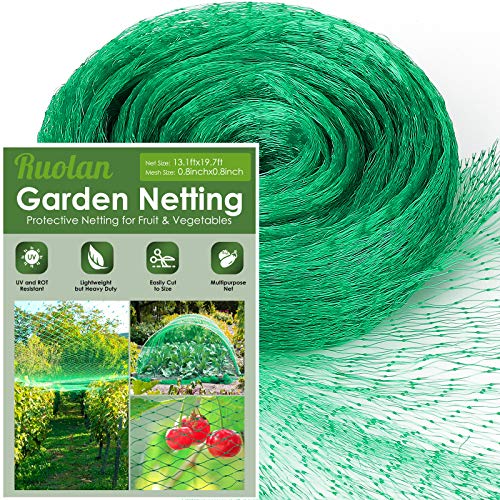
- Birds on strawberries, blueberries and raspberries: Gardman 19 mm Bird Netting (rigid-feel polypropylene, 19 mm mesh).
- Birds, best all-round value in larger sizes: Agfabric woven bird netting.
- Heavier-duty bird and large-animal deterrent: Gardeneer by Dalen bird netting (UV-protected polypropylene).
- Cabbage moths, carrot fly, leek moth and aphids: Enviromesh 0.85 mm Insect Mesh.
- Ready-made insect tunnel with hoops: Haxnicks Micromesh tunnel.
- Fine insect barrier in standard bed sizes: Agfabric insect barrier netting.
- Deer and large browsers: Tenax heavy-duty polypropylene deer netting.
- Frost and light pest cover: Agfabric floating row cover (non-woven fabric, not a true net).
The best garden netting depends on the pest: Gardman 19 mm Bird Netting or Agfabric woven bird netting for birds on soft fruit, Enviromesh 0.85 mm Insect Mesh or the Haxnicks Micromesh tunnel for cabbage moths, carrot flies and aphids, Tenax heavy-duty polypropylene fence-style netting for deer, and Agfabric floating row cover when you want frost and light insect protection together. The most common mistake is buying the wrong mesh size: a net that stops birds will not stop insects, and a net fine enough for aphids can overheat tomatoes.
Garden netting also earns its place beside patio and deck plantings. Raised beds, container berries, trellised vines and fruit trees near seating areas are all easy targets for birds and caterpillars, and a neat net-and-hoop cover keeps them off without spraying anything where you eat and relax. The guide below sorts eight current netting products by mesh class, material, coverage and best use, then walks through a worked sizing example so you buy the right width the first time.
Our top picks


As an Amazon Associate we earn from qualifying purchases at no extra cost to you.
Quick answer: which netting for which job
- Birds on strawberries, blueberries and raspberries: Gardman 19 mm Bird Netting (rigid-feel polypropylene, 19 mm mesh).
- Birds, best all-round value in larger sizes: Agfabric woven bird netting.
- Heavier-duty bird and large-animal deterrent: Gardeneer by Dalen bird netting (UV-protected polypropylene).
- Cabbage moths, carrot fly, leek moth and aphids: Enviromesh 0.85 mm Insect Mesh.
- Ready-made insect tunnel with hoops: Haxnicks Micromesh tunnel.
- Fine insect barrier in standard bed sizes: Agfabric insect barrier netting.
- Deer and large browsers: Tenax heavy-duty polypropylene deer netting.
- Frost and light pest cover: Agfabric floating row cover (non-woven fabric, not a true net).
How we chose
This guide is research-based. We compared manufacturer specification pages and multiple independent roundups, then sorted products by the buyer criteria that decide success: the pest you are excluding, the mesh aperture, material and UV rating, light transmission, airflow, available sizes and how the net is supported. Many roundups note that “insect mesh” is not a standardized specification, so we treat the aperture printed on the packet as the number that matters. Where sources disagreed on a specific figure for a model, we describe the product by mesh class and ask you to confirm the aperture before buying.
Mesh size: the one spec that decides everything
Garden netting falls into four mesh classes, and each solves a different problem.
- Bird netting, about 10-30 mm (roughly 3/8 to 1 inch): Excludes birds, lets pollinators and beneficial insects through. Does nothing against caterpillars or flies.
- Insect netting, about 0.6-2 mm: Fine enough to exclude butterflies, moths, flea beetles, carrot flies and, at the finest end, aphids and thrips. Reduces airflow and light.
- Deer and large-animal netting, heavy polypropylene with wide openings: A barrier, not a pest screen. It works only when it is tall and tensioned like a fence.
- Floating row cover and fleece (non-woven fabric): Not a net. Provides a few degrees of frost protection and keeps light insects off, but traps heat in summer.
The trade-off is simple: the finer the mesh, the more it blocks sun and wind. That is good for keeping out aphids and bad for sun-loving, humidity-sensitive crops such as tomatoes, which can suffer fungal disease under tight cover.
Comparison table
| Product | Class | Mesh | Material | Best target | Supports needed |
|---|---|---|---|---|---|
| Gardman Bird Netting | Bird | 19 mm | Polypropylene | Soft fruit, brassicas vs pigeons | Hoops, stakes or cage frame |
| Agfabric woven bird netting | Bird | Bird-grade (confirm size on pack) | Woven polypropylene | Berries, fruit trees, ponds | Frame or tree-draping |
| Gardeneer by Dalen bird netting | Bird / large animal | Bird-grade (confirm size on pack) | UV-protected polypropylene | Fruit trees, beds, small animals | Frame or stakes |
| Enviromesh Insect Mesh | Insect | 0.85 mm | Woven polypropylene | Cabbage moth, carrot fly, aphids, leek moth | Hoops or direct drape on sturdy crops |
| Haxnicks Micromesh tunnel | Insect | About 1 mm class (listings vary) | Mesh with wire hoops | Carrot fly, flea beetle, aphids | Built-in hoops |
| Agfabric insect barrier netting | Insect | Fine insect-grade (confirm aperture) | Woven polyethylene or polypropylene | Aphids, thrips, whitefly | Hoops |
| Tenax deer netting | Deer / large animal | Wide-open barrier mesh | Heavy-duty polypropylene | Deer around beds and trees | Posts and tension |
| Agfabric floating row cover | Fabric | Non-woven (no aperture) | Spun polypropylene | Frost, light insects | Hoops or direct drape |
Sizes and aperture details vary by listing and over time, so check the packet before you buy. Insect mesh in particular is sold under inconsistent labels.
Best netting for birds on fruit and berries
Choose a mesh of roughly 3/4 inch or less so small birds cannot get their heads through, and always seal the bottom edge, because birds find gaps.
1. Gardman 19 mm Bird Netting
Spec line: 19 mm mesh · polypropylene · UV-treated for multi-season reuse per the maker · lets pollinators pass.
Best for: Strawberries, raspberries, blueberries and brassicas where pigeons are the pest, especially over a hoop or fruit-cage frame.
Skip if: You need to exclude insects, or you plan to drape it loosely over bushes, where birds and wildlife can tangle.
- Pros: Standard mesh for home fruit cages; lets beneficial insects through for pollination; good value for the coverage.
- Cons: Must be sealed fully at ground level; loose draping can trap birds; no insect protection.
2. Agfabric woven bird netting
Spec line: Woven polypropylene · bird-grade mesh · multiple roll sizes · UV stabilized per the maker · light and easy to cut.
Best for: Larger beds, orchard rows and anyone who wants a wide roll rather than a small packet.
Skip if: You want a tougher, thicker net for rough use around larger animals.
- Pros: Broad size range; frequently highlighted by roundups as a top woven bird net; woven construction resists fraying when cut.
- Cons: Mesh and strength vary by roll, so confirm specs; needs a frame to keep the net off the plants.
3. Gardeneer by Dalen bird netting
Spec line: UV-protected polypropylene · bird and small-animal deterrent · heavier feel than basic nets · multi-season use.
Best for: Fruit trees, ornamental plants and beds where squirrels or larger birds are the problem.
Skip if: Insects are the issue, because the mesh will not stop determined insects.
- Pros: Tougher material; designed for repeated seasonal use; suits larger plants.
- Cons: Not an insect screen; confirm mesh size on the label.
Best netting for insects
Look for a printed aperture of 1 mm or less for flies, moths and aphids, and use hoops so the net never touches the leaves, because insects can lay eggs through a net that rests on the plant.
4. Enviromesh Insect Mesh (0.85 mm)
Spec line: 0.85 mm aperture · woven polypropylene · long UV rating (about 10 years per the maker) · water permeable · light enough to drape on sturdy crops.
Best for: Brassicas, carrots, leeks and onions against cabbage moth, carrot fly and leek moth.
Skip if: Your main crop is sun-loving and disease-prone, or you need the cheapest option.
- Pros: Excludes most flying pests without pesticides; stays on the crop all season; water permeable.
- Cons: Costs more than coarse bird net; reduces some light and airflow.
5. Haxnicks Micromesh tunnel
Spec line: Roughly 1 mm class mesh (listings differ) · wire hoops included · tunnel shape · opens and closes at the ends.
Best for: Gardeners who want a ready-made tunnel over a bed with no assembly beyond pushing the hoops into the soil.
Skip if: You have unusual bed dimensions or need a very tall cover.
- Pros: Frame and net in one; simple to open for weeding and harvest; blocks carrot fly and flea beetle.
- Cons: Fixed size; can reduce airflow in humid weather; confirm the aperture on your pack.
6. Agfabric insect barrier netting
Spec line: Fine insect-grade mesh · multiple sizes · high light transmission claimed by the maker · drapes over hoops.
Best for: Raised beds and greenhouse openings where aphids, thrips and whitefly are the pest.
Skip if: You grow tomatoes in full sun, since very fine mesh traps heat.
- Pros: Available in sizes that fit raised beds; fine enough for small pests; also sold by the same maker as the bird net.
- Cons: Aperture figures differ between listings; heat and humidity build-up under cover.
Best netting for deer and large animals
7. Tenax heavy-duty polypropylene deer netting
Spec line: Heavy-duty polypropylene · open barrier mesh · UV stabilized · sold in tall rolls · installed on posts under tension.
Best for: Fencing around vegetable beds, young trees and shrub borders where deer browse heavily.
Skip if: You are protecting a single small plant; a wire cage is simpler.
- Pros: Nearly invisible from a distance; lighter than metal fencing; works as a physical barrier rather than a deterrent.
- Cons: Needs posts and tension to work; height matters, and short installations can be jumped.
Best for frost and light protection
8. Agfabric floating row cover
Spec line: Spun non-woven polypropylene · light fabric weights available · lets water and air through · adds a few degrees of frost protection.
Best for: Early spring seedlings, late-season salad greens and keeping light insects off short crops.
Skip if: You need to keep out birds, or you want pollination access, since the fabric blocks pollinators too.
- Pros: Frost buffer without a frame; can rest on plants; light and easy to handle.
- Cons: Not a net; traps heat in summer; wears out over a few seasons.
Decision matrix: choose by pest and crop
| Problem | Mesh class | Choose | Setup |
|---|---|---|---|
| Birds on berries | 10-25 mm | Gardman or Agfabric bird net | Hoops or fruit cage, sealed edge |
| Cabbage moth, carrot fly | 0.6-1 mm | Enviromesh or Haxnicks Micromesh | Hoops, net off the leaves |
| Aphids, thrips, whitefly | Finest insect grade | Agfabric insect barrier | Hoops, check airflow |
| Deer | Barrier mesh | Tenax deer netting | Posts, tension, tall height |
| Squirrels on fruit trees | Bird-grade, heavy | Gardeneer bird netting | Cage frame around the tree |
| Frost and light pests | Non-woven | Agfabric row cover | Drape or hoops |
Worked example: sizing netting for a 4 by 8 foot raised bed
Buying a net that is too narrow is the most common failure. Use this step-by-step logic.
- Pick the cover height. Brassicas and berries often need about 18 inches of clearance. Set the hoop height to 18 inches.
- Estimate the width. A hoop of 18 inches rise over a 4 foot (48 inch) bed has an arc length of about 48 inches plus the extra for the curve. A simple rule: net width equals bed width plus twice the height, plus 12 inches for anchoring on each side. That is 48 + 36 + 24, or about 108 inches (9 feet).
- Estimate the length. Add the bed length (96 inches) plus about 12 inches at each end for the ends to be gathered and clipped. That is 120 inches, or 10 feet.
- Pick the size. A sheet of at least 9 by 10 feet covers the bed with room to bury or weigh the edges. Many insect nets come in 10 by 10 feet or wider rolls, so choose the next size up.
- Plan the hoops. Space hoops about 3 feet apart: for a 96 inch bed you need three or four hoops.
- Seal the edges. Pin the net with landscape staples, board or soil along the bottom, since pests find gaps within hours.
The same arithmetic works for any bed: net width = bed width + 2 x height + 24 inches, and net length = bed length + 24 inches. A rough total beats a net that falls short and leaves a gap.
Installation tips that decide whether netting works
- Keep the net off the plants. Hoops or a frame stop birds pecking through and insects laying eggs through the mesh.
- Seal the bottom. Bury the edge a few inches, pin it or weigh it with boards. Most failures come from gaps.
- Cover before the pest arrives. Put insect mesh over carrots and brassicas at sowing or planting, not after the first caterpillars appear.
- Leave access for pollination. For fruiting crops that need insects, remove insect netting at flowering and use bird netting only once fruit begins to ripen.
- Check airflow. In humid climates, choose coarser mesh or open the ends in the heat of the day.
- Store clean and dry. Shake off debris, let it dry and fold loosely out of sunlight. Good polypropylene nets last several seasons.
Safety and wildlife guidance
- Loose, slack bird netting can entangle birds, snakes and other wildlife. Keep it taut on a frame, with openings that cannot be threaded by animals, and check it daily during the fruiting season.
- Do not drape nets over open water or pond edges where animals could be trapped.
- Wear gloves when working with wire hoops and stakes, and cap hoop ends so they cannot injure eyes.
- Keep netting away from lawn mowers and string trimmers, which can pull and shred the material.
Common mistakes
- Using bird netting against insects. A 19 mm mesh stops birds but lets every moth and fly in.
- Touching plants. Net resting on foliage is an invitation for pests to feed or lay eggs through it.
- Over-covering heat-loving crops. Tomatoes, peppers and squash can overheat and develop disease under fine mesh.
- Forgetting pollination. Remove insect cover for bees when flowers open on fruiting crops.
- Buying by marketing name. Always check the printed aperture on the packet.
Frequently asked questions
What is the best garden netting for birds?
Gardman 19 mm Bird Netting and Agfabric woven bird netting are the most widely chosen for fruit. Both are polypropylene nets with a bird-grade mesh that lets pollinators through.
Use hoops or a cage frame so the net does not touch the fruit, and seal the bottom edge to prevent gaps.
What mesh size stops cabbage moths and carrot fly?
A mesh of about 1 mm or finer stops cabbage moths and carrot flies. Enviromesh at 0.85 mm is a common example, and Haxnicks Micromesh is a similar class.
Check the printed aperture on the packet, since insect netting is not a standardized specification.
Can I use bird netting to keep insects out?
No. Bird netting has an aperture of roughly 10 to 30 mm, which is far too large to stop insects. You need insect-grade mesh at about 1 mm or finer.
If you have both bird and insect pests, use insect mesh over the crop and add bird netting on a frame over soft fruit as it ripens.
Will garden netting hurt my plants or reduce yield?
Fine insect mesh reduces light and airflow somewhat, which can stress sun-loving crops. Coarser mesh or row covers that are opened in hot weather reduce the effect.
For fruiting crops that need pollinators, remove insect netting when flowers open and replace it afterward.
How long does garden netting last?
UV-stabilized polypropylene netting often lasts several seasons when cared for. Makers claim anywhere from multiple seasons up to many years for premium insect mesh.
Fold it loosely, store it dry and out of sunlight, and avoid dragging it across thorny plants to extend its life.
Can birds get trapped in garden netting?
Yes, loose or slack netting can entangle birds and other wildlife. Keep the net taut on a frame and check it often, especially in the fruiting season.
Choose a smaller mesh such as 19 mm or finer, and remove the net when the harvest is done.
Is floating row cover the same as netting?
No. Row cover is a non-woven fabric that protects against light frost and some insects, while netting is an open mesh designed to exclude a specific pest.
Row cover traps more heat and blocks pollinators, so it suits early spring and late autumn better than midsummer.
Does netting work against deer?
Only heavy-duty deer netting on tall posts under tension works against deer. Bird and insect netting will not stop them.
Use a barrier product such as Tenax at sufficient height, and combine it with a repellent where deer pressure is high.