Key takeaways
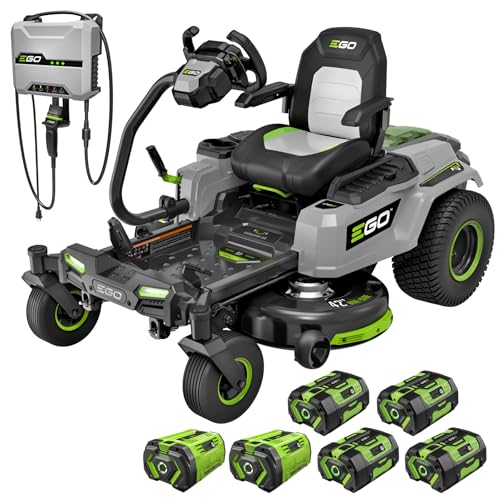
- Best Overall for 1 to 2 Acres: EGO Z6 ZT4214L (42 inch deck, six 6.0Ah batteries, lap bars)
- Best for Comfort: EGO Z6 e-Steer ZT4215S (steering wheel control, 42 inch deck)
- Best for Larger Lawns: EGO Z6 ZT5216L (52 inch deck)
- Best Value on Paper: Ryobi 80V HP 42 inch zero-turn (claimed runtime up to 2 acres; not in our store)
- Best Alternative for Big Properties: Greenworks 60V 54 inch MaximusZ (two 20Ah and four 8Ah batteries)
- Best 80V Alternative: Greenworks 80V 54 inch MaximusZ (two 16Ah and four 6Ah batteries)
For most one-to-two-acre yards, the EGO Z6 is the easier electric zero-turn to buy today, because you can get it in 42 inch and 52 inch decks and in lap-bar or steering-wheel versions, while the Ryobi 80V HP zero-turn claims longer runtime on paper at a lower price tier. EGO’s ZT4214L lists up to 1.5 acres per charge with six 6.0Ah batteries, a 12-gauge stamped steel 42 inch deck, and a top speed of up to 8 mph. Ryobi’s 42 inch model is described in secondary sources with two 80V 14Ah batteries, four brushless motors, and a claimed runtime of up to 2 acres. This head-to-head compares EGO Z6 and Ryobi 80V electric zero-turn mowers on deck, battery system, and runtime, and adds the Greenworks MaximusZ line as the main alternative.
A note on sourcing before the details. This guide is research-based and we did not personally use any of these mowers. EGO figures come from the maker’s product pages and major retailers. The Ryobi figures come mostly from a secondary comparison (Power Tool Insider), so treat them as claims to verify on Ryobi’s own spec sheet. The Ryobi 80V zero-turn itself is not listed in our product store at the time of writing, only parts and accessories, so we cannot point you to a card for it; the EGO and Greenworks models are available in the store. Where a spec is missing we write “not listed”.
Our top picks



As an Amazon Associate we earn from qualifying purchases at no extra cost to you.
Top Picks at a Glance
- Best Overall for 1 to 2 Acres: EGO Z6 ZT4214L (42 inch deck, six 6.0Ah batteries, lap bars)
- Best for Comfort: EGO Z6 e-Steer ZT4215S (steering wheel control, 42 inch deck)
- Best for Larger Lawns: EGO Z6 ZT5216L (52 inch deck)
- Best Value on Paper: Ryobi 80V HP 42 inch zero-turn (claimed runtime up to 2 acres; not in our store)
- Best Alternative for Big Properties: Greenworks 60V 54 inch MaximusZ (two 20Ah and four 8Ah batteries)
- Best 80V Alternative: Greenworks 80V 54 inch MaximusZ (two 16Ah and four 6Ah batteries)
Head-to-Head Specs: EGO Z6 vs Ryobi 80V
| Spec | EGO Power+ Z6 ZT4214L | Ryobi 80V HP 42 in zero-turn |
|---|---|---|
| Deck | 42 in, 12-gauge stamped steel | 42 in, fabricated steel (a 54 in version also exists) |
| Battery system | Six 56V 6.0Ah batteries in the kit | Two 80V 14Ah batteries |
| Power claim | Rated by EGO as equal to a 24 HP gas engine | Rated as equal to 25 HP |
| Claimed runtime | Up to 1.5 acres per charge | Up to 2 acres per charge |
| Top speed | Up to 8 mph | Not listed in the sources we reviewed |
| Controls | Lap bars (steering-wheel e-Steer version also sold) | Lap bars |
| Motors | Not listed | Four brushless motors |
| Charging | 1,600 W charger listed by most retailers; one listing says 800 W | Single 14Ah battery takes about 90 minutes |
| Battery platform | EGO 56V tools | Ryobi 80V tools |
| Availability in our store | Yes | Parts and accessories only |
On paper the Ryobi wins on runtime and power-equivalent rating, and the EGO wins on deck options and a published top speed. Both sets of numbers are claims, and the two companies may not measure runtime in the same way. Terrain, mowing speed, grass height, and whether you mulch all change the result. EGO states that mulching or bagging uses about 20 percent more energy than side discharge, so plan on less than the claimed acreage if you mulch.
1. EGO Power+ Z6 ZT4214L: Best Overall for 1 to 2 Acres
- 42 inch 12-gauge stamped steel deck
- Six 56V 6.0Ah batteries and a charger in the kit
- Peak Power technology combining the batteries, equal to a 24 HP gas engine per EGO
- Up to 1.5 acres per charge, top speed up to 8 mph
- Lap-bar controls
Best for: Homeowners with one to two acres who want a quiet, low-maintenance zero-turn and already use, or plan to use, EGO 56V tools. Skip if: You mow more than two acres in one session without a second charge.
The Z6 is the model most readers will compare first. EGO sells it in multiple configurations, and the store lists the ZT4214L (42 inch), ZT4215S e-Steer (42 inch, steering wheel), ZT5216L (52 inch), and a few older kits. The kit with six 6.0Ah batteries sets the energy capacity, so it is the line to look at if you want to match a gas-powered zero-turn without engine upkeep: no oil changes, no fuel, and no belts to service for the engine.
One point worth understanding is how EGO’s system differs from a two-large-battery design. Six smaller batteries means more packs to charge and more parts, but those packs also fit EGO’s handheld tools, so the investment is shared with a trimmer, blower, or chainsaw. If you do not own other EGO tools this advantage disappears, and a system with two bigger batteries may feel simpler.
Pros: Wide deck options; high top speed for an electric; battery platform shared with EGO tools; low engine maintenance. Cons: Six batteries to manage; runtime lower than Ryobi’s claim; premium cost; charger specs differ between retailers.
2. EGO Power+ Z6 e-Steer ZT4215S: Best for Comfort and Control
- 42 inch deck, steering wheel instead of lap bars
- Larger battery kit than the ZT4214L, according to one retailer source that cites four 12Ah batteries and a claim of 2.5 acres
- Battery details in the store listing: not listed
Best for: Owners who find lap bars tiring or who have mobility or comfort concerns. Skip if: You like the direct feel of lap bars on sloped ground.
Steering-wheel zero-turns are a newer idea. Some people find the wheel more intuitive, because it behaves like a car, and it reduces arm fatigue on long mows. Whether it suits you is a matter of taste, so try one at a dealer if you can. Because the battery configuration differs between listings and the 2.5 acre claim comes from a single source, confirm the kit contents and claimed runtime on EGO’s page before you order.
Pros: Steering-wheel controls; comfort on long jobs; part of the same Z6 family. Cons: Price tier above the lap-bar model; battery specs vary by source; less familiar to buyers used to lap bars.
3. EGO Power+ Z6 ZT5216L: Best for Larger Lawns
- 52 inch deck
- Zero-turn electric riding mower in the Z6 line
- Battery kit, runtime, and speed: not listed in the store title
Best for: Two-acre properties where cutting width saves time. Skip if: You have narrow gates or tight beds, where a 42 inch deck fits better.
A 52 inch deck cuts a swath about 24 percent wider than a 42 inch deck. That reduces passes, which matters when runtime is limited by the battery. The tradeoff is that a wider deck draws more power per minute and is harder to guide through gates. Check the gate and path widths on your property before choosing; a mower that cannot reach the back lawn is useless.
Pros: Wider cut for faster mowing; same Z6 platform. Cons: Heavier; needs wider gates; battery details vary by listing.
4. Ryobi 80V HP 42 Inch Zero-Turn: Best Value on Paper
- 42 inch fabricated steel deck (a 54 inch version also exists, per accessory listings)
- Four brushless motors
- Two 80V 14Ah batteries
- Rated as equal to 25 HP; claimed runtime up to 2 acres
- Lap-bar controls; one 14Ah battery charges in about 90 minutes, per a secondary source
Best for: Homeowners already invested in the Ryobi 80V battery platform. Skip if: You need to buy and compare it from our product store; it is not currently listed.
Ryobi’s pitch is simple: two big batteries, four brushless motors, and a big runtime claim at a lower price tier than EGO. Two batteries is a simpler charging routine than six. The claim of up to two acres per charge is the strongest in this comparison, but it comes from one secondary source and should be confirmed with Ryobi. Because accessory makers list parts for the 2021 to 2026 versions, the mower appears to be an established product.
The decision usually comes down to the tools you already own. If your garage has Ryobi 80V string trimmers, blowers, or a chainsaw, you can share batteries. If it has EGO 56V tools, the same logic favors the Z6. Owning neither means you can choose on the mower alone, and that makes deck options, dealer availability, and service access the deciding factors.
Pros: Longer claimed runtime; fewer batteries; lower price tier; four motors. Cons: Specs come from secondary sources; fewer deck options; not in our store.
5. Greenworks 60V 54 Inch MaximusZ: Best Alternative for Big Properties
- 54 inch zero-turn riding mower
- Two 20.0Ah and four 8.0Ah batteries with a 1.5 kW fast charger, per the listing
- A 60 inch version is also listed
- Runtime and speed: not listed
Best for: Properties that are too big for a 42 inch deck, from owners who want electric. Skip if: You mow under an acre; a smaller deck is easier to store.
Greenworks is the other well-known name for electric zero-turns. Its MaximusZ line comes in 54 inch and 60 inch decks, and the kit listed here includes six batteries in two sizes plus a fast charger. This is a good option if you want the widest cutting width of the electric options we reviewed. Greenworks also sells an 80V 54 inch MaximusZ (two 16.0Ah and four 6.0Ah batteries), which suits buyers who prefer 80V platforms.
Pros: Wide decks; fast charger included; two voltage options. Cons: Premium cost; many batteries; runtime not shown in the listing.
Also Consider
- Greenworks 80V 54 Inch MaximusZ: The 80V counterpart to the 60V model, with two 16.0Ah and four 6.0Ah batteries and a 1.5 kW fast charger per the listing.
- EGO Power+ TR4204 42 Inch Lawn Tractor: An electric riding mower that is not a zero-turn. A better fit for open lawns when you prefer steering-wheel familiarity and do not need zero-turn maneuverability.
- GIYI Electric Riding Lawn Mower (42 inch, six 40V 6.0Ah batteries): A lower-cost riding option from a lesser-known brand. Check service support before you buy.
Worked Calculation: How Much Lawn Can One Charge Really Cover?
Runtime claims are given in acres, but you can sanity-check them with simple math. A 42 inch deck cuts 3.5 feet. At 5 mph, a mower travels 26,400 feet per hour. The theoretical area is 3.5 x 26,400 = 92,400 square feet per hour, or about 2.1 acres per hour (one acre is 43,560 square feet). Real mowing is slower, because of turns, overlap, and obstacles. If you assume 70 percent efficiency, you get about 1.5 acres per hour of mowing time.
That means a claim of 1.5 acres per charge equals roughly an hour of mowing at 5 mph, and a claim of 2 acres per charge equals about 80 minutes. Those are plausible runtimes for a large battery pack, which suggests the claims are in the right range for light to normal grass. If your grass is tall, wet, or thick, or if you mulch, expect less. Now use your own lawn: a 1.25 acre yard with a few trees might need 1.25 acres divided by 1.5 acres per hour, or about 50 minutes of mowing. A 1.5 acre claim would work, but with little margin. If you add tall grass, think about whether a second set of batteries or a mid-mow recharge fits your schedule.
How We Chose
This guide is research-based and we did not personally use these mowers. We started from the electric zero-turn mowers available in the site’s product store and added the Ryobi 80V HP model because it is the direct rival named in the search. We compared EGO’s product pages and retailer listings, Greenworks listings, and independent coverage from Pro Tool Reviews, Power Tool Insider, and Acme Tools. We marked Ryobi figures as secondary-source claims, flagged conflicting charger specs, and avoided quoting prices because they change. Each brand is limited to the models that fit a home lawn.
Buying Guide
Match deck width to your gates and lawn
A 42 inch deck fits through most standard gates and handles lawns up to about two acres. A 52 to 60 inch deck saves time on bigger lawns but needs wide access. Measure the narrowest gate and add a few inches of clearance.
Compare the battery system, not just the voltage
Total energy is what matters. Volts multiplied by amp-hours gives watt-hours: for example, six 56V 6.0Ah batteries total about 2,016 Wh, and two 80V 14Ah batteries total about 2,240 Wh. That is within about 10 percent, which fits with similar runtime claims. A system with fewer packs is simpler; a system with more packs shares with more tools.
Think about slopes and traction
Zero-turn mowers steer by driving each rear wheel independently, and they can lose traction on wet slopes. Follow the maker’s slope guidance in the manual, mow across slopes only as the manual allows, and never use a zero-turn on ground the maker marks as unsuitable.
Check charger time and the number of chargers
Charging six batteries on one charger can take hours. EGO lists a 1,600 W charger with most kits, and Greenworks lists a 1.5 kW fast charger. Faster charging helps if you mow large areas in two sessions.
Look at service and parts
A mower is a long-term purchase. Check that a local dealer will service it, that blades are easy to find, and that the warranty terms on the maker’s page match what you need. Both EGO and Ryobi have large retail networks, which helps with parts.
Frequently Asked Questions
Is the EGO Z6 better than the Ryobi 80V zero-turn?
It depends on your priorities. EGO offers more deck options and a published 8 mph top speed, while Ryobi claims longer runtime at a lower price tier. Both claims should be verified on the maker’s page, and the best choice often follows the battery platform you already own.
How many acres can an EGO electric riding mower cut on one charge?
EGO lists up to 1.5 acres for the ZT4214L with six 6.0Ah batteries. A source for the e-Steer model cites 2.5 acres with larger batteries, so check the kit you plan to buy.
Is there an EGO electric riding lawn mower besides zero-turn?
Yes. The EGO Power+ TR4204 is a 42 inch electric lawn tractor, which uses a conventional steering wheel and a regular turning radius.
Are Greenworks 60V and 80V zero-turn mowers good alternatives?
They are credible alternatives with wide decks (54 and 60 inches) and fast chargers. The 60V and 80V versions differ in battery sizes, so pick based on the platform you already own and the lawn size.
Can electric zero-turns handle hills?
Treat them like any zero-turn: follow the maker’s slope limits, avoid wet grass on slopes, and never mow ground that the manual marks as unsafe. If your property is steep, consider a walk-behind or a tractor with a conventional steering system.
How long do the batteries last?
Battery life depends on use and care and is not stated in the sources we reviewed. Check the warranty terms on the maker’s page, store the batteries in a cool place off-season, and avoid fully draining them for long periods.
Do electric zero-turns need maintenance?
Much less than gas, as there are no oil or fuel changes. You still need to sharpen or replace blades, clean the deck, check tires and fasteners, and keep the batteries and charger clean and dry.
Which One Should You Buy?
Choose the EGO Z6 ZT4214L if you have one to two acres, want a proven electric zero-turn with a published top speed, or already own EGO 56V tools. Move to the e-Steer ZT4215S if comfort matters, or the ZT5216L if you need a wider cut. Consider the Ryobi 80V HP zero-turn if you own Ryobi 80V tools and the claimed runtime of up to two acres suits you, after checking Ryobi’s spec sheet. For larger properties, look at the Greenworks 54 inch MaximusZ in 60V or 80V form. In every case, confirm the battery kit contents and runtime claim on the maker’s page and follow the slope guidance in the manual.
Sources
- EGO Power+ Z6 zero-turn product pages
- Pro Tool Reviews EGO Z6 zero-turn coverage
- Power Tool Insider battery riding mower comparison
- Acme Tools EGO zero-turn lineup overview
- Greenworks MaximusZ product pages
- Ryobi 80V HP zero-turn product page
Last updated: October 2026