Key takeaways
- Best Overall Seed for Mixed Conditions: Pennington Kentucky 31 Tall Fescue, 7 lb bag
- Best for Fall Overseeding: Scotts Turf Builder Grass Seed Fall Mix, 5.6 lb
- Best for Fast Cover in Sun: Pennington Smart Seed Perennial Rye plus Fertilizer, 3 lb
- Best Fertilizer: Scotts Turf Builder Lawn Food, 12.5 lb
- Best Watering Tool for New Seed: Melnor XT Oscillating Sprinkler
- Best Thatch Fix: Walensee 15-Inch Thatch Rake
- Best for Bumpy Lawns: Goplus 24-Inch Compost Spreader
Most lawn care mistakes come down to timing: mowing too soon after seeding, cutting wet grass, or skipping fall work. The short version is to mow only when the grass is dry and the soil firm, never remove more than about one third of the blade height at once, wait until new seedlings are established before the first cut, and treat fall as the main season for seeding and feeding cool-season lawns. For gear, the two products we would put in most baskets are Pennington Kentucky 31 Tall Fescue (a hardy, drought-tolerant seed) and Scotts Turf Builder Lawn Food (a straightforward fertilizer), with the Melnor XT Oscillating Sprinkler as the runner-up tool that keeps new seed evenly damp.
This guide answers the questions people actually type into search boxes about mowing, seeding and fall lawn care, one direct answer at a time. Every timing in it is a general range, because grass species, weather and soil change the real number. Where a product label or your local extension office says something different, follow them. This guide is research-based: we did not personally use these products, and the notes below come from manufacturer listings and published extension guidance.
Our top picks


As an Amazon Associate we earn from qualifying purchases at no extra cost to you.
Top Picks at a Glance
- Best Overall Seed for Mixed Conditions: Pennington Kentucky 31 Tall Fescue, 7 lb bag
- Best for Fall Overseeding: Scotts Turf Builder Grass Seed Fall Mix, 5.6 lb
- Best for Fast Cover in Sun: Pennington Smart Seed Perennial Rye plus Fertilizer, 3 lb
- Best Fertilizer: Scotts Turf Builder Lawn Food, 12.5 lb
- Best Watering Tool for New Seed: Melnor XT Oscillating Sprinkler
- Best Thatch Fix: Walensee 15-Inch Thatch Rake
- Best for Bumpy Lawns: Goplus 24-Inch Compost Spreader
Quick Comparison Table
| Product | Best for | Key specs (as listed) | Watch for | Price tier |
|---|---|---|---|---|
| Pennington Kentucky 31 Tall Fescue (7 lb) | Tough, drought-resistant lawns | Full sun to moderate shade; 7 lb bag | Coarser blade than bluegrass | Budget |
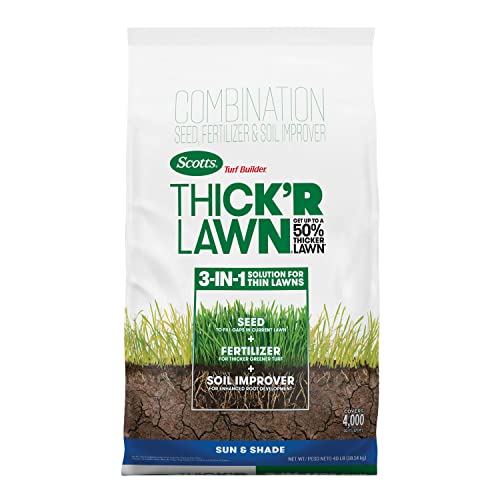
| Scotts Turf Builder Grass Seed Fall Mix (5.6 lb) | Autumn overseeding | Seed plus fertilizer plus soil improver; 5.6 lb | Check coverage on the bag for your lawn size | Mid-range |
| Pennington Smart Seed Perennial Rye plus Fertilizer (3 lb) | Quick patches in sun | Perennial ryegrass; 4 to 6 hours of sun; 3 lb | Not a shade or heat specialist | Budget |
| Scotts Turf Builder Lawn Food (12.5 lb) | Routine feeding | Covers 5,000 sq. ft. per the listing; all grass types | Follow spreader settings on the bag | Mid-range |
| Melnor XT Oscillating Sprinkler | Even watering of new seed | 4,500 sq. ft. coverage; 20 nozzles; adjustable flow, width and range | Wind pushes spray off target | Mid-range |
| Walensee 15-Inch Thatch Rake | Removing dead grass buildup | 19 tines; 70-inch handle | Hard work on large lawns | Mid-range |
| Goplus 24-Inch Compost Spreader | Topdressing low spots | 24-inch roller; height-adjustable handle | Needs sieved, dry material | Mid-range |
1. Pennington Kentucky 31 Tall Fescue: Best for Hardy, Low-Fuss Lawns
- Seed type: Kentucky 31 tall fescue
- Listed light range: full sun to moderate shade
- Listed trait: drought-resistant
- Size reviewed: 7 lb bag (3 lb and 40 lb sizes also exist)
- Use: residential lawns and bare-spot repair
Best for: homeowners in the transition zone or cool-season areas who want a lawn that forgives missed waterings. Skip if: you want the fine, dense look of Kentucky bluegrass or you live where warm-season grasses such as bermudagrass dominate.
Tall fescue is a bunch-type cool-season grass with a deep root system, which is why drought resistance is the headline on the listing. In practice that means you can usually go longer between deep waterings once it is established, but you still have to keep the top inch of soil damp until the seedlings come up. A 7 lb bag is a good size for patching or overseeding a modest yard; for a full new lawn you will want the larger bag, and the coverage chart on the label tells you how many pounds you need.
When people ask how long grass seed takes to grow, tall fescue is a good example of why no single answer is safe. Germination speed depends on the species, soil temperature and moisture. Many cool-season seeds sprout somewhere in the range of one to three weeks under good conditions, and tall fescue is often on the slower end of that range, but cold nights or a dry week can stretch it. Read the label rather than counting days on a calendar.
Pros: handles some shade and some drought; suits repair and renovation; widely available in several bag sizes. Cons: coarser texture than bluegrass; clumping habit means bare spots fill slowly; not for warm-season lawns.
2. Scotts Turf Builder Grass Seed Fall Mix: Best for Autumn Overseeding
- Bag size: 5.6 lb
- Format: grass seed plus lawn fertilizer plus soil improver, per the listing
- Listed coverage: covers up to 4,240 sq. ft. when overseeding (check the full listing for the exact wording)
- Season: designed for fall
Best for: thinning cool-season lawns in early autumn. Skip if: you are in a warm-season region or sowing in spring, where a spring-labelled blend is a better match.
The reason fall is the favorite season for cool-season grass is simple: soil is still warm from summer, air is cooler, weeds are slowing down and rain is more dependable. A fall-labelled mix is formulated for those conditions. Because the seed comes with a starter feed and a soil improver, you can skip buying a separate product for the first round, though you will still want a proper lawn food later in the season.
Overseeding works best when seed touches soil, so mow slightly lower than usual, bag the clippings, rake out loose thatch and scatter the seed. Press it in lightly, then water lightly and often so the surface never dries out. Moderate foot traffic and pets should stay off the area while seedlings are small.
Pros: fall-specific formulation; seed and starter feed in one bag; readable coverage claims. Cons: blend composition varies, so check the label for your region; bagged mixes cost more per pound than plain seed.
3. Pennington Smart Seed Perennial Rye plus Fertilizer: Best for Quick Patching in Sun
- Seed type: perennial ryegrass
- Listed light: about 4 to 6 hours of sun
- Bag size: 3 lb, with fertilizer included
- Typical use: small patches and fast cover
Best for: filling dog spots, thin edges and worn paths in sunny areas where you want a quick green-up. Skip if: the spot is deep shade, or you need a seed that survives hot dry summers without regular watering.
Perennial ryegrass is known for germinating faster than most cool-season grasses, which is why it shows up in quick-repair products. The tradeoff is that it prefers regular moisture and moderate temperatures. It makes a good partner for tall fescue: ryegrass gives early cover while the slower grass establishes. A 3 lb bag is meant for patches, not whole lawns.
Pros: fast starter; compact bag for small jobs; includes fertilizer. Cons: limited shade and drought tolerance; small coverage; not a long-term answer for a stressed lawn on its own.
4. Scotts Turf Builder Lawn Food: Best Fertilizer for Routine Feeding
- Bag size reviewed: 12.5 lb
- Listed coverage: 5,000 sq. ft.
- Grass types: listed as suitable for all grass types
- Larger 37.5 lb bag also listed, covering 15,000 sq. ft.
Best for: a basic fertilizer you can spread with a broadcast or drop spreader. Skip if: a soil test says you need something specific, such as extra iron or a low-phosphorus formula.
People often ask how long to wait to mow after fertilizing. For granular lawn food, the usual guidance is to let it settle for a day or two and let the grass dry before mowing, and to water it in as the label directs. The best habit is to mow first, then fertilize, so you are not cutting off freshly fed leaf blades. For liquid products, mow once the lawn is dry. If a label gives a waiting period, the label wins.
Pros: clear coverage per bag; two bag sizes; fits most spreaders. Cons: over-application can burn grass; not a weed treatment on its own.
5. Melnor XT Oscillating Sprinkler: Best for Keeping New Seed Evenly Damp
- Listed coverage: up to 4,500 sq. ft.
- Nozzles: 20 precision nozzles
- Controls: flow, width and range adjustments
- Drive: InfinityDrive, as named in the listing
Best for: rectangular lawns where you need a gentle, even rain over newly seeded ground. Skip if: your yard is small and curvy, where a smaller sprinkler wastes less water.
New seed lives or dies by moisture. The standard advice is to keep the top layer damp, which usually means short, frequent watering sessions rather than one long soak. An oscillating sprinkler with adjustable width lets you avoid soaking the sidewalk and driveway. Once the grass is established, shift to deeper, less frequent watering.
Pros: adjustable pattern; large listed coverage; familiar, simple design. Cons: wind drift; an oscillating pattern can leave dry corners.
6. Walensee 15-Inch Thatch Rake: Best Manual Thatch Remover
- Width: 15 inches
- Tines: 19
- Handle: 70 inches
- Style: dual-sided manual dethatcher, per the listing
Best for: small and medium lawns where a few passes will lift dead grass before seeding. Skip if: you have a large lawn, or a grass like St. Augustine, where aggressive dethatching can damage runners.
St. Augustine owners often ask whether dethatching is wise. Many extension guides advise caution with this grass because its stolons sit at the surface and can be torn up by hard raking; if you think you have a thatch problem, check thatch depth first and ask your local extension office. For cool-season lawns that you plan to overseed in fall, light raking helps the seed reach the soil.
Pros: low cost; no fuel or battery; long handle reduces bending. Cons: physical work; can pull up healthy grass if pressed hard.
7. Goplus 24-Inch Compost Spreader: Best for Topdressing a Bumpy Lawn
- Width: 24 inches
- Material: heavy-duty metal mesh basket, per the listing
- Handle: height-adjustable T-shape
- Use: compost, peat moss and topsoil spreading
Best for: leveling low spots with thin layers of screened compost or sand mix. Skip if: your lawn is mostly flat and you only need seed or fertilizer, where a standard spreader is simpler.
To fix a bumpy or uneven lawn by topdressing, spread a thin layer, work it down into low areas with the back of a rake, and let the grass grow up through it. Applying too much at once can smother grass, so go light and repeat later if needed. A mesh roller spreader makes the layer more even than a shovel does.
Pros: speeds up topdressing; adjustable handle; works for compost and peat. Cons: wet material clogs the mesh; storage space needed.
Also Consider
Eden 96213 Weighted Oscillating Sprinkler
Listed at up to 3,600 sq. ft. with 16 nozzles, it suits medium yards and the weighted base keeps it from walking around on slopes.
Orbit Tripod Zinc Impact Sprinkler
An adjustable-height impact sprinkler that throws water over a wide circle, useful for large open lawns once seedlings are established.
Maxpower 331528B 21-Inch Mulching Blade
A replacement blade for 21-inch MTD, Cub Cadet and Troy-Bilt decks per the listing. A fresh blade makes a cleaner cut, which matters for stress and appearance; check your mower model before ordering.
Scotts Green Max Lawn Food
A fertilizer with an added iron supplement, listed for 5,000 sq. ft. A reasonable alternative if your lawn looks pale and a soil test supports it.
Mowing Questions Answered
How often should you mow your lawn?
Most lawns need mowing about once a week in active growth, and less often when growth slows. The better rule is to mow when the grass is about one third taller than your target height, so you never remove more than a third of the blade at once. In a fast spring flush that may be twice a week; in a summer drought, every two weeks may be plenty. This also answers how much to mow: cool-season grasses usually do best at a taller setting, often in the 3 to 4 inch range, but follow guidance for your species.
How early can you mow your lawn in the morning, and in the season?
Mow once the dew has dried, which is usually mid-morning, and once the grass has started actively growing in spring. Early spring mowing on soggy ground leaves ruts, so wait until the soil is firm. For neighbors’ sake, check your local noise rules for earliest allowed hours.
Can you mow the lawn when it is wet, and how soon after rain can you mow?
Avoid it if you can. Wet grass clumps, cuts unevenly, clogs the deck and compacts soil. University of Maryland Extension notes that soil should be dry enough that wheels do not leave ruts. A common rule of thumb is to wait until the blades are dry to the touch, often a day after a heavy rain, but cooler, humid weather stretches that. If you must mow wet grass, raise the deck, cut lightly and clean the underside afterward.
How long after seeding can I mow?
Wait until the new grass is established, which is usually several weeks. University of Maryland Extension says that under good conditions new turf is typically mowed four to six weeks after seeding. Other lawn guides give shorter ranges for overseeding, around two to four weeks, and note that ryegrass starts sooner than slower grasses. A sensible check is to wait until seedlings are around 3 inches tall, then cut with a sharp blade and take off only a little.
How long after fertilizing can I mow?
For granular lawn food, many guides suggest waiting a day or two, and mowing only once the grass is dry. Liquid products usually need to dry first. Following the product label is the safest path, and mowing before you fertilize avoids the issue.
How long to wait to mow after a lawn treatment such as weed killer?
Check the label. Some products ask you to wait 24 hours or more before mowing, and some ask you to keep clippings off compost and mulch for a period. Weed-and-feed products often have a different rule from liquid herbicides.
How do lawn mowers make stripes?
Stripes come from bending grass blades in different directions. A roller or the mower’s rear wheels lays the blades over: grass leaning away from you looks lighter, and grass leaning toward you looks darker. Mow in straight, alternating lines, and use a roller or a striping kit if you want bolder patterns.
How do I fix scalping marks after mowing?
Scalping is when the deck cuts into the soil or too much leaf, leaving brown patches. Raise the deck, mow when the lawn is dry, and slow down over bumps. Scalped areas usually recover on their own if the crowns are intact; if not, rake the spot lightly and reseed.
Can you cut grass without a lawn mower?
Yes, with string trimmers, hand shears, a scythe, a reel mower or even grazing animals on a large property. For a small patch a string trimmer does the job; for a large lawn it is slow and gives an uneven cut.
How often should I sharpen mower blades, and how often should I replace a mower?
Many makers suggest checking the blade at least once a season, and sharpening it after a certain number of hours of use or whenever the grass looks torn and tips turn brown. A mower itself can last many years with oil changes, a clean deck and fuel care, so there is no single replacement schedule. Look at your owner’s manual.
Do lawn mowers kill ticks, and can chinch bugs travel on a mower?
Regular mowing keeps grass short, which makes a yard less friendly to ticks, but it does not kill them, and it is not a substitute for protective clothing and checks. Chinch bugs are an insect pest of some turf grasses; any outdoor equipment that has been in infested turf could in theory carry insects or debris, so cleaning the deck after mowing a problem area is a sensible precaution. For a confirmed pest problem, ask your local extension service.
Seeding Questions Answered
Does grass seed expire?
Seed does not spoil like food, but its germination rate drops with age and with heat and humidity during storage. Check the date on the bag, store it cool and dry, and expect lower success from old seed, so apply a little more if you must use it.
How long does it take grass seed to grow?
It varies with species, soil temperature, moisture and light. Cool-season seeds often sprout within a few weeks, and some warm-season seeds take longer. We do not promise a number; the label is the best guide, and it is normal for slower grasses to take noticeably longer.
Can you germinate Kentucky bluegrass in 10 days?
Kentucky bluegrass is known as one of the slower cool-season grasses to germinate, so claims of ten days should be taken with caution. Pre-soaking, warm soil and constant moisture can speed things up, but results vary. A ryegrass companion gives a quicker green while the bluegrass catches up.
Is DIY hydroseeding worth it?
It can be, for larger areas, because the slurry of seed, mulch and tackifier holds moisture and helps hold soil on slopes. The costs come from renting or buying a sprayer, plus the materials; for a small patch, hand seeding with a light mulch covering is cheaper. Pricing and sprayer availability vary by region, so check local quotes before deciding.
Fall Lawn Care Questions Answered
What should I do for fall lawn care?
For cool-season lawns, a simple fall routine is: keep mowing until growth stops, remove leaves so they do not smother grass, rake or aerate if soil is compacted, overseed thin areas, feed with a fall-appropriate fertilizer, and keep seed damp until it is established. Lower the mower slightly for the last couple of cuts, but do not scalp.
When is the best time to seed in fall?
Early autumn is best, when soil is still warm and there are several weeks before hard frost. In very cold regions that can be late summer. Warm-season lawns follow a different calendar, so check what your grass type needs.
Should I use a weed-and-feed in fall?
Not on a day you are seeding, since many weed-control products can stop seed from sprouting. If you seed, read the label for the required waiting period. A starter fertilizer is usually the better match for seeding day.
How We Chose
This guide is research-based. We reviewed manufacturer listings for each product, the published specs in them, and extension guidance from universities, including University of Maryland Extension on seeding and mowing. We did not personally use any of these products and we do not claim results. Where a spec was not stated, we wrote “not listed.” We limited each brand to a small number of picks, favored items that are widely stocked, and ruled out anything that did not clearly fit mowing, seeding or fall care. Prices are shown as tiers only because they change often.
Buying Guide
Match the seed to your sun and climate
Cool-season grasses such as tall fescue, Kentucky bluegrass and perennial ryegrass thrive where winters are cold; warm-season grasses such as bermudagrass and zoysia prefer heat. Check how many hours of sun your lawn gets: many seed bags list a range such as 4 to 6 hours, or full sun to moderate shade. A mix beats a single species for varied conditions.
Size the bag to the area
Seed and fertilizer bags list coverage. As a rule, note the square footage of your lawn first (length times width, broken into rectangles) and then compare it with the label, rounding up for overseeding. A 3 lb bag is for patches; a 5.6 lb fall mix is for a few thousand square feet at overseeding rates; 40 lb bags are for large or new lawns.
Choose a watering tool that fits your yard
Oscillating sprinklers suit rectangles; impact and gear-drive sprinklers suit round or large areas. Look at listed coverage, adjustable width and range, and a weighted base if the yard has a slope. Frequent short sessions are the rule for new seed; once the grass is established, deeper and less frequent watering builds roots.
Think about thatch and soil
More than about half an inch of thatch may be worth treating. A manual rake is fine for small yards; larger lawns may justify a rented power dethatcher or a tow-behind unit. Compacted soil may call for core aeration instead of raking.
Keep the mower in shape
A dull blade tears grass and leaves brown tips. Check the blade each season, balance it after sharpening, and make sure replacement blades match your deck size and model number. Do not guess; confirm in the manual.
Common Mistakes to Avoid
- Cutting grass very short to mow less often. It stresses the lawn and invites weeds.
- Mowing new seedlings too early or with a dull blade, which can pull up young plants.
- Applying seed and a weed-control product on the same day without checking the label.
- Watering new seed deeply once a week instead of lightly and often.
- Letting fallen leaves sit in a thick mat all winter.
Frequently Asked Questions
How often should I mow my lawn?
About once a week during active growth is typical, but mow by height rather than the calendar: cut when the grass is about a third above your target height.
Can I mow a wet lawn?
It is best not to, because wet grass clumps, tears and compacts the soil, so wait until the blades and soil have dried.
How long after seeding should I wait to mow?
Wait until the new grass is established, often several weeks; University of Maryland Extension gives four to six weeks under good conditions for new turf, and overseeded lawns are often cut sooner.
Is fall really the best time to seed?
For cool-season lawns, yes, because warm soil, cooler air and steadier rain help seed establish before winter.
Does grass seed expire?
It does not spoil quickly, but germination drops with age and poor storage, so check the bag date and keep seed cool and dry.
Can I fertilize and seed on the same day?
Often yes with a starter fertilizer, but avoid weed-and-feed products on seeding day and follow the label of each product.
How do I make stripes in my lawn?
Mow in straight alternating lines and use a roller or striping kit to bend the grass in opposite directions, which changes how light reflects.
Which One Should You Buy?
If you only buy one thing, pick the seed that matches your sun and climate: Pennington Kentucky 31 Tall Fescue for tough, mixed conditions, or Scotts Turf Builder Grass Seed Fall Mix if you are overseeding in autumn. Add Scotts Turf Builder Lawn Food for routine feeding and the Melnor XT sprinkler if you have no way to water evenly. Choose the Walensee thatch rake for small lawns with visible thatch and the Goplus spreader only if you plan to level low spots with topdressing. Everything else in this guide is a free habit: mow when dry, take off a third at most, wait for new grass to establish and use fall as your main lawn season.
Sources
- University of Maryland Extension: Care and Maintenance of a Lawn after Seeding
- Pennington product pages (tall fescue and Smart Seed perennial rye)
- Scotts product pages (Turf Builder Fall Mix and Turf Builder Lawn Food)
- Melnor sprinkler product page
- Local state cooperative extension lawn calendars
Last updated: October 2026