Key takeaways
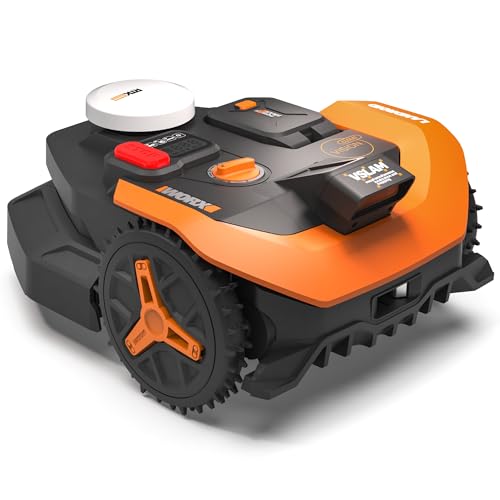
- Best Overall: WORX Landroid Vision Cloud WR310 (quarter acre, wire-free)
- Best for Larger Lawns: WORX Landroid Vision Cloud WR320 (half acre, wire-free)
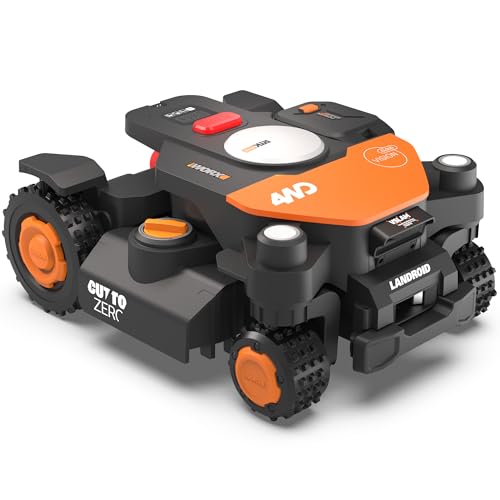
- Best for Slopes, Smaller Lawn: WORX Landroid Vision Cloud 4WD WR341 (quarter acre)
- Best for Slopes, Larger Lawn: WORX Landroid Vision Cloud 4WD WR342 (half acre)
- Best for Existing Vision Owners and Shoppers: WORX Landroid Vision (original, wire-free)
- Best Wired Alternative: WORX Landroid L WR155E (boundary-wire system)
The WORX Landroid Vision line is a good choice for homeowners who want a robot mower with no boundary wire, and the WR310 is the right starting point for a quarter-acre lawn while the WR320 suits a half-acre lawn. Both models use camera-based Vision AI with RTK Cloud positioning, which means you map the lawn in an app instead of burying a cable. If your lawn has real slopes, the 4WD versions (WR341 for a quarter acre, WR342 for a half acre) are the ones to look at, because the listing for the WR341 gives an 84 percent slope rating compared with about 30 percent for the two-wheel-drive models. This review is research-based: we compared maker pages, store listings and independent write-ups, and we did not personally use these mowers. Figures here are what the maker or seller states, and anything we could not confirm is marked “not listed”.
The Landroid name covers a confusing family. There is the original Landroid Vision, the newer Landroid Vision Cloud models with RTK Cloud, a set of 4WD variants, and the older wired Landroid L. Search results for “worx landroid vision cloud 4wd wire free robot mower” or “worx wr155 landroid l 1 2 acre” mix them together. This guide separates them, explains what each model is for, compares them side by side, and tells you who should skip the Landroid line altogether.
Our top picks


As an Amazon Associate we earn from qualifying purchases at no extra cost to you.
Top Picks at a Glance
- Best Overall: WORX Landroid Vision Cloud WR310 (quarter acre, wire-free)
- Best for Larger Lawns: WORX Landroid Vision Cloud WR320 (half acre, wire-free)
- Best for Slopes, Smaller Lawn: WORX Landroid Vision Cloud 4WD WR341 (quarter acre)
- Best for Slopes, Larger Lawn: WORX Landroid Vision Cloud 4WD WR342 (half acre)
- Best for Existing Vision Owners and Shoppers: WORX Landroid Vision (original, wire-free)
- Best Wired Alternative: WORX Landroid L WR155E (boundary-wire system)
Comparison Table
| Model | Best for | Key specs (as listed) | Watch for | Price tier |
|---|---|---|---|---|
| Landroid Vision Cloud WR310 | Quarter-acre lawns | Wire-free, 1/4 acre, 2WD, about 30% slope, 8.7 in cut width | Not for steep ground | Mid-range |
| Landroid Vision Cloud WR320 | Half-acre lawns | Wire-free, 1/2 acre, 2WD, about 30% slope | Same slope limit as the WR310 | Premium |
| Landroid Vision Cloud 4WD WR341 | Slopes on a small lawn | Wire-free, 1/4 acre, 4WD, 84% slope rating in listing | Premium cost for a small area | Premium |
| Landroid Vision Cloud 4WD WR342 | Slopes on a bigger lawn | Wire-free, 1/2 acre, 4WD | Slope figure not in the listing title | Premium |
| Landroid Vision (original) | Buyers comparing older stock | Wire-free, active obstacle avoidance, Wi-Fi and Bluetooth | Older design; confirm what navigation it uses | Premium |
| Landroid L WR155E | Large gardens, wired install | Boundary-wire robotic mower | Needs a buried or pegged wire | Mid-range |
What “Vision” and “Cloud” Actually Mean
The Landroid Vision name refers to the camera system. The newer models use a stereo camera with visual mapping (V-SLAM) to see the lawn and obstacles. The “Cloud” part refers to RTK Cloud, a satellite correction service delivered over the internet so that the mower can tell where it is without an antenna in your yard. WORX states that its RTK Cloud service is free for life on these models, but check the current terms when you buy because services and conditions can change.
Together, these features mean you do not bury a wire or set up a base station. You drive or map the lawn through the app, mark no-go zones, and set schedules. The trade-off is that you depend on a phone, an app and a network connection during setup and for updates, and satellite-based positioning works best with open sky.
1. WORX Landroid Vision Cloud WR310: Best Overall
- Recommended lawn size: 1/4 acre, per the maker
- Wire-free, no perimeter wire
- Stereo camera, V-SLAM, AI obstacle avoidance and RTK Cloud
- Maximum slope: about 30 percent (roughly 17 degrees) per the maker’s page
- Cutting width about 8.7 inches, three-blade system, electric height adjustment from about 1.57 to 3.54 inches
- Uses the PowerShare battery platform; battery capacity is quoted inconsistently across sources, so it is “not listed” here
Best for: A typical suburban lawn of about a quarter acre with gentle slopes. Skip if: your lawn is steep or your trees cover most of the sky.
The WR310 is the entry point into the wire-free Vision Cloud line. Its main appeal is simplicity: you map the lawn, set no-go zones, and let it run. The 8.7 inch cut width is small compared with a push mower, so it does the work over many short sessions rather than a single pass. That is normal for robotic mowers and is gentler on grass.
The electric cutting-height adjustment is easy to overlook but useful. You can raise the height in summer heat and lower it in spring from the app or the mower, without handling blades. WORX also sells an edge-cutting accessory for its Vision Cloud mowers; check that your model is compatible.
Slope capability is where the WR310 draws the line. A 30 percent slope is about 3 feet of rise over 10 feet of distance, which is fine for gentle yards but not for terraces or banks. If a section of your lawn is steeper than that, either exclude it from the mowing map or choose a 4WD model.
Pros: no boundary wire; app mapping; electric height adjustment; shares a battery platform with other WORX tools. Cons: 2WD and 30 percent slope limit; 1/4 acre rating; depends on app and signal.
2. WORX Landroid Vision Cloud WR320: Best for Larger Lawns
- Rated for 1/2 acre by the maker
- Wire-free with RTK Cloud and AI obstacle avoidance
- 2WD, about 30 percent slope in independent write-ups
- Similar cut width, about 8.7 inches
- Battery size: reported as about 5 Ah by one reviewer; treat as unconfirmed
Best for: Lawns closer to half an acre that are mostly open and not steep. Skip if: your yard has banks or terraces.
The WR320 takes the WR310 formula and extends it to a bigger area. For a half-acre lawn, the extra capacity reduces how many hours per day the mower must work. Remember that area ratings assume a flat, open lawn without a lot of obstacles. If your lawn has many beds, trees or narrow passages, treat the rating as a ceiling and consider the 4WD WR342 or a different brand if you also need slope capacity.
As with the WR310, the biggest practical question is signal and sky. RTK Cloud positioning improves with a clear view of the sky, and the camera system helps with obstacles, but heavy canopy can make mapping harder. If your lawn is mostly under trees, a LiDAR-based mower from another brand may be a better match.
Pros: larger area rating; same wire-free setup; app control. Cons: premium cost compared with the WR310; still 2WD; slope limit.
3. WORX Landroid Vision Cloud 4WD WR341: Best for Slopes on a Smaller Lawn
- Rated for 1/4 acre in the listing
- 4WD with a terrain-adaptive body, per independent write-ups
- 84 percent slope rating in the store listing
- Cut-to-Zero edge cutting mentioned in the listing
- Weight reported by one reviewer at about 37 pounds
- Cutting height in a UK review: 20 to 70 millimeters (this differs from the 2WD figures)
Best for: A small lawn with hills, banks or uneven ground. Skip if: your lawn is flat, since the extra cost goes to traction you will not use.
The slope rating deserves a careful read. An 84 percent slope is roughly 40 degrees, far steeper than most residential lawns. Treat that as a maker’s headline figure rather than a promise for every surface, and avoid mowing wet or slippery slopes. If a section is that steep, a person should also consider whether it is safe to mow at all, even with a robot, and follow the manual.
The 4WD design is where this model separates itself from the WR310. More driven wheels mean better grip on grass that is damp or uneven, and it is the main reason to pay a premium over the 2WD version. Reports that the cutting-height range differs between the 2WD and 4WD models are a good reminder to check the spec sheet for the exact version you buy.
Pros: strong slope rating; 4WD traction; wire-free; edge cutting option. Cons: premium cost; 1/4 acre area only; spec details vary between sources.
4. WORX Landroid Vision Cloud 4WD WR342: Best for Slopes on a Larger Lawn
- Rated for 1/2 acre in the listing
- 4WD, wire-free
- Landroid Vision Cloud AI obstacle avoidance with RTK Cloud
- Slope rating: not listed in the title
Best for: Large sloped lawns where you want one brand across the whole yard. Skip if: a smaller 4WD or a different brand’s mower covers your lawn.
The WR342 is essentially a half-acre version of the 4WD line. Because the slope rating is not in the listing title, check the product page and manual for the figure before buying, and compare it with a measurement of your steepest section. You can measure slope by placing a straight board and a level on the ground and dividing the rise by the run.
Pros: larger area with 4WD; wire-free; same app ecosystem. Cons: top of the WORX price range; slope figure not shown in the title; limited independent coverage.
5. WORX Landroid Vision (Original): Best for Older Stock and Comparison Shoppers
- Wire-free robot mower with active obstacle avoidance
- Wi-Fi and Bluetooth connectivity
- Area and slope: not listed in the title
- Navigation details beyond the camera system: not listed
Best for: Shoppers who find this model at a different tier or who already know it. Skip if: you want the RTK Cloud system and recent models.
The original Landroid Vision came first, and the Cloud models refined it. If you see both for sale, compare area, slope and navigation features carefully rather than assuming the older model matches the newer one. For most buyers, the Vision Cloud series is the easier recommendation because the specs are better documented.
Pros: wire-free; obstacle avoidance; connectivity. Cons: older design; limited spec detail in the listing; compare carefully with the Cloud line.
6. WORX Landroid L WR155E: Best Wired Alternative
- Boundary-wire robotic mower for larger gardens
- Self-propelled design
- Rated area is commonly shown as about half an acre by sellers; confirm on the product page
- Requires a perimeter wire
Best for: People who do not mind installing a wire and want a proven approach. Skip if: your main reason for shopping is a wire-free setup.
Searches for the Landroid L often show up next to the Vision models, which causes confusion. The Landroid L is the older wired approach: you lay a boundary wire around the lawn and the mower follows it. The advantage is that wire-based systems do not depend on satellites or cameras for boundaries. The drawback is the installation effort and the risk of wire damage from aerating or edging. If you want no wire, this is not the model you want.
Pros: wire-based boundary reliability; large garden positioning; proven approach. Cons: wire installation; fewer smart features than Vision models.
WORX Landroid Vision vs Landroid L
The key difference is how the mower knows where the lawn ends. The Landroid Vision and Vision Cloud models use cameras and, in the Cloud series, RTK Cloud positioning. The Landroid L follows a wire. If you hate the idea of cutting a trench or pegging a wire, choose Vision. If you have complex terrain with many trees and want boundaries that do not depend on a signal, the wire may still be attractive. Also compare the battery system: WORX’s PowerShare platform is shared across many of its garden tools, so check that the mower’s battery works with tools you already own.
Wire-Free Alternatives to Consider
- Sunseeker X3 Plus: RTK plus Vision AI, listed for 0.3 acre.
- Segway Navimow i105N: RTK plus vision, listed for 1/8 acre, suited to small lawns.
- ECOVACS GOAT O1000 RTK: RTK plus vision, listed up to 1/4 acre.
- Roborock RockNeo Q110H: full-band RTK plus VSLAM navigation, wire-free.
Sizing Worked Example
An acre is 43,560 square feet, so a 1/4 acre mower is rated for about 10,890 square feet and a 1/2 acre mower for about 21,780. Measure your mowable lawn, not your plot. If the lawn is 90 by 110 feet, that is 9,900 square feet, close to the WR310 rating. If beds and a patio take away 1,500 square feet, the mowable area is 8,400 square feet and the WR310 has headroom. If the lawn is 14,000 square feet with trees and beds, the WR320 gives more margin. Add 20 to 30 percent of margin when your lawn has narrow gaps or many obstacles, because those slow the mower down.
Setup and Daily Use: What to Expect
Setup begins with the app. You create an account, connect the mower to Wi-Fi, charge it at the dock and then map the lawn. Because the Vision Cloud models are wire-free, the main job is drawing the mowing area and marking no-go zones around beds, ponds and soft ground. Plan an hour for the first session and expect to adjust the map after watching the first few runs.
Daily use is mostly hands-off. The mower leaves the dock on schedule, mows in passes, avoids obstacles it recognizes and returns to charge. Keep a few habits: pick up toys and hoses, trim along fences and walls, and clear leaf piles in autumn, because piles can confuse a camera system. If the mower reports that it is stuck, the usual causes are a root, a hole or wet ground, and the app notes where it stopped.
Seasonal care is simple. Check blades every few weeks in the growing season and replace them when they look chipped; third-party blade packs exist, but use the type the maker lists for your model. Clean the underside and wheels after wet cuts. In winter, clean the mower, store it indoors as the manual advises and keep the battery at the recommended charge level.
A fair expectation is a neat, regularly trimmed lawn rather than a striped, hand-mowed finish. Frequent light cutting returns small clippings to the soil, which many lawn guides describe as a gentle way to feed the grass, but it also means scheduled maintenance of blades and sensors. If you want a lawn that looks mowed by hand in stripes, a robot is not the right tool.
How We Chose
This review is based on research. We read WORX product pages, store listings and several independent write-ups of the Landroid Vision Cloud family. We did not personally use these mowers and did not measure anything. Where sources disagreed, for example on battery size and cutting height for the 4WD model, we flagged the difference instead of choosing a number. We included both the Vision and the Landroid L so that readers who searched for either can see how they differ.
Buying Guide
Match area rating to your actual lawn
Measure the mowable grass and choose a mower rated with 20 to 30 percent margin. A smaller mower on a larger lawn can run for long hours and leave patchy cuts.
Decide whether you need 4WD
If every part of your lawn is under about 25 percent slope, a 2WD mower is usually enough. If you have banks, wet clay or uneven ground, 4WD is worth the extra cost.
Check your sky and network
RTK Cloud depends on satellite and internet data. Stand in several parts of the lawn and check that your phone has a signal and a view of the sky. Heavy canopy can make mapping harder.
Think about edges
No robot cuts exactly to the edge of a fence or wall. Plan to trim a few inches by hand, or look at the accessory edge-cutting option if your model supports it.
Plan for storage and upkeep
Blades wear, and the mower needs cleaning and winter storage. Keep spare blades on hand, store the mower indoors in the off-season according to the manual and consider a garage or cover for the charging dock.
Safety Basics
Follow the manual. Remove toys, hoses and debris before mowing, keep children and pets away from the working mower, and never reach under it while it is powered. Do not mow wet slopes, and use the pause and lift sensors as designed. If you are unsure about electrical connections for the dock, ask a qualified electrician.
Frequently Asked Questions
Is the WORX Landroid Vision worth buying?
It is worth considering if you want a wire-free robot mower and your lawn matches its rated area and slope. Choose the model by lawn size and slope, not just by name.
What is the difference between Landroid Vision and Vision Cloud?
The Cloud models add RTK Cloud positioning to the camera system, which is intended to improve mapping without an antenna in your yard.
Does the Landroid Vision need a boundary wire?
No. The Vision and Vision Cloud models are described as wire-free, while the Landroid L uses a wire.
Which Landroid Vision is best for a half-acre?
The WR320 is the 2WD half-acre model and the WR342 is the 4WD half-acre version, so pick based on slope.
Can the Landroid Vision handle hills?
The 2WD models are listed around 30 percent slope, and the 4WD WR341 is listed at 84 percent. Always follow the manual and avoid wet slopes.
How does the Landroid Vision compare with the Landroid L?
Vision is wire-free and camera-based. The Landroid L uses a boundary wire and suits people who prefer a wire-based system.
Do I pay for the RTK Cloud service?
WORX states that the service is free for life on these models, but check the current terms on the product page.
Which One Should You Buy?
Buy the WR310 for a quarter-acre lawn with gentle slopes and the WR320 for a half-acre lawn. Choose the WR341 or WR342 if you have hills or damp, uneven ground. Consider the Landroid L only if you accept installing a wire. If your lawn is heavily shaded, compare LiDAR-based alternatives. In every case, measure the mowable area and your steepest slope first.
Sources
- WORX Landroid Vision Cloud product pages
- Store listings for WR310, WR320, WR341, WR342 and Landroid L WR155E
- MowerRanker WORX Landroid Vision Cloud 4WD review
- SmartHomeCompared WR320 review and specs
- Robomowermag WORX Landroid Vision Cloud versions guide
Last updated: October 2026