Key takeaways
- A pre-emergent stops seeds from sprouting; it does not kill weeds that are already up.
- Soil temperature is the trigger, not the calendar. For crabgrass, aim to apply before soil holds around 50 to 55 degrees F for several days.
- Pre-emergents also stop grass seed. Do not use them where you plan to seed, unless the label says it is safe for that use.
- Bag size should match your lawn area, and the spreader setting should come from the label.
- Prodiamine products suit people who want long-lasting, pro-style control, while crabgrass preventers from retail brands are simple and easy to find.
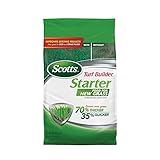
The best pre emergent weed preventers for home lawns are granular products built around prodiamine, such as The Andersons Barricade or Yard Mastery Prodiamine, or a crabgrass-focused spreadable like Scotts Halts. All of them work the same way: they form a barrier in the top inch of soil that stops weed seeds from establishing, so timing matters more than brand. Apply in spring before soil temperatures settle at about 50 to 55 degrees F, and again in early fall if winter weeds are a problem for you.
Our top picks



As an Amazon Associate we earn from qualifying purchases at no extra cost to you.
Key takeaways
- A pre-emergent stops seeds from sprouting; it does not kill weeds that are already up.
- Soil temperature is the trigger, not the calendar. For crabgrass, aim to apply before soil holds around 50 to 55 degrees F for several days.
- Pre-emergents also stop grass seed. Do not use them where you plan to seed, unless the label says it is safe for that use.
- Bag size should match your lawn area, and the spreader setting should come from the label.
- Prodiamine products suit people who want long-lasting, pro-style control, while crabgrass preventers from retail brands are simple and easy to find.
Best Pre Emergent Weed Preventers: Quick Comparison
| Pick | Best for | Key specs | Price tier |
|---|---|---|---|
| The Andersons Barricade Professional-Grade Granular | Long-lasting pro-style control | 18 lb covers up to 5,800 sq ft; 40 lb covers up to 12,880 sq ft | Mid to premium |
| Scotts Halts Crabgrass and Grassy Weed Preventer | Easy, widely available crabgrass control | 10.06 lb and 20.12 lb bags listed | Mid |
| Yard Mastery 0-0-7 Granular Prodiamine | Big lawns, value per square foot | 45 lb covers 15,000 sq ft at 3 lb per 1,000 sq ft | Premium bulk |
| Hi-Yield Turf and Ornamental Weed and Grass Stopper | Lawns plus ornamental beds | 12 lb bag; oryzalin pre-emergent granules | Budget to mid |
| LebanonTurf Prodiamine .58G | Pro-style crabgrass control | Prodiamine granules for turf, trees, and shrubs | Mid to premium |
| Scotts Turf Builder Halts Crabgrass Preventer with Lawn Food | Feed and prevent in one pass | Covers 5,000 sq ft per the listing | Mid |
| The Andersons 18-0-4 Barricade Fertilizer with Pre-Emergent | Fertilizer plus pre-emergent for big lawns | 40 lb covers 10,000 sq ft per the listing | Premium |
1. The Andersons Barricade Professional-Grade Granular Pre-Emergent: Best for Long-Lasting Control
- Professional-grade granular pre-emergent weed control
- 18 lb bag covers up to 5,800 sq ft; 40 lb bag covers up to 12,880 sq ft (per the listings)
- Barricade is the name tied to prodiamine; confirm the active ingredient on the label
- Applied with a broadcast or drop spreader
Best for: homeowners who want a product used by lawn professionals and can calibrate a spreader.
Skip if: you plan to seed soon, since long-acting barriers also block grass seed.
Pros:
- Two bag sizes fit small and large yards
- A pro-style product designed for a season of control
- Good coverage per bag
Cons:
- Higher price than basic retail crabgrass preventers
- Needs correct application and watering in, per the label
2. Scotts Halts Crabgrass and Grassy Weed Preventer: Best for Easy Crabgrass Control
- Granular crabgrass and grassy weed preventer for lawns
- 10.06 lb and 20.12 lb bag sizes are listed; larger multipacks also exist
- Designed for spring application before crabgrass sprouts
- A related WeedEx Prevent with Halts bag treats up to 5,000 sq ft per its listing, so confirm coverage for the size you buy
Best for: homeowners who want a well-known crabgrass preventer in a store-friendly bag.
Skip if: you want a broadleaf weed barrier too, or you plan to overseed in the same season.
Pros:
- Simple, familiar product with clear instructions
- Several bag sizes
- Works in standard spreaders
Cons:
- Primarily a crabgrass and grassy weed preventer
- Smaller bags cost more per square foot
3. Yard Mastery 0-0-7 Granular Prodiamine: Best for Big Lawns on a Per-Square-Foot Basis
- 0-0-7 granular prodiamine pre-emergent with fertilizer carrier
- 45 lb bag covers 15,000 sq ft at 3 lb per 1,000 sq ft, per the listing
- Prodiamine is a commonly used active ingredient for crabgrass and other annual weeds
- Check the label for timing, watering-in, and seeding intervals
Best for: larger yards and DIY lawn enthusiasts who buy in bulk.
Skip if: your lawn is small, because the bag is heavy and storage matters.
Pros:
- One bag covers a very large area
- Clear rate printed in the listing (3 lb per 1,000 sq ft)
- Potential for lower cost per square foot
Cons:
- 45 lb is heavy to carry and store dry
- Higher up-front cost
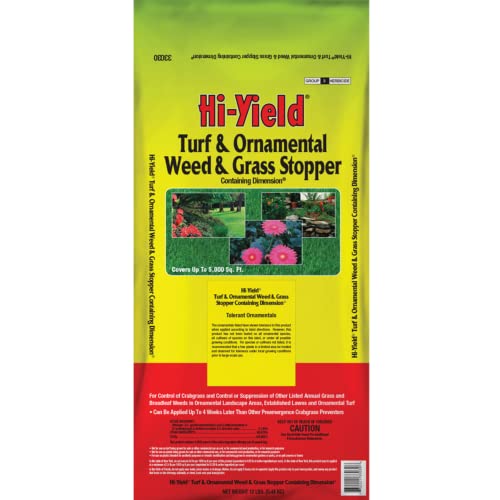
4. Hi-Yield Turf and Ornamental Weed and Grass Stopper: Best for Lawns and Beds Together
- Oryzalin pre-emergent granules, 12 lb bag
- Labeled for turf and ornamental areas, per the listing
- Controls annual grasses and certain broadleaf seedlings, per the listing
- Check the label for grass types it is safe on
Best for: people who want one product for both the lawn and landscape beds.
Skip if: you have a cool-season lawn and want to confirm tolerance carefully; some turf types are more sensitive to oryzalin.
Pros:
- Serves turf and ornamental areas
- Budget-friendly bag
- Different active ingredient from the prodiamine products
Cons:
- Label restrictions by grass type
- Less common in big-box stores
5. LebanonTurf Prodiamine .58G: Best for a Straight Prodiamine Product
- Prodiamine .58G granules, a pre-emergent crabgrass control
- Used on turf, trees, shrubs, and flower areas per the listing
- Straight pre-emergent with no fertilizer built in
- Check the maker page for bag sizes, rates, and coverage
Best for: homeowners who want a plain prodiamine granule they can apply on the lawn and around ornamentals.
Skip if: you want a feed-and-prevent product in one bag.
Pros:
- Simple pre-emergent with no extras
- Versatile across turf and landscape
- Pro-style active ingredient
Cons:
- Coverage details need to be confirmed on the label
- Not a quick fix for existing weeds
6. Scotts Turf Builder Halts Crabgrass Preventer with Lawn Food: Best for Feed and Prevent
- Combines crabgrass preventer with lawn fertilizer in one granular product
- Listing mentions coverage of 5,000 sq ft per bag
- Pre-emergent crabgrass control plus lawn feeding for established lawns
- Check the label for timing and mowing guidance
Best for: homeowners who want to feed the lawn in early spring and prevent crabgrass in a single pass.
Skip if: you plan to seed or overseed this spring, or if the lawn has low-nitrogen needs.
Pros:
- Combines two jobs into one pass
- Easy-to-find retail product
- Good coverage per bag
Cons:
- Feeding and preventing share a schedule, which may not fit every lawn
- Only for established lawns
7. The Andersons 18-0-4 Barricade Fertilizer with Pre-Emergent: Best for Large Lawns That Need Feeding
- 18-0-4 fertilizer with Barricade pre-emergent weed control
- 40 lb bag covers 10,000 sq ft per the listing
- Granular formula for lawns
- Check the label for the active ingredient and rate
Best for: larger lawns where you want spring feeding and weed prevention in one pass.
Skip if: you plan to seed, or you already have a fertilizer program on a separate schedule.
Pros:
- Bulk bag size for large areas
- Combines feed and prevention
- Professional-grade brand
Cons:
- Heavy bag and a higher price
- Combination products tie both jobs to the same timing
Also Consider
- Syngenta Tenacity Turf Herbicide, 8 oz: a liquid with both pre- and post-emergent action, sometimes used when seeding. The listing describes it as pre-emergent and post-emergent weed control. Check the label for rates and grass types.
- Jonathan Green Crabgrass Preventer (5,000 sq ft): a granular crabgrass preventer that the listing describes as a fertilizer with weed control. Confirm the active ingredient and timing on the label.
- Preen Garden Weed Preventer, 13 lb: a bed product that covers about 2,080 sq ft per the listing. It is made for gardens and landscape beds, not for lawns, so do not use it on grass unless the label says it is allowed.
- Quali-Pro Prodiamine 65 WDG, 5 lb: a sprayable generic prodiamine for people who prefer to mix and spray. This is a professional-style product that needs careful measuring.
How We Chose
This roundup is research-based, and we did not personally use the products. We began with listings for granular pre-emergent products used on lawns, then kept ones with a clear pre-emergent role, a stated bag size or coverage, and a recognizable maker. We limited the list to two products per brand, dropped bundles and listings with unclear contents, and kept garden-bed-only products in the extras. Coverage figures come from the listings and should be confirmed on the product label. We use price tiers rather than prices.
Pre-Emergent Weed Preventer Buying Guide
Pre emergent granular weed killer: what it actually does
A pre-emergent is not a weed killer in the usual sense. It forms a chemical barrier in the top inch of soil, and seeds that germinate there fail to establish. Established weeds are not affected, so if crabgrass is already up, you need a post-emergent product. The barrier lasts weeks to months depending on the active ingredient and rainfall.
Soil temperature for pre emergent application
Crabgrass seeds germinate when soil temperatures stay around 55 degrees F or higher for several days. A common guide is to apply when soil is at about 50 to 55 degrees F and rising, which often lines up with forsythia blooms in many regions. In practice, you can buy a probe thermometer or use your state’s local soil temperature data, and apply a couple of weeks before the expected germination. Fall applications for winter annual weeds usually target the point when soil temperatures drop through the 70s and into the 60s F.
| Target weed | Apply when | Approximate soil temperature trigger | Season |
|---|---|---|---|
| Crabgrass and summer annual grasses | Before germination | Soil approaching 50 to 55 F and rising | Early to mid spring |
| Goosegrass | Later than crabgrass | Soil holding about 60 to 65 F | Mid to late spring |
| Winter annuals such as annual bluegrass | Before fall germination | Soil falling toward about 70 F | Late summer to early fall |
| Spring broadleaf seedlings (label dependent) | Per label | Per label | Spring or fall |
Choose by active ingredient
- Prodiamine: a widely used pro-style active that lasts a long time at labeled rates. Used in Barricade, Yard Mastery, and LebanonTurf products.
- Oryzalin: used in some turf-and-ornamental products, such as Hi-Yield; check which grass types the label covers.
- Combination feed-and-prevent bags: convenient, but they tie fertilizer timing to pre-emergent timing.
- Mesotrione (for example, Tenacity): works as both pre- and post-emergent and is often discussed for use around seeding. Read the label closely.
Match the bag to the lawn
Measure the lawn area. As an example, a 6,000 sq ft yard needs at least 6,000 sq ft of coverage; one 18 lb Andersons bag at 5,800 sq ft will fall slightly short, so you would step up to the 40 lb bag (12,880 sq ft) or buy a second small bag. Yard Mastery at 3 lb per 1,000 sq ft needs 18 lb for the same 6,000 sq ft, so a 45 lb bag would leave about 27 lb for later use. Compare per-bag coverage rather than bag weight.
Watering in and activation
Most granular pre-emergents need water to activate and move into the soil, often about half an inch within a few days of application. Follow the label. If rain does not arrive, run a sprinkler. Do not rake or disturb the soil afterward, because that breaks the barrier.
Seeding and overseeding
Pre-emergents block grass seed as well as weed seed. If you plan to seed in spring, either wait until the label’s interval has passed or use a seeding-safe product. Many prodiamine labels set months-long gaps before seeding, so check the label before you apply. Fall seeding is easier when you apply the pre-emergent in spring and skip the fall application.
Pre-emergent or post-emergent: which problem do you have?
| Situation | Use | Why |
|---|---|---|
| Crabgrass was a problem last summer, nothing is up yet | Pre-emergent in early spring | Stops the new seed crop before it sprouts |
| Crabgrass is already green and spreading | Post-emergent labeled for crabgrass | A pre-emergent cannot kill weeds that are up |
| Dandelions and clover in the lawn | Post-emergent broadleaf product | Most pre-emergents do not control established perennials |
| Bare soil you plan to seed this season | Skip standard pre-emergent; consider a seeding-safe product | The barrier blocks grass seed too |
| Thin lawn with winter weeds each year | Fall pre-emergent, plus thicker turf | Dense turf shades out weed seedlings |
A sample year of pre-emergent timing
Here is a worked calendar for a cool-season lawn in a region with a typical spring. Adjust by your local soil temperature, because the dates shift by several weeks between regions.
- Late winter: clean up debris, sharpen the mower blade, and buy the bag so you are ready.
- Early spring (soil approaching 50 to 55 F): apply the pre-emergent at the labeled rate and water it in with about half an inch if no rain is forecast.
- 6 to 8 weeks later: check the label. Some products allow a second application for extended control in long seasons; others do not.
- Summer: mow high, around 3 to 4 inches for cool-season grass, to shade the soil and reduce new weed seedlings.
- Late summer to early fall: if you will overseed, skip the pre-emergent or use a seeding-safe product, and seed once the label interval has passed.
For warm-season lawns such as bermudagrass and zoysia, the first window usually opens earlier in spring, and a second fall application for winter weeds can be useful. Always follow the product label for your grass type.
Common pre-emergent mistakes
- Applying too late. Once crabgrass has sprouted, a pre-emergent will not stop it.
- Skipping the water-in. Granules that stay on the surface do not form a proper barrier.
- Gaps in coverage. Skipped strips become weed lanes. Overlap spreader passes slightly and use two directions.
- Raking or aerating right after. Digging breaks the barrier. Core aerate before you apply, not after.
- Using it where you want grass seed. Check the interval or pick a product made for seeding.
- Buying by weight, not coverage. A 40 lb bag that covers 10,000 sq ft is a different deal from a 40 lb bag that covers 12,880 sq ft.
Safety and storage
- Wear gloves and closed shoes when spreading. Keep kids and pets off the area until the label says it is safe, which is often after the product is watered in and the lawn dries.
- Store bags sealed, dry, and away from food, seed, and fertilizer, and keep them out of reach of children.
- Leftover granules can usually be saved for next season if the bag stays dry. Check the label.
Granular versus liquid pre-emergents
The picks above are granular because spreaders are easy to calibrate and most homeowners already own one. Liquid or water-dispersible products, such as the sprayable prodiamine in the extras list, cost less per treated area but need a sprayer, careful mixing, and a set volume of water. A granular bag also tells you the covered area right on the label, so mistakes are easier to spot. If you maintain a very large lawn or treat many beds, a sprayer plus concentrate can make sense, but for most yards a granular bag in the right size is simpler and safer.
Cost per treated area, without quoting prices
To compare value, divide the bag’s price by its coverage and then by 1,000 to get cost per 1,000 sq ft. A bag that looks cheap can cost more per area if it covers little, and bulk bags often win on this math. Remember to count the unused remainder: a 15,000 sq ft bag is only a bargain if you will store the rest dry and use it next season or on a second application.
Spreader and application tips
- Use the spreader setting on the bag. Calibrate if your spreader is not listed.
- Spread half in each direction for even coverage.
- Sweep granules off sidewalks and drives.
- Keep a record of the date so you can plan the second application if the label allows it.
- Wear gloves and follow the safety instructions on the label.
Frequently Asked Questions
What is the best pre emergent for crabgrass?
Prodiamine-based products such as The Andersons Barricade or Yard Mastery, and retail crabgrass preventers like Scotts Halts, are commonly used. The best one is the one you can apply on time at the label rate.
When should I apply a pre emergent weed preventer?
For crabgrass, apply before germination, when soil is approaching 50 to 55 degrees F in spring. For winter weeds, apply in late summer or early fall.
Can I use a pre-emergent and plant grass seed?
Usually not at the same time. Most pre-emergents block grass seed. Check the label for the waiting interval, or use a product made for use with seeding.
Does a pre-emergent kill weeds that are already growing?
No. It stops new seeds from establishing. For weeds that are up, use a post-emergent product labeled for your grass type.
How long does a pre-emergent last?
It depends on the product and rate. Many last several weeks to a few months. Rain, irrigation, and soil disturbance can shorten the period.
Is Tenacity a pre-emergent?
The Syngenta listing describes it as both pre- and post-emergent. It is often used around seeding, but follow the label for grass types and rates.
Can I put a pre-emergent on flower beds?
Only products labeled for ornamentals. Preen is made for beds, while some turf products also list ornamentals. Do not apply lawn products where the label does not allow it.
Which One Should You Buy?
- Best overall for DIY pro-style control: The Andersons Barricade Professional-Grade Granular.
- Simplest crabgrass prevention: Scotts Halts Crabgrass and Grassy Weed Preventer.
- Big lawn on a per-area basis: Yard Mastery 0-0-7 Granular Prodiamine.
- Lawn plus beds: Hi-Yield Turf and Ornamental Weed and Grass Stopper.
- Straight prodiamine: LebanonTurf Prodiamine .58G.
- Feed and prevent for small to mid lawns: Scotts Turf Builder Halts with Lawn Food.
- Feed and prevent for large lawns: The Andersons 18-0-4 Barricade Fertilizer.
Sources
- Manufacturer product pages and listing specifications for each product named
- University extension guides on crabgrass control and pre-emergent timing
- Product label directions for rates, watering in, and seeding intervals
- State soil temperature and lawn care calendars
Last updated: November 2026
FAQ
What is the best pre emergent for crabgrass?
When should I apply a pre emergent weed preventer?
Can I use a pre-emergent and plant grass seed?
Does a pre-emergent kill weeds that are already growing?
How long does a pre-emergent last?
Is Tenacity a pre-emergent?
Can I put a pre-emergent on flower beds?
More from Amazon
Programs that pair well with the guide above. Offers and eligibility are set by Amazon and may change.
Collect the home and kitchen items you want in one registry that guests can shop from.
Create a wedding registrySet up recurring deliveries of everyday items on eligible products. Terms and savings are set by Amazon.
Explore Subscribe & SaveFree shipping on eligible items, Prime Video and more. Eligible new members can start with a free trial.
Start a Prime free trialAudiobooks and podcasts to listen to on the go. Eligible new members can start with a free trial.
Try Audible freeAs an Amazon Associate we earn from qualifying purchases.