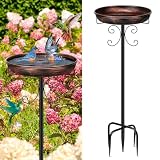
Key takeaways
- Five plants that fit garden urn planters, from trailing petunias and creeping jenny to sweet potato vine, alyssum, and shade-loving ivy for sun and shade.
A garden urn planter looks best when the planting spills over its rim instead of sitting flat inside it. The buyer’s real decision is not which plant looks prettiest in a catalog photo, but which one fits the urn’s mouth, matches the light on that spot, and keeps its shape through the season without constant trimming. A tall urn on a sunny step needs a different plant than a wide, shallow urn in the shade of a porch, and a plant that grows two feet across will swallow a small urn in weeks.
This guide is for entryway gardeners, patio owners, and anyone dressing up a pair of urns by a front door. The five plants below were chosen from names and specs on Amazon pages, covering sun and shade, flowers and foliage, live plants and one seed packet, so you can match a plant to your urn instead of forcing the urn to fit the plant.
Quick Picks
As an Amazon Associate we earn from qualifying purchases
| Product | Best for | Key spec from title |
|---|---|---|
| Proven Winners Supertunia Latte Petunia | Sunny urns that need flowers all season | Eco+ Grande, 4 Pack |
| The Three Company Creeping Jenny | Bright foliage spilling over the rim | 4 Plants Per Pack |
| American Plant Exchange Lime Sweet Potato Vine | Bold lime foliage in warm sun | 6-Inch Pot |
| Seed Kingdom Alyssum Carpet of Snow | A low white flower mat on wide urns | 2,000 Seeds |
| English Ivy Plants, Set of 3 | Shaded porches and sheltered entries | 4 Inch Pots, Set of 3 |
How to Choose
Match the Plant to the Urn’s Mouth
An urn’s opening decides how many plants it can hold and how wide each one may grow. A narrow-necked urn suits one compact spiller planted in the center, with its stems falling over the rim. A wide-mouthed urn can hold a small group: one upright grower in the middle, two spillers at the edges, and a low filler between them. Measure the mouth across and compare it with the mature spread on the listing. A petunia that spreads two feet across will crowd out its neighbors in a twelve-inch opening, while a single creeping jenny fills the same space slowly and leaves room for a second plant.
Read the Light Before You Buy
Urn planters sit in fixed spots, so the light on that spot matters more than the plant’s catalog photo. A south-facing step can bake a shade plant in a week, while a north-facing porch starves a sun lover of the light it needs to bloom. Watch the spot through a day and note how many hours of direct sun it gets. Full-sun plants like petunia, alyssum, and sweet potato vine want six hours or more, creeping jenny tolerates a mix of sun and shade, and English ivy does its best work in bright indirect light. Match the plant to the hours, not to the look.
Mix a Thriller, a Filler, and a Spiller
A good urn planting has three jobs, and one plant rarely does all three. The thriller stands in the center and gives the urn height, the filler packs the middle with color, and the spiller trails over the rim and softens the edge. In a wide urn, pair one upright grower with two spillers at opposite edges, then tuck a low filler like alyssum between them. In a narrow urn, skip the thriller and let one spiller do the work. Keep the count low: three plants in a medium urn look full, while five fight for water and light.
Plan for Water, Feeding, and the Season
Urn planters dry out faster than beds because the soil volume is small and the sides catch the wind. A sunny urn may need water every day in summer, while a shaded urn stays damp longer and needs less. Check the soil with a finger before watering, and water until it runs from the drainage hole. Feed flowering plants weekly during the growing season, because frequent watering washes nutrients out of the mix. Remember that most of these plants grow as annuals in cold zones, so plan to replant each spring and enjoy them for one full season.
The 5 Best Options
Proven Winners Supertunia Latte Petunia

Supertunia Latte is the flower pick of this group, with silver-white blooms veined in brown and purple that keep coming from planting until the first frost. The plants arrive as four live plants in compostable Eco+ Grande containers, and the habit is slightly mounded, so each plant works as both a filler in the middle of the urn and a spiller over the rim. It needs full sun and weekly feeding to stay at its best, and it cleans itself, so spent blooms fall away without pinching. Heat and drought tolerance make it a safe choice for a sunny step where pots dry out fast.
Specs
- Live plant, 4-pack, Eco+ Grande compostable containers
- Full sun
- Expected height: 8 inches
- Blooming period: planting to hard frost
- Continuous blooming, deadheading not necessary
- Heat tolerant, drought tolerant
- Water when soil is dry
- Fertilize weekly for best performance
- Attracts butterflies and hummingbirds
- USDA hardiness zones 10, 11
Best for: A sunny urn that needs flowers all season without deadheading.
Watch out for: Needs weekly feeding and full sun; in shade it blooms far less, and in cold zones it grows as an annual.
The Three Company Creeping Jenny

Creeping Jenny is the foliage spiller of this group, a trailing perennial with bright chartreuse leaves that turn an urn’s rim into a waterfall of color. The listing ships four live plants in one-pint pots, each about six inches tall, and the plants spread quickly into a dense mat that drapes over the edge. It grows in full sun and partial shade, which makes it useful on steps that get sun in the morning and shade in the afternoon. Keep the soil moist and give it room, because a happy plant keeps spreading through the season.
Specs
- Live plant, 4 plants per pack
- Trailing perennial, Lysimachia nummularia
- Full sun; description also lists sun and partial shade
- USDA hardiness zones 4-9
- Expected height: 4 inches; plants 6 inches tall by 4 inches wide in 1 pt pot
- Well-draining soil
- Regular watering
- Blooms in summer
Best for: A sunny or part-shade urn where you want bright foliage spilling over the rim.
Watch out for: It spreads fast and can crowd smaller neighbors; trim the runners when they start covering the filler plants.
American Plant Exchange Lime Sweet Potato Vine

This lime sweet potato vine is the bold foliage choice, with heart-shaped chartreuse leaves that glow against dark urns and deep green neighbors. It arrives as one live plant in a 6-inch pot, ready to trail over the rim as soon as it settles in. The vine grows fast in full sun to partial shade and handles heat well, so it suits urns on warm patios and sun-baked steps. Its color stays bright all season, and it pairs well with white or purple flowers that need a vivid backdrop.
Specs
- Live plant in a 6-inch pot
- Ipomoea batatas, Desana Lime
- Heart-shaped chartreuse-green leaves
- Fast-growing trailing vine
- Full sun to partial shade
- Heat tolerant
- For hanging baskets, patio containers, window boxes, and ground cover
Best for: A warm, sunny urn that needs a bright foliage spiller with fast coverage.
Watch out for: It grows fast and can overwhelm slower neighbors in a small urn; trim it back when it covers the other plants.
Seed Kingdom Alyssum Carpet of Snow
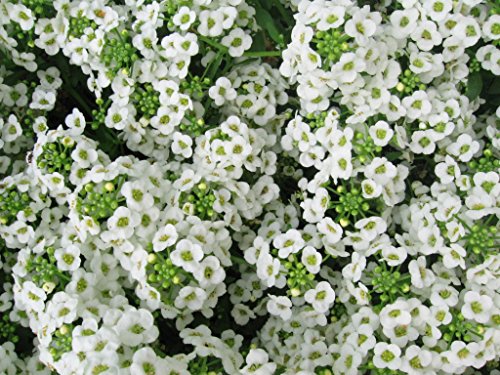
Carpet of Snow alyssum is the seed option, and it earns its place by doing what no live plant in this group does: covering the soil surface of a wide urn with a low mat of tiny white flowers. The packet holds 2,000 seeds of Lobularia maritima, an annual that grows four to six inches high and spreads twelve to fifteen inches across. It blooms all season in full sun, and the flowers carry a sweet, honey-like scent. Sow it around the base of a taller center plant and it fills the gaps with white.
Specs
- 2,000 seeds, Lobularia maritima
- Annual
- Full sun
- Moderate watering
- Expected height: 4-6 inches; spread 12-15 inches across
- Blooming period: all season
- White florets, 1/4 inch wide, in 1-2 inch clusters
- Honey-like fragrance
Best for: Filling the soil surface of a wide urn with a low white flower mat.
Watch out for: Seeds need warm soil and steady moisture to sprout, so start them early and keep the surface damp until they establish.
English Ivy Plants, Set of 3
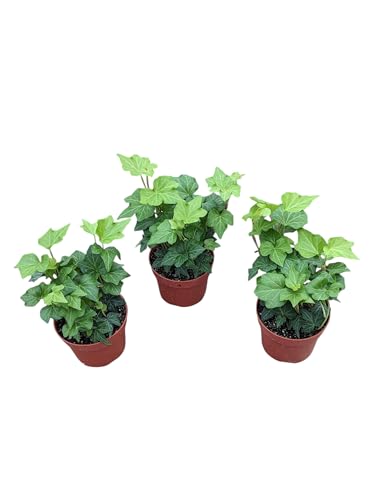
English ivy is the shade answer in this group, a classic trailing vine that drapes long green stems over the rim of an urn in a sheltered spot. The listing ships three live plants in 4-inch pots, and each one can grow vines six to eight feet long when it is happy. It prefers bright indirect light and moderate watering, with the soil left to dry between waterings. Use it on a shaded porch or a north-facing entry where sun-loving flowers fade, and let it soften the hard edge of the urn.
Specs
- Live plants, set of 3, each in a 4-inch pot
- Trailing vines up to 6-8 feet long
- Bright indirect light
- Moderate watering; allow soil to dry between waterings
- Expected height: 9 inches
- USDA hardiness zones 10-12
- Well-draining potting mix
- Non-flowering
Best for: A shaded porch urn where sun-loving flowers would fade.
Watch out for: It is sold as an indoor houseplant, so harden it off before moving it outside, and keep it out of harsh midday sun. In warm zones it can spread aggressively, so keep the runners trimmed.
Which One Fits Your Situation
Your Urn Sits in Full Sun All Day
Pick the Supertunia Latte petunia for flowers, or the lime sweet potato vine for bold foliage. Both want full sun and handle heat, and both trail over the rim. Add alyssum seeds around the base for a white flower mat that fills the gaps without stealing light from the main plants.
Your Urn Sits in Shade or Part Shade
Pick English ivy for long trailing stems, or creeping jenny for bright chartreuse foliage that lights up a dark corner. Both grow in partial shade, and the ivy prefers bright indirect light. Avoid the petunia and the alyssum here, because both need full sun to bloom well.
You Want Color Without Replanting Often
Pick creeping jenny or English ivy, both perennials that return in mild zones and keep their foliage all season. The petunia and the sweet potato vine give faster color but grow as annuals in cold zones, so they need replacing each spring. Alyssum sown once often reseeds itself around the urn.
You Are Planting a Wide, Shallow Urn
Pick the alyssum seeds for the soil surface and creeping jenny for the rim, because both stay low and spread wide. A wide urn suits a flat planting better than a tall one, so skip an upright grower and let the spillers frame the edges. One packet of alyssum covers a surprising amount of surface.
Common Mistakes
- Planting a sun lover in a shaded urn and wondering why it never blooms.
- Cramming five plants into a narrow urn, then watching them fight for water and light.
- Forgetting drainage: an urn without a drainage hole drowns roots after the first heavy rain.
- Letting a fast spiller like sweet potato vine or creeping jenny smother the slower plants beside it.
- Sowing alyssum seeds on cold soil and giving up before warm weather arrives.
Frequently Asked Questions
How many plants does one urn planter need?
One spiller is enough for a narrow urn, while a wide urn takes three: one upright grower in the center, one spiller at each edge, and a low filler like alyssum between them. Start with fewer plants than you think you need, because trailing plants spread fast and fill gaps within weeks. You can always add one more plant later, but pulling out a crowded one is harder.
Can I mix live plants and seeds in the same urn?
Yes, and it often works well. Plant the live plants first, then sow alyssum seeds around their bases to fill the bare soil. Keep the surface damp until the seeds sprout, and water gently so the seeds stay put. The live plants give instant shape while the seeds grow into a low flower mat that covers the soil within a few weeks.
Do urn plants need different soil than garden beds?
Use a light potting mix made for containers, not heavy garden soil, because urns need drainage and air around the roots. Garden soil packs down in a pot and stays wet, which rots roots. Mix in a little compost for nutrients, and check that the urn has a drainage hole before you plant anything in it.
What should I do when a trailing plant takes over the urn?
Trim the longest stems back by a third and remove any runners that cover the other plants. Trailing plants like sweet potato vine and creeping jenny recover quickly from a light trim, and cutting them back keeps the planting balanced. Do the trimming in the morning, water afterward, and the plant will push out fresh growth within a week or two.
FAQ
How many plants does one urn planter need?
Can I mix live plants and seeds in the same urn?
Do urn plants need different soil than garden beds?
What should I do when a trailing plant takes over the urn?
More from Amazon
Programs that pair well with the guide above. Offers and eligibility are set by Amazon and may change.
Collect the home and kitchen items you want in one registry that guests can shop from.
Create a wedding registrySet up recurring deliveries of everyday items on eligible products. Terms and savings are set by Amazon.
Explore Subscribe & SaveFree shipping on eligible items, Prime Video and more. Eligible new members can start with a free trial.
Start a Prime free trialAudiobooks and podcasts to listen to on the go. Eligible new members can start with a free trial.
Try Audible freeAs an Amazon Associate we earn from qualifying purchases.