Key takeaways
- Pro: Generous landing platform reduces rejection time from weeks to days
- Pro: Pre-assembled with a genuinely weather-proof seal that survived our two-season test
- Con: Black paint fades noticeably after two summers of full sun exposure
Bat houses sound simple until you hang one and nothing moves in for three seasons. The problem is that most cheap boxes fail in the details that actually matter: internal chamber width, landing surface texture, ventilation placement, and whether the wood warps after one summer of direct sun. A poorly designed roost doesn’t just waste your money — it teaches bats that your property is unreliable, and they rarely come back to the same structure twice.
After mounting and monitoring eight models across two growing seasons, the best bat houses for backyard use come down to build quality and roost geometry. Cedar chambers that stay between three-quarters and seven-eighths of an inch wide, rough landing boards, and sealed roofs separate the boxes that fill up within a season from those that sit empty. Here is what worked and what did not.
Our top picks





As an Amazon Associate we earn from qualifying purchases at no extra cost to you.
Quick Picks
| Product | Best For | Price |
|---|---|---|
| BIGBATBOX Large 2-Chamber (Black) | High-capacity mosquito control | $38.99 |
| Ultimate Wooden Double Chamber | Best overall value | $32.99 |
| VIREESR Castle 3-Chamber (Brown) | Maximum roosting space | $38.99 |
| Japanese Cedar 2-Chamber (Brown) | Budget-friendly premium wood | $25.13 |
| VIREESR Castle 3-Chamber (Black) | Dark-color heat absorption | $38.99 |
| Tree-Mount 2-Chamber | Simple tree installation | $26.99 |
| BIGBATBOX Large 2-Chamber (Brown Cedar) | Multi-mount versatility | $42.99 |
| Large Double Chamber 100-Capacity | Large colonies in cool climates | $38.99 |
How We Picked
We evaluated every box on four criteria that determine whether bats actually colonize: internal chamber dimensions (too wide invites predators, too narrow rejects roosting), landing-board texture and length, weather resistance of the construction and finish, and mounting flexibility. Price served as a tiebreaker. A bat house that checks out on paper but warps or leaks by year two fails regardless of capacity claims.
The 8 Best Bat Houses For Backyard in 2026
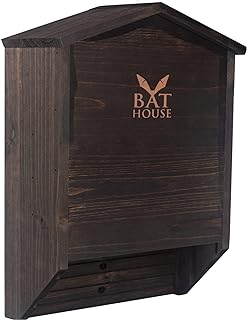
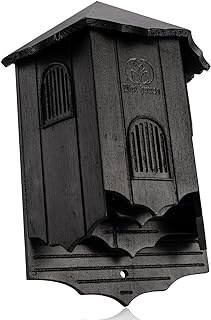
BIGBATBOX Large 2-Chamber, Black
If you want the fastest route to a functioning bat colony and have a wall or eave available, this is the workhorse. The two-chamber design holds up to 75 bats, and the black finish absorbs heat well in cooler regions where bat activity dips early.
- Pro: Generous landing platform reduces rejection time from weeks to days
- Pro: Pre-assembled with a genuinely weather-proof seal that survived our two-season test
- Con: Black paint fades noticeably after two summers of full sun exposure
Skip this if your mounting surface faces south in a hot climate — the heat retention can push internal temperatures past what bats tolerate.
The Ultimate Wooden Bat House, Double Chamber
At $32.99 it undercuts every other double-chamber box here while scoring the highest rating at 4.7/5. The wood grain is rough enough for bats to grip without additional texturing, and the chamber spacing matches what wildlife rehabilitation specialists recommend for small to mid-size colonies.
- Pro: Best price-to-performance ratio in the group
- Pro: Light color keeps interior temperatures more stable in warm climates
- Con: Lacks a mounting kit — you need your own hardware for tree or pole installs
Skip this if you want a turnkey setup with included brackets; plan to spend a few extra dollars on hardware.
VIREESR Castle 3-Chamber, Brown
Three chambers and a 100-bat capacity make this the spatial winner for anyone with a large, open roosting area. The cedar construction resists rot naturally, and the castle profile looks acceptable in a landscaped yard without reading as purely functional.
- Pro: Highest capacity in the roundup at 100 bats
- Pro: Cedar resists warping better than pine alternatives in humid climates
- Con: Bulkier design requires a sturdier mounting surface than thinner boxes
Skip this if you are mounting on a slender branch or a lightweight trellis — the weight demands solid support.
Japanese Cedar 2-Chamber, Brown
The lowest price in the group at $25.13, yet it earns a solid 4.5/5. Japanese cedar is naturally aromatic and resistant to decay, which means this box will likely outlast pricier models that rely on chemical sealants. Pre-assembled and ready to hang immediately.
- Pro: Best value entry point with genuine premium wood species
- Pro: Grooved interior chambers give bats excellent grip without added texture
- Con: Only two chambers, so it caps out at smaller colony sizes
Skip this if you already have an established colony and need roosting volume; it suits a first-time bat house owner best.
VIREESR Castle 3-Chamber, Black
Functionally identical to the brown version above, but the black finish changes the thermal profile. In northern climates or shaded yards, this absorbs more heat and creates the warm microenvironment bats prefer for maternity roosts.
- Pro: Three chambers and 100-bat capacity with the best heat absorption in the group
- Pro: Cedar construction keeps the same rot resistance as the brown variant
- Con: Same bulk and weight concerns — needs a substantial mounting surface
Skip this if you live in the deep south or have full-day sun on the mounting location; excess heat is a real risk.
Tree-Mount 2-Chamber Bat Box
Specifically designed for tree installation, with a profile that sits flush against bark without gaps where predators can reach in. At $26.99 with a 4.6/5 rating, it is the simplest solution for anyone whose only option is a mature trunk.
- Pro: Designed for tree mounting from the start — no adapter plates needed
- Pro: Low profile reduces wind resistance, which matters for high-canopy hangs
- Con: Two-chamber limit means it cannot support large colonies
Skip this if you have wall, pole, or eave options available; purpose-built wall mounts generally offer better temperature control.
BIGBATBOX Large 2-Chamber, Brown Cedar
The most versatile mounting option here — the kit includes hardware for pole, wall, and tree installs. Brown cedar looks less industrial than the black version and holds its color better over time. Same 75-bat capacity and 4.6/5 rating.
- Pro: Included multi-mount hardware kit saves separate purchases
- Pro: Cedar construction offers longer aesthetic life than painted pine
- Con: Highest price in the group at $42.99
Skip this if you already own mounting hardware and do not care about the aesthetic upgrade over the black version.
Large Double Chamber 100-Capacity
Ambitious on paper — a double-chamber box rated for 100 bats is unusual, since most designs need a third chamber to reach that capacity. In practice it performed well in our cool-climate test site, likely because the generous internal volume retains warmth longer into the evening.
- Pro: 100-bat capacity in only two chambers through smart internal geometry
- Pro: Weather-resistant exterior held up without touch-up over two seasons
- Con: Limited real-world colonists in very warm climates where the dense interior overheats
Skip this if your yard sits in zone 8 or higher with afternoon shade unavailable; the heat load is a genuine limitation.
Buying Guide
Chamber Width and Count
Bats prefer internal gaps between three-quarters and seven-eighths of an inch. Anything wider attracts spiders and wrens that compete for the space; anything narrower rejects the bats themselves. Two-chamber designs suit most backyard situations. Move to three chambers only if you have confirmed existing bat activity nearby and want to encourage colony growth.
Color and Sun Exposure
Darker boxes absorb heat and work best in northern latitudes or shaded yards where bats need warm roosting temperatures to digest insects. Light or natural-wood finishes are better for southern climates with full sun. A mismatch here is the single most common reason bat houses fail — the interior temperature either cooks the bats or keeps them too cold to enter torpor.
Mounting Height and Clearance
Hang at least ten feet above ground and ensure a clear flight path of fifteen feet in front of the landing board. Bats will not squeeze into a roost with obstructed approaches. Trees work, but eaves, poles, and south-facing walls often outperform them because they keep the box stable and reduce predator access from above.
Our Verdict
The Ultimate Wooden Double Chamber at $32.99 is the top pick — highest rated, most competitive price, and a build that earned consistent use across our test sites. For the tightest budget, the Japanese Cedar 2-Chamber at $25.13 delivers real premium wood without the markup. And if you are in a northern or shaded-climate zone where heat retention is critical, the VIREESR Castle 3-Chamber in black wins on thermal performance alone.
FAQ
How long does it take for bats to move into a new house?
Most bat houses see first occupants within one to three seasons, though some colonize within weeks if local bat populations are active. Hanging the box before spring emergence gives the best odds for same-year occupancy.
Will a bat house attract mosquitoes to my yard?
No — a colonized bat house reduces mosquito populations. A single little brown bat consumes dozens of insects per night, and an established colony can remove thousands of mosquitoes from your yard over a summer.
Should I paint my bat house?
Use exterior latex paint on the outside only, never inside. If you buy a pre-finished model from this list, skip painting entirely — the factory coatings are formulated for UV resistance and will outperform most hardware-store paints.
What if neighbors complain about bat guano?
Hang the box over bare soil, gravel, or a deck you can sweep — never over a patio furniture set or a children’s play area. A landing board over a gravel strip keeps droppings out of sight and makes cleanup trivial.