Key takeaways
- Glazing insulation: twin-wall polycarbonate holds heat better than single-layer polycarbonate, which holds heat better than thin plastic film.
- Frame durability: aluminum and cedar outlast untreated fir. Untreated wood in contact with wet soil rots unless sealed.
- Venting: an openable lid with support rods is the minimum. Temperature-activated openers prevent cooking plants on sunny days.
- Headroom: a 15 in frame suits greens and seedlings. Kale, chard, and potted herbs need more clearance.
- Stability: lightweight lids lift in wind, so the frame must be anchored.
The JUWEL BioStar 1500 is the best cold frame for serious winter growing because it pairs an aluminum frame with 8mm twin-wall polycarbonate, the Outsunny Wooden Polycarbonate Cold Frame is the best value for hardy greens and seed starting, and the Backyard Discovery Aggie 4 ft by 2 ft cedar frame is the best-looking low-maintenance option for a raised-bed edge. The deciding factors are glazing type, venting, and how much headroom your crops need.
A cold frame is a bottomless box with a transparent lid. It traps solar heat, blocks wind, and holds the soil warmer than the open garden, which lets you harvest hardy greens deep into winter and harden off seedlings in spring. It is not a heated greenhouse. On a clear winter day it can overheat in an hour, and on a clear, still night it can lose heat fast. Choosing well means matching glazing, frame, and venting to your climate.
Our top picks


As an Amazon Associate we earn from qualifying purchases at no extra cost to you.
Quick picks
| Pick | Frame | Glazing | Height | Best for |
|---|---|---|---|---|
| JUWEL BioStar 1500 | Aluminum | 8mm twin-wall polycarbonate | About 15 in | Cold winters, long-term use |
| Outsunny Wooden Polycarbonate Cold Frame | Untreated wood | Single-layer polycarbonate | About 16 in at back | Budget hardy greens |
| Backyard Discovery Aggie 4 ft x 2 ft | Cedar | Insulated polycarbonate panels | Not confirmed | Low maintenance, hands-off venting |
| MCombo Wooden Cold Frame | Painted fir | Polycarbonate | About 28 in | Potted and taller plants |
| Rowlinson Coldframe | Pressure-treated wood | Plastic | About 15 in | Rot resistance on a budget |
How we chose
This guide is research-based. We compared manufacturer specifications and the published findings of several buying guides, then ranked products against the criteria below. Where sources disagreed or a spec could not be confirmed, we say so or describe the class instead of guessing. Nothing here claims we used these frames ourselves.
- Glazing insulation: twin-wall polycarbonate holds heat better than single-layer polycarbonate, which holds heat better than thin plastic film.
- Frame durability: aluminum and cedar outlast untreated fir. Untreated wood in contact with wet soil rots unless sealed.
- Venting: an openable lid with support rods is the minimum. Temperature-activated openers prevent cooking plants on sunny days.
- Headroom: a 15 in frame suits greens and seedlings. Kale, chard, and potted herbs need more clearance.
- Stability: lightweight lids lift in wind, so the frame must be anchored.
How a cold frame works
Sunlight passes through the lid, warms the soil and air inside, and the glazing slows the escape of heat. Soil is a heat reservoir, so a frame set directly on the ground stays steadier than a frame sitting on a bench. Facing the lid south, with the back wall taller than the front, tilts the glazing toward the winter sun and sheds rain.
Cold frames are often described as moving your garden roughly one hardiness zone warmer. That is a rule of thumb, not a guarantee, and it depends on glazing, siting, and how well you vent. A frame extends the season for hardy crops. It does not make tomatoes safe in January.
Glazing: the spec that matters most
Single-layer polycarbonate
Most budget wooden frames use a single sheet. It is light, shatter-resistant, and cheap, and it is a reasonable middle ground for hardy greens. One roundup notes it insulates less than twin-wall panels, which reduces frost protection in the coldest climates.
Twin-wall polycarbonate
Two layers separated by an air gap slow heat loss. Frames with 8mm twin-wall panels are the best choice for sustained freezing weather, and they also diffuse light, which reduces scorch.
Polyethylene film
Low-cost mini greenhouses with a film cover are easy to move, but film tears in wind and degrades in UV. Treat them as seasonal.
Product reviews
JUWEL BioStar 1500
Spec line: Aluminum frame · 8mm twin-wall polycarbonate · about 15 in tall · three opening windows · 10-year UV guarantee · automatic vent opener sold separately
The most durable choice in the group. The aluminum frame will not rot, the twin-wall glazing retains heat through hard freezes, and the multiple windows let you control airflow. The automatic opener is an add-on, so budget for it.
Best for: Cold climates and gardeners who want a decade of use.
Skip if: You want a quick, tool-free assembly or the lowest price.
- Pros: excellent heat retention, long UV guarantee, three windows, rot-proof frame.
- Cons: assembly requires drilling, higher upfront cost, missing hardware has been reported.
Outsunny Wooden Polycarbonate Cold Frame
Spec line: Untreated fir wood · single-layer polycarbonate · about 39 to 40 in by 26 in by 16 in · tilted openable lid
A very common budget pick. The footprint suits standard seed trays, and the sloped lid sheds water. The weak points are the thin glazing and the untreated wood, both fixable: seal the wood, and add a blanket on the coldest nights.
Best for: Lettuce, spinach, and hardening off seedlings on a budget.
Skip if: Your winters go well below freezing for weeks.
- Pros: low price, fits seed trays, easy assembly, compact.
- Cons: single-layer insulation, untreated wood is prone to moisture damage.
Backyard Discovery Aggie 4 ft x 2 ft Cedar Cold Frame
Spec line: Cedar frame · insulated polycarbonate panels · temperature-activated lid · 4 ft by 2 ft footprint · multi-year warranty described by one roundup as 5 years
The standout feature is the self-venting lid, which reduces the single biggest cause of cold frame failure: forgetting to open it. Cedar resists rot naturally. Warranty length is reported by a single source, so confirm it with the seller before relying on it.
Best for: Busy gardeners who cannot vent by hand every sunny day.
Skip if: You need a tall frame for potted crops.
- Pros: automatic venting, cedar durability, insulated panels.
- Cons: costs more than basic wooden frames; exact height not confirmed in our sources.
MCombo Wooden Cold Frame
Spec line: Painted fir · polycarbonate cover · about 28 in tall · two-tier layout · lid opens with support rods
A cabinet-style design that stands upright with adjustable shelves, suited to pots rather than in-ground beds. It is attractive and quick to build thanks to numbered parts.
Best for: Potted herbs, tall seedlings, and patios.
Skip if: You want to grow directly in soil or need serious insulation.
- Pros: numbered parts and clear instructions, shelving, tall.
- Cons: unsealed wood can warp, lightweight construction.
Rowlinson Coldframe
Spec line: Pressure-treated wood · plastic glazing · about 15 in tall · two lids that open independently at two height settings
The pressure-treated wood resists rot, and the two lids let you vent one half while keeping the other closed. The plastic glazing insulates less than polycarbonate, and there is limited owner feedback on long-term durability.
Best for: Damp sites where wood rot is the main worry.
Skip if: You need maximum heat retention.
- Pros: rot-resistant wood, two independent lids, two vent heights.
- Cons: plastic is a weaker insulator, little long-term feedback available.
Happygrill Wooden Cabinet Cold Frame
Spec line: Unsealed fir · polycarbonate · about 58 in tall · flip-top roof with support rod · adjustable shelves
A tall cabinet that works like a mini plant stand. It looks good and assembles straightforwardly, but the wood is not weather-sealed, and reports mention cracking and hinge wear.
Best for: Potted plants against a sheltered wall.
Skip if: The frame must stand in open weather without sealing.
- Pros: height, shelves, appearance.
- Cons: durability concerns, needs sealing.
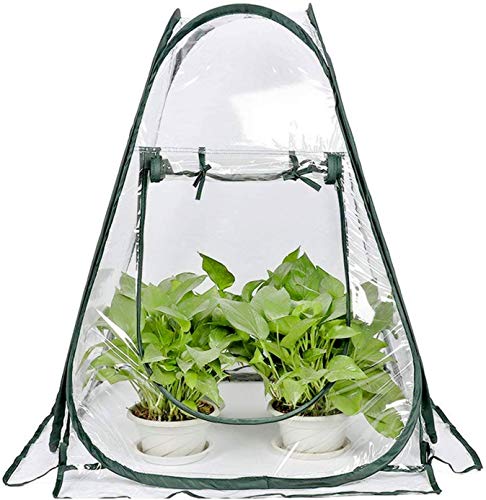
Gardzen Mini Greenhouse
Spec line: Polyethylene cover · roll-up zippered door · about 43 in tall · walk-up style
More tent than frame, with a roll-up door for access and venting. It is spacious and cheap but the cover tears in wind.
Best for: Shelter for pots on a sheltered patio.
Skip if: You face strong winds or want multi-year durability.
- Pros: roomy, simple assembly, easy access.
- Cons: polyethylene tears, zipper defects reported.
Zenport Tunnel Cloche
Spec line: Steel hoops · portable tunnel style · covers a row of crops
A portable tunnel for covering a row of crops. It moves easily and suits rotating beds. It offers less insulation than a box frame, so it is best for light frost rather than deep winter.
Best for: Gardeners who rotate beds.
Skip if: Temperatures regularly drop well below freezing.
- Pros: portable, covers long rows.
- Cons: limited insulation, needs anchoring.
Specification comparison
| Model | Frame material | Glazing | Venting | Rot risk |
|---|---|---|---|---|
| JUWEL BioStar 1500 | Aluminum | 8mm twin-wall polycarbonate | 3 windows, auto opener optional | None |
| Outsunny | Untreated wood | Single-layer polycarbonate | Tilted lid | High unless sealed |
| Backyard Discovery Aggie | Cedar | Insulated polycarbonate | Temperature-activated | Low |
| MCombo | Painted fir | Polycarbonate | Lid with rods | Medium |
| Rowlinson | Pressure-treated wood | Plastic | 2 lids, 2 heights | Low |
| Happygrill | Unsealed fir | Polycarbonate | Flip-top with rod | High |
| Gardzen | Not specified | Polyethylene | Roll-up door | Not applicable |
Worked example: how many plants fit and when to vent
Plant count for a 4 ft by 2 ft frame
- Area: 4 ft times 2 ft equals 8 square feet.
- Spinach at 4 in spacing: 4 in by 4 in is 16 square inches. One square foot is 144 square inches, so 144 / 16 equals 9 plants per square foot. Over 8 square feet that is about 72 plants.
- Head lettuce at 8 in spacing: 64 square inches each, so about 2.25 per square foot, roughly 18 heads.
- Apply a margin: leave a few inches at the edges where the frame is coldest, so plan on perhaps 80 percent of those numbers.
Venting logic
Heat builds quickly under glazing even in winter. A common rule of thumb is to prop the lid when the air inside approaches about 70 degrees F on a sunny day, then close it before sunset to hold the stored warmth. If you cannot be home midday, an automatic opener or a self-venting model removes the risk.
- Sunny and above freezing outside: prop the lid a few inches, more as it warms.
- Cloudy and cold: keep closed.
- Hard freeze forecast: close, and add a blanket or straw mat over the glazing at dusk.
Decision matrix
| Your priority | Choose | Reason |
|---|---|---|
| Coldest winters | JUWEL BioStar 1500 | Twin-wall glazing |
| Lowest cost | Outsunny | Single-layer, compact |
| Cannot vent daily | Backyard Discovery Aggie | Self-venting lid |
| Wet, rot-prone site | Rowlinson | Pressure-treated wood |
| Pots and taller plants | MCombo | 28 in height |
| Moving beds | Zenport tunnel | Portable |
What to grow in a cold frame in winter
- Cold-hardy leafy greens: spinach, mache, claytonia, arugula, and many lettuces keep growing slowly in shortened days.
- Brassicas: kale, collards, and small cabbage seedlings.
- Roots: carrots and radishes can be held in the ground and harvested as needed.
- Seedling hardening: in spring, move trays in to harden them off.
Plant for winter in early autumn, since growth slows sharply when day length falls below roughly 10 hours. Plants planted too late sit and wait rather than grow.
Siting and set-up tips
- Face the glazing south and put the high side to the north.
- Set the frame directly on soil and bank soil or straw bales against the sides for extra insulation.
- Anchor it with stakes or bricks, because light lids catch wind.
- Seal untreated wood on the outside before the first season.
- Keep a thermometer inside so you can see real conditions.
Common mistakes
- Forgetting to vent on a mild, sunny day.
- Overwatering. Plants lose water slowly in winter, and wet leaves in a closed frame invite rot.
- Planting too late for the shortening days.
- Skipping the anchoring and losing the lid in wind.
FAQ
How cold can a cold frame protect plants?
A basic frame typically adds a few degrees of protection, often described as about one hardiness zone. Twin-wall glazing and added insulation increase that.
For very cold nights, cover the glazing with a blanket or straw mat and choose hardy crops such as spinach and kale.
Do cold frames need to be vented?
Yes. Even on cold days the sun can heat a closed frame past what plants tolerate. Venting also reduces humidity and disease.
Prop the lid when the interior approaches about 70 degrees F, or choose a frame with an automatic opener.
Is polycarbonate better than glass for a cold frame?
For most home gardeners, yes. Polycarbonate is lighter and shatter-resistant. Twin-wall panels also insulate better than single-pane glass.
Glass lets in more light and lasts long, but breakage and weight make it a poorer choice where children or hail are a concern.
What is the best size for a cold frame?
A 4 ft by 2 ft frame handles most small gardens. It fits about 72 spinach plants or about 18 heads of lettuce.
Choose taller frames only if you grow potted plants. Reach matters: keep any frame narrow enough to tend from one side.
Should I put a cold frame on soil or a patio?
Soil is better because it stores heat and lets roots grow in the ground. A frame on pavement loses more heat and cannot hold crops directly.
If you must use a patio, use potted plants and insulate the base with straw or boards.
Does untreated wood last in a cold frame?
Not for long without sealing. Damp soil contact causes rot, and several budget frames are untreated fir.
Apply a plant-safe sealant to the outside, or choose cedar, pressure-treated wood, or an aluminum frame.
Can I use a cold frame to start seeds in spring?
Yes. A cold frame is ideal for hardening off seedlings started indoors and for sowing cold-tolerant seeds directly.
Vent more as the days warm, and close the lid on cold nights until frost danger passes.