Key takeaways
- Denier and weave. Polyester tops range from about 150D on budget pop-ups to 500–600D on heavy commercial units. Higher denier blocks more light, resists tearing, and lasts longer in sun.
- Coating. A PU or PVC coating on the underside adds water resistance and UV blocking. Silver-coated undersides reflect radiant heat and keep the shaded area a few degrees cooler on hot afternoons.
- Color. Light-colored tops reflect more heat but let more visible light glow through; darker tops feel shadier but absorb more heat into the fabric. Beige, grey, and khaki sit in the middle.
- Height and venting. A vented peak lets hot air escape, which noticeably improves comfort under the canopy in still air.
The best UV blocking patio canopy for most backyards is a 10 x 10 ft or 12 x 12 ft canopy with a coated polyester top of at least 300D, a published UPF 50+ rating, and a steel frame weighted with at least 25–40 lb per leg. That combination blocks roughly 98% of ultraviolet radiation, holds its shape through a summer of sun, and stays put in a moderate breeze. Pop-up canopies with sides are the most flexible option for renters and occasional use, while a permanent soft-top gazebo frame makes more sense if the canopy will stay up from spring to fall.
Our top picks



As an Amazon Associate we earn from qualifying purchases at no extra cost to you.
What “UV Blocking” Really Means on a Canopy
UV protection on fabric is measured with UPF, the Ultraviolet Protection Factor. A UPF 50+ fabric allows less than 2% of UV radiation through. Shade feels cooler, however, depends on more than UPF:
- Denier and weave. Polyester tops range from about 150D on budget pop-ups to 500–600D on heavy commercial units. Higher denier blocks more light, resists tearing, and lasts longer in sun.
- Coating. A PU or PVC coating on the underside adds water resistance and UV blocking. Silver-coated undersides reflect radiant heat and keep the shaded area a few degrees cooler on hot afternoons.
- Color. Light-colored tops reflect more heat but let more visible light glow through; darker tops feel shadier but absorb more heat into the fabric. Beige, grey, and khaki sit in the middle.
- Height and venting. A vented peak lets hot air escape, which noticeably improves comfort under the canopy in still air.
Comparison of Outdoor Canopy Types for a Backyard
| Type | Common sizes | Shaded area | Top fabric | Frame | Setup time | Usual price range |
|---|---|---|---|---|---|---|
| Budget pop-up canopy tent | 10 x 10 ft | 64–100 sq ft (slant legs shade less) | 150–210D polyester, PU coated | Powder-coated steel, 0.8 in legs | 10 min | usually $80–$150 |
| Mid-range straight-leg pop-up with sides | 10 x 10, 10 x 20 ft | 100–200 sq ft | 300–420D polyester, UPF 50+ | Steel, 1–1.25 in legs | 10–15 min | usually $150–$350 |
| Commercial-grade pop-up | 10 x 10, 10 x 15 ft | 100–150 sq ft | 500–600D, silver coated | Aluminum or heavy steel, hex legs | 10 min | usually $350–$800 |
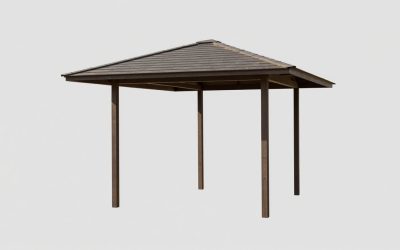
| Soft-top gazebo (semi-permanent) | 10 x 12, 12 x 12 ft | 120–144 sq ft | Polyester with vented double roof | Steel or aluminum posts, anchored | 2–4 h assembly | usually $300–$900 |
| Shade sail (triangle or square) | 12–18 ft per side | 60–160 sq ft | HDPE knitted, 90–95% UV block | Anchors to posts or walls | 1–2 h first time | usually $40–$200 plus hardware |
Note the slant-leg trap: a canopy advertised as 10 x 10 ft at the base may only have an 8 x 8 ft top, which shades 64 sq ft rather than 100. Straight-leg designs give you the full footprint as shade.
Sizing: How Much Canopy Do You Need?
| What you want to shade | Minimum canopy |
|---|---|
| Two lounge chairs and a side table | 10 x 10 ft |
| Bistro set or four-seat dining table | 10 x 10 ft |
| Six-seat dining set (about 72 x 40 in table) | 12 x 12 ft |
| Outdoor sectional plus coffee table | 10 x 15 or 12 x 12 ft |
| Party seating for 15–20 people | 10 x 20 ft |
Worked example: a six-seat dining table measuring 72 x 40 inches needs about 3 feet of clearance on all sides for chairs, making the occupied area roughly 12 x 9.3 feet. A 10 x 10 ft straight-leg canopy is tight; a 12 x 12 ft canopy covers it with room for afternoon sun angle.
Pop Up Canopy With Sides: Worth It?
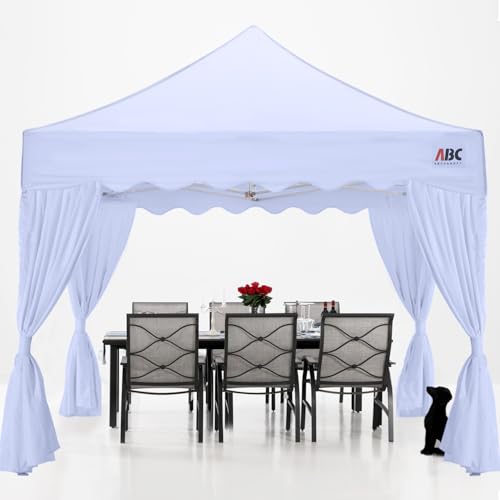
Side walls are the most underrated feature for sun protection. When the sun drops below about 45 degrees in the late afternoon, a roof-only canopy leaves most of the space in direct light. A single mesh or solid side wall on the west side keeps the seating area shaded through the evening. Mesh walls block insects and some UV while allowing airflow; solid walls add privacy and wind blocking but can make the space warmer.
Wind, Anchoring, and Safety
Canopies act like sails. Most manufacturers recommend taking pop-ups down when winds exceed about 15–20 mph. To keep one in place:
- Use stakes on grass and weights on patios. 25–40 lb per leg is a good minimum for a 10 x 10 ft canopy; heavy commercial units benefit from more.
- Run guy lines from each corner at roughly a 45-degree angle.
- Lower the canopy to its shortest leg height in breezy conditions to reduce sail area.
- Pick a vented top so gusts can escape instead of lifting the frame.
Decision Matrix
| Your situation | Best choice |
|---|---|
| Occasional weekend shade, renting | Mid-range straight-leg pop-up, 10 x 10 ft |
| All-summer shade over a dining set | Soft-top gazebo, 12 x 12 ft, anchored |
| Hot climate, harsh sun | Commercial pop-up or gazebo with silver-coated top and vented roof |
| Irregular yard or around a pool | Shade sail anchored to posts |
| Windy site | Shade sail or anchored gazebo rather than a pop-up |
Established brands such as ABCCanopy and Eurmax sell straight-leg pop-ups with optional side walls across several price tiers, and they are a sensible place to start comparing denier, leg thickness, and replacement-top availability.
Durability and Ownership Realities
- The top fails first. UV exposure breaks down polyester over time. Budget tops left up all season often fade and become brittle within one or two summers; heavier coated fabrics usually last three to five seasons. Buy a model with replacement tops available.
- Joints and truss pins wear. On pop-ups, plastic corner pieces crack before steel frames bend. Metal connectors last longer.
- Do not pack it wet. Let the fabric dry before folding to prevent mildew.
- Clean gently. Use mild soap and a soft brush; pressure washers and harsh cleaners strip UV and water coatings.
- Take it down before storms. Pooled rain and gusts are the top causes of bent frames.
Bottom Line
Choose UPF 50+ fabric of at least 300D, size the canopy to the furniture underneath with clearance for chairs, and plan for side walls and proper anchoring. For flexible backyard shade, a straight-leg pop-up with sides is the best value; for a season-long shaded dining area, an anchored soft-top gazebo is the more durable choice.