Our Top Picks
 Moiswell 240 Pints Commercial Dehumidifier with Pump and240 PPD with Pump18.6 x 15.3 x 31.7 InchesCheck on Amazon
 Airzentti 155 Pint Commercial Dehumidifier with Pump and14.2 x 24.3 x 15 inches59 PoundsCheck on Amazon
 6000 Sq.Ft. Energy Star Dehumidifier for BasementLarge13.62 x 10.47 x 19.57 inches30.9 PoundsCheck on Amazon
 KNKA Energy Star 5500 Sq.Ft Dehumidifier for BasementMAX 80 Pints11.14 x 14.17 x 20.87 inches5.5 poundsCheck on Amazon
 AEOCKY 5500 Sq.Ft Energy Star Most Efficient 202580 Pints - 5500 Sq.Ft14.45 x 8.66 x 24.09 inchesCheck on Amazon
The best dehumidifier for a pool room is a purpose-built pool dehumidification system sized by a qualified HVAC professional, and of the eight consumer-style units compared here, the large commercial-class models are the closest stand-ins. That is not the cheerful opening you may have expected from a buying guide, but it is the honest one. A swimming pool puts hundreds of pints of water into the air every day, the air often carries chlorine byproducts that eat ordinary metal parts, and a mistake means mold, rotted framing and corroded electronics. Use this page to understand the problem and to shortlist hardware for small enclosures; use a professional to size anything that holds a real pool.
Among the models below, the Moiswell 240-pint commercial unit is the strongest candidate on paper, mainly for its capacity and its stated five-year warranty. Nobody on the team used or measured these units. We compared titles, published specifications, manufacturer documentation and buyer reviews, and any performance figure is an estimate. None of the titles claims suitability for chlorinated air, which is the first thing to confirm with the manufacturer in writing.
Before you shop: why a pool room is not a basement
Moiswell 240 Pints Commercial Dehumidifier with Pump and Drain Hose | for Basements Industrial Water Damage Large Spaces up to 8,500 Sq Ft, 5-Year Warranty


As an Amazon Associate we earn from qualifying purchases. Product prices and availability are accurate as of the date/time indicated.
Airzentti 155 Pint Commercial Dehumidifier with Pump and Drain, Energy Star | Large Space Dehumidifier for Basement, Crawl Space, Whole House, Industrial, Water Damage, Attic, Garage, Home, Auto Defrost


As an Amazon Associate we earn from qualifying purchases. Product prices and availability are accurate as of the date/time indicated.
6000 Sq.Ft. Energy Star Dehumidifier for Basement, Max 100Pint/Day Smart WiFi Dehumidifier with Drain Hose, Voice & APP Control, Adjustable Humidistat for Home, Bedroom, Bathroom, Garage(White Gray)


As an Amazon Associate we earn from qualifying purchases. Product prices and availability are accurate as of the date/time indicated.

ToLife Dehumidifier, 1000 Sq Ft 95 oz Tank with Sleep Mode, Auto Shutoff | Portable for Home, Bedroom, Bathroom and Basement with 7-Color LED Light, Grey


As an Amazon Associate we earn from qualifying purchases. Product prices and availability are accurate as of the date/time indicated.
KNKA Energy Star 5500 Sq.Ft Dehumidifier for Basement, Max 80 Pint/Day | Dehumidifier with Drain Hose, Dehumidifiers for Home, Bedroom, Bathroom, Large Room, Smart Humidity Control, Sleep Mode


As an Amazon Associate we earn from qualifying purchases. Product prices and availability are accurate as of the date/time indicated.
AEOCKY 5500 Sq.Ft Energy Star Most Efficient 2025 Dehumidifier Max 80Pint/D | Dehumidifier with Drain Hose for Basement, Home, Bedroom, Bathroom, Intelligent Humidistat


As an Amazon Associate we earn from qualifying purchases. Product prices and availability are accurate as of the date/time indicated.
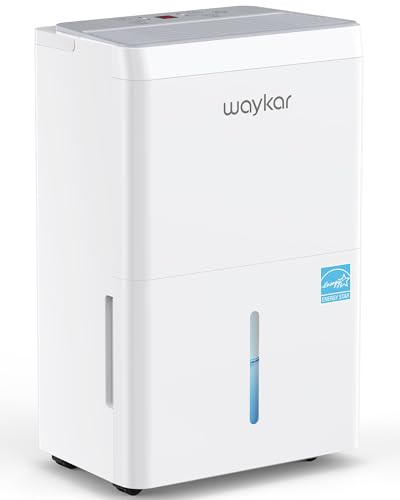
Waykar 6000 Sq.Ft Energy Star Dehumidifier for Basement & Home, 120 Pint/Day with Drain Hose & Tank, Ultra Quiet (40 dB), Smart Auto Comfort Mode

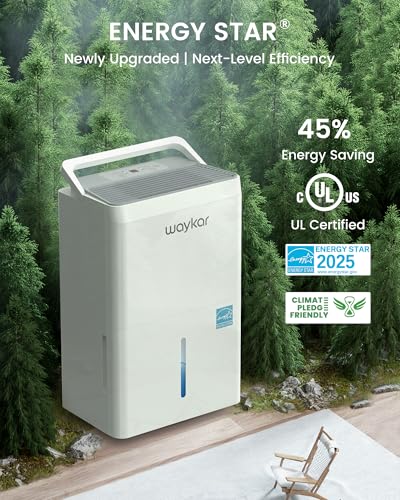
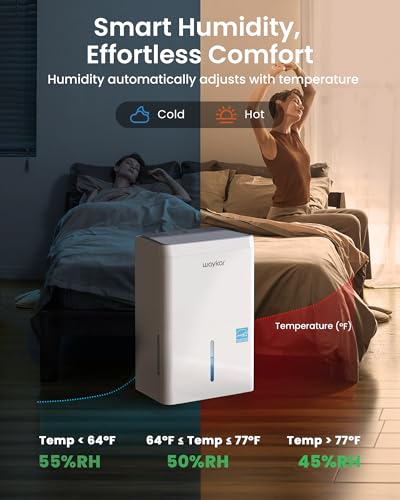


As an Amazon Associate we earn from qualifying purchases. Product prices and availability are accurate as of the date/time indicated.

KNKA 2500 Ft² Max 34 Pints Dehumidifier for Basement with Drain Hose, White | Dehumidifiers for Home, Bedroom, Bathroom, Large Room, Three Modes, Intelligent Humidity Control, Dry Clothes, 24HR Timer
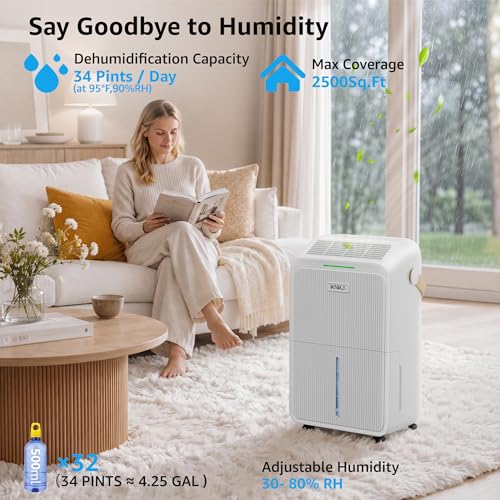

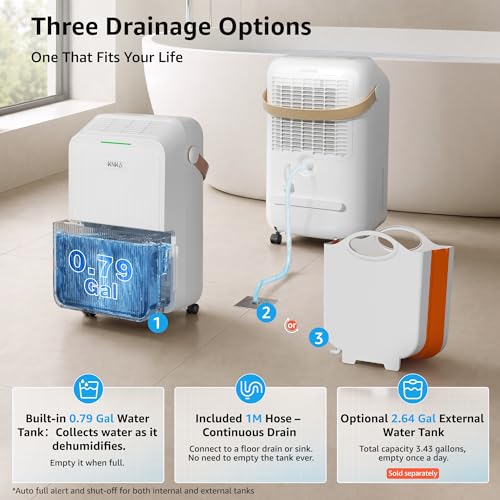


As an Amazon Associate we earn from qualifying purchases. Product prices and availability are accurate as of the date/time indicated.
Every dehumidifier in this guide is marketed for basements, crawl spaces, garages or whole-house use. A basement has a steady, modest moisture inflow from walls and slab. A pool room is the opposite: the source is a large warm water surface that evaporates continuously, and the room is heated to keep swimmers comfortable, so the air can hold even more water. The result is a load that is both much larger and much harder on equipment.
Two further problems make the job different. First, chemistry. Chlorine and the chloramines produced when chlorine meets sweat, sunscreen and oils are corrosive in humid air. Pool-specific dehumidifiers use protected coils, usually with an epoxy or similar coating, and stainless or coated cabinets. A consumer unit with bare copper tubing and aluminum fins can be corroded over a few seasons, and the manufacturer’s warranty may exclude corrosive environments. Second, building physics. Warm humid air will condense on any cold surface, such as windows, doors and exterior walls, and slowly rot wood framing, so a pool room needs a controlled air strategy, not just a machine in the corner.
That is why we recommend a qualified HVAC or pool-dehumidification professional for any enclosure that contains a full-size indoor pool. They calculate evaporation, choose a unit with a corrosion-resistant coil, plan ducting and a fresh-air strategy, and tie the system into heating so the room does not turn into a cold, wet cave. Consumer units may still have a role in smaller or adjacent spaces, such as a hot tub room with a good cover, a changing room or a pump room next door. The rest of this page is for those cases.
How much water does a pool put into the air? A worked estimate
Here is a back-of-envelope calculation using a commonly cited simplified evaporation formula: pounds of water per hour is about 0.1 times the water surface area in square feet, times the difference in vapor pressure between pool water and room air (in inches of mercury), times an activity factor of around 0.5 for a quiet residential pool. Take a 15 by 30 foot pool, 450 square feet of surface. Assume 82 degree F water and 80 degree F air at 55 percent humidity. The vapor-pressure difference works out to roughly 0.5 inches of mercury. That gives about 0.1 x 450 x 0.5 x 0.5, or roughly 11 to 12 pounds of water per hour, near 275 pounds a day. A pint of water weighs about a pound, so the estimate is on the order of 250 to 300 pints per day.
That figure is an estimate for illustration, and real values swing widely with air movement, splashing, bather count and cover use, but the order of magnitude is the lesson. The largest unit in this guide claims 240 pints per day, and that headline number is probably quoted under a warm test condition; a pool room is warm, so the warm rating may be the more relevant one, but check the listing. A mid-size 100 or 120-pint unit would be outclassed by a 450 sq ft pool with no cover. Likewise, “6000 sq ft” on a title refers to a basement-style coverage claim, not to a pool’s moisture load.
A smaller pool or spa changes things. A hot tub of 8 by 8 feet at about 100 degrees F has far less area but a much higher water temperature, so the same estimate gives something near 100 pints per day if left uncovered around the clock. With a tight cover kept on whenever nobody is in the water, the load collapses, and a large home unit might handle the remainder in a small, sealed enclosure. For a more familiar comparison, even a large home tank of the kind covered in our guide to aquariums for every room size gives off only a tiny fraction of that moisture.
| Water body (estimate) | Surface | Conditions assumed | Rough evaporation per day |
|---|---|---|---|
| Small indoor pool, no cover | 15 x 30 ft | 82 F water, 80 F air, 55% RH | about 250-300 pints |
| Same pool with a cover most of the day | 15 x 30 ft | Cover on when not swimming | a small fraction of the above |
| Hot tub, uncovered | 8 x 8 ft | 100 F water, 80 F air, 55% RH | about 100 pints |
| Hot tub, covered | 8 x 8 ft | Cover on when not in use | a small fraction of the above |
How the eight units line up
| Model | Key spec (from the title) | Price tier | Best for |
|---|---|---|---|
| Moiswell 240 Pints Commercial | 240 pints, pump and drain hose, up to 8,500 sq ft, 5-year warranty | Premium | Closest stand-in for a larger pool room, with pro advice |
| Airzentti 155 Pint Commercial | 155 pints, pump and drain, Energy Star, auto defrost | Premium | Mid-size enclosure, efficiency-minded |
| Waykar 6000 Sq.Ft, 120 Pint/Day | Energy Star, drain hose and tank, 40 dB, auto comfort mode | Mid-range | Quiet unit for a spa room |
| boglvr 6000 Sq.Ft, Max 100Pint/Day | Energy Star, smart WiFi, voice and app control, humidistat | Mid-range | Remote monitoring of a small enclosure |
| AEOCKY 5500 Sq.Ft, Max 80Pint/D | Energy Star, drain hose, intelligent humidistat | Mid-range | Covered hot tub room |
| KNKA Energy Star 5500 Sq.Ft, Max 80 Pint/Day | Drain hose, smart humidity control, sleep mode | Mid-range | Changing room or spa alcove |
| KNKA 2500 Ft2, Max 34 Pints | Drain hose, three modes, 24HR timer | Mid-range | Adjoining utility or changing room |
| ToLife 1000 Sq Ft | 95 oz tank, auto shutoff, sleep mode | Budget | Dry-side closet only |
Chlorine, corrosion and what to ask the manufacturer
Before you spend on any unit, put four questions to the manufacturer or seller, in writing, so you have a record. First, is the unit approved for use in chlorinated or corrosive environments, and does the warranty cover that use? Second, what are the coil material and coating? Third, what are the rated pints per day and at which temperature and humidity? Fourth, what is the operating temperature range, because a pool room runs warm and some home units cap their operating range. A seller who answers vaguely is giving you the answer.
Corrosion shows up gradually. White powder on aluminum fins, green or blue crust on copper tubing, pitting on screws and a mildew-like chemical smell are warnings. Circuit boards in humid chlorinated air can fail early, which is a particular worry on models with WiFi and voice control, since electronics are the first thing to go. Place the unit on the side of the room least exposed to splashing and chemicals, away from where chlorine is stored, and have the outlet, cord and drain line inspected. If you want music at the pool, the same moisture and corrosion risks apply to speakers and amplifiers: keep electronics in the dry rooms where you can, browse wireless multi-room audio systems for homes for the zones around the pool, and confirm with each maker whether humid-room placement is allowed.
Electrical and placement safety near water
- Never near water. Keep the unit out of splash range and off the wet deck. A unit that can be reached by a swimmer, a hose or a wave is in the wrong place.
- GFCI and code. Use a GFCI-protected outlet installed in line with local electrical code. A licensed electrician should check the circuit, especially for a 240-pint class unit that draws more current than a bedroom model.
- No extension cords. Wet floors and cords are a bad mix. If the outlet is too far away, have an electrician add one.
- Do not draw air across the water. Place the intake so it pulls room air, not spray, and leave the clearances from walls listed in the manual.
- Drain properly. Use the pump or hose option to send condensate to a drain, not onto the deck, and secure the line so nobody trips.
- Keep it level and off the floor if the deck is wet. A low stand or shelf helps, provided the unit remains stable.
Commercial-class stand-ins
These two come closest to the scale of a pool room. Both list a built-in pump with a drain, which matters because a pool room rarely has a floor drain near where you will park the machine.
Moiswell 240 Pints Commercial Dehumidifier with Pump and Drain Hose
Moiswell leads on numbers: 240 pints, a pump and drain hose, coverage up to 8,500 sq ft for basements, industrial use and water damage, and a five-year warranty named in the title. In a pool context, the 240 pints sits close to the estimated 250 to 300 pints per day for a small uncovered pool, and the long warranty is a hint that the maker expects long service. It is the only unit here where capacity and warranty both point toward the job.
It is not a pool-specific unit. The title lists water damage, large spaces and basements, not natural chlorinated air, so the coil coating and corrosion approval must be confirmed with the manufacturer. Also check the power requirement, because a 240-pint class machine may need a dedicated circuit; as an estimate it could draw something like 1,000 to 1,500 watts when running, which at 16 cents per kilowatt-hour is several dollars a day if it runs around the clock. The pump should let you run the condensate to a sink, floor drain or outside, but make sure the line does not cross the deck. Ask whether the warranty applies in a pool environment; a five-year promise that excludes corrosive air is worth little.
Practical note: ask for the unit’s dimensions, weight and electrical requirements before ordering, and have an electrician confirm the circuit if the label shows a high current draw. Commercial-class machines are often built for fixed placement, so plan the route to the pool room, because carrying a heavy unit past a wet deck is itself a hazard. Place it on a stand clear of any splash, and set up the drain line before powering up.
Pros
- Largest capacity in the group, close to a small pool’s estimated load
- Built-in pump and hose for flexible drainage
- Five-year warranty stated in the title
Cons
- Highest price tier
- Not described as suitable for chlorinated air
- Likely heavy, high-wattage and louder than home units
Who it’s for: an owner with a small indoor pool who is working with a pro and wants a commercial-class candidate to evaluate.
Airzentti 155 Pint Commercial Dehumidifier with Pump and Drain (Energy Star)
Airzentti claims 155 pints, a pump and drain, Energy Star branding and auto defrost, aimed at basements, crawl spaces, whole houses, industrial use, water damage, attics and garages. In a pool setting, 155 pints is roughly half to two-thirds of the estimated uncovered load of a small pool, but it fits very well with a covered pool or a hot tub room, where the dehumidifier handles splash, showers and the little that escapes the cover.
Energy Star branding matters more here than in a basement, because a pool room unit may run for most of the day. Estimate: if it draws between 600 and 900 watts, 16 hours a day costs roughly 46 to 70 dollars a month at an assumed 16 cents per kilowatt-hour, so efficiency translates into real money. Auto defrost is relevant if the room cools when the pool is closed for winter. Confirm with the seller whether the cabinet and coil are protected against corrosion, and ask for an operating range that reaches warm room temperatures. The pump is handy but depends on the discharge height, so verify the maximum lift on the listing.
Compare the 155-pint figure with the load estimate carefully. If your pool is covered for most of the day, the unit may run at half duty and last a long time. If you remove the cover for parties, the load climbs and the unit may run flat out without reaching the target. Log the room humidity during a few typical days, with and without swimmers, and share the log with a professional. It turns a vague worry into numbers and helps size the right system.
Pros
- Energy Star branding for a unit that will run long hours
- Pump and drain included for deck-free condensate handling
- Auto defrost helps in cooler off-season conditions
Cons
- Premium price tier, nearly that of the 240-pint model
- 155 pints alone may undershoot an uncovered pool
- No mention of corrosive-air protection
Who it’s for: a covered pool or large spa enclosure where the cover does the heavy lifting and the unit handles the rest.
Large home units for spa rooms and small enclosures
These four are mainstream basement units with 80 to 120 pints per day on the title. They belong in a pool conversation only for small, sealed rooms with a good cover, and only after you confirm chlorine tolerance.
Waykar 6000 Sq.Ft Energy Star Dehumidifier, 120 Pint/Day (40 dB)
Waykar advertises 120 pints per day, Energy Star, a drain hose and tank, ultra-quiet 40 dB operation and a smart auto comfort mode, aimed at basements and homes. For a hot tub room or spa enclosure, the quietness claim is attractive, since people use these rooms to relax. A 120-pint unit would cover the estimated uncovered load of a hot tub at about 100 pints a day, at least on paper.
The question is how it handles warm, corrosive air. Home dehumidifiers are often specified to operate within a narrow ambient temperature range, and a spa room is warm and humid, so check the maximum operating temperature on the listing. “Auto comfort mode” suggests it picks a humidity target for you; in a spa you probably want a fixed target near 50 to 55 percent, so look for manual control. Also consider the 40 dB claim as a manufacturer figure that will rise with distance and operating mode. Estimate: a 120-pint class unit draws perhaps 600 to 800 watts. If the cover is tight, a unit like this may cycle comfortably.
A spa enclosure has its own quirks. Steam from the water surface condenses on cold windows and glass doors first, so the dehumidifier’s real job is to keep those surfaces above the dew point as much as to lower the air’s moisture. Run it before you open the cover, not after, so the air is already dry when the steam arrives. Keep the unit several feet from the tub, raised on a stand and plugged into a GFCI circuit, and aim its exhaust along the room, not toward the water. Wipe condensation from glass after each session.
Pros
- High 120-pint figure in the title
- 40 dB claim suggests quiet running in a spa space
- Energy Star branding and drain hose
Cons
- Basement-oriented, with no corrosive-air claim
- Auto comfort mode may not allow a firm setpoint
- Tank is not a substitute for a drain in this application
Who it’s for: an enclosed hot tub room with a tight cover and an owner who prizes quiet.
boglvr 6000 Sq.Ft Energy Star Dehumidifier, Max 100Pint/Day, Smart WiFi
The boglvr title adds smart features: WiFi, voice and app control, an adjustable humidistat and a drain hose, with a Max 100 pint per day figure and Energy Star branding. In a pool enclosure, remote monitoring has real value. Being able to check from outside the room that the unit is running, or to adjust the setpoint without stepping onto a wet deck, avoids unnecessary exposure to a humid, chemical environment.
The trade-off is electronics in a corrosive room. Boards, sensors and antennas are more vulnerable than a simple dial, so confirm what protects them, and whether the warranty covers a pool environment. “Max” in the title may refer to a warm test condition, so ask which one. If the unit gets used for a spa enclosure, schedule a periodic inspection of the rear grille and coil for white or green residue. Estimate: 100 pints per day corresponds to a power draw in the mid hundreds of watts, and the app lets you log run time so you can see whether the unit is struggling, which is useful evidence if you later consult a professional about a bigger system.
Treat the smart features as a monitoring tool. Set alerts for high humidity if the app allows it, so that a failed cover or a stalled unit shows up on your phone before mold does. Do not rely on the app as a safety device. The unit still needs a GFCI circuit, a drain and a physical inspection every month for corrosion on the grille, the screws and the power cord. Keep the router outside the humid room if possible, since a signal that passes through a steamy enclosure may be weak, and avoid adding a plug-in repeater inside the room.
Pros
- Remote app and voice control reduce time in the humid room
- Adjustable humidistat supports a fixed setpoint
- Drain hose named in the title
Cons
- Electronics may be vulnerable to chlorinated air
- Max figure leaves the test condition unclear
- Depends on stable home WiFi in the pool area
Who it’s for: someone monitoring a small covered spa room who wants run-time data.
AEOCKY 5500 Sq.Ft Energy Star Dehumidifier, Max 80Pint/D
AEOCKY lists 5500 sq ft, Energy Star, Max 80 pints per day, a drain hose and an intelligent humidistat for basements, homes, bedrooms and bathrooms. Eighty pints is below the estimated load of an uncovered pool, but it is a reasonable size for a hot tub enclosure with a cover, or for the changing area connected to a pool.
The title’s phrase “Most Efficient” is a marketing claim, and we would not rely on it without checking the Energy Star listing in the product documentation. For a pool-adjacent room, the advice is the same as for the other mid-range units: confirm the operating temperature range, the coil protection and the warranty position on corrosive environments, and install it on a GFCI circuit away from water. The intelligent humidistat is useful if it lets you hold a firm 50 to 55 percent. Estimate: an 80-pint class unit might draw 500 to 700 watts when running. Place it on a stable platform with the drain line sloping to a sink or floor drain, and keep the grille free of towels.
Think about the room’s heat as well as its moisture. A hot tub enclosure is often warm, and an 80-pint home unit may be rated for a narrower temperature range than the room reaches in summer. Ask the seller for the maximum operating temperature in writing. Consider recording the room’s temperature and humidity for a week with an inexpensive logger before buying, so you know whether the unit would face 70 percent humidity at 90 degrees F or something milder. That is the data a seller or professional needs to say whether this machine fits.
Pros
- Mid-range price for 80 pints
- Energy Star and humidistat named in the title
- Drain hose for continuous operation
Cons
- Capacity is well below an uncovered pool’s estimated load
- “Most Efficient” is a claim to verify
- No chlorinated-air statement
Who it’s for: a covered hot tub room or a changing area beside a pool, not the pool hall itself.
KNKA Energy Star 5500 Sq.Ft Dehumidifier, Max 80 Pint/Day
KNKA’s 80-pint model is a near-twin of the AEOCKY on capacity: 5500 sq ft, Max 80 pint per day, drain hose, smart humidity control and a sleep mode, plus Energy Star branding. The sleep mode suggests a quieter, lower-power setting, which could be useful at night in a spa room when the cover is on and moisture release is low.
What sets it apart is its place in the brand family: KNKA also sells the 34-pint model below. If you try one in a changing area and find that it runs constantly, the family makes it easier to compare the next size up. The practical advice is to start with a hygrometer reading before and after installation. If the room never drops below 60 percent with the door shut and the cover on, the unit is undersized or the cover is leaking moisture, and neither problem is solved by running a machine harder. As an estimate, an 80-pint class unit draws a few hundred watts, and the Energy Star label helps keep the cost per pint sensible.
A word on warranties: most home dehumidifier warranties exclude damage caused by corrosive atmospheres, and a pool-adjacent room can easily count. Ask the seller to confirm in writing whether a spa room or changing room is covered, and keep that message with your receipt. If the answer is no, the unit is a consumable with a shorter life, and you should price it that way. Put it on a stable stand away from the water, wipe the grille and cabinet monthly with a damp cloth to remove chemical film, and replace the filter when it looks discolored.
Pros
- Sleep mode and smart control in the title
- Energy Star branding
- Drain hose supports continuous operation
Cons
- Not claimed for corrosive environments
- Max figure may refer to a warm test condition
- Undersized for an uncovered pool
Who it’s for: a changing room, pool-side alcove or small spa enclosure with modest moisture.
Small units for adjoining spaces
KNKA 2500 Ft2 Max 34 Pints Dehumidifier for Basement with Drain Hose
This KNKA lists a 2500 ft2 coverage claim, Max 34 pints, a drain hose, three modes, intelligent humidity control and a 24-hour timer. In a pool property, it makes sense one room away: a pump room, a utility closet, a changing room with a shower or a poolside bathroom, where condensation and mildew appear even though the water is in a different room.
It will not manage the pool hall. At 34 pints, the unit falls far short of the estimated 250 to 300 pints per day for a small pool, and running it next to the water would only expose it to chlorine for a short, expensive lifespan. In the adjacent room, though, the humidistat and timer let it hold 50 percent with little attention. Estimate: draws roughly 300 to 400 watts while running. If the changing room opens directly onto the pool area, leave the door closed or consider that the unit is dehumidifying the pool air by the back door, which defeats the purpose.
Setup notes for the changing room: put the unit near the shower or wet-towel area but outside the spray zone, set the humidistat for about 50 percent and use the timer to run it through the night. Route the hose to a floor drain or a sink, not across the walkway. Keep the door between the changing room and the pool hall shut during operation. If the machine cannot hold the target with the door closed, the room is sharing too much air with the pool, and the fix is better separation and ventilation, not a bigger dehumidifier.
Pros
- Mid-range price, drain hose and timer
- Good size for a bathroom or changing room
- Intelligent humidity control for hands-off use
Cons
- Far too small for any open pool
- Not claimed suitable for chlorinated air
- Max figure may reflect a warm test
Who it’s for: the changing room, pump room or poolside bathroom, with the door kept closed.
ToLife Dehumidifier, 1000 Sq Ft, 95 oz Tank (Grey)
ToLife is a small, budget portable with a 95-ounce tank, auto shutoff, sleep mode and a 7-color LED. It has no place in a pool room, and we include it so the guide is honest about what the keyword attracts. A 95-ounce tank holds about 5.9 pints, which a pool could fill many times over in an hour.
Where it can help is the dry side: a closet that stores pool towels and robes, or an adjacent hallway. Keep it far from the water, never on a wet deck, and never plugged into a cord that crosses a damp floor. Estimate: a small unit like this draws a few dozen watts, so a closet use costs pennies. If the towels still feel clammy after a week, the problem is that the closet is warm and wet, and a better-ventilated space is better than a stronger gadget.
To be fair, there is a legitimate role for a small unit on a pool property: the places that stay damp because of the pool without being the pool room. A towel cupboard in a hallway, a mudroom where wet swimsuits drip, or a bench closet by the changing area can all develop musty smells even though they never see the water. A small unit with a closed door, a hygrometer and a tank emptied daily can keep such a cupboard fresh. Aim for 50 percent, place it at shelf height, and empty the tank every day or two. If the closet shares a wall with the pool hall, ask whether the wall is insulated and vapor-sealed, because a leaky wall keeps feeding the closet.
Pros
- Lowest price tier
- Small and light for closets and cabinets
- Auto shutoff when the tank is full
Cons
- Capacity is irrelevant to a pool’s moisture load
- Manual tank emptying
- Not built for chlorinated air
Who it’s for: a towel closet or storage cabinet near, but not in, the pool room.
How we picked these
The Editorial team compared the eight units using published specifications, manufacturer documentation and buyer reviews. Nobody on the team used or measured these units, and nothing in this guide should be read as evidence that any of them performs well in a chlorinated room. What we could compare was what each title states: pint rating, coverage claim, drain and pump options, certifications and warranty, plus how those features match a pool or spa enclosure.
We ranked by capacity first, because the pool’s moisture load is the defining constraint, then by features that matter for long running hours, such as Energy Star and drain options. We downgraded any unit whose title does not mention corrosive environments, which is every unit here, and we flagged that as the first question for the manufacturer. Price tier follows the relative price on the listing. Figures such as wattage, evaporation and electricity cost are estimates with stated assumptions, and a licensed professional should do the actual load calculation.
Verdict
For a real indoor pool, hire a qualified HVAC or pool-dehumidification professional and ask for a unit designed for chlorinated air. If you want a consumer-style candidate to discuss with them, the Moiswell 240-pint unit is closest on capacity and warranty, and the Airzentti 155-pint is the efficient alternative for covered pools. For a hot tub room with a cover, the Waykar 120-pint is the quiet pick, the boglvr adds remote monitoring, and the AEOCKY or KNKA 80-pint models are lower-cost options. Use the KNKA 34-pint in the changing room and the ToLife only in dry storage. Wherever the unit goes, keep it out of the water’s reach, on a GFCI circuit, with a proper drain.
Frequently asked questions
Can I use a regular home dehumidifier in an indoor pool room?
Sometimes for a very small enclosure, but it is rarely the right tool. Pool rooms add hundreds of pints of water to the air each day, and chlorine-related compounds attack the copper and aluminum parts inside ordinary units. A home dehumidifier may run nonstop, corrode early and void its warranty. For anything beyond a small covered spa room, a qualified HVAC or pool-dehumidification professional should size a purpose-built system.
What humidity should an indoor pool room hold?
Common pool-room guidance targets roughly 50 to 60 percent relative humidity, with air kept a few degrees warmer than the water to limit evaporation and condensation on cold surfaces. Exact setpoints depend on the building envelope, so a qualified professional should confirm them. Too high promotes mold and corrosion; too low increases evaporation and makes the room feel chilly for swimmers.
How many pints per day does a pool room need?
It depends on water surface area, water and air temperature, activity and whether a cover is used. As a rough estimate, a 15 by 30 foot pool with warm water and no cover can evaporate on the order of 250 to 300 pints per day, far more than most home units remove. A professional performs a proper load calculation, and you should not size by room square footage alone.
Where should a dehumidifier go in a pool room?
Well away from the water. Keep the unit outside splash zones and off the wet deck, plug it into a GFCI-protected outlet in accordance with local electrical code, and avoid extension cords entirely. Position it so the intake does not draw directly across the pool surface, leave clearances from walls for airflow, and send condensate to a proper drain or pump line. If you cannot meet those conditions, ask a professional to install a ducted system.
Does a pool cover reduce the dehumidifier I need?
Yes, substantially. Evaporation is driven by exposed water surface, so a well-fitted cover can cut moisture release dramatically while the pool is not in use, and the cover also saves heat. Even so, swimming sessions, splashing, showers and wet towels still add moisture. Treat the cover as a way to shrink the load, then have the remaining load sized by a professional.