The best gimbal stabilizers for professional filmmaking in 2026 are the DJI RS 4 Pro for heavy cinema rigs, the DJI RS 4 for mid-weight mirrorless and cine hybrids, and the Zhiyun Crane 4 for lightweight run-and-gun work, with choice determined by payload, expansion needs, and how often you switch cameras.
Our top picks
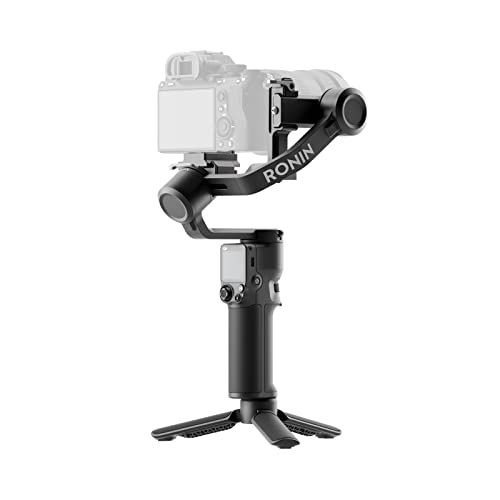 DJI RS 3 Mini
- 795g (1.75lbs) Lightweight and Portable - DJI RS…
- Wide-Ranging Compatibility - With strong, high-torque motors, the…
- Bluetooth Shutter Control - Your camera automatically reconnects…
 FeiyuTech SCORP 2 Gimbal Stabilizer for DSLR
- 【Built-in Al Sensor for Intelligent Tracking】The SCORP 2…
- 【Instant Vertical Filming Setup】The quick-installation system has been…
- 【Wireless/Cable Control, Easy to Use】The gimbal can connect…
 DJI RS 3 Combo
- 3 kg (6.6 lbs) Tested Payload - With…
- Automated Axis Locks - The three axes of…
- 3rd-Gen RS Stabilization Algorithm - With the new-generation…
As an Amazon Associate we earn from qualifying purchases at no extra cost to you.
How to choose: 7 decision criteria that actually matter
1. Payload capacity vs. real-world rig weight
Payload is not just the camera body. Add lens, cage, monitor, wireless video transmitter, follow-focus motor, and microphone. A Sony FX6 with a 24-70mm f/2.8, SmallHD monitor, and DJI transmission system easily exceeds 3.2 kg. Professional stabilizers are rated between 2.5 kg and 6 kg, but operating above 80% of max payload reduces motor headroom, increases balancing time, and shortens battery life.
Choose a gimbal rated at least 30% above your heaviest intended build. If you regularly fly RED Komodo, Canon C70, or Sony FX9 class cameras, you need a 4.5 kg+ class. For mirrorless kits like Sony A7S III, Canon R5 C, or Panasonic BS1H with primes, a 3 kg class is sufficient and lighter to operate all day.
2. Camera compatibility and balancing time
Arca-Swiss and Manfrotto quick-release compatibility, stepless axis locks, and fine-tune knobs cut balancing from 10 minutes to under 2 minutes. Teflon-coated axes and auto-locking arms (as on DJI RS 4 series) prevent arm swing during lens swaps. Check vertical and horizontal clearance: deep grips like the Canon C80 or accessories like matte boxes require extended tilt clearance, which not all compact gimbals offer.
Autotune functions calibrate motor stiffness automatically after balancing, but manual tuning is still needed for very light or very front-heavy builds. If you swap between multiple cameras daily, prioritize memory presets and quick-balance calibration via app or gimbal touchscreen.
3. Stabilization modes and axis control
All professional 3-axis gimbals offer Pan Follow, Pan and Tilt Follow, FPV, and Lock modes. What separates pro models is:
- 360-degree roll and unlimited pan for inverted and flashlight transitions
- SuperSmooth-style algorithm for high-frequency damping at longer focal lengths (75mm+)
- Customizable joystick speed, deadband, and smoothness curves per mode
- Second-operator control via remote handles, wheels, or apps for crane/jib emulation
For narrative work, precise low-speed pan control and minimal joystick drift matter more than acrobatic modes. For documentary or gimbal-to-shoulder transitions, strong vertical arm support systems matter more than the gimbal head itself.
4. Battery runtime and power delivery
Integrated batteries now typically deliver 12 to 13 hours in locked bench tests, which translates to 7 to 9 hours of active shooting with frequent rebalancing and motor load. Hot-swappable battery handles or USB-C PD power-in from V-mount batteries are critical for 10+ hour production days. Look for models that can charge camera bodies and power accessories via 8V/12V outputs while operating.
5. Follow-focus support
Professional filmmaking requires precise focus pulling. Integrated focus wheels, Bluetooth or USB lens control, and compatibility with external lidar autofocus (such as DJI Focus Pro LiDAR or Zhiyun MasterEye) eliminate the need for a separate hand unit on lightweight jobs. For cinema lenses, you need at least one, ideally two, 15mm rod-mounted focus/zoom motors with adjustable torque and AB hard stops. Check whether focus, iris, and zoom can be mapped simultaneously to wheel, joystick, and trigger.
6. Rig expansion
A gimbal is the center of a rig, not the whole rig. Professional expansion options include:
- Briefcase/direct carry handles, dual handles, and ring grips for low angles
- Vehicle mounts, slider mounts, and Easyrig or vest support connectors
- NATO rails, 1/4″-20 and 3/8″-16 mounting points, and ARRI rosette compatibility
- Wireless video transmission integration (DJI Transmission, Hollyland) without cable snag
- Timecode and genlock sync for multi-camera shoots
7. Weight and operator fatigue
A 1.6 kg gimbal with a 3.5 kg payload totals over 5 kg held away from your body. All-day operation without a vest leads to forearm fatigue and micro-shake. Lighter single-handed gimbals reduce fatigue but limit expansion. Heavier pro frames distribute weight better for vest operation but are overkill for solo operators.
Spec comparison: Leading professional gimbals in 2026
| Model | Max Payload | Weight (gimbal only) | Battery Runtime (lab / real) | Key Stabilization Features | Focus / Expansion |
|---|---|---|---|---|---|
| DJI RS 4 Pro | 4.5 kg | 1,430 g | 13 hrs / 7-9 hrs | 4th-gen stabilization, SuperSmooth at 100mm, 360-degree roll, auto-lock axes, Teflon plates | DJI Focus Pro LiDAR + motor, 2x focus motors, DJI Transmission ready, car mount + ring grip compatible |
| DJI RS 4 | 3.0 kg | 1,090 g | 12 hrs / 7-8 hrs | Same algorithm as RS 4 Pro, vertical shooting plate, joystick mode switch | Bluetooth camera control, single focus motor, USB-C power delivery |
| Zhiyun Crane 4 | 3.2 kg | 1,470 g | 12 hrs / 6-8 hrs | Wrist-rest grip, sling mode, quick-release balance indicator lights | MasterEye visual controller support, dual-motor option, 1/4″ expansion ports |
| Zhiyun Weebill 3S | 2.8 kg | 1,060 g | 11 hrs / 6-7 hrs | Sling grip 2.0, portrait switch, built-in fill light + mic | Single motor focus/zoom, Bluetooth shutter, limited ring expansion |
| Moza AirCross 3 | 3.2 kg | 1,290 g | 19 hrs / 10-12 hrs | 4-way joystick, Spider-O arm for inverted shots | Multi-brand follow focus, Arca-Swiss, time-lapse modes |
| DJI Ronin 2 | 13.6 kg | 4,200 g | Hot-swap dual TB50 / 4-6 hrs per pair | Monocoque carbon, GPS-assisted stability for vehicle work, dual-operator | Full studio ecosystem: RED/ARRI power, thumb controller, Ready Rig / Steadicam vest native |
Picks by shooting situation
Best for cinema cameras and fully built commercials: DJI RS 4 Pro
If your standard kit is RED Komodo-X, Canon C400, or Sony Burano with cine primes, V-mount, and wireless video, the RS 4 Pro is the threshold model that stays stable without overshooting when panning at 50-85mm. Its higher torque motors maintain horizon lock during acceleration, and native LiDAR autofocus allows solo operators to keep subjects sharp on manual lenses without a focus puller. General market range for this class is $850 to $1,100 for the combo with motors and transmission accessories, before ring or car mount.
Best for hybrid mirrorless documentary: DJI RS 4
For FX3, FX6 with compact zooms, Canon R5 C, Nikon Z9, or Panasonic GH7/S5IIX builds under 3 kg, the RS 4 balances faster, weighs 340 g less than the Pro, and still provides dual-layer quick-release plates for horizontal to vertical switching in seconds. This is the most versatile choice for owner-operators who shoot interviews, b-roll, and social vertical in one day. General market range is $500 to $700 for standard combos.
Best for solo travel and long handheld days: Zhiyun Weebill 3S or Crane 4
The sling grip design shifts wrist load to the forearm, delaying fatigue by hours compared to straight-handle designs. Crane 4 adds higher payload and better expansion if you use heavier zooms; Weebill 3S is lighter and more compact for airline carry-on kits. Both integrate Bluetooth control for Sony, Canon, and Panasonic without cables. General market range is $300 to $650 depending on kit.
Best for endurance and minimalist power: Moza AirCross 3
With the longest single-charge runtime and manual lock latches that survive dust and cold better than motorized locks, the AirCross 3 suits timelapse, event coverage, and remote location shooting where charging access is limited. Its modular battery can be supplemented via USB-C PD from a power bank while operating.
Best for car rigs, jibs, and heavy studio builds: DJI Ronin 2
When payload exceeds 6 kg with anamorphic lenses, FIZ units, and full wireless stacks, single-handed gimbals cannot safely stabilize. Ronin 2 is a larger system built for car mounts, cranes, and vest operation with dual batteries, GPS-enhanced algorithms for high-speed movement, and power pass-through for ARRI and RED. It is not a one-handed walk-and-talk tool; it requires a crew and dedicated transport. General market range is $5,500 to $8,500 for the base frame.
Decision matrix: Match your workflow to the right gimbal
| Your Situation | Typical Rig Weight | Recommended Class | Why |
|---|---|---|---|
| Solo operator, frequent lens swaps, travel | 1.5 – 2.8 kg | Weebill 3S / RS 4 | Fastest balancing, lightest kit, vertical-ready |
| Documentary / corporate, A-cam mirrorless + monitor + wireless | 2.5 – 3.5 kg | RS 4 / Crane 4 | Headroom for accessories without jumping to heavy rig |
| Narrative / commercial with cine lenses, need focus pulling | 3.5 – 4.5 kg | RS 4 Pro | Dual-motor FIZ, LiDAR, transmission and ring-ready |
| Studio, vehicle, or heavy ARRI/RED builds | 6 – 13 kg | Ronin 2 / similar heavy frame | Payload, power delivery, and mount ecosystem single-hand gimbals lack |
| Events / timelapse / remote with limited power | Under 3.2 kg | Moza AirCross 3 | Extended battery runtime and USB-C PD flexibility |
Worked example: Calculating true load and cost per shoot day
To avoid buying an underpowered gimbal, sum the full rig before comparing to payload:
Example documentary rig: Sony FX6 (890 g body) + Sony 24-70mm f/2.8 GM II (695 g) + SmallRig cage (180 g) + Atomos Shinobi II (200 g) + DJI Transmission + battery (280 g) + Zhiyun focus motor (120 g) + V-mount plate and small battery (350 g) = 2,715 g. Add 15% safety margin for cables and counterweights = 3,122 g. A 3.0 kg-rated RS 4 would be at its limit; a 4.5 kg RS 4 Pro would operate at 69% load, preserving motor headroom and smoother stops.
For value planning, estimate cost per use without needing a specific price: if a $900 pro combo is rented on the market for $55 per day, purchase breaks even at roughly 16 to 17 rented days ignoring maintenance. For owner-operators shooting 3 paid days per month, that is about 6 months of regular use before ownership is cheaper than renting, with residual resale value further lowering net cost.
Durability and ownership realities
Gimbals fail gradually, not suddenly. What wears first:
- Motors and bearings: Dust and sustained high-load operation wear tilt and roll motors first. Avoid blowing compressed air directly into motor housings; use a soft brush and leave axis locks open for storage ventilation.
- Quick-release plates and clamps: Arca-style plates develop play after repeated over-tightening. Check for micro-wobble by gently twisting the mounted camera after locking.
- Cables: Flexing at the USB-C and camera control ports frays internal wires. Route cables with slack and strain relief, not tight across the tilt axis.
- Batteries: Lithium handles lose capacity after 300 to 500 cycles. Avoid storing fully charged for weeks; store at 50-60% if not shooting for 10+ days. Cold reduces runtime by 15-25%.
- Counterweights and rod mounts: Threads loosen with vibration. Apply a small amount of thread locker on accessory rods if you keep them permanently mounted.
Common mistakes that cause shaky footage despite good hardware: balancing with the lens cap on then removing it, forgetting to rebalance after changing ND filters or batteries, running autotune with a loose lens, and setting joystick smoothing to zero which creates abrupt starts. Always rebalance after any weight change over 50 g and recalibrate autotune.
Cleaning is minimal but regular: wipe Teflon plates with isopropyl alcohol to keep slide adjustments smooth, keep the OLED touchscreen free of grit before stowing in a case, and update firmware via the manufacturer app before critical shoots rather than the night before, as tuning parameters often change.
Setup workflow for reliable results
A consistent order prevents repeated rebalancing:
- 1. Build the camera fully (lens, cage, monitor, transmission, motor) before mounting to the gimbal.
- 2. Lock all three axes, mount the camera, set rough center on the plate.
- 3. Unlock tilt, balance fore/aft, then vertical, and lock tilt. Repeat for roll, then pan.
- 4. Power on, perform auto-tune, then test 45-degree tilt holds without drift.
- 5. Assign focus motor calibration and mark A/B limits before recording.
- 6. Save the profile in the app under camera/lens name for next time.
Final guidance
Do not buy on max payload alone. Evaluate how you shoot most weeks, not the heaviest day you might have. If you live at 2.5 to 3 kg with expansion plans, the RS 4 class is the efficient center. If you consistently include cinema lenses, LiDAR focus, and wireless video for client work, step up to the RS 4 Pro. Reserve heavy frames like the Ronin 2 for dedicated rigging rather than daily handheld use.