Key takeaways
- Total beginner, small counter, mostly herbs: Click & Grow Smart Garden 3 or AeroGarden Sprout.
- Beginner who wants lettuce plus a few tall plants: AeroGarden Bounty (adjustable light arm).
- Mid-size countertop, six plants: AeroGarden Harvest 360.
- Soil-style pods, pre-seeded and simple: Click & Grow Smart Garden 9.
- Serious volume in a corner of the room: Gardyn Home 4 (tall, high capacity).
- Floor-standing tower with pre-started seedlings: Lettuce Grow Farmstand Nook.
The best hydroponic kit for most beginners is the AeroGarden Bounty (nine pods, a 30W LED, and a roughly 24-inch grow height) for countertop herbs, lettuce, and small tomatoes, with the Click & Grow Smart Garden 3 as the easiest zero-experience starter, the AeroGarden Sprout as the lowest-commitment entry-level option, and the Gardyn Home 4 or Lettuce Grow Farmstand Nook if you want a floor-standing system that produces a real share of your greens. All of these automate the three things that kill first-time hydroponic gardens: light schedule, water level, and nutrient dosing.
This guide compares eight kits from four brand families by the criteria that decide beginner success: plant capacity, grow height, light output, how much you must do each week, and whether you are locked into one brand’s pods. It includes a worked calculation to size a kit to your household, a comparison table, a decision matrix, and a setup and troubleshooting section. Specs come from published roundups and listings; where a number was not stated in what we reviewed, we describe the class instead of guessing.
Our top picks
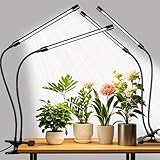
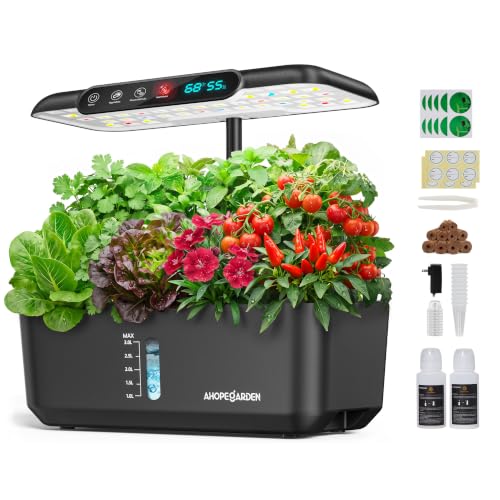
 Ahopegarden Hydroponics Growing System Kit: 12 Pods
- Avant-garde and modern design: Our smart hydroponics growing…
- Optimal plant growth: Designed for organic vegetables and…
- Versatile planting options: Grow 12 fresh herbs or…


As an Amazon Associate we earn from qualifying purchases at no extra cost to you.
Quick answer: which kit for which beginner
- Total beginner, small counter, mostly herbs: Click & Grow Smart Garden 3 or AeroGarden Sprout.
- Beginner who wants lettuce plus a few tall plants: AeroGarden Bounty (adjustable light arm).
- Mid-size countertop, six plants: AeroGarden Harvest 360.
- Soil-style pods, pre-seeded and simple: Click & Grow Smart Garden 9.
- Serious volume in a corner of the room: Gardyn Home 4 (tall, high capacity).
- Floor-standing tower with pre-started seedlings: Lettuce Grow Farmstand Nook.
How we chose
This is a research-based selection compiled from published beginner buying guides and manufacturer listings, not a test of the products. We kept systems that meet every one of these criteria.
- Automatic light timer. A built-in LED on a fixed schedule, such as the 16-hour cycle in AeroGarden’s countertop line.
- Low weekly effort. The system reminds you, or makes obvious, when to add water and nutrients.
- Clear capacity. A stated number of pods, plants, or planting sites, so you can size to your household.
- Space fit. Countertop systems under about 24 inches of grow height, or floor systems with a known footprint.
- A realistic path to a first harvest. Fast-growing lettuce, herbs, and greens, not crops that need pollination or large root zones.
- Pod ecosystem trade-off. We note which kits use proprietary pods, because that affects long-term running cost.
Worked example: sizing a kit to your household
Use this logic before you buy. The yield figures are rough planning assumptions, not guarantees.
- Decide what you want to eat. Say two adults want a side salad five days a week, using about 2 ounces of leaves per person per salad. That is 2 people x 2 oz x 5 days = 20 oz a week.
- Estimate per-plant leaf yield. A leaf lettuce plant picked as cut-and-come-again might give roughly 1 to 2 ounces a week once established. At 1.5 oz, 20 oz needs about 13 plants.
- Compare to capacity. A 3-pod kit supports about 3 plants, a 6-pod kit about 6, a 9-pod kit about 9. None of the countertop kits covers 13 plants of lettuce. The Gardyn Home 4, listed at 30 plants, does.
- Re-scope if you mostly want herbs. Herbs are used in small amounts. A basil, parsley, and mint trio from a 3-pod kit covers cooking for a household, because you pick a few leaves at a time.
- Check height. Basil and cherry tomatoes get tall. A kit with about 24 inches of grow height (the Bounty’s listed adjustable arm) leaves room, while a 10-inch kit such as the Sprout limits you to herbs and microgreens.
- Estimate running cost. Divide the price of a refill pack by the number of pods it includes to get a cost per pod. Multiply by the number of harvest cycles per year. Proprietary pods usually cost more per pod than loose seed in a generic sponge, so this number tells you whether a cheap kit stays cheap.
The result of this exercise for most beginners: a countertop kit is a herb-and-salad-topper garden, and a floor tower is a salad-staple garden.
Comparison table
| Model | Style | Capacity | Light / height | App or reminders | Pods | Price tier |
|---|---|---|---|---|---|---|
| AeroGarden Bounty | Countertop | 9 pods | 30W LED, 24 in adjustable arm | Wi-Fi app notifications | Proprietary | Mid-range |
| AeroGarden Harvest 360 | Countertop | 6 pods | Built-in LED, timed | Check listing | Proprietary | Mid-range |
| AeroGarden Sprout | Countertop | 3 pods | 10W LED, 10 in height | No app, no Wi-Fi | Proprietary | Entry-level |
| Click & Grow Smart Garden 3 | Countertop | 3 pods | Built-in grow light | Basic automation | Proprietary, 50+ varieties | Entry-level to mid-range |
| Click & Grow Smart Garden 9 | Countertop | 9 soil pods | Built-in grow light | Check listing | Proprietary, biodegradable | Mid-range |
| Rise Garden | Countertop | Check listing | Built-in light | Check listing | Check listing | Premium |
| Gardyn Home 4 | Floor-standing tower | 30 plants listed | Built-in lights, tall frame, 6-gallon tank | App-driven | Proprietary yCubes | Premium |
| Lettuce Grow Farmstand Nook | Floor-standing tower | Check listing | Natural or grow light needed per setup | Not an app system | Pre-started seedlings shipped | Premium |
Best countertop kits
AeroGarden Bounty
Specs: 9 pods · 30W LED · 24 in adjustable grow height · Wi-Fi app notifications · proprietary pods
Best for: A beginner who wants room to grow lettuce, herbs, and a small fruiting plant such as a cherry tomato or pepper.
Skip if: You have a small counter. Nine pods and a tall arm take real space.
Pros:
- Adjustable light arm lets plants grow tall without hitting the lamp.
- Nine planting sites support a mix of crops.
- App reminders for water and nutrients reduce missed steps.
Cons:
- Larger footprint than 3 or 6-pod units.
- Pod refills are brand-specific.
AeroGarden Harvest 360
Specs: 6 pods · timed LED · compact countertop footprint · proprietary pods
Best for: A mid-size kitchen counter and a beginner who wants more than three plants without the bulk of a 9-pod unit.
Skip if: You want to grow tall crops. Check the listing for the maximum light height before choosing it for tomatoes.
Pros:
- Good middle ground between the Sprout and the Bounty.
- Simple, mostly automatic routine.
Cons:
- Lower capacity than the Bounty.
- Proprietary pods tie you to one ecosystem.
AeroGarden Sprout
Specs: 3 pods · 10W LED · 10 in height · no app, no Wi-Fi · proprietary pods
Best for: A low-commitment trial of hydroponics, mainly herbs and small greens.
Skip if: You want tomatoes, peppers, or any tall plant. A 10-inch ceiling limits you to herbs and microgreens.
Pros:
- Entry-level cost tier and small footprint.
- No app to set up.
Cons:
- No smartphone reminders, so you rely on the on-unit indicators.
- Smallest capacity here.
Click & Grow Smart Garden 3
Specs: 3 pods · built-in grow light · 50+ pre-seeded pod varieties · proprietary biodegradable pods
Best for: Someone who has never grown anything and wants the simplest possible start with herbs.
Skip if: You want to grow your own seed. Click & Grow pods are brand-specific and cost more per pod than many alternatives.
Pros:
- Pre-seeded pods remove seed-starting guesswork.
- Wide pod variety including herbs and greens.
- Small footprint.
Cons:
- Higher per-pod cost than some competitors.
- Three plants limit total harvest.
Click & Grow Smart Garden 9
Specs: 9 soil pods · built-in grow light · proprietary biodegradable pods · price tier mid-range
Best for: A beginner who wants the pre-seeded simplicity of Click & Grow with nine growing spots.
Skip if: You need a large reservoir. The reservoir is described as smaller than the AeroGarden Bounty’s, so plan on frequent checks.
Pros:
- Same easy pod system with triple the capacity of the 3-pod model.
- Strong beginner reputation in published reviews.
Cons:
- Proprietary pods and a smaller reservoir than some rivals.
- Light and height specs were not stated in the sources we reviewed, so confirm on the listing.
Rise Garden
Specs: countertop · built-in light · confirm pod count and reservoir on the listing · premium tier
Best for: Beginners who want a design-forward countertop garden and are willing to pay a premium tier.
Skip if: You are optimizing for lowest running cost. Confirm refill pricing before you commit.
Pros:
- Cited in published guides as a step up from entry-level kits.
Cons:
- Premium cost tier. Detailed specs were not confirmed here.
Best floor-standing systems
Gardyn Home 4
Specs: about 30 plants listed · tall vertical frame · 6-gallon water tank · app-driven · proprietary yCubes · premium tier
Best for: Households that want a meaningful share of their salad greens from one system, and have a floor corner to spare.
Skip if: Budget or space is tight. It is tall, uses proprietary seed cubes, and sits in the premium tier. One published source also rates it as intermediate rather than beginner difficulty.
Pros:
- High capacity, enough to feed a household salad habit.
- Large tank means less frequent top-ups.
- Reviewers describe it as a strong introduction for new gardeners.
Cons:
- Premium cost and proprietary yCubes.
- Large footprint and height.
Lettuce Grow Farmstand Nook
Specs: floor-standing vertical tower · ships with pre-started seedlings · premium tier · confirm planting sites and lighting needs on the listing
Best for: Growers who want a tower and like the idea of starting from healthy seedlings instead of seed.
Skip if: You want to start from your own seed or you have a small room. One guide advises against it for tight spaces, and it does not come with the same app automation as the countertop kits.
Pros:
- Pre-started seedlings shorten the wait to first harvest.
- Highly rated for overall value in at least one major published guide.
Cons:
- Premium cost.
- Less control over seed choice.
Decision matrix
| If you… | Choose | Why |
|---|---|---|
| Want the lowest-risk first try | AeroGarden Sprout or Click & Grow Smart Garden 3 | Entry-level cost, 3 plants, minimal setup |
| Want herbs plus a tall plant | AeroGarden Bounty | 24 in adjustable arm, 9 pods |
| Prefer pre-seeded soil-style pods | Click & Grow Smart Garden 9 | 9 pods, ready to plant |
| Want 6 plants on a moderate counter | AeroGarden Harvest 360 | Middle capacity |
| Want a household salad supply | Gardyn Home 4 | 30 plants listed, large tank |
| Want a floor tower with seedlings | Lettuce Grow Farmstand Nook | Starts from seedlings |
What to know before your first grow
What hydroponic means in a countertop kit
Plants grow with roots in water and dissolved nutrients rather than in garden soil. Countertop kits circulate or wick that solution, run an LED on a timer, and use a seed pod. Because roots sit in a nutrient reservoir, the main tasks are keeping the water level up, adding nutrients on schedule, and keeping leaves clear of the lamp.
Proprietary pods versus your own seed
Every kit in this guide uses brand pods or yCubes or shipped seedlings. Proprietary pods are convenient and pre-seeded but cost more over time and limit crop choice. Some AeroGarden-style kits can accept generic seed in refillable pods; check the manufacturer’s guidance before relying on that, because it varies by model.
Crops that suit beginners
- Easiest: leaf lettuce, basil, mint, parsley, cilantro, and other leafy herbs.
- Moderate: kale, chard, and pak choi.
- Harder in small kits: tomatoes and peppers, which need height, pollination, and strong light. Only the taller countertop kits are even worth trying.
Light and placement
Built-in LEDs do the main work, so a kit does not need a sunny window. Keep it out of direct afternoon sun, which can overheat the reservoir, and give it a spot near an outlet with space above for the plants to grow toward the lamp.
Water and nutrients
Top up the reservoir when the indicator says so, using clean tap or filtered water. Add the nutrient formula supplied with the kit at the interval the manufacturer states. Do not add more than directed, as over-feeding can burn roots.
Safety basics
Keep the plug, cord, and power adapter away from the water reservoir, and unplug the unit before moving it or cleaning around the lamp. Do not place electrical equipment where water can spill onto it. Wash hands and rinse produce before eating.
First 30 days: a simple routine
- Day 1: Rinse the reservoir, fill with clean water to the fill line, add starter nutrients as directed, insert pods, and plug in the lamp.
- Days 2 to 10: Leave the dome on if the kit includes one. Check the water level every couple of days.
- Days 10 to 21: Raise the lamp as plants grow, keeping it a few inches above the leaves. Add nutrients on the kit’s reminder schedule.
- Days 21 to 30: Begin harvesting outer leaves of lettuce and herbs, leaving the growing center. Frequent light picking encourages new growth.
Troubleshooting
- Pods do not sprout: Check that the water level touches the pod base and that the lamp is on its schedule.
- Tall, pale, floppy plants: The light may be too far away or the schedule too short. Lower the lamp or confirm the timer.
- Yellowing leaves: Often a nutrient issue. Follow the schedule and avoid doubling doses.
- Slimy roots or a bad smell: Root rot. Empty the reservoir, clean it, and refill with fresh water.
- Leaves touching the lamp: Raise the lamp or trim the plant.
FAQ
What is the best hydroponic kit for a complete beginner?
The AeroGarden Bounty and the Click & Grow Smart Garden 3 are the most common beginner picks. The Bounty offers more capacity and height; the Smart Garden 3 is simpler and more compact.
Choose by space and crop: the Bounty for lettuce and a tall plant, the Smart Garden 3 for a few herbs.
Do hydroponic kits need sunlight?
No. Countertop and tower kits use built-in LED grow lights on timers, so they work in windowless kitchens. Avoid direct hot sun, which can overheat the water.
Placement matters mostly for outlet access and space above the plants.
Are hydroponic kits worth it for beginners?
They are worth it if you value convenience and a steady supply of herbs or small greens. They cost more per ounce than store produce, mainly because of proprietary pods.
Use the sizing steps above to check whether a kit matches how much you actually eat.
Can I use my own seeds in a hydroponic kit?
It depends on the kit. Many systems use proprietary pods or shipped seedlings, and some allow generic pods. Confirm in the manufacturer’s guidance for your model.
If seed choice matters to you, check this before purchase rather than after.
How long until my first harvest?
Fast crops such as leaf lettuce and basil usually reach first picking in roughly three to five weeks. Slower crops like peppers and tomatoes take months.
Pre-started seedlings, as with the Lettuce Grow tower, shorten the wait.
What can I grow in a small kit like the Sprout?
Herbs and microgreens suit a 10-inch grow height. Basil, parsley, mint, and chives work well; tomatoes and peppers need a taller system.
If you want taller crops, step up to a kit with an adjustable arm such as the Bounty.
Are hydroponic kits hard to maintain?
Not much. Most require topping up water and adding nutrients every one to two weeks, plus trimming. App reminders help on models that include them.
The common failures are skipped water top-ups and over-feeding nutrients.
Is a floor tower better than a countertop kit?
A tower grows far more plants but costs more and takes floor space. A countertop kit suits herbs and salad toppers; a tower suits a household salad habit.
Gardyn lists about 30 plants for its Home 4, compared with 3 to 9 on the countertop kits here.