Key takeaways
- Find the best mason bee house for your garden: five confirmed picks, from wax-coated wood to bamboo-tube hotels, plus mounting and care tips.
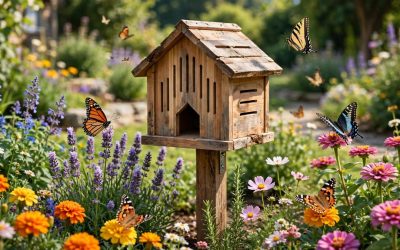
Mason bees are quiet, solitary pollinators that do much of their work in early spring, when fruit trees bloom and honeybees are still sluggish. A mason bee house gives them a place to nest: a sheltered block of tubes or trays, hung facing the morning sun, where each female lays her eggs in a row of sealed cells.
The five houses below cover the main ways to begin. One matches the tube size and depth that extension services recommend. One holds far more tubes than the rest for a bigger garden or an orchard. One is a compact all-rounder, and two are small, low-cost entries for a first season. Each one is a real listing with confirmed details, so match the exact model before ordering.
As an Amazon Associate, we earn from qualifying purchases.
Quick Answer
For most gardens, the POLLIBEE wax-coated house is the safest first pick: its holes measure 5/16 inch across and 6 inches deep, the size mason bees prefer, and its wax coating sheds rain. Bigger gardens should look at the Cestari house with 75 tubes, while a small patio does fine with the compact Nature’s Way or SunVara houses.
POLLIBEE Wax-Coated Mason Bee House

The POLLIBEE house is the only pick here that states both of the numbers that matter most: hole diameter and hole depth. Its kraft paper tubes measure 5/16 inch across and 6 inches long, which lines up with the size Oregon State University Extension recommends for mason bees. Females lay female eggs at the back of a long tube and male eggs near the front, so a shallow tube produces mostly males.
The body is handmade wood with a heavy wax coating that POLLIBEE says extends its life outdoors. The house measures 6 inches on each side and comes with a hook, rope, and screw clasp, so it stays rigid once mounted. Two gaps: the listing states no tube count and no model number, so confirm the listing shows the wax-coated house with kraft paper tubes. The loose paper tubes are the better arrangement, since old tubes can be pulled out each season and replaced.
Specs
| Spec | Detail |
|---|---|
| ASIN | B08CVS6HCV |
| Material | Wax-coated wood, cedar wood per listing |
| Tube material | Kraft paper |
| Hole diameter | 5/16 inch |
| Tube depth | 6 inches |
| Dimensions | 6D x 6W x 6H inches |
| Hole count | Not stated |
| Model number | Not stated |
Cestari Mason Bee House Bamboo Tube Solitary Bee Hotel

The Cestari house is the capacity pick. It holds 75 tubes of FSC wood and bamboo in a fir-wood frame, far more nesting space than any other house here, and it suits a larger garden, an orchard, or a gardener who already knows mason bees visit in numbers. The listing describes it as a high-capacity nester for 140 species of nesting solitary bees, including blue orchard bees, leafcutter bees, and red mason bees, so it is not a mason-only house.
The house measures 8 inches wide, 7.5 inches high, and 5 inches deep, and the pick is the rose pink finish; other finishes are separate listings. Bamboo tubes cannot be opened for cleaning, and old tubes can harbor mites, so plan to replace them each season. Seventy-five tubes in a garden with few mason bees will sit mostly empty, so match the house to the garden, not to the catalogue page.
Specs
| Spec | Detail |
|---|---|
| ASIN | B01G2QLQU8 |
| Material | Bamboo, fir wood |
| Tube count | 75 FSC-wood and bamboo tubes |
| Dimensions | 8 x 7.5 x 5 inches |
| Color | Rose Pink |
| Manufacturer | Cestari Bee Houses, Etc. |
| UPC | 712038057535 |
Kinsman Giant Solitary Bee Nester

The Kinsman Giant packs 68 tubes into a block that measures 6.5 inches long, 3.5 inches wide, and 3.5 inches high, so it fits on a narrow fence post or a small balcony rail where a full-size house would not. The maker is Wildlife World Ltd, and the model number is KMB. It is sold as a solitary bee nester rather than a mason-only house, and the listing names leafcutter bees and red mason bees among its intended tenants.
The small size comes with a real compromise: the block is only 3.5 inches deep, well short of the 6-inch depth mason bees prefer. A short tube leaves little room for female eggs at the back, so this house tends to produce mostly males. Treat it as a first-season house or a second house in a sheltered corner, not as the main nursery. It is a simple solid block with nothing to assemble, and it is easy to take down for cleaning and storage.
Specs
| Spec | Detail |
|---|---|
| ASIN | B005FW89MO |
| Tube count | 68 tubes |
| Dimensions | 6.5 x 3.5 x 3.5 inches |
| Model number | KMB |
| Manufacturer | Wildlife World Ltd |
Nature’s Way PWH1-C Teal Bee House

The Nature’s Way house is the compact, colorful entry in this roundup. Its model number is PWH1-C, and the pick is the teal finish. The body is pine wood, and the listing names mason bees, leafcutter bees, solitary bees, and other pollinators among its target species. The tubes are hollow bamboo shoots in differing diameters, which lets a wider variety of solitary pollinators use the house.
That variety is both the appeal and the limit: a gardener who wants mason bees specifically may find leafcutters taking the larger tubes first. The house is small and light, and its size suits a patio, a balcony, or a small raised bed rather than an orchard. The listing does not state the full dimensions in the excerpt seen, so measure the space before ordering. And as with any bamboo-tube house, plan on replacing the tubes each season, since bamboo cannot be opened and cleaned.
Specs
| Spec | Detail |
|---|---|
| ASIN | B07NWBR315 |
| Model number | PWH1-C |
| Material | Pine wood |
| Tube material | Hollow bamboo shoots |
| Color | Teal |
| Target species | Mason bees, leafcutter bees, solitary bees |
| UPC | 857505008037 |
| Dimensions | Not stated |
SunVara Mason Bee House

The SunVara house is the simplest pick here: a small bamboo bee house that ships from Amazon and is sold by SunVara. Its model number is SV-0001, and its UPC is 810046950012. The listing describes it as a mason bee home for the garden, and its bamboo construction is the fast-growing, renewable material the maker leads with. It is the least expensive way into this roundup to try mason bees for a season without committing to a larger house.
The house is small. The excerpt seen gives a depth of 4.53 inches and a width of 5.91 inches, with the full dimension set not visible, so check the listing before ordering if the mounting spot is tight. Like the other bamboo houses here, its tubes are fixed in place and cannot be opened for cleaning, so the honest use is one season of nesting followed by a tube replacement or a new house.
Specs
| Spec | Detail |
|---|---|
| ASIN | B086WNVLTG |
| Material | Bamboo |
| Model number | SV-0001 |
| UPC | 810046950012 |
| Ships from | Amazon |
| Sold by | SunVara |
| Dimensions | Partially stated, 4.53D x 5.91W inches |
How to choose
Start with tube size and depth, because those two numbers decide whether mason bees will use the house at all. Mason bees favor a tube about 5/16 inch across and about 6 inches deep, closed at one end. A house that states both figures, as the POLLIBEE pick does, takes the guesswork out of the choice.
Next, look at the tube material and whether it can be replaced. Loose paper tubes and removable wood trays are the cleanest arrangement, because old tubes can be pulled out each year and fresh ones put in. Fixed bamboo tubes and drilled wooden blocks cannot be opened, so they need replacing on a schedule.
Then match capacity to the garden: a small patio needs a small house, while an orchard can fill a 75-tube house in a season. Hang the house facing east or southeast, about 3 to 6 feet off the ground, rigidly fixed so it never swings, with a roof or an overhang above the tube mouths to shed rain. Put it up before the first blossoms open, since mason bees fly in early spring.
Who should skip
Skip a mason bee house if the garden has no early flowers or fruit trees nearby, because mason bees need pollen and nectar within a short flight of the nest. A bare patio with no planting will not draw them, and an empty house is just a decoration.
Skip the large-capacity houses if the garden is small or the gardener is only testing the idea. A 75-tube hotel in a courtyard with two pots is oversized, and a compact house will teach the same lessons for less. Skip any house with fixed bamboo tubes if the plan is to keep the same house for years without replacing its nesting material, since old tubes collect mites and disease. Skip a mason bee house entirely if the goal is honey. Mason bees are solitary, they make no honey, and they do not live in a colony.
Frequently Asked Questions
When should I put a mason bee house up?
Hang the house in late winter or very early spring, before the first fruit-tree blossoms open. Mason bees emerge when daytime temperatures reach the mid-50s, and they look for nesting sites as soon as they fly. A house put up in midsummer will sit empty until the next spring, though leafcutter bees may use it later in the season.
Which direction should a mason bee house face?
Face the tube openings east or southeast so the morning sun warms the house and the bees start flying early. Mount it about 3 to 6 feet off the ground on a wall, post, or fence, fixed rigidly so it never swings. A roof overhang or an eave above the openings keeps rain out of the tubes.
Do mason bees sting?
Mason bees are among the gentlest bees in the garden. Females can sting only if trapped against skin, and males cannot sting at all. They have no hive to defend and no honey to guard, so they do not behave the way honeybees do around a hive. Children and pets can watch them from a short distance without worry.
How do I clean a mason bee house?
At the end of the season, pull out the old tubes and replace them with fresh ones, or open the wood trays and harvest the cocoons for winter storage in a cool, dry place. Fixed bamboo tubes and drilled blocks cannot be opened, so replace the whole nesting insert each year. Never leave old tubes in place for a second season, since mites and disease build up inside them.
Final verdict
For most gardens, the POLLIBEE wax-coated house is the pick to start with. It is the only house here that states the 5/16-inch diameter and 6-inch depth mason bees prefer, its wax coating sheds rain, and its loose paper tubes can be replaced each year. The Cestari house is the right step up for a bigger garden or an orchard, with 75 tubes and room for many species. The Kinsman, Nature’s Way, and SunVara houses cover smaller spaces and smaller budgets, with the honest trade-off that their tubes are shallower or fixed in place. Hang the house before the blossoms open, keep it rigid and dry, and replace the nesting material every year.
FAQ
When should I put a mason bee house up?
Which direction should a mason bee house face?
Do mason bees sting?
How do I clean a mason bee house?
More from Amazon
Programs that pair well with the guide above. Offers and eligibility are set by Amazon and may change.
Collect the home and kitchen items you want in one registry that guests can shop from.
Create a wedding registrySet up recurring deliveries of everyday items on eligible products. Terms and savings are set by Amazon.
Explore Subscribe & SaveFree shipping on eligible items, Prime Video and more. Eligible new members can start with a free trial.
Start a Prime free trialAudiobooks and podcasts to listen to on the go. Eligible new members can start with a free trial.
Try Audible freeAs an Amazon Associate we earn from qualifying purchases.