The classic cast iron skillet has a weight problem. Traditional pans built for decades were heavy enough to discourage daily use, rough enough to frustrate new owners trying to build a proper seasoning layer, and often so thick that preheating felt like a commitment. Field Company set out to correct all three issues at once by sandcasting thinner walls in the American Midwest, and the resulting field cast iron cookware has become a reference point for anyone who wants reliable heat retention without the wrist strain or the learning curve.
But not every Field pan suits every kitchen, and the accessories matter more than beginners expect. A lid that does not seal tightly wastes the heat performance you paid for; a seasoning oil that polymerizes unevenly creates the very sticky spots that drive people back to nonstick. We compared published dimensions, weight relative to diameter, price per cooking surface, and aggregated owner feedback across retail and forum sources to sort the lineup into clear recommendations for different cooking habits.
Our top picks



As an Amazon Associate we earn from qualifying purchases at no extra cost to you.
Quick Picks
| Product | Best for | Price |
|---|---|---|
| Field No.10 Large Skillet | Most home cooks feeding four or more | $215 |
| Field No.6 Small Skillet | Singles, couples, or side-dish specialists | $135 |
| Field No.5 Chef Skillet | Eggs and curved-edge tasks | $125 |
| Field Cast Iron Starter Set | First-time cast iron buyers | $200 |
| Field Seasoning Oil | Restoring or maintaining seasoning | $16 |
| Field No.12 Extra-Large Skillet | Entertaining and batch cooking | $265 |
| Field Cast Iron Care Kit | Owners who want a complete maintenance routine | $50 |
| Field No.8 Skillet Lid | Braising, deglazing, and moisture retention | $120 |
How We Picked
We weighed four criteria: cooking-surface diameter relative to overall pan weight (thinner walls mean you lift less metal for the same usable area), seasoning quality straight from the factory (a pan that arrives slick and even saves weeks of kitchen labor), price per dollar of usable cooking surface, and long-term accessory ecosystem — whether lids, care kits, and replacement oils exist and actually fit. Field cast iron scored consistently on the first three, but accessory compatibility and lid weight deserve scrutiny because they affect daily workflow more than the initial purchase price suggests.
The 8 Best Field Cast Iron in 2026
1. Field Company No.10 Large Cast Iron Skillet
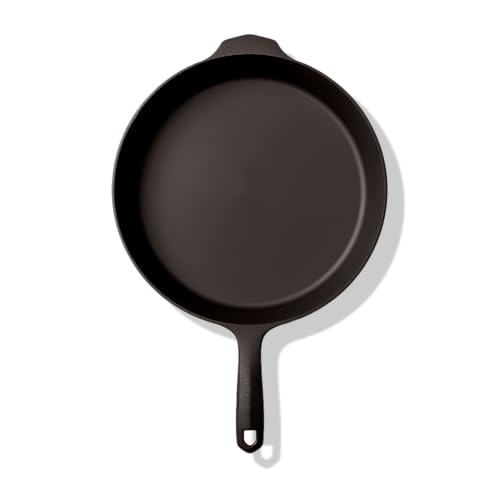
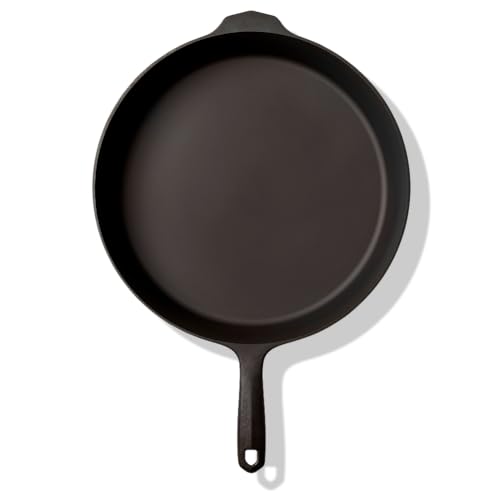
The No.10 is the sweet spot most buyers should start with. At 11.6 inches it handles a full weeknight protein-and-vegetable meal for four without crowding, yet its lighter wall construction keeps the heft manageable on a standard stovetop. Owners praise the smooth cooking surface straight from the factory, a direct result of sandcasting followed by mechanical smoothing, and the American-made provenance is a practical plus for warranty service rather than a marketing checkbox. The main trade-off is price: at $215 you pay a premium over mass-produced options, and the pan still demands the basic cast iron discipline of drying after every wash. Skip it if you routinely cook for fewer than three people, since the No.6 covers that range at less than two-thirds the cost.
2. Field Company No.6 Small Cast Iron Skillet
Designed for one or two servings, the 8.38-inch No.6 is the pan for a compact kitchen or a dedicated single-purpose job like searing two chicken breasts or finishing a cornbread. Its lightness is its headline advantage: you can toss it, flip it, and store it on a hook without the forearm fatigue a larger iron pan introduces. Seasoning from the factory is even and dark, so it performs well in its first week. The limitation is straightforward capacity — it simply cannot handle a family dinner in one pass. Skip it if you regularly cook for three or more, because running two batches defeats the time-saving logic that makes cast iron worth owning.
3. Field Company No.5 Cast Iron Chef Skillet
The No.5 occupies a narrow but genuinely useful niche. Its 7.5-inch diameter and curved egg-pan profile make it ideal for fried eggs, small reductions, or finishing a single portion under a broiler. The sloped sides let a spatula slide cleanly under delicate food, something a flat-walled skillet cannot match. It also doubles as a personal serving vessel, which owners appreciate for tableside presentation. The downside is its very small cooking area: you cannot comfortably fit more than two eggs without them merging. Skip it if you want one pan that flexes across recipes, since the No.6 offers more room for a similar price.
4. Field Cast Iron Starter Set
This 10.25-inch skillet bundled with a natural fiber brush, chain mail scrubber, and organic seasoning oil removes the guesswork from a first cast iron purchase. Everything you need for the initial seasoning cycle and routine cleaning ships in one box, and the skillet itself shares Field’s lighter, smoother construction. The vintage design label refers to the lid-handle silhouette rather than any functional quirk. At $200 the set undercuts buying the components individually, though the skillet inside is smaller in diameter than the standalone No.10, so you trade cooking area for convenience. Skip it if you already own cleaning tools or want the largest possible pan; a single No.10 plus a later care kit may suit you better.
5. Cast Iron Seasoning Oil by Field Company
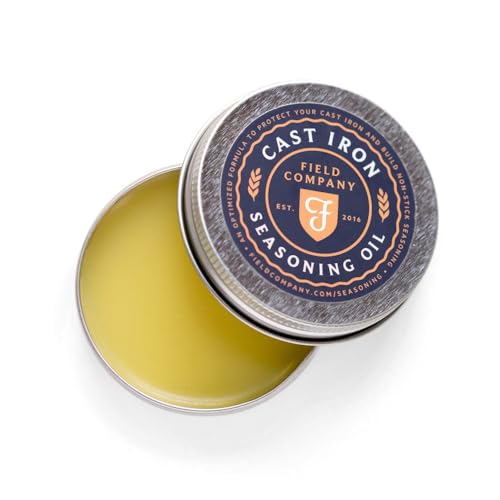
A small bottle of organic grapeseed, sunflower, and beeswax blend priced at $16, this seasoning oil is the one accessory that protects the multi-hundred-dollar investment above it. Grapeseed and sunflower oils polymerize into a hard, even layer, while beeswax helps the coat stay flexible during thermal cycling instead of chipping. Owners report it restores sticky or patchy surfaces within two or three applications. The only realistic complaint is volume: a single generous seasoning cycle can consume a third of the bottle, so frequent maintenance owners go through it fast. Skip it if you already keep a high-smoke-point neutral oil on hand for seasoning, though the convenience of a pre-blended formula still justifies the price for occasional users.
6. Field Company No.12 Extra-Large Cast Iron Skillet
At 13.4 inches the No.12 feeds six to eight servings without crowding, making it the practical choice for holidays, meal prep batches, or anyone who regularly cooks in volume. The same lighter-and-smooth wall philosophy keeps it manageable despite its diameter, though it is undeniably the heaviest pan in the lineup. Owners love that it transitions from stovetop to oven without a second pan dirtying the counter. The trade-off is cost and storage footprint: at $265 it commands the top price, and it will not fit inside most standard ovens on the middle rack without rearranging. Skip it if your oven or cabinet space is tight, or if you rarely cook for more than four.
7. Field Company Cast Iron Care Kit
The $50 care kit assembles the three maintenance items Field owners ask about most: a chain mail scrubber for stuck-on food, a natural fiber brush for gentle cleaning, and a bottle of the same seasoning oil sold separately. Buying them together saves a few dollars versus three individual purchases and eliminates the search for compatible replacements. The chain mail scrubber works best when the pan is still warm from cooking, and the fiber brush handles seasoning touch-ups without stripping the surface. There is no major flaw here beyond the fact that owners who already stock these tools individually gain nothing. Skip it if you own a compatible brush and prefer your own oil brand, since the skillet itself is the real investment.
8. Field Company No.8 Cast Iron Skillet Lid
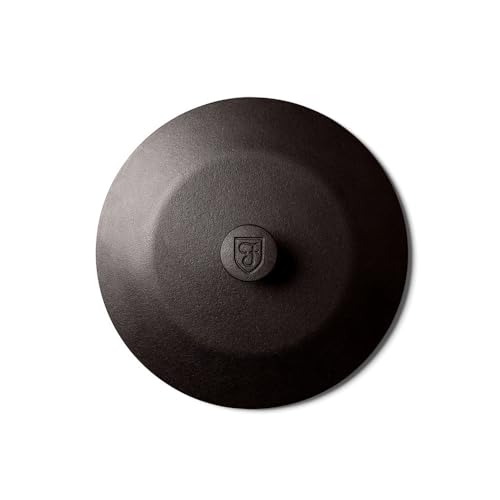
A $120 lid that fits the No.8 skillet and Field’s Dutch oven, this piece converts an open pan into a braising vessel. Pre-seasoned cast iron means it arrives ready to use, and the heavy lid traps steam for deglazing, short-cook stews, and finishing dishes under a broiler with a covered environment. Owners note the snug fit is noticeably better than generic wooden or stainless alternatives. The limitation is compatibility: it only fits the No.8, so if your primary pan is the No.10 or No.12 you cannot use it. Skip it unless you own the matching skillet, and if you need moisture control on a larger pan, budget for both the No.8 and the lid together.
Buying Guide
Match Diameter to Your Household Size
Cast iron heats slowly and retains heat longer than aluminum or steel, so a pan oversized for your serving needs wastes preheat time and fuel. The Field No.6 handles one to two portions, the No.10 covers four or more, and the No.12 stretches to eight. The intermediate No.5 and No.8 serve single-purpose or two-person tasks. Before choosing, measure the largest protein or vegetable volume you typically cook at once and select the pan whose cooking surface accommodates it without crowding. Overcrowding causes steaming rather than searing, which negates the primary advantage of buying field cast iron in the first place.
Understand Wall Thickness and Weight Trade-offs
Field pans are noticeably thinner than legacy brands like Lodge or vintage Griswold reproductions. That thin wall preheats faster and reduces wrist load, but it also means hot spots appear more quickly on high-output burners. If your stove has a variable flame or an electric coil that runs hot on one side, you will compensate with more frequent rotation. Owners who use induction cooktops report the smoothest experience because heat distribution at the base is uniform regardless of pan geometry. Factor your cooking surface into the value equation: a lighter pan is only an advantage if your burner does not introduce unevenness that a thicker pan would mask.
Plan for Seasoning and Cleaning from Day One
Field ships pre-seasoned, but “pre-seasoned” means a functional starting coat, not a finished, lifetime-ready surface. Expect to build seasoning through regular cooking with oil-rich foods, and keep the company’s seasoning oil nearby for touch-ups on bare or worn spots. The chain mail scrubber in the care kit removes stuck-on residue without stripping the seasoning you are building, which a metal scouring pad cannot promise. A simple rule from experienced owners: dry the pan on a warm burner immediately after washing, then wipe a thin film of oil before storage. Neglect this step once and you will spend the next three cookouts repairing rust spots.
Our Verdict
Top pick: the Field Company No.10 Large Cast Iron Skillet at $215. It balances cooking area, manageable weight, and price for the broadest range of home cooks, and its 11.6-inch surface handles nearly any weeknight task without crowding. Budget pick: the Field Cast Iron Starter Set at $200 delivers a capable 10.25-inch skillet plus the three maintenance tools a new owner would otherwise purchase separately over the following month. Conditional winner: if you cook for large groups regularly and your oven accommodates a 13.4-inch pan, the No.12 Extra-Large at $265 is the one that justifies its premium, because no smaller skillet eliminates the need for batch cooking.
FAQ
Is Field cast iron really smoother than Lodge or other mainstream brands?
Yes, Field sandcasts its pans and then mechanically smooths the cooking surface, producing a noticeably flatter texture out of the box. Lodge and similar brands use sandcasting but skip the finishing pass, so their pans start rougher and require more cooking cycles before food releases cleanly.
Do I need to re-season a Field pan before first use?
No. Field pans arrive pre-seasoned and are ready to cook. A light wipe of oil before the first use helps, but a full seasoning cycle is unnecessary unless the surface looks dry or patchy after unboxing.
Can I use the No.8 lid on the No.10 or No.12 skillet?
No. The lid is machined to fit the No.8 skillet and Field’s Dutch oven specifically. The diameter and seating profile differ on larger pans, so an ill-fitting lid will not trap steam or heat as intended.
What makes Field cast iron more expensive than a $30 supermarket skillet?
The price gap reflects sandcasting labor, the post-cast smoothing process, domestic manufacturing overhead, and a tighter quality-control tolerance on wall thickness consistency. A supermarket pan is die-cast or molded to looser specs, which you can feel in the uneven surface and heavier walls.