Key takeaways
- Choosing between wall planters and vertical garden towers is less about which format looks better and more about how you use your home. A wall-mounted system turns a blank surface into a planted display, while a tower concentrates several growing…
Choosing between wall planters and vertical garden towers is less about which format looks better and more about how you use your home. A wall-mounted system turns a blank surface into a planted display, while a tower concentrates several growing levels into one freestanding footprint. That difference affects watering, stability, installation, plant size, cleaning, and whether you can take the garden with you when you move.
For 2026, both options are widely available at approachable prices, but they solve different problems. Wall planters are usually the better fit for decorative indoor greenery and narrow rooms. Vertical garden towers are often more practical for herbs, strawberries, flowers, and vegetables, especially on a balcony, patio, or sunny porch. The right choice depends on whether you value a built-in look or flexible growing capacity.
Our top picks

 VECELO 5 Tier Vertical Garden Planter
- Space-Saving : This strawberry planter maximizes your gardening…
- Efficient Self-Draining: This vertical garden planter’s built-in drainage…
- Soil Moisture Retention: Designed to maintain ideal moisture…

As an Amazon Associate we earn from qualifying purchases at no extra cost to you.
Quick Verdict
Choose wall planters if you want a lightweight, customizable display that uses vertical wall space and works well with small houseplants. They are particularly useful in apartments, offices, entryways, and rentals where floor space is limited. Installation does require suitable hardware, and the wall must support the combined weight of the planters, soil, and water.
Choose a vertical garden tower if you want to grow multiple edible or flowering plants in one movable unit. Towers generally offer more planting volume per square foot and can be rolled toward sunlight or moved aside for cleaning. They take up floor space, can become top-heavy, and may require more frequent watering as plants mature.
Side by Side
| Factor | Wall Planters | Vertical Garden Towers |
|---|---|---|
| Comfort and access | Easy to see and reach when mounted at eye level; repeated bending is minimal. | Lower tiers may require bending or kneeling, while upper tiers can be harder for children to reach. |
| Durability | Plastic and resin models are light and rust-free; wood can need sealing, especially near moisture. | Plastic towers resist rust, but wheels, clips, and tier connections are potential wear points. |
| Typical price range | About $20-$100 for a small set or modular display; larger systems cost more. | About $25-$150 for a compact stackable tower; larger self-watering units can exceed that range. |
| Maintenance | Watering is straightforward, but runoff must be managed to protect the wall. | Requires monitoring of several tiers, drainage paths, wheels, and possible water pooling. |
| Space needed | Uses wall area, commonly about 12-30 inches wide and 4-10 inches deep per section. | Uses floor space, commonly about 12-24 inches wide and 12-24 inches deep. |
| Look | Artful, architectural, and easy to arrange as a grid or asymmetrical display. | More garden-like and functional, with a visible central column or stacked-pot profile. |
| Resale and portability | Individual pots are easy to reuse, but wall anchors and holes may need repair. | Can usually be moved intact, although a planted tower may be heavy and awkward. |
| Best for | Houseplants, trailing vines, succulents, herbs, and decorative foliage. | Strawberries, herbs, compact vegetables, annual flowers, and high-volume planting. |
Where Wall Planters Wins
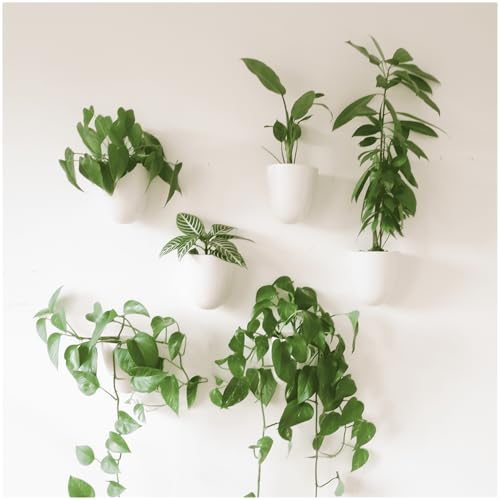
Wall planters make the most of unused vertical space. A hallway, kitchen wall, enclosed balcony, or home office can accommodate plants without sacrificing a walkway or valuable floor area. Because each container is separate, you can mix plant sizes, colors, and shapes rather than committing to one large structure.
They are also useful when visual balance matters. A row of matching planters can frame a window, soften a hard wall, or create a focal point behind a sofa. Trailing plants such as pothos, spider plants, and string-of-turtles can grow downward, while compact herbs and small upright plants fill the upper sections. Modular designs allow you to add or rearrange containers as your collection changes.
Lightweight sets are especially convenient for indoor use. For example, the Make Good PlantPod Luxe Self-Watering Wall Planters come as a set of six and are listed at $32.95, while the LaLaGreen Wood Planter Box set includes eight wall planters at $31.62. Products in this category can provide many planting positions for roughly the cost of a single larger decorative planter.
The main caution is installation. A wall planter holding damp soil can weigh considerably more than its empty container. Six small planters weighing 1 pound each when empty could collectively exceed 20 pounds after soil and water are added, depending on their capacity. Use hardware suited to the wall type, avoid placing heavy units over seating or electronics, and check whether the design includes a saucer, reservoir, or controlled drainage.
Water management is equally important. Even a small drip can stain paint, damage drywall, or affect wood trim. Indoor wall planters work best when they have removable liners, measured watering, or self-watering reservoirs that reduce overflow.
Where Vertical Garden Towers Wins
Towers provide more growing capacity in a compact floor footprint. Their stacked arrangement makes them a strong choice for a sunny balcony, patio, deck, or kitchen garden. Instead of spreading six pots across a shelf, you can place multiple plants in a unit roughly 1 to 2 feet wide.
This format is especially practical for edible plants. Strawberries, basil, parsley, lettuce, compact peppers, and many annual flowers can share a tower, provided their light and watering needs are reasonably compatible. A tower also keeps plants elevated above some ground-level pests and makes harvesting easier than tending a bed at floor level.
Mobility is another advantage. A tower with casters can be rolled closer to a window, moved away from a storm, or shifted when sweeping. The VECELO 5 Tier Vertical Garden Planter is an example of a stackable, self-watering style with wheels, listed at $33.98. The GameXcel Vertical Planter Tower, also a five-tier wheeled model, is listed at $27.97. These products show how an entry-level tower can cost about the same as a small wall-planter set.
However, a tower is not automatically easier to maintain. The top tiers may dry out quickly, while lower tiers can receive runoff from above. Plants with aggressive roots may outgrow shallow pockets, and a fully planted tower can become difficult to move. Place it on a level surface, leave room to rotate or roll it, and avoid locations where children or pets can pull the structure over.
Cost Over 5 Years
The purchase price is only part of the decision. For a realistic five-year comparison, assume a basic wall-planter setup costs $30-$80, while a compact tower costs $28-$100. Add approximately $20-$60 for potting mix and plants at the start. A tower may need an additional $10-$30 in replacement clips, trays, or wheels over five years; wall planters may need $10-$40 for replacement liners, anchors, or containers.
That puts a modest wall system at roughly $60-$180 over five years, excluding water and electricity. A comparable tower comes to about $60-$190. The totals can rise if you replace seasonal plants several times a year. Annual flowers and edible crops often create higher recurring plant costs than durable houseplants.
Water use is typically modest for either system, but self-watering features can reduce missed-water losses rather than eliminate maintenance. Neither format requires electricity unless you add grow lights or a pump. If indoor sunlight is inadequate, a small LED grow light may add approximately 10-40 watts and increase operating cost based on hours of use and local utility rates.
Which One for Your Home
Small apartment
Wall planters are usually the better choice when every inch of floor space matters. Install a narrow arrangement near a bright window, or use a freestanding wall that you own rather than drilling into a rental wall. Select shallow containers and plants with similar light needs. A tower works if you have a sunny balcony, but keep its footprint and turning clearance in mind.
Family with kids or pets
A securely anchored wall system can keep plants out of reach, but avoid toxic species and make sure no heavy container can fall. A tower may be more accessible for harvesting, yet its stacked shape can be unstable if bumped. Choose a broad base, lockable casters, and lightweight containers, and place the unit away from high-traffic paths.
Rental
Wall planters are attractive but may leave holes, water marks, or anchor damage. If your lease limits drilling, use an approved rail, freestanding screen, or removable display rather than relying on adhesive strips for heavy, wet containers. A tower is the simpler rental option because it can move with you and does not require permanent installation.
Long-term home
Wall planters make sense when you want a permanent design feature and are willing to plan drainage and mounting carefully. A tower is better for a changing garden, seasonal crops, or a household that may rearrange outdoor spaces. Many homeowners use both: decorative wall planters indoors and a tower for edible plants outside.
FAQ
Are wall planters or towers easier to water?
Neither is universally easier. Wall planters are simple when each container is small and accessible, but indoor drainage requires care. Towers can hold reservoirs or channel water between tiers, yet uneven drying is common. Whichever format you choose, group plants with similar watering needs and check the soil rather than watering on a fixed schedule alone.
Can wall planters hold herbs and vegetables?
Yes, if they provide enough depth, light, and drainage. Chives, thyme, oregano, parsley, and small leafy greens are generally more suitable than deep-rooted tomatoes or large peppers. Check the container’s capacity before planting; a decorative pocket may be too shallow for a productive edible crop.
Do vertical garden towers need full sun?
Many edible plants need at least six hours of direct light for strong growth, although leafy greens and some herbs tolerate less. Rotate the tower if one side receives more light. Indoors, a grow light may be necessary, particularly when the tower sits far from a bright window.
Which option lasts longer?
Longevity depends more on material, drainage, sunlight, freezing temperatures, and installation than on the format itself. UV-resistant plastic can last for years, while untreated wood may deteriorate faster in wet conditions. Bring towers indoors before hard freezes, seal wooden planters as needed, and replace cracked containers or unstable hardware promptly.