
Key takeaways
- A dull mower blade is easy to spot once you know what to look for. Instead of a clean cut, the blade tears the grass, leaving ragged brown tips that invite fungus and give your lawn a stressed, uneven appearance.…
What's inside
A dull mower blade is easy to spot once you know what to look for. Instead of a clean cut, the blade tears the grass, leaving ragged brown tips that invite fungus and give your lawn a stressed, uneven appearance. Removing the blade, driving to a shop, and waiting days for a sharpening service is what most homeowners would rather skip, which is exactly the problem a lawn mower blade sharpener is meant to solve. The right tool lets you restore a sharp edge in minutes, often without unbolting the blade from the mower deck at all.
What separates a worthwhile sharpener from a frustrating purchase comes down to three things: how well the tool holds a consistent angle, whether it suits your blade type, and how much physical effort it demands. The market in 2026 spans drill-attach adapters under ten dollars to dedicated benchtop grinders approaching two hundred, and owner feedback makes the tradeoffs clear. Some tools excel at convenience but produce uneven edges that shorten blade life. Others deliver professional results but require a workshop space and a steady hand. The comparison below cuts through the noise.
As an Amazon Associate we earn from qualifying purchases at no extra cost to you. Product prices and availability are accurate as of the date shown and are subject to change.



Quick Picks
| Product | Best for | Price |
|---|---|---|
| cenoz Crafts Man (5-Pack) | Budget bulk purchase | $9.99 |
| SporGain Brushless | Professional-grade sharpening with lifetime warranty | $179.99 |
| Jinlida JLD10-9 | Heavy-duty sharpening with included balancer | $199.99 |
| SporGain Adjustable Frame | Versatile angle control on a budget | $49.99 |
| SHARPAL 103N | Multi-purpose sharpening for blades, knives, and garden tools | $22.99 |
| 2/3HP Grinder (7-inch) | Broad blade compatibility including Gator and mulching types | $169.99 |
| UF-SHARP Diamond | Premium diamond abrasive paired with your existing drill | $18.99 |
| SporGain 3000RPM | High-RPM brushless performance for frequent use | $169.99 |
How We Picked
We narrowed this list by weighing published motor output and wheel size against owner-reported ease of use, angle consistency, and blade-type compatibility. A sharpener that works beautifully on a flat mulching blade may struggle on a high-lift blade with a steep bevel. We also prioritized tools where the price-to-build-quality ratio held up across multiple reviews, and we flagged any unit with recurring complaints about wobble, overheating, or poor customer support.
The 8 Best Lawn Mower Blade Sharpener in 2026
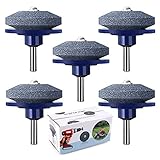
1. cenoz Crafts Man Lawn Mower Blade Sharpener for Any Power Hand Drill (5 Packs, Blue)
Who it is for: homeowners with a cordless drill who want a no-fuss, low-risk entry into drill-powered blade sharpening. The five-pack format means you can keep a fresh abrasive on hand or share with a neighbor. Published specs confirm it attaches to standard 3/8-inch or half-inch drill chucks. Owner feedback highlights the convenience of never removing the blade from the deck. Pros: extremely affordable for the quantity; works under the mower without blade removal. Con: the coarse grit wears quickly on hardened steel, and the flat pad does not guide a specific angle, so consistency depends entirely on your hand. Skip it if you own Gator blades or need a precise 30-degree bevel.
2. SporGain Lawn Mower Blade Sharpener, Brushless Motor, Lifetime Motor Warranty
Who it is for: serious lawn-care operators or homeowners with multiple mowers who sharpen blades every few weeks. The brushless motor and lifetime warranty signal a machine built for repeated duty rather than occasional weekend use. Owner reviews consistently praise the guided angle system and the reduced vibration compared to brushed-motor competitors. Pros: lifetime motor warranty removes long-term risk; brushless design runs cooler and lasts longer under sustained load. Con: the unit is heavier and requires a stable surface to bolt or clamp to, making it impractical for renters or small apartments. Skip it if you sharpen fewer than two blades per season and want something you can toss in a garage drawer.
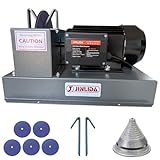
3. Jinlida JLD10-9 Lawn Mower Blade Sharpener, 1HP 750W with 9-inch Ceramic Grinding Wheel, Balancer, and 5 Sanding Discs
Who it is for: buyers who want a complete sharpening station in one purchase. The nine-inch ceramic wheel covers more surface area per pass, and the included balancer lets you verify blade balance immediately after grinding, a step most cheaper tools ignore. Owner feedback notes the 750-watt motor handles thick mulching blades without bogging. Pros: the included balancer eliminates a separate purchase; the large wheel diameter reduces the number of passes needed. Con: at $199.99 it is the priciest option here, and the footprint demands dedicated bench space. Skip it if you have limited storage or only sharpen one thin blade per year.
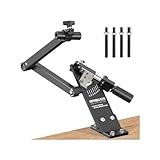
4. SporGain Updated Lawn Mower Blade Sharpener 15° to 45° Adjustable Frame
Who it is for: the buyer who wants a guided sharpening experience without committing to a motorized benchtop unit. The 15-to-45-degree adjustable frame covers the full range of common mower-bevel angles, making it one of the few manual tools that can handle both flat and high-lift blades with the correct setting. Owner reviews highlight the solid metal construction relative to the price. Pros: wide angle range accommodates multiple blade types; no power source needed, so it works anywhere. Con: it is a manual tool, meaning you supply the motion and pressure, which can be tiring on a very dull or nicked blade. Skip it if you want a push-button solution or have arthritis in your hands.
5. SHARPAL 103N All-in-1 Knife Garden Tool Lawn Mower Blade Sharpener
Who it is for: the homeowner who wants one compact tool for lawn mower blades, garden shears, kitchen knives, and hatchets. The multi-stage design moves from coarse repair to fine honing in a single fixture, and it clamps to a bench edge or table. Owner feedback praises the versatility and the built-in angle guides that keep edges consistent across different tools. Pros: handles far more than just mower blades; the clamp-mount design requires no drilling or permanent bench setup. Con: the narrow slot geometry limits blade width, so very wide mulching blades may not fit cleanly. Skip it if your primary need is sharpening Gator or multi-purpose blades over three inches wide.
6. Lawn Mower Blade Sharpener, 2/3HP Lawnmower Blades Grinder with 7-Inch Ceramic Wheel, 30°/40° Angle Brackets
Who it is for: owners of multiple mower brands and blade types who need one machine that covers high-lift, low-lift, Gator, and flat blades. The dual bracket system (30 and 40 degrees) addresses the two most common bevel angles without any guesswork, and the seven-inch ceramic wheel provides a good balance of cutting speed and portability. Owner reviews highlight the clear bracket labeling and the sturdy frame. Pros: explicitly designed for broad blade compatibility; the included extra sandpapers extend consumable life. Con: at $169.99 it sits in the same price tier as motorized competitors that may offer brushless longevity. Skip it if you want the absolute fastest sharpening time and prefer a nine-inch wheel.
7. UF-SHARP Diamond Lawn Mower Blade Sharpener, 120 Grit, All-Metal Construction, for Any Power Hand Drill
Who it is for: drill-attach users who found cheap fiber pads disappointing and want a longer-lasting, more aggressive abrasive. The 120-grit diamond coating cuts faster than standard aluminum-oxide pads and resists glazing on hardened steel. All-metal construction handles the torque of a cordless drill without flexing. Owner feedback notes the improvement in edge finish over disposable pads. Pros: diamond abrasive lasts significantly longer than fiber or sandpaper alternatives; metal body resists heat buildup. Con: the aggressive grit can remove material quickly, so a light touch is needed to avoid over-grinding a thin blade. Skip it if your blades are already near minimum thickness.
8. SporGain Updated Lawn Mower Blade Sharpener, 3000RPM Brushless Motor
Who it is for: the same buyer as the #2 pick but who prioritizes raw speed. The 3000-RPM brushless motor reduces pass count noticeably on badly nicked blades, and owner reports confirm a shorter overall sharpening session. It shares the guided-angle platform but pairs it with a higher-output motor. Pros: 3000 RPM clears deep nicks faster than slower competitors; brushless keeps the unit quiet and efficient during extended use. Con: the higher speed means you must keep the blade moving steadily to avoid hot spots that can warp thin steel. Skip it if you sharpen rarely and want the most forgiving, low-RPM experience.
Buying Guide
Motor Type and Speed
Brushless motors outlast brushed ones, run cooler under continuous load, and eliminate carbon-brush replacement. For occasional homeowners, a brushed unit is perfectly adequate, but if you sharpen multiple blades weekly, the longevity difference pays for the price gap. Speed matters too: a 3000-RPM grinder clears nicks in fewer passes than a 1500-RPM model, but higher speed demands more control to prevent overheating the blade steel.
Angle Guidance and Blade Compatibility
Mower blades are not universal. Flat blades typically use a 30-degree bevel; high-lift and Gator blades may require 35 or 40 degrees, and mulching blades are wider. A sharpener with fixed brackets or adjustable guides at the correct angle produces a true edge every time. Manual drill-attach pads without a guide rely entirely on your wrist, which leads to wavy edges that vibrate the blade. Match the tool’s angle range to your specific blade type before purchasing.
Wheel Size and Consumable Cost
A seven-inch ceramic wheel removes material in fewer passes than a five-inch wheel, saving time on thick or heavily nicked blades. A nine-inch wheel goes further still. However, larger wheels mean a bulkier machine and more expensive replacement discs. Check consumable pricing and availability for the model you choose; a sharpener is only useful as long as you can get fresh discs without hunting across the internet.
Our Verdict
The top pick for most homeowners who want a permanent, guided solution is the SporGain Brushless with lifetime motor warranty. It removes the single biggest variable—your hand stability—and the warranty means you will never face a repair bill. The budget pick is the cenoz 5-Pack at $9.99, which turns a cordless drill into a surprisingly capable edge-restoration tool for flat-blade owners who already own a drill. If you sharpen Gator or wide mulching blades and want explicit compatibility confirmed in the specs, the 2/3HP Grinder with 30/40-degree brackets wins on coverage without reaching a four-figure price.
FAQ
How often should I sharpen a mower blade?
Most manufacturers recommend sharpening every 20 to 25 hours of cutting time, or at minimum once per season. If you notice brown-tipped grass or a torn appearance after mowing, the blade is overdue regardless of the hour count.
Can I sharpen a mower blade without removing it from the deck?
Drill-attach tools like the cenoz and UF-SHARP Diamond are designed for exactly this scenario. You tilt the deck or roll the mower on its side and work the adapter along the visible edge. Motorized benchtop units require blade removal and provide a more consistent result.
Is a diamond abrasive better than a ceramic wheel?
Diamond coatings cut harder steels faster and resist glazing, but they are more expensive per surface area. Ceramic wheels remove material effectively at a lower cost and are well suited to softer mower steels. For a one-blade household, ceramic is the better value; for a small shop, diamond wins on speed and durability.
What does a balancer do and do I need one?
A blade balancer checks whether the sharpened blade spins evenly on a mandrel. An unbalanced blade causes mower vibration that wears deck spindles and produces uneven cuts. If you grind material off one side more than the other, which happens easily with hand-held tools, a balancer catches the problem before you reinstall the blade.


