
Key takeaways
- Pro: Affordable entry price with usable planting quantities
- Pro: Includes oxygen absorbers and mylar pouches for basic storage
- Con: Variety mix leans toward the predictable
What's inside
Choosing the right survival seed kit means balancing variety, storage longevity, and realistic garden scale. A family homesteading on an acre needs something different from a suburban grower filling a backyard plot, yet both want non-GMO heirloom genetics that can be saved year after year without degrading vigor.
The best bedrock seeds for survival 2026 come from vendors that publish clear variety counts, honest germination expectations, and container specifications. What separates a worthwhile kit from a shelf ornament is whether the assortment matches your growing zone and whether the packaging actually protects seed viability over years of storage. The eight products below represent the range we found when comparing published specs and long-term owner feedback across the current market.
As an Amazon Associate we earn from qualifying purchases at no extra cost to you. Product prices and availability are accurate as of the date shown and are subject to change.




Quick Picks
| Product | Best for | Price |
|---|---|---|
| Gardeners Basics Survival Seed Vault Kit | Beginner preppers | $29.95 |
| Heaven’s Harvest 10 Year Survival Kit | Mid-range long-term storage | $49.97 |
| Survive Seed Co. 155-Variety Kit | Maximum genetic diversity | $159.99 |
| Survival Garden Seeds 30 Variety Pack | Home gardeners on a budget | $29.99 |
| Companion Plant Seeds 5 Variety Pack | Adding a focused crop group | $9.99 |
| Heaven’s Harvest 10 Year Garden Kit | Large-scale seed banking | $105.99 |
| Lush&Dew Zone 6 Survival Seed Kit | Northern temperate growers | $44.99 |
| Tactiko Vegetable, Herb & Edible Flower Kit | Culinary variety seekers | $30.55 |
How We Picked
We evaluated each kit on four criteria that consistently determine satisfaction: total variety count relative to price, whether the seeds are genuinely heirloom and non-GMO as claimed, storage container quality and stated shelf life, and how well the assortment maps to real growing conditions rather than padded marketing numbers. Kits that included filler varieties or vague packet counts scored lower regardless of headline seed totals.
The 8 Best Bedrock Seeds For Survival 2026 in 2026
Gardeners Basics Survival Seed Vault Kit
This kit targets first-time preppers who want a broad foundation without a large upfront cost. Owners appreciate that the variety list includes staples like beans, carrots, lettuce, and tomatoes in quantities that let you actually plant a full first season rather than just collect packets. The included mylar storage bags with oxygen absorbers are a practical touch at this price point. The main limitation is that the assortment is fairly standard and offers less uniqueness than pricier kits, so experienced gardeners may find it repetitive of seed catalogs they already own.
- Pro: Affordable entry price with usable planting quantities
- Pro: Includes oxygen absorbers and mylar pouches for basic storage
- Con: Variety mix leans toward the predictable
Skip this if you already maintain a homestead garden and want rarer cultivars or a larger seed bank for multi-year rotation.
Heaven’s Harvest 10 Year Survival Kit
Heaven’s Harvest steps up from the entry level with over 25,000 seeds across a wider range of vegetables, and the storage drum is the real differentiator here. A galvanized steel drum with a sealed liner outperforms zip-lock bags for anyone storing seeds in a basement or outbuilding where humidity fluctuates. Owner feedback consistently praises the drum’s build quality and the company’s responsiveness. The variety count is solid but not extraordinary, and some growers report that certain herb germination rates run lower than the vegetable seeds in the same kit.
- Pro: Durable storage drum suited to long-term holding
- Pro: Strong customer service reputation
- Con: Herb germination rates inconsistent with vegetable seeds
Skip this if you already own a dedicated seed vault and only need refills for specific crops.
Survive Seed Co. 155-Variety Kit
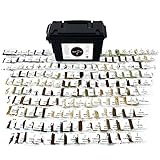
This is the broadest assortment on our list, spanning vegetables, fruits, herbs, and flowers across 155 varieties and over 65,000 seeds. For anyone building a true self-sufficiency garden, the breadth means you can rotate crops, trial new plants, and cover pollinator needs all from one purchase. The seed vault container is included. The trade-off is price and the sheer volume, which can overwhelm a smaller grower who cannot plant everything in a single season. Some owners note that flower and fruit varieties are smaller-stocked than the vegetable selections.
- Pro: Unmatched variety breadth across plant categories
- Pro: Comes with a dedicated storage container
- Con: High upfront cost and volume may exceed small-garden needs
Skip this if your growing space is under 1,000 square feet and you prefer a curated, focused kit.
Survival Garden Seeds 30 Variety Pack
Survival Garden Seeds builds its reputation on clear labeling, honest germination data, and varieties vetted for home gardens. This 30-pack is the company’s middle offering, and owners report that the packets arrive well-organized with planting instructions and days-to-maturity charts. At just under thirty dollars it sits close to the Gardeners Basics kit, but the variety curation feels more intentional and less generic. The limitation is quantity per packet; some owners plant out a full bed and need to reorder the next season because seed counts are modest per variety.
- Pro: Transparent labeling with germination and maturity data
- Pro: Well-curated variety list suited to real backyards
- Con: Lower per-packet seed counts limit first-season planting area
Skip this if you are feeding a large family and need bulk quantities of each crop from a single purchase.
Companion Plant Seeds 5 Variety Pack
This is not a survival kit in the traditional sense. It is a focused companion-planting bundle with five varieties designed to grow alongside your main crops for pest deterrence and soil health. At under ten dollars it is an inexpensive add-on for someone who already has a vegetable kit and wants to round out a polyculture strategy. Owners like the simplicity and the clear companion-planting guidance included. The obvious limitation is that this cannot stand alone as a survival seed source.
- Pro: Low-cost way to add pest-management planting to an existing kit
- Pro: Clear guidance on pairing with main crops
- Con: Too narrow to serve as a standalone seed bank
Skip this if you are starting from zero and need calorie-producing vegetables as your foundation.
Heaven’s Harvest 10 Year Garden Kit
This is the larger sibling in Heaven’s Harvest’s lineup, pushing past 50,000 seeds with two bonus items: a garden planner and the same storage drum format. For homesteaders who want a near-complete seed bank in one purchase, the seed volume is substantial and the planner adds real organizational value for multi-year rotation. Owners report that the bonus items are genuinely useful rather than token giveaways. The price reflects that volume, and some growers find they never plant through the full stock within the stated viability window without a large garden footprint.
- Pro: Very high seed volume with practical storage drum included
- Pro: Garden planner helps with crop rotation over multiple seasons
- Con: Requires significant garden space to realize the full inventory before germination declines
Skip this if your plot is small or you only store seeds as backup rather than actively cycling stock.
Lush&Dew Zone 6 Survival Seed Kit
Lush&Dew earns attention for targeting Zone 6 specifically, which means the variety selections are chosen to succeed in climates with moderate winters and shorter frost-free windows. Thirty-two types with over 30,000 seeds is a solid middle-ground package. Owners in the upper Midwest and Mid-Atlantic appreciate that cool-season crops are well represented and that the kit does not include warm-zone varieties that would never mature in their climate. The downside is that if you are outside Zone 6, the selection becomes less optimized for your conditions.
- Pro: Zone-specific curation improves likelihood of garden success
- Pro: Good balance of variety count and seed volume per packet
- Con: Less relevant if you grow in a climate outside its target range
Skip this if you are in Zones 3 through 5 or 7 and above, where the selection will not match your season length.
Tactiko Vegetable, Herb & Edible Flower Kit
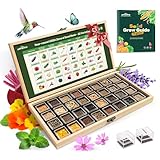
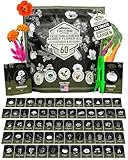
Tactiko’s 60-variety kit stands out for including edible flowers alongside vegetables and herbs, which broadens the culinary range beyond what most survival kits offer. The price is competitive for the variety count, and the non-GMO claim is consistently upheld in owner reports. The edible-flower additions make this appealing to kitchen gardeners who want aesthetic and flavor variety, not just calorie production. The limitation is depth; with 60 varieties spread across three categories, individual seed counts per type are smaller than you would find in a kit focused solely on vegetables.
- Pro: Edible flowers add culinary and garden-design dimension
- Pro: Strong variety-to-price ratio
- Con: Shallow seed quantities per variety limit planting area per crop
Skip this if your priority is bulk planting of calorie crops rather than diverse kitchen-garden experimentation.
Buying Guide
Match the Variety List to Your Growing Zone
A 30-variety kit that includes three warm-season squash types will underperform in a short-season Zone 4 garden regardless of germination rates. Before purchasing, cross-reference the variety list against your frost dates and pick kits where at least half the selections mature within your window. Zone-specific kits like the Lush&Dew pack solve this problem by default; general kits require you to check individually.
Evaluate Storage Packaging Over Seed Count
Headline numbers like “50,000 seeds” are less meaningful than whether the packaging protects those seeds. A sealed galvanized drum with oxygen absorbers and a desiccant sachet will hold germination rates far longer than a cardboard box of loose packets sitting in a humid garage. If a kit lists a shelf life beyond five years, verify that the container type supports it; paper packets in a humid environment lose viability in half that time.
Compare Per-Variety Quantity, Not Just Total Count
Divide the total seed count by the number of varieties to get a rough per-crop figure. A kit with 60 varieties and 60,000 seeds gives you roughly 1,000 seeds per type, which covers a generous bed. A kit with 150 varieties and 65,000 seeds drops to about 430 per type, suitable for spot-planting or seed-saving trials. Knowing which scenario you are in prevents the frustration of buying a large kit and discovering you cannot fill your planned rows.
Our Verdict
For most readers, the Survive Seed Co. 155-Variety Kit is the top pick because its breadth covers vegetables, fruits, herbs, and flowers in a single purchase with dedicated storage, making it the closest thing to a complete seed bank in one box. For budget-conscious buyers, the Gardeners Basics Survival Seed Vault Kit at just under thirty dollars delivers usable planting quantities and basic storage materials without unnecessary premium features. If you grow in a northern temperate climate and want a kit that respects your season length, the Lush&Dew Zone 6 kit is the clear winner for that specific condition.
FAQ
Do survival seed kits really last ten years?
Germination viability depends on storage conditions more than the printed shelf life. Seeds kept in a sealed container with oxygen absorbers in a cool, dark location will exceed five years reliably; ten-year claims assume ideal and stable conditions that many home storage situations do not provide. Plan to germination-test older stock before relying on it for a full season.
Are heirloom seeds better than hybrids for survival gardening?
Heirloom seeds can be saved from your own plants and will grow true in the next generation, which matters for long-term self-sufficiency. Hybrids often produce higher yields in a single season but do not breed true when saved. If seed saving is part of your survival plan, heirloom genetics are the functional choice.
How many seeds do I actually need to feed a family?
A family of four with a half-acre garden typically uses a few hundred seeds per major crop per season. A kit with 1,000 or more seeds per variety gives you room for succession planting, seed-saving stock, and backup in case of crop failure. Kits that spread thousands of seeds across 150 varieties may look impressive but leave you short on any single crop.
Should I buy multiple kits to build a larger seed bank?
Buying two smaller kits from different vendors gives you more variety coverage than one large kit at a similar total price, and it reduces the risk of a single vendor’s germination issues affecting your entire stock. Stagger purchases so that each kit is used in rotation before its viability window closes.


