Key takeaways
- Covers a large area per purchase, reducing per-ounce cost dramatically
- Labeled for bed bugs, fleas, and ticks in a single formula, simplifying inventory
- Requires a separate sprayer or transfer pump, adding a small upfront cost
Bed bugs are among the most stubborn household invaders you can face. Unlike a stain on a carpet or a draft under a door, they reproduce quickly, hide in microscopic cracks, and survive for months without feeding. The moment you spot even a single bug or a cluster of dark fecal spots on a mattress seam, the window for easy eradication begins to close. A spray that kills on contact but leaves no residual protection means you are starting the fight over every few days. A spray that fails to reach eggs means a fresh generation hatches within two weeks and you are right back where you started.
What separates a genuinely effective bed bug spray from a mediocre one comes down to a handful of measurable differences: residual kill duration, whether the formula addresses eggs and nymphs rather than adults alone, how the product handles pyrethroid-resistant populations, and whether it is safe to apply on fabrics and mattresses where families sleep. This roundup for 2026 compares the top options available on the market using published specifications, listed prices, and aggregated owner feedback, so you can match the right product to your infestation severity, budget, and household constraints.
Our top picks






As an Amazon Associate we earn from qualifying purchases at no extra cost to you.
Quick Picks
| Product | Best for | Price |
|---|---|---|
| Ortho Home Defense Max (Gallon) | Large-area treatment on a budget | $23.97 |
| EcoRaider EcoVenger | Plant-based kill including resistant strains | $19.95 |
| Ortho Home Defense Max (Aerosol) | Quick spot treatment without a sprayer | $12.27 |
| Harris Toughest Bed Bug Killer | Long residual protection on tough infestations | $59.99 |
| Raid Max Foaming Spray | Crack and crevice reach on hard surfaces | $11.18 |
| Natural Bed Bug Repellent Pouches (16 Pack) | Prevention and travel protection | $24.92 |
| Natural Plant-Based Bed Bug Spray (22 oz) | Mattress and fabric-safe treatment | $24.99 |
| GoneNaturally Bed Bug Spray | Scentless, non-staining home use | $24.95 |
How We Picked
We focused on four criteria that consistently determine whether a spray eliminates an infestation or merely pushes it underground. First, spectrum of kill: does the product address adults, nymphs, and eggs, or only mobile stages? Second, residual duration: how long does the treated surface remain lethal after application? Third, resistance handling: can the formula defeat populations that have evolved tolerance to common pyrethroids? Fourth, safety profile: is the product rated for use on mattresses, fabrics, and in rooms where children or pets spend time? Products that satisfy all four earn a spot here; those that compromise on one or more are still included when they excel in a specific niche.
The 8 Best Bed Bug Sprays That Work in 2026
Ortho Home Defense Max Bed Bug, Flea & Tick Killer, 1 gal
This gallon jug is the volume play for anyone treating multiple rooms or a whole apartment without buying dozens of small aerosol cans. Owners highlight the convenience of a pump-sprayer-compatible container that covers baseboards, bed frames, and furniture legs in one session.
- Covers a large area per purchase, reducing per-ounce cost dramatically
- Labeled for bed bugs, fleas, and ticks in a single formula, simplifying inventory
- Requires a separate sprayer or transfer pump, adding a small upfront cost
Skip this one if you are treating a single mattress seam or a travel suitcase. The gallon format is overkill for spot jobs, and the liquid needs dilution awareness for precise application in tight spaces.
Bed Bug Killer 16 oz EcoVenger by EcoRaider
EcoRaider’s EcoVenger stands out among plant-based options because its published kill-efficacy data addresses resistant bed bug populations rather than relying solely on the assumption that botanicals are gentle enough to ignore. USDA Bio-Certification adds a regulatory layer of credibility that most “natural” sprays lack entirely.
- Targets eggs, nymphs, and adults including pyrethroid-resistant strains
- Non-toxic plant-extract base rated safe around children and pets
- Smaller bottle size means multiple units for whole-home coverage
Pass on this product if you need a large residual window on hard surfaces. EcoRaider’s formula prioritizes contact kill and ongoing protection through reapplication rather than a long chemical tail on baseboards.
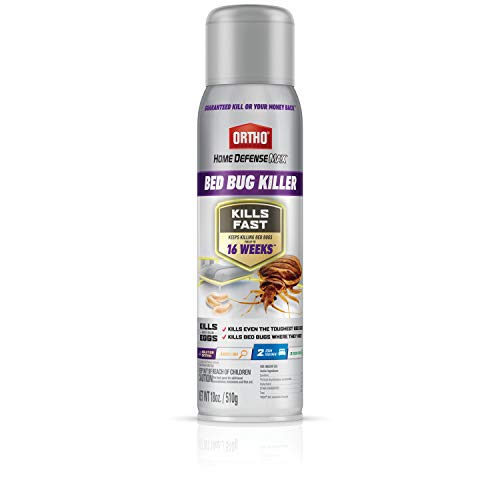
Ortho Home Defense Max Bed Bug Killer, Aerosol, 18 oz
The aerosol version of Ortho’s Max line is the grab-and-go solution for renters or anyone who wants to hit a bed frame and headboard without mixing anything. The canister design allows one-handed application into crevices, and the trigger spray pattern gives reasonable control for a pressurized format.
- No separate sprayer needed; usable straight out of the box
- Compact size makes it practical for hotel rooms, dorms, or a single piece of furniture
- Limited coverage area per can compared to the gallon version
Skip the aerosol if your infestation spans several rooms. You will go through cans quickly and the per-ounce cost climbs compared to buying the gallon.
Harris Toughest Bed Bug Killer, Liquid Spray with Odorless and Non-Staining Extended Residual Kill Formula (Gallon)
Harris occupies the premium tier here, and the price reflects a formula engineered around one property buyers rarely find together: an extended residual kill window combined with odorless, non-staining application. Owners dealing with severe or recurring infestations report it as the single product they return to after cheaper options failed to hold the line.
- Extended residual protection reduces reapplication frequency significantly
- Odorless and non-staining, making it suitable for upholstery and light-colored fabrics
- Highest upfront cost in this roundup at $59.99
Consider skipping Harris if your situation is a precautionary treatment or a very early-stage problem with fewer than a handful of bugs. The investment is hardest to justify when a cheaper product could have resolved it in one pass.
Raid Max Bed Bug Crack & Crevice Extended Protection Foaming Spray
Raid’s foaming spray solves a specific mechanical problem: reaching the narrow gaps in laminated wood, laminate flooring seams, and baseboard joints where liquid sprays pool and fail to penetrate. The foam expands into the void and holds position long enough to deliver its active ingredient to hidden harborage sites.
- Foam expansion reaches crack and crevice harborage that liquid cannot
- Priced at the entry point of this list, making it a low-risk trial
- Best performance is limited to hard, laminated surfaces rather than fabrics
Skip this foam if your primary need is mattress or upholstery treatment. The formula is optimized for rigid surfaces, and applying it to fabric wastes the product without matching its strengths.
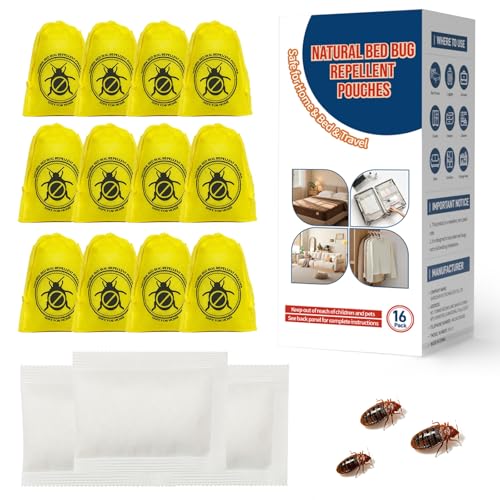
16 Pack Natural Bed Bug Repellent Pouches
These pouches serve a different role than any spray in this list. They are a deterrent and monitoring aid rather than a kill mechanism, placed in drawers, luggage, closets, and under bed frames to create a barrier of plant-based essential oils that bed bugs avoid. Owners who use them alongside a spray report fewer re-infestation events during the weeks between treatments.
- Passive protection with zero application effort, safe around kids and pets
- Sixteen pouches cover multiple rooms and travel scenarios in one purchase
- Not a killer spray; will not eliminate an active infestation on its own
Do not buy these as your primary solution. If bugs are already breeding in your mattress, pouches alone will not reduce the population. Pair them with a contact-kill spray for meaningful results.
Bed Bug Spray – Natural, Plant-Based Killer for Bed Bugs, Eggs & Nymphs (22 oz)
This product targets a specific buyer concern: treating a mattress or upholstered headboard without worrying about chemical residue pressed against skin all night. The formula is labeled fabric and mattress-safe, low-odor, and eco-friendly, addressing adults, eggs, and nymphs in a single application pass. The twenty-two-ounce size gives reasonable coverage for a queen mattress and box spring without transferring to a sprayer.
- Explicitly safe for direct mattress and fabric application
- Kills all three life stages including eggs in one pass
- Residual duration is shorter than synthetic-chemistry competitors
Skip this natural option if you are dealing with a heavy, well-established infestation on hard surfaces. The plant-based actives work best where contact is intimate and reapplication is practical, not where you need a chemical shield lasting weeks.
GoneNaturally Bed Bug Spray for Home, Mattresses, Headboards & Travel Bags (16oz)
GoneNaturally carves out a niche for sensitive-nose households and people who cannot tolerate even mild chemical or botanical fragrances on bedding. The scentless formulation is non-staining, works on mattresses, headboards, and travel bags, and covers eggs, nymphs, and dust mites alongside bed bugs. At sixteen ounces it sits between the travel-size aerosols and the full-gallon jugs in coverage per bottle.
- Completely scentless, suitable for fragrance-sensitive sleepers
- Broad-spectrum kill including dust mites, adding allergen-control value
- Smaller volume per bottle than the gallon formats, so larger spaces need multiple units
Move past GoneNaturally if your priority is maximum residual duration on baseboards and subfloor. The scentless botanical base trades longevity for sensory comfort, which is the right call for some households and not for others.
Buying Guide
Residual Duration and Reapplication Frequency
Residual kill is the single most important spec after contact efficacy. A spray that kills instantly but evaporates or degrades within hours forces you to treat the same crevice daily, which is unsustainable across multiple rooms. Look for products that advertise extended residual protection and note which surfaces the duration applies to, since foam on laminated wood behaves differently from liquid on fabric. The practical consequence: a longer-residual product lets you treat on a weekly or biweekly schedule rather than daily, reducing physical effort and total product consumption over the course of an infestation.
Egg and Nymph Coverage vs. Adult-Only Kill
Bed bug eggs take roughly six to ten days to hatch under normal room temperature. A spray that kills only mobile adults leaves the next generation untouched, guaranteeing you will see fresh bites within two weeks of treatment. Products explicitly labeled for egg kill break that cycle in a single pass. When reading labels, check whether the claim covers eggs, nymphs, and adults as separate statements rather than a blanket “kills bed bugs” that may only mean the adult stage.
Safety Around Fabrics, Mattresses, Children, and Pets
If you sleep in the treated bed every night, the safety profile is not optional. Mattress-safe formulations specify low toxicity to human skin, minimal volatile residue, and no staining on fabric. USDA Bio-Certification or equivalent third-party ratings provide an external verification layer. For households with crawling infants or curious pets, a non-toxic or botanical base with published safety data beats an aggressive synthetic that requires vacating the room for hours after each application.
Our Verdict
For the majority of households facing a confirmed active infestation, the Ortho Home Defense Max gallon offers the best balance of coverage, multi-pest labeling, and price per treated area. It handles the volume problem that defeats smaller cans. For buyers who need the longest possible residual hold and are willing to pay for it, Harris Toughest Bed Bug Killer justifies its premium with an extended kill window that reduces reapplication burden.
The budget pick is the Raid Max Foaming Spray at $11.18. Its foam delivery into cracks and crevices on hard surfaces punches well above its price, though it is not a fabric or mattress solution. If you must treat a mattress directly and cannot tolerate any scent, GoneNaturally wins that narrow condition over every other product on this list.
FAQ
Can bed bugs build resistance to natural sprays?
Resistance to botanical actives is possible but far less documented than pyrethroid resistance, which is widespread in urban bed bug populations. Products like EcoRaider specifically publish efficacy data against resistant strains to address this concern. The practical takeaway is that a certified plant-based spray tested against resistant populations is not the same as an uncertified “natural” product with no published kill data.
Do I need to treat the whole room or just the bed?
Bed bugs typically harbor within a few feet of where people sleep, so the bed frame, mattress seams, headboard, and nearby baseboards are priority zones. However, in multi-room dwellings or apartments with shared walls, bugs can migrate between units. Treating adjacent furniture, carpet edges, and electrical plate covers reduces the chance of re-introduction from untreated harborage sites.
How often should I reapply a spray with residual protection?
The answer depends entirely on the stated residual window and the surface you treated. Products advertising multi-week protection on hard surfaces need less frequent reapplication than those designed for fabric, which degrade faster through friction and cleaning. Always follow the label’s reapplication interval rather than assuming a single pass resolves the problem, since eggs that were chemically inaccessible at first application may hatch before the residual tail expires.
Are repellent pouches a substitute for killing sprays?
No. Repellent pouches create a deterrent zone that bugs prefer to avoid, but they do not kill existing populations. A pouch placed in a drawer with an active infestation may push bugs to the next drawer over, spreading the problem rather than reducing it. Pouches work best as a prevention layer in luggage or closets, or as a supplementary barrier alongside a verified kill spray during active treatment.