Key takeaways
- If you want to grow vegetables, herbs, or flowers at home and have limited ground space, you are probably choosing between a planter box and a raised garden bed. They look similar in photos, but they solve very different problems.…
What's inside
If you want to grow vegetables, herbs, or flowers at home and have limited ground space, you are probably choosing between a planter box and a raised garden bed. They look similar in photos, but they solve very different problems. A planter box is a contained, often portable container that sits on a patio, balcony, deck, or windowsill. A raised garden bed is a larger, open-bottom structure placed directly on the ground that gives plants deeper soil and more room to spread. Picking the wrong one means wasted money, poor harvests, or a setup that does not fit your lifestyle.
The core trade-off is this: planter boxes prioritize flexibility, small footprints, and clean looks for tight spaces, while raised garden beds prioritize growing capacity, soil health, and long-term yield. Your decision should come down to how much space you have, what you want to grow, and how long you plan to keep the setup in one place.
As an Amazon Associate we earn from qualifying purchases at no extra cost to you. Product prices and availability are accurate as of the date shown and are subject to change.


Quick Verdict
Choose a planter box if you live in an apartment, condo, or rental, have a balcony or small patio, want to grow herbs, lettuce, strawberries, or ornamental flowers, and need something portable, low-maintenance, and easy to move or store.
Choose a raised garden bed if you have a yard, patio with ground access, or dedicated garden area, want to grow root vegetables, tomatoes, peppers, or high-yield crops, and want deeper soil, better drainage, and a permanent growing station that improves year after year.
If you are on the fence and have at least 20 to 30 square feet of sunny ground-level space, a raised bed will give you more versatility for the money. If you have no in-ground space at all, a quality planter box is the clear winner.
Side by Side
| Feature | Planter Box | Raised Garden Bed |
|---|---|---|
| Typical Dimensions | 18 to 48 inches long, 8 to 16 inches wide, 6 to 12 inches deep; window boxes often 24 to 36 inches long | 4 to 8 feet long, 2 to 4 feet wide, 12 to 24 inches deep; common kit is 6x3x2 ft |
| Soil Depth & Root Space | 6 to 10 inches; ideal for shallow roots like herbs, lettuce, radishes, and flowers | 12 to 24 inches; supports deep roots like tomatoes, carrots, potatoes, and squash |
| Comfort & Accessibility | Elevated or railing-mounted; no bending, great for balconies and accessible gardening | Ground-level but raised 12 to 24 inches; reduces kneeling and bending compared to in-ground gardening |
| Durability & Materials | Plastic, wood, or resin; 3 to 7 years for plastic, 5 to 10 years for cedar or composite; lightweight at 3 to 15 lbs empty | Galvanized steel, cedar, or composite; 10 to 20+ years for galvanized metal, 10 to 15 years for cedar; 20 to 45 lbs per kit |
| Price Range | $15 to $60 for single boxes; multi-packs like a 10-pack of plastic window box planters around $28.99 | $19.99 to $120 for single beds; 2-pack large steel kits around $69.99 for two 6x3x2 ft beds |
| Maintenance | Low; rinse, check drainage holes, refresh potting mix annually; dries out faster and needs more frequent watering | Moderate; top up with compost each season, check for soil settling, less frequent watering due to larger soil volume |
| Space Needed | 2 to 8 square feet; fits balconies, windowsills, railings, and small patios | 12 to 50 square feet per bed; needs level ground, 6+ hours of sun, and room to walk around all sides |
| Look & Style | Neat, decorative, uniform; blends with outdoor furniture and apartment decor | Substantial, garden-focused; creates defined growing zones and a more traditional vegetable garden look |
| Resale & Longevity | Portable and renter-friendly; moves with you, no impact on property | Semi-permanent; can add curb appeal and perceived value to a home with an established garden area |
| Best For | Herbs, salad greens, strawberries, succulents, flowers, small-space gardening | Tomatoes, peppers, cucumbers, carrots, beans, high-yield and deep-rooted crops |
Where Planter Boxes Wins
Planter boxes win on convenience and control in tight spaces. Because they are self-contained with a solid bottom and drainage holes, you can place them anywhere that gets light without worrying about the existing soil quality. A balcony that gets 6 hours of afternoon sun is suddenly a viable herb garden.
Portability is the biggest advantage. A plastic window box planter that weighs 2 to 4 pounds empty can be moved for cleaning, rearranged for sun exposure, or taken with you when you move. That matters for renters who cannot build permanent structures. A 10-pack of window box planters, often priced around $28.99, makes it easy to line a railing or windowsill with matching containers for a uniform look without a large upfront investment.
They also offer cleaner aesthetics and less mess. Potting mix stays contained, water drains neatly, and you avoid the muddy borders that can come with ground-level beds. For flowers and decorative planting, boxes give you precise control over color and arrangement. You can mix a trailing petunia with upright herbs in a 36-inch box and create an instant centerpiece for a patio table.
Water and soil management is simpler at first. You fill with a bagged potting mix, not bulk garden soil, so you start with weed-free, well-draining media. The downside is that small soil volume dries out in 1 to 2 days in summer heat, so you will need to water more often, sometimes daily in July and August, and fertilize every 2 to 4 weeks since nutrients wash out quickly.
Where Raised Garden Beds Wins
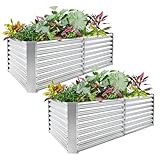
Raised garden beds win on growing power and soil health. The extra depth is not just for show. A 2-foot deep bed like the Land Guard 2 Pack 6x3x2 ft galvanized steel kit holds roughly 27 cubic feet of soil per bed, which keeps roots cool, retains moisture longer, and allows you to grow almost any vegetable. Deep-rooted plants that struggle or fail in a 8-inch planter box will thrive here.
Drainage and soil quality are superior. Because the bottom is open to the ground, excess water drains naturally while earthworms and beneficial microbes can move in. You can build a custom soil blend of topsoil, compost, and perlite that improves each year as you add 1 to 2 inches of compost each spring. Over time, this creates looser, more fertile ground than bagged potting mix alone.
Durability is another clear win, especially with modern metal designs. A GRS certified galvanized planter like the Rakukiri 5ft oval rot-resistant model at around $19.99 shows how affordable steel has become compared to wood. Galvanized steel will not rot, warp, or attract termites, and it tolerates freezing and thawing without cracking. With a proper coating, expect 15 to 20 years of use, versus 5 to 7 years for untreated wood.
Yield per square foot is also higher. A single 6×3 ft bed can produce 20 to 40 pounds of tomatoes, or 8 to 12 heads of lettuce per succession planting, in a single season with proper sun and watering. You also get ergonomic benefits. Working at 18 to 24 inches high means less bending and easier weeding, which is a major comfort factor for anyone gardening for more than 30 minutes at a time.
In 2026, the trend toward recycled and GRS certified materials has made metal beds both more sustainable and more attractive, with oval and rounded shapes that soften the industrial look and fit better on patios and in small yards.
Cost Over 5 Years
Upfront price can be misleading, so look at total cost including soil, water, and replacements.
Planter Boxes: A single plastic or resin box costs $15 to $40, or under $3 per box when buying a 10-pack around $28.99. You will need 0.5 to 1.5 cubic feet of potting mix per box at $8 to $15 per bag. Over 5 years, plan to replace potting mix annually ($15 to $30 per year for two to three boxes), add liquid fertilizer ($15 to $25 per season), and possibly replace one or two boxes if plastic becomes brittle from UV exposure. Five-year total for a small setup of 3 boxes: roughly $120 to $250.
Raised Garden Beds: A single galvanized bed starts as low as $19.99 for a 5ft oval model, while a larger 6x3x2 ft steel bed kit is typically $35 to $75 per bed, with 2-packs around $69.99 offering the best value. Soil is the bigger upfront cost: 20 to 36 cubic feet of raised bed mix at $6 to $10 per cubic foot, so $120 to $300 to fill one large bed. After that, annual maintenance is just 2 to 4 cubic feet of compost ($20 to $40) and minimal fertilizer. No replacement needed for a decade or more. Five-year total for one large bed: roughly $220 to $450, but with far greater harvest volume that offsets grocery costs.
Bottom line: planter boxes are cheaper to start and cheaper to abandon, while raised beds cost more on day one but cost less per pound of food grown over time.
Which One for Your Home
Small Apartment or Condo with Balcony
Choose planter boxes. You likely have 20 to 60 square feet of outdoor space, weight restrictions, and no permission to build on the ground. Look for boxes 24 to 36 inches long, 8 inches deep minimum, with built-in drainage and water trays to protect the balcony floor. Mount window boxes on railings and use rectangular planters along walls to maximize sun without blocking walkways. Grow herbs like basil, parsley, and mint, plus compact vegetables like cherry tomatoes and loose-leaf lettuce that do well in 6 to 10 inches of soil.
Family with Kids or Pets
Choose a raised garden bed. A sturdy galvanized steel bed with rounded edges and a height of 18 to 24 inches keeps soil contained, prevents trampling, and creates a clear boundary that helps kids understand where to play and where to plant. The larger soil volume is also more forgiving if watering is inconsistent. Place the bed where it gets 6 to 8 hours of sun and leave 24 to 36 inches of clearance on all sides for a wheelbarrow and for pets to pass without jumping in. An oval shape without sharp corners is helpful in high-traffic yards.
Rental Home or Temporary Living Situation
Choose planter boxes if you may move within 1 to 3 years. They require no assembly beyond adding soil, no ground leveling, and they leave no trace when you leave. A few well-planted boxes can still produce a steady supply of herbs and greens while keeping your security deposit safe. If you have a rental with a yard and a landlord who allows a small garden, consider a single low-cost galvanized bed around $19.99 that can be disassembled and taken with you, rather than investing in multiple large beds.
Long-Term Home with Yard
Choose raised garden beds. If you own your home and plan to garden for years, the durability, depth, and scalability of raised beds pay off. Start with one or two 6x3x2 ft beds and expand as you learn your sun patterns and crop preferences. You can grow rotation crops, add trellises for cucumbers and beans, and build healthy soil that gets better each season. For a polished look that lasts, invest in powder-coated galvanized steel or cedar and plan for a permanent location with good sun, level ground, and access to a hose.
FAQ
Can I use a planter box for vegetables or is it only for flowers?
You can grow vegetables in a planter box, but stick to shallow-rooted and compact varieties. Herbs, lettuce, spinach, radishes, strawberries, green onions, and bush beans do well in 8 to 10 inches of soil. For larger vegetables like full-size tomatoes, peppers, or carrots over 6 inches long, you need at least 12 to 18 inches of depth, which is where a raised garden bed is the better choice.
Do raised garden beds need a bottom liner?
No, most raised beds are open at the bottom and sit directly on soil or grass. This improves drainage and lets roots access the ground below. Use landscape fabric or hardware cloth only if you need to block weeds or burrowing pests like gophers. For patios or decks, place a liner or base to protect the surface, but ensure it still allows drainage so roots do not sit in water.
How much sun do both options need?
Most vegetables and herbs need 6 to 8 hours of direct sun per day. Flowers vary, but many annuals need at least 4 to 6 hours. Place both planter boxes and raised beds in your sunniest spot, ideally south-facing. If you only have 3 to 4 hours of sun, focus on shade-tolerant crops like lettuce, mint, parsley, and impatiens rather than sun-loving tomatoes or peppers.
Which is easier to maintain for beginners?
Planter boxes are easier in the first month because they are smaller and have fewer weeds, but they require more frequent watering and feeding because the soil dries out and loses nutrients quickly. Raised beds need more effort to set up and fill, but after that they hold moisture better, need less daily attention, and produce more food with less fuss. For a beginner who wants to learn without daily watering, a single raised bed is often more forgiving over a full summer.