Key takeaways
- Choosing between polyurethane and concrete garden fountains is less about which material is universally “better” and more about how the fountain must fit your home. A lightweight polyurethane fountain may be easier to carry upstairs, reposition, and install on a…
What's inside
Choosing between polyurethane and concrete garden fountains is less about which material is universally “better” and more about how the fountain must fit your home. A lightweight polyurethane fountain may be easier to carry upstairs, reposition, and install on a small patio. Concrete, including fiber-reinforced concrete, generally offers a more substantial appearance and greater resistance to being nudged or blown over. The trade-off is weight, installation effort, and sometimes a higher purchase price.
Think about the fountain’s location, the people and animals around it, the amount of maintenance you will tolerate, and whether you expect to move within a few years. A tabletop or compact 24-inch fountain presents very different demands from a 48-inch, three-tier centerpiece. This guide compares polyurethane vs concrete garden fountains so you can make a practical choice for your space in 2026.
As an Amazon Associate we earn from qualifying purchases at no extra cost to you. Product prices and availability are accurate as of the date shown and are subject to change.


Quick Verdict
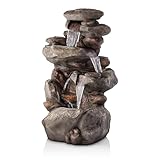
Choose polyurethane if you want a lightweight, affordable fountain for an apartment balcony, rental home, small patio, or location where one person may need to move it. Polyurethane fountains are typically molded to imitate stone, slate, or carved architectural details. They are also less demanding to install because many models can sit on a level, reinforced surface without specialized equipment.
Choose concrete if you want a permanent focal point with a convincingly solid, traditional appearance. Concrete and fiber-reinforced concrete fountains are usually better suited to larger yards, exposed areas, and homes where the fountain will remain in one place for many years. They can be difficult to relocate, however, and an oversized model may require careful attention to the patio or foundation beneath it.
Side by Side
| Factor | Polyurethane fountain | Concrete fountain |
|---|---|---|
| Comfort | Light enough for easier delivery, assembly, and repositioning; many compact models weigh about 10–40 pounds. | Stable and substantial, but a medium or large model may weigh 100–400 pounds or more. |
| Durability | Resists chipping and is less likely to crack from a minor impact, though finishes can fade, scratch, or peel. | Excellent long-term solidity, but it can chip or crack from impact, freezing water, or movement on an uneven base. |
| Price range | About $100–$700 for many residential models, with larger or highly detailed versions costing more. | About $250–$2,000 or more; size, craftsmanship, and fiber reinforcement have a major effect on price. |
| Maintenance | Clean the basin, pump, and finish; repainting may eventually be necessary. | Clean the basin and pump; seal porous surfaces when appropriate and inspect for cracks or scale. |
| Space needed | Often works in footprints around 18–30 inches wide and on reinforced balconies or decks. | Commonly needs a firm, level footprint of 24–48 inches or more, plus room around the basin. |
| Look | Consistent molded details and convincing faux-stone finishes, but close inspection may reveal a less authentic texture. | Natural variation, visual heft, and a classic stone or masonry appearance. |
| Resale | Portable and easy to include with a move, but usually adds little value to a property. | Can strengthen the visual appeal of a landscaped yard when well placed, though it is rarely a direct return on investment. |
| Best for | Renters, balconies, small patios, frequent movers, and buyers prioritizing easy handling. | Long-term homeowners, larger yards, formal gardens, and high-traffic areas needing a stable centerpiece. |
Where Polyurethane Wins
Easy handling is the biggest advantage. A polyurethane fountain can often be carried by one or two people rather than delivered with a pallet jack or several helpers. That matters when the fountain must travel through a narrow gate, up stairs, or across a deck. If you rearrange outdoor furniture seasonally, a lighter fountain is much less frustrating.
Polyurethane also makes sense where weight is a concern. A balcony or elevated deck should never receive a heavy fountain without confirming that the structure can support the load. A 20-gallon basin adds roughly 167 pounds of water before the fountain itself, so even a lightweight unit can become surprisingly heavy when full. Smaller polyurethane models with 1–5 gallon reservoirs are easier to manage, although the pump may need more frequent refilling in hot weather.
Many polyurethane fountains cost less than comparable decorative concrete pieces. Budget models commonly begin around $100–$200, while larger multi-level versions may fall between $300 and $700. The material can be molded into ornate patterns without the labor associated with carving or casting heavy masonry. It also tends to tolerate a bump from a chair, garden tool, or pet better than brittle decorative concrete.
Another benefit is design flexibility. Polyurethane may imitate aged limestone, dark slate, copper, or painted ceramic. If the finish becomes tired, it can often be cleaned and recoated with a compatible exterior product. For example, a water-based finish such as Varathane Water-Based Ultimate Satin Polyurethane, priced at $13.49, or the gloss version at $11.99, may be useful for certain compatible decorative surfaces. These are protective finishing products—not complete fountain materials—and the label should confirm suitability for outdoor use, water exposure, and the fountain’s existing coating before application.
The compromises are mainly cosmetic and long-term. Direct sun can fade a finish, and thin molded sections may feel less convincing than solid stone. A light fountain may also need a wider base, a small amount of ballast, or a sheltered position in a windy yard.
Where Concrete Garden Fountains Wins
Concrete wins on presence. A large basin, broad pedestal, or three-tier design looks anchored to the landscape rather than placed on it. The natural variations in texture and color can complement brick, stone paths, mature planting, and traditional architecture particularly well.
Its weight is also an advantage in many yards. A stable fountain is less likely to shift when a child leans against it, a dog brushes past it, or a gust hits a tall tiered structure. That does not make it automatically childproof or tipproof: a fountain still needs a level, load-bearing base, and its basin should not create an unsafe climbing opportunity.
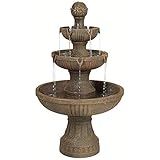
Modern fiber-reinforced concrete can reduce some of the weight associated with traditional cast concrete while retaining a masonry-like finish. For scale, Naturefalls lists 48-inch and 51.5-inch three-tier outdoor fountains made from fiber-reinforced concrete at $449.99 and $450.77, respectively. A fountain around four feet tall needs more than a tiny patio corner: allow room for the footprint, electrical cord routing, splash control, and access for cleaning.
Concrete does require more planning. Set it on a stable pad rather than loose soil, and make sure the surface drains away from walls and foundations. In climates with freezing temperatures, drain the basin and follow the manufacturer’s winter instructions. Water that freezes inside cracks or porous areas can cause damage. Mineral deposits may also show more clearly on pale concrete, so periodic cleaning with a manufacturer-approved method is worthwhile.
Cost Over 5 Years
The purchase price is only part of the calculation. A small polyurethane fountain might cost $150–$350, with a replacement pump costing roughly $20–$60 if needed. Electricity is usually modest: a 15-watt pump running continuously uses about 131 kilowatt-hours per year, while a 40-watt pump uses about 350 kilowatt-hours. At $0.16 per kilowatt-hour, that is approximately $21–$56 annually, before considering seasonal operation.
Over five years, a $250 polyurethane fountain, one $40 pump replacement, and $105–$280 in electricity could produce an approximate total of $395–$570. Add occasional cleaner, paint, or sealant as needed. Actual costs depend on local utility rates and whether you run the pump 24 hours a day.
A $500 concrete or fiber-reinforced concrete fountain with the same pump use could total about $645–$820 over five years after one replacement pump and electricity. Delivery, a reinforced pad, professional placement, or winter storage can raise that figure substantially. Concrete may last longer physically, but longevity depends on drainage, climate, construction quality, and maintenance—not simply the label on the material.
Which One for Your Home
Small apartment
Choose a compact polyurethane fountain, preferably under 30 inches wide and with a modest reservoir. Confirm balcony rules, electrical access, and the structure’s load limit. Use a waterproof tray or splash mat, and select a quiet pump so the water feature does not disturb neighbors.
Family with kids or pets
A stable concrete fountain is often the better choice for a ground-level yard, provided it has a broad base and no easily accessible sharp edges. Keep the water shallow where possible, secure cords, and supervise children and pets. If the fountain will sit on a deck, polyurethane may be safer structurally because of its lower empty weight, but the filled weight still requires checking.
Rental
Polyurethane is the practical winner. It can be moved when the lease ends, does not usually require a permanent pad, and is easier to position without altering landscaping. Pick a model small enough to transport through doors and stairs, and protect the surface beneath it from standing water.
Long-term home
Concrete is compelling for a permanent garden feature, especially beside a walkway, pool terrace, or formal planting bed. Measure access before ordering: a fountain that fits the final location may not fit through a gate. If delivery or structural work is difficult, a fiber-reinforced model can provide a middle ground between traditional concrete and lightweight resin.
FAQ
Is polyurethane better than concrete in cold weather?
Not automatically. Polyurethane is less vulnerable to cracking from impact and some freeze-thaw stresses, but its paint or exterior coating can still deteriorate. Concrete requires especially careful winter preparation: remove standing water, drain the pump, and follow the manufacturer’s instructions for freezing conditions.
Do concrete fountains use more electricity?
No. Electricity is determined primarily by the pump’s wattage, water lift, and operating schedule, not by whether the basin is concrete or polyurethane. A 15-watt pump generally uses much less power than a 40-watt pump, regardless of fountain material.
Can a polyurethane fountain look like real stone?
Yes, particularly from a few feet away. High-quality molding can reproduce layered rock, carved basins, and weathered finishes. Concrete usually looks and feels more authentic up close, while polyurethane offers more consistent color and easier refinishing.
Does concrete last longer than polyurethane?
It can, when properly supported and protected from freezing water, but material alone does not guarantee a longer life. A well-maintained polyurethane fountain may remain attractive for many years, while poorly installed concrete can crack early. Location, drainage, finish quality, and pump care matter just as much.