Key takeaways
- Using thin wire directly on stems: Wire can girdle a vine as it expands. If wire is necessary, use it to create a support line and attach the plant with soft ties.
- Overloading a lightweight arbor: Leaves, flowers, fruit, and rain can add substantial weight. A decorative arbor may not be suitable for a vigorous woody vine.
- Making ties too tight: Check young vines at least every two weeks during rapid growth. Replace restrictive ties immediately.
- Training only the top: A vine that is attached at the roof but unsupported below can whip in wind and loosen the structure.
- Ignoring mature dimensions: Planting a vine that can grow 20 to 30 feet long beside a narrow arbor guarantees frequent pruning and may shorten the structure’s life.
- Pruning at the wrong time: Some vines flower on old wood, while others flower on new growth. Confirm the plant’s pruning schedule before making a major cut.
- Blocking the entry: Keep growth at least several inches away from the walking path, lights, gates, and door hardware.
Training a vine on an arbor can turn a plain garden entrance into a leafy tunnel, but the wrong approach can leave you with broken stems, a leaning structure, or a dense tangle that blocks doors and walkways. Vines need early guidance, steady support, and enough room for air to circulate. If you wait until flexible shoots become woody, forcing them into place can cause cracking or permanent kinks.
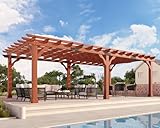
The best time to begin is soon after planting, when new growth is soft and easy to redirect. Whether you are working with a wooden arbor such as the 7-foot Outvita Dark Brown Garden Arbor Arch Trellis, priced around $102.99, or the Giantex 7-foot Wooden Garden Arbor Trellis, priced around $99.99, inspect the structure first. It should be firmly anchored, level, and strong enough to carry the mature vine. The following method works for flowering vines, annual climbers, and many fruiting vines, with adjustments for each plant’s growth habit.
As an Amazon Associate we earn from qualifying purchases at no extra cost to you. Product prices and availability are accurate as of the date shown and are subject to change.


What You Need
| Item | Why | Optional? |
|---|---|---|
| Soft plant ties | Secure stems without cutting into expanding growth. Choose stretchy ties, hook-and-loop strips, or strips of old T-shirt fabric. | No |
| Hand pruners | Remove damaged growth and shorten shoots that are heading in the wrong direction. | No |
| Garden gloves | Protect hands from thorns, rough bark, sap, and splinters. | No |
| Measuring tape | Helps space ties and check that the vine is not crowding the walkway or roofline. | Optional |
| Extra trellis netting or wire | Provides additional horizontal or vertical attachment points when the arbor has wide openings. | Optional |
| Compost or balanced fertilizer | Supports healthy growth when soil nutrients or organic matter are low. | Optional |
| Stakes and concrete or anchor hardware | Stabilizes a freestanding arbor, especially in windy locations or with heavy perennial vines. | Optional |
Step-by-Step
1. Check the arbor and planting location (20 to 30 minutes)
Before touching the vine, confirm that the arbor is secure. A 7-foot arbor should be anchored according to the manufacturer’s instructions, with enough clearance for people to pass comfortably beneath it. As a general guide, allow at least 6 feet 8 inches of headroom after accounting for the vine’s leaves and flowers. Check for loose screws, cracked wood, wobbling posts, or fasteners that protrude into the planting area.
Make sure the vine is planted far enough from each post that its root ball has room to expand. A spacing of about 8 to 18 inches from the base of the arbor is common, depending on the plant and soil. Do not plant directly against a post if doing so would keep the crown constantly wet or make future maintenance impossible.
2. Identify the vine’s strongest shoots (10 minutes)
Look for two to four healthy stems emerging from the base. These will become the main framework. Remove weak, broken, crossing, or diseased growth with clean pruners. Do not strip away every side shoot; leaves power the plant and help it establish.
Research the vine’s mature size before training it. A fast-growing perennial such as wisteria can become extremely heavy, while a light annual climber may need only a few attachment points. If the plant can eventually weigh several dozen pounds when wet, the arbor must have sturdy posts and crosspieces rather than narrow decorative slats alone.
3. Choose the climbing direction (10 to 15 minutes)
Decide whether the vine will climb one side, both sides, or a single central post before spreading over the top. For balanced coverage, guide one or two main stems up each side. Keep the central passage open, and avoid directing all growth toward one corner, which can pull unevenly on the arbor.
For a vine that naturally twines, position the stem around the post or a horizontal support. For a vine with tendrils, offer thin wires, netting, or narrow crosspieces it can grab. Clinging vines may attach directly to a surface, but they still benefit from initial guidance.
4. Attach the main stems loosely (15 to 20 minutes)
Place the first tie about 6 to 8 inches above the soil, then add ties every 12 to 18 inches as the stem climbs. Use a loose figure-eight loop: one loop around the support and one around the stem, with a crossing section between them. This keeps the stem from rubbing directly against the arbor and leaves room for growth.
Do not tie every leaf stem or side branch. The goal is to secure the main framework while allowing new shoots to move naturally. Leave approximately 1/2 inch of extra space inside each tie. Recheck ties regularly because a loop that is loose today can become restrictive within a few weeks.
5. Train new shoots sideways (15 minutes per session)
Once a main stem reaches the top third of the arbor, bend it gently along a horizontal support. Horizontal training encourages side shoots to grow along the arch instead of sending one long, bare runner straight upward. Make gradual bends rather than sharp angles. If a stem resists, guide it in a series of small changes over several days.
Space major stems about 8 to 12 inches apart where possible. This creates a framework for leaves and flowers without producing a solid, damp mass. On a broad arbor, alternate stems from side to side so the weight remains distributed.
6. Redirect or prune unwanted growth (10 to 20 minutes)
During the growing season, redirect shoots that cross the walkway, wrap around nearby plants, or point away from the arbor. If a shoot is still green and flexible, untie it and reposition it. If it has become woody, prune it back to a healthy side branch or bud rather than forcing it.
Remove dead leaves and congested growth from the interior of the arch. Aim for enough coverage to shade the structure while preserving visible gaps between stems. Better airflow helps foliage dry more quickly after rain and makes it easier to spot pests.
7. Finish with a seasonal inspection (15 to 30 minutes)
After the first major flush of growth, inspect every tie, joint, and anchor. Replace ties that have stretched, loosened, or begun to cut into stems. Look beneath the arbor for new suckers or runners that are traveling along the ground. Water deeply at the root zone rather than wetting the foliage repeatedly, and add a 2- to 3-inch layer of mulch without piling it against the stem.
Mistakes to Avoid
- Using thin wire directly on stems: Wire can girdle a vine as it expands. If wire is necessary, use it to create a support line and attach the plant with soft ties.
- Overloading a lightweight arbor: Leaves, flowers, fruit, and rain can add substantial weight. A decorative arbor may not be suitable for a vigorous woody vine.
- Making ties too tight: Check young vines at least every two weeks during rapid growth. Replace restrictive ties immediately.
- Training only the top: A vine that is attached at the roof but unsupported below can whip in wind and loosen the structure.
- Ignoring mature dimensions: Planting a vine that can grow 20 to 30 feet long beside a narrow arbor guarantees frequent pruning and may shorten the structure’s life.
- Pruning at the wrong time: Some vines flower on old wood, while others flower on new growth. Confirm the plant’s pruning schedule before making a major cut.
- Blocking the entry: Keep growth at least several inches away from the walking path, lights, gates, and door hardware.
How Often
Inspect the vine every one to two weeks during spring and summer, when new shoots can lengthen quickly. Redirect flexible growth during each visit and check whether ties still have room. Water according to the plant, soil, and weather; newly planted vines may need a deep watering one to two times per week during dry periods, while established plants often need less frequent irrigation.
Prune lightly whenever damaged or misplaced growth appears. Plan a more substantial seasonal pruning according to the vine’s type, usually in late winter, after flowering, or in early spring. Inspect the arbor at least twice a year and after severe wind, heavy snow, or an ice storm.
When to Call a Pro or Replace
Ask an arborist, landscaper, or qualified contractor for help if a mature vine has pulled posts out of alignment, lifted footings, cracked beams, or become too heavy to handle safely from a ladder. Professional advice is also worthwhile when the plant is a large woody climber near power lines, gutters, roofs, or utility equipment.
Replace the arbor if posts are rotting at ground level, crosspieces are split, fasteners no longer hold, or the structure sways significantly when pushed lightly. Do not add a heavier vine to compensate for a weak frame. Remove or severely cut back the plant first, support its root zone during the transition, and install the new arbor before retraining the stems.
FAQ
What is the best way to attach a vine to a wooden arbor?
Use soft, flexible ties in a loose figure-eight pattern. Attach the main stems every 12 to 18 inches, leaving room for expansion. Let tendrils or twining stems grip thin supports, but do not rely on them to stabilize a heavy plant immediately.
Can I train an established vine that is already tangled?
Usually, yes, but proceed gradually. Remove dead and clearly misplaced growth first, then separate flexible stems. Avoid ripping mature branches from the arbor. If untangling would split the wood or damage most of the vine, prune in stages over more than one season.
How long does it take for a vine to cover an arbor?
Annual vines may provide noticeable coverage within one growing season. Perennial vines commonly need two to four years to create a full framework, depending on sunlight, water, soil, climate, and mature size. Faster coverage is not always better; unchecked growth can create excessive weight and poor airflow.
Should a vine be trained over the entire top of the arbor?
It can be, provided the arbor is rated for the mature plant and remains stable. Leave some open space for ventilation, and distribute stems across the top rather than piling them in one section. Trim growth that hangs into the passage or presses against nearby structures.