Key takeaways
- Airflow disruption. Propane and misting repellers rely on a vapor or droplet cloud drifting through the air. Any crosswind over about 5 mph pushes that cloud sideways instead of settling over your seating area, cutting effective coverage by roughly half.
- Obstructions. Furniture, planters, and railings break up the cloud’s spread. A deck packed with a dining set and umbrella base loses more usable radius than an empty slab.
- Height placement. Repellent vapor is often heavier than air and sinks. Units mounted too high (common with lantern-style propane repellers) let the active ingredient settle below where people are sitting, so the “radius” on the box doesn’t translate to protection at head or ankle height.
What's inside
The best outdoor pest repeller for a patio depends almost entirely on your space: propane-fueled units genuinely cover open 400 sq ft patios but need refills and calm air, plug-in and misting systems suit covered 10×12 ft decks where wiring or water access is easy, and butane-cartridge repellers split the difference for portable use on uncovered decks without outlets. The advertised coverage numbers on packaging are almost always best-case figures measured in still air with no obstructions, so the real-world radius you get is usually 30-50% smaller.
As an Amazon Associate we earn from qualifying purchases at no extra cost to you.

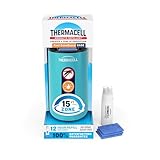


How the Four Main Types Actually Compare
Here’s how claimed coverage stacks up against realistic usable coverage, along with the ownership costs that don’t show up on the box.
| Type | Advertised Coverage | Realistic Usable Coverage | Wind Tolerance | Typical IP Rating | Seasonal Refill Cost |
|---|---|---|---|---|---|
| Propane (thermacell-style burner) | Up to 3,000 sq ft | 500-1,000 sq ft in open air | Poor above 5-8 mph; plume drifts off target | IPX4 (splash resistant, not submersible) | $60-$120 (propane canisters + repellent cartridges) |
| Butane cartridge (compact clip-on/lantern style) | Up to 225-450 sq ft | 100-150 sq ft, better in semi-enclosed spots | Moderate; works in light breeze under cover | IPX4 | $40-$80 (butane cartridges + repellent mats) |
| Misting system (timed spray around perimeter) | Up to 1,500-3,000 sq ft perimeter | Effective zone is a 3-6 ft band along the mist line, not the whole yard | High when nozzles are low and shielded | IPX5-IPX6 (hose-connected units are weather-tolerant) | $80-$180 (concentrate refills, more with multiple tanks) |
| Plug-in / electric (UV trap or repellent diffuser) | Up to 300-625 sq ft (indoor-rated figure often reused outdoors) | 150-250 sq ft, only under roof cover and near an outlet | N/A – must stay dry and sheltered | IPX4-IPX5 for outdoor-rated models only | $20-$50 (replacement cartridges or bulbs) |
Why Advertised Radius Rarely Matches Reality
Manufacturers measure “coverage area” in controlled conditions: no wind, no furniture, no plants breaking up airflow, and often indoors for a baseline reading that gets applied to an outdoor use case. Three things shrink that number on an actual patio:
- Airflow disruption. Propane and misting repellers rely on a vapor or droplet cloud drifting through the air. Any crosswind over about 5 mph pushes that cloud sideways instead of settling over your seating area, cutting effective coverage by roughly half.
- Obstructions. Furniture, planters, and railings break up the cloud’s spread. A deck packed with a dining set and umbrella base loses more usable radius than an empty slab.
- Height placement. Repellent vapor is often heavier than air and sinks. Units mounted too high (common with lantern-style propane repellers) let the active ingredient settle below where people are sitting, so the “radius” on the box doesn’t translate to protection at head or ankle height.
Worked Example: Matching Coverage to Two Common Spaces
A 10×12 ft covered deck is 120 sq ft. A propane unit rated for 1,000+ sq ft is overkill here and wastes fuel maintaining a cloud that has nowhere to disperse — a butane cartridge unit or a plug-in diffuser rated for 150-250 sq ft matches the space almost exactly, and the covered structure also protects it from wind and rain, letting you use a lower IP-rated unit.
An open 400 sq ft patio with no roof is a different calculation. Even a propane unit’s realistic 500-1,000 sq ft range gives you margin, but only if you place it upwind of the seating zone and accept that on breezy evenings (above 8 mph) you’ll likely need to reposition it or supplement with a second unit at the opposite corner. A single plug-in or butane device would leave most of that square footage unprotected.
Quick Decision Matrix
| Your Situation | Best-Suited Type | Why |
|---|---|---|
| Covered 10×12 ft deck, outlet nearby | Plug-in diffuser | Sheltered space fits its limited coverage; no fuel to buy or store |
| Covered or uncovered small deck, no outlet | Butane cartridge unit | Portable, no wiring needed, coverage matches a compact footprint |
| Open 400 sq ft patio, calm evenings typical | Propane burner | Only type with genuine coverage for larger open areas |
| Open patio bordering lawn/garden, windy site | Misting perimeter system | Targets the approach zone rather than relying on a drifting cloud |
| Budget-conscious, occasional weekend use | Butane cartridge or plug-in | Lower upfront cost and cheaper consumables than propane or misting setups |
| Frequent entertaining, large groups | Misting system or two propane units | Sustained, wider coverage holds up better with more people moving through the space |
Refill Cost Per Season, Broken Down
Assuming roughly 15 weekends of use across a warm-weather season:
- Propane: each 12-hour propane canister plus a repellent cartridge typically runs $4-$8 per use session. Over 15 sessions, that’s $60-$120, matching the table above.
- Butane cartridge: cartridges plus mats cost less per session, around $3-$5, since the units cover less volume and burn less fuel. Total seasonal cost lands at $40-$80.
- Misting systems: concentrate refills are bought in bulk (quart or gallon jugs) and diluted, which is why they’re cheaper per treated area, but tank refills and occasional nozzle cleaning solution push the seasonal total to $80-$180.
- Plug-in units: replacement cartridges or UV bulbs are the main cost, and because the units run continuously rather than per-session, cost is more about how often you swap cartridges (usually monthly) than how often you entertain.
Ownership Realities: What Wears Out First
- Propane units: the piezoelectric igniter is usually the first failure point, often within 1-2 seasons of regular use. The heating element that vaporizes the repellent mat also degrades and can scorch unevenly if left on too long per session.
- Butane units: the fuel valve and the small mesh screen that disperses vapor tend to clog with repellent residue; wiping the mesh after every few uses prevents uneven output.
- Misting systems: nozzles clog if the concentrate isn’t diluted properly or if the system sits unused for weeks, which is the most common complaint. Flushing the line with plain water at the end of the season prevents this.
- Plug-in units: fans and UV bulbs (on trap-style models) have the shortest lifespan, often rated for one season of nightly use before output drops noticeably.
Across all four types, the most common mistake is leaving units running during rain or heavy dew without checking the IP rating. An IPX4 unit tolerates splashing but not pooling water, and corrosion inside the fuel or electrical housing is a frequent reason units fail early.
Bottom Line
Match the device to the space, not the biggest number on the package. A covered 10×12 ft deck does fine with a plug-in or butane unit at a fraction of the running cost, while an open 400 sq ft patio genuinely needs propane-level output or a misting perimeter to get real protection, especially once wind enters the picture.