Key takeaways
- Height caps: Most municipalities cap front-yard fences at 36–48 inches; 42 inches is a common maximum. Fences under 30 inches often need no permit at all.
- Sight triangles: Within the triangle at driveway entrances and street corners (typically 10–20 feet back), fences are commonly restricted to 30 inches or required to be at least 50% open — which is why open styles dominate front yards.
- HOA approved lists: Aluminum picket is the most commonly pre-approved style. Hog-wire is the risk: some HOAs classify it as agricultural fencing and prohibit it outright. Check before falling in love with the look.
- Setbacks and utilities: Confirm your property line (a survey, not the neighbor’s fence) and call 811 for a utility locate before digging any post hole.
For most front yards, the best decorative fence is a 36- to 48-inch open-style design — wood picket, vinyl picket, ornamental aluminum, or framed hog-wire — because each marks the boundary without walling off the house. The right pick comes down to four variables: your HOA’s approved-style list, the height cap in your local code, how much maintenance you’ll honestly do, and installed cost per linear foot. Here’s how the four styles stack up.
Our top picks


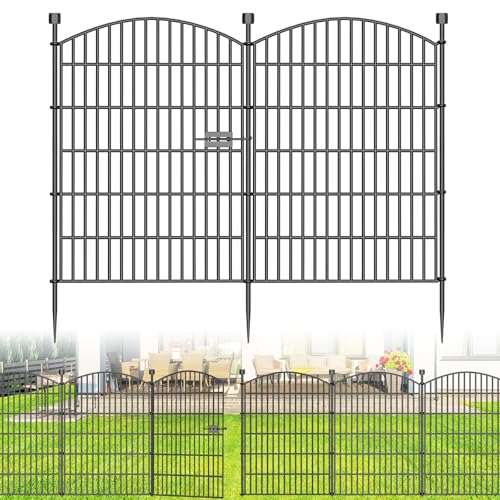
As an Amazon Associate we earn from qualifying purchases at no extra cost to you.
Check the Rules Before You Pick a Style
Front-yard fencing is the most regulated fencing on a property, so confirm limits before pricing materials:
- Height caps: Most municipalities cap front-yard fences at 36–48 inches; 42 inches is a common maximum. Fences under 30 inches often need no permit at all.
- Sight triangles: Within the triangle at driveway entrances and street corners (typically 10–20 feet back), fences are commonly restricted to 30 inches or required to be at least 50% open — which is why open styles dominate front yards.
- HOA approved lists: Aluminum picket is the most commonly pre-approved style. Hog-wire is the risk: some HOAs classify it as agricultural fencing and prohibit it outright. Check before falling in love with the look.
- Setbacks and utilities: Confirm your property line (a survey, not the neighbor’s fence) and call 811 for a utility locate before digging any post hole.
The Four Styles at a Glance
| Style | Typical heights | Installed cost / linear ft | Upkeep | Expected lifespan | Openness |
|---|---|---|---|---|---|
| Wood picket | 36–48 in | $15–$35 | Stain or seal every 2–3 years | 15–20 yrs | High |
| Vinyl picket | 36–48 in | $25–$45 | Occasional wash | 20–30 yrs | High |
| Ornamental aluminum | 36–54 in | $30–$60 | Near zero | 25–30+ yrs | Very high |
| Framed hog-wire | 36–48 in | $20–$40 | Frame stain; inspect welds | 15–25 yrs | Very high |
How Each Style Behaves in a Real Front Yard
Wood picket
The charm benchmark. Cedar pickets (3.5 or 5.5 inches wide, spaced 1.5–2.5 inches apart) on pressure-treated rails give you full control over spacing, tops, and paint color — nothing else is as customizable. The tradeoff is upkeep: rot starts at the grade line and where pickets meet rails, and you’ll restain or repaint every two to three years. Posts typically fail before pickets do.
Vinyl picket
The same silhouette with no painting. Better lines use routed rails with an aluminum insert in the bottom rail to prevent sag. The downsides: budget PVC chalks and yellows in sun, panels crack from mower impacts or hard knocks in extreme cold, and color options are limited — once you buy white, you’re committed. No-dig systems like WamBam and Zippity make this the most DIY-friendly option for purely decorative borders, though they’re lighter-duty than post-and-concrete installs.
Ornamental aluminum
Powder-coated pickets (usually 5/8- to 3/4-inch square) with the least visual bulk of any style — from the street it nearly disappears, which is exactly what many HOAs want. Rackable panels from lines like ActiveYards, Barrette Outdoor Living, and Veranda follow moderate slopes without stepping. At 42–48 inches it’s the sweet spot for pet containment plus curb appeal. It’s the priciest per foot, and the gate hinges and latch are the parts that actually wear.
Framed hog-wire
Welded 4-gauge wire panels with 4×4-inch openings (2×4 mesh exists for small dogs) set into wood or steel frames — the modern-farmhouse look that’s surged in recent years. It preserves views better than anything except aluminum. Two realities: cut ends and weld points rust first unless you buy galvanized-after-weld or PVC-coated panels, and climbing plants will treat it as a trellis whether you planned that or not.
Match the Fence to Your Situation
| Your situation | Best pick | Why |
|---|---|---|
| Lowest upfront spend, willing to DIY | Wood picket | Cheapest materials; forgiving to build on-site |
| Zero-maintenance priority | Aluminum | Powder coat outlasts vinyl’s surface; no rot, no chalking |
| White picket look without painting | Vinyl | Classic profile, hose-it-off upkeep |
| Corner lot or view worth keeping | Hog-wire or aluminum | Near-invisible sight lines; clears sight-triangle rules |
| Strict HOA | Aluminum | Most commonly pre-approved style; verify the list first |
| Small dogs | Aluminum puppy-picket or 2×4 hog-wire | Tight bottom spacing stops slip-throughs |
| Sloped frontage | Rackable aluminum or stepped wood | Panels follow grade without gaps |
| Windy, exposed lot | Any open style | Wind passes through; solid panels act as sails |
What a Typical Front-Yard Run Really Costs
Take a common job: 50 linear feet of fence plus one walk gate, at mid-range installed pricing:
| Style | 50 ft installed | Walk gate | Total | Lifespan | Cost per service year |
|---|---|---|---|---|---|
| Wood picket | $1,250 | $250 | $1,500 | 15–20 yrs | $75–$100 |
| Vinyl picket | $1,750 | $300 | $2,050 | 20–30 yrs | $68–$103 |
| Aluminum | $2,250 | $400 | $2,650 | 25–30+ yrs | $88–$106 |
| Hog-wire | $1,500 | $350 | $1,850 | 15–25 yrs | $74–$123 |
The counterintuitive takeaway: once you amortize wood’s stain-and-seal cycle (roughly $40–$70 per year DIY, more if hired out), the cheapest fence to buy is often the most expensive to own. Vinyl and aluminum win on cost per service year precisely because their upkeep line is near zero.
Ownership Realities: What Wears First
- Posts fail before panels on every style. Set them in concrete sloped away from the post (or a gravel base for drainage), and below the frost line where winters demand it. Most “bad fences” are actually bad post installs.
- Wood: Rot starts at the grade line. Use hot-dip galvanized or stainless fasteners — standard screws leave rust streaks down pickets within a season.
- Vinyl: Bottom rails crack from string trimmers and mower decks. Run a mulch bed or mowing strip along the fence line.
- Aluminum: Coating chips at gate latch contact points. A touch-up pen fixes it; hinges and latches are the only true consumables.
- Hog-wire: Cut ends rust first. Seal them with cold-galvanizing spray at install, and pay extra for galvanized-after-weld panels if the budget allows.
- The universal mistake: Building a tall or solid fence in front. It violates most codes, kills the charm you were paying for, and can be ordered removed entirely.
FAQ
How tall can a decorative front-yard fence be?
Typically 36–48 inches depending on your municipality, dropping to about 30 inches inside sight triangles at driveways and corners. Purely ornamental edging under 30 inches rarely needs a permit.
Can I mix fence styles on one property?
Yes — it’s the standard approach. Most homeowners run an open decorative style across the front, then transition to a taller privacy style along the sides and back, usually switching materials at the front corner post.
Will a decorative fence keep my dog in?
For calm dogs, 42–48 inches works. The gap that matters is picket spacing: measure your dog’s head width and keep gaps under it, or choose aluminum puppy-picket panels or 2×4-inch hog-wire mesh for small breeds.
Does a decorative front fence add resale value?
Modestly — through curb appeal rather than appraised square footage. A straight, code-compliant fence reads as well-maintained; a leaning wood fence with peeling paint reads as deferred maintenance and can hurt the first impression instead.