Key takeaways
- 1. Flanking planters. Symmetry does the heavy lifting. For a standard 36 in door, use pots at least 18 in in diameter and roughly a third of the door height (24–28 in for an 80 in door). Fiberglass and resin composites are light but need drainage holes so trapped water can’t freeze and crack them; powder-coated aluminum won’t rust; cast concrete stays put in wind. Match the finish to your door hardware.
- 2. Layered doormat. A flat-weave polypropylene rug (UV- and mildew-resistant) under a top mat adds pattern for under $90. Skip coir in rainy climates — it sheds and mildews within a season. Recycled rubber mats survive wet weather far better.
- 3. Wreath or door accent. Choose UV-treated faux greenery or preserved materials rated for outdoors; untreated natural wreaths fade in weeks on a sunny south-facing door.
- 4. Porch seating. Rocking chairs and a bench suit craftsman and farmhouse porches at least 6 ft deep; on a 4 ft porch, a compact bistro set or a single chair keeps the 36 in path to the door clear. HDPE poly lumber (the material type Polywood built its name on) lasts 20+ years with zero refinishing; powder-coated aluminum is the lighter, cheaper alternative. For cushions, solution-dyed acrylic fabric such as Sunbrella holds color 5–8 years versus 1–2 years for printed polyester.
- 5. Lantern sconces. Replace builder-grade fixtures with wet-location-rated lanterns sized to the door — about a quarter of the door height for a single fixture, a sixth for a pair. Flank the door at roughly 66 in to the fixture’s center.
The outdoor front yard decor ideas that deliver instant curb appeal are a pair of properly scaled planters flanking the front door, fresh mulch in cleanly edged beds, path lights staggered along the walkway, oversized house numbers, and a refreshed mailbox — but which of these work for you depends on yard size, home style, and how far each piece needs to sit from paths and sightlines.
This guide matches 15 upgrades to specific situations. For each idea you’ll get the placement distance that keeps it looking intentional, the weather-resistant material worth paying for, and a realistic budget range. Pick three to five ideas maximum; more than that reads as clutter from the street.
Our top picks



As an Amazon Associate we earn from qualifying purchases at no extra cost to you.
Match each idea to your yard size and style
| Upgrade | Best yard size | Style fit | Placement rule | Typical cost |
|---|---|---|---|---|
| 1. Flanking planters | All | All — match finish to door hardware | Keep 36 in door clearance; pot height ≈ 1/3 of door height | $80–$300 per pair |
| 2. Layered doormat | All | All | 24×36 in rug under an 18×30 in top mat | $40–$90 |
| 3. Wreath or door accent | All | Cottage, traditional | Center at 57–60 in (eye level) | $25–$80 |
| 4. Porch seating | Porch ≥6 ft deep for rockers; bistro set for shallower | Craftsman, farmhouse, colonial | 36 in walk lane to door; 24–30 in behind rockers | $150–$600 |
| 5. Lantern sconces | All | All | Center ≈66 in off porch floor; fixture ≈1/4 door height if single | $60–$250 |
| 6. Path lights | All | Stakes for modern, lantern heads for traditional | 12–18 in off path edge, spaced 6–8 ft | $30–$80 solar set; $120–$250 low-voltage kit |
| 7. Bed edging | All | Steel for modern, brick/stone for traditional | Steel edging 1/8 in thick, 1–2 in above grade | $2–$6 per ft steel; $4–$10 stone |
| 8. Border plants | Medium–large | Cottage, English garden | Mature spread ends 12 in before path edge; ≤24 in tall near driveway | $10–$25 per plant |
| 9. Mulch or gravel refresh | All | Dark mulch = formal; gravel = modern/xeric | 2–3 in deep, kept 3 in off stems and siding | $4–$8 per bag |
| 10. Statement urn | All | Classic urn or modern cube | Anchor the end of a sightline; 1/3–1/2 door height | $90–$350 |
| 11. Ornamental tree + uplight | Medium–large | All | Trunk ≥4 ft from path; uplight 12–18 in from trunk | Tree $60–$200; light $40–$120 |
| 12. Birdbath or sculpture | Medium–large | Birdbath = cottage; abstract = modern | Basin 24–30 in high; within ~10 ft of shrub cover | $60–$300 |
| 13. Window boxes | All | Cottage, colonial, craftsman | Box = full window width; ≥8 in deep | $50–$150 each plus brackets |
| 14. Oversized house numbers | All | Modern, industrial | 4 in minimum for ~40 ft readability; mount 57–66 in high | $20–$80 |
| 15. Mailbox refresh | All | Post styles vary | USPS spec: box bottom 41–45 in high, 6–8 in back from curb | $80–$250 |
Small yards (under roughly 25 ft of depth from street to door) do best with ideas 1, 2, 6, 9, 13, and 14 — upgrades that add detail without eating ground space. Medium and large yards can absorb focal pieces like a birdbath, urn, or ornamental tree without crowding.
Entry and porch upgrades
- 1. Flanking planters. Symmetry does the heavy lifting. For a standard 36 in door, use pots at least 18 in in diameter and roughly a third of the door height (24–28 in for an 80 in door). Fiberglass and resin composites are light but need drainage holes so trapped water can’t freeze and crack them; powder-coated aluminum won’t rust; cast concrete stays put in wind. Match the finish to your door hardware.
- 2. Layered doormat. A flat-weave polypropylene rug (UV- and mildew-resistant) under a top mat adds pattern for under $90. Skip coir in rainy climates — it sheds and mildews within a season. Recycled rubber mats survive wet weather far better.
- 3. Wreath or door accent. Choose UV-treated faux greenery or preserved materials rated for outdoors; untreated natural wreaths fade in weeks on a sunny south-facing door.
- 4. Porch seating. Rocking chairs and a bench suit craftsman and farmhouse porches at least 6 ft deep; on a 4 ft porch, a compact bistro set or a single chair keeps the 36 in path to the door clear. HDPE poly lumber (the material type Polywood built its name on) lasts 20+ years with zero refinishing; powder-coated aluminum is the lighter, cheaper alternative. For cushions, solution-dyed acrylic fabric such as Sunbrella holds color 5–8 years versus 1–2 years for printed polyester.
- 5. Lantern sconces. Replace builder-grade fixtures with wet-location-rated lanterns sized to the door — about a quarter of the door height for a single fixture, a sixth for a pair. Flank the door at roughly 66 in to the fixture’s center.
Walkway upgrades
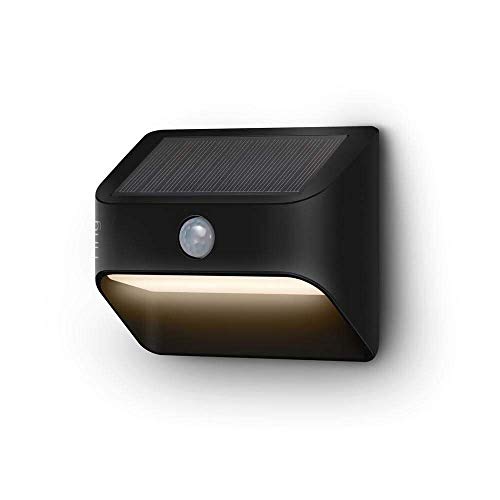
- 6. Path lights. Set them 12–18 in back from the path edge so mowers and ankles miss them, and stagger sides rather than running a symmetrical “runway.” At 6–8 ft spacing, a 30 ft walkway needs about five lights total, alternating sides. Solar stakes need 6+ hours of direct sun — on shaded or north-facing walks, a wired low-voltage kit is the reliable answer. Look for solar units with replaceable NiMH batteries; the battery is the part that dies first, usually in year one or two. Brass and aluminum housings outlast plastic by years.
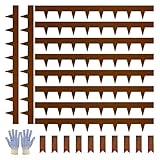
- 7. Bed edging. A crisp edge is the single cheapest curb appeal multiplier. Steel edging (weathering/corten or galvanized, 1/8 in thick) suits modern homes and disappears visually at 1–2 in above grade. Brick or stone soldier courses suit traditional homes but cost roughly double per foot. Note that corten bleeds rust-colored runoff onto light pavers in its first season.
- 8. Border plants. A low row of lavender, dwarf boxwood, salvia, or fountain grass softens a path edge. The mistake to avoid: planting for today’s size. Check the mature spread and plant so it ends 12 in short of the path — and keep anything within about 15 ft of the driveway under 24 in tall so it doesn’t block the driver’s sightline.
Beds, lawn and focal points
- 9. Mulch or gravel refresh. Fresh 2–3 in of mulch makes beds look maintained instantly. The math: cubic yards needed = bed square footage × depth in inches ÷ 324. Two beds of 4×10 ft (80 sq ft) at 2 in deep = 0.49 cubic yards, or about seven 2 cu ft bags. Keep mulch 3 in away from plant stems and siding to avoid rot and pests.
- 10. Statement urn or planter. One oversized urn at the end of a sightline — beside the garage, at a path junction — reads as deliberate design. Scale it to a third to a half of door height. Fiberglass handles freeze-thaw better than terra cotta; concrete/GFRC handles wind better than everything.
- 11. Ornamental tree with uplight. A 10–20 ft ornamental (serviceberry, Japanese maple, dwarf magnolia) gives a large yard structure year-round. Plant the trunk at least 4 ft from any path so the canopy doesn’t overhang the walk, and set an uplight 12–18 in from the trunk aimed into the branches.
- 12. Birdbath or sculpture. Birdbaths work best 24–30 in high with a shallow 1–2 in basin, placed within about 10 ft of shrubs so birds have escape cover but clear sightlines. Concrete stays stable; expect to scrub algae weekly in summer. Sculptures follow the same rule as urns — one per sightline.
- 13. Window boxes. Size the box to the full window width and at least 8 in deep for root room. PVC and composite boxes won’t rot like wood. Brackets matter: a 36 in box of wet soil can weigh 40–60 lb, so anchor into framing, not just siding.
Street-facing finishing touches
- 14. Oversized house numbers. Four-inch digits are readable from about 40 ft — the typical distance to the curb. Go 6 in or larger if your house sits farther back, mount at 57–66 in, and pick a finish that contrasts with the siding (brushed aluminum on dark paint, matte black on light). This is the highest impact-per-dollar upgrade on the list.
- 15. Mailbox refresh. For curbside boxes, USPS placement is a spec, not a suggestion: the bottom of the box 41–45 in above the road surface, set 6–8 in back from the curb. A planting ring at the post base finishes the look — keep it under 24 in tall so the box and flag stay visible.
Weather-resistant materials cheat sheet
| Material | Best for | Outdoor lifespan | Upkeep | Watch for |
|---|---|---|---|---|
| Powder-coated aluminum | Seating, planters, sconces | 10–15 yrs | Rinse; touch up chips | Scratches expose bare metal |
| HDPE poly lumber | Rockers, benches | 20+ yrs | Soap and hose | Heavy; higher upfront cost |
| Teak or shorea | Benches, window boxes | 15–25 yrs | Oil 1–2×/yr or let silver | Grays without oiling |
| HDPE resin wicker on aluminum | Chairs, rockers | 7–10 yrs | Brush out dirt | Cheap PVC wicker cracks in sun — check the spec |
| Corten or galvanized steel | Edging, numbers, planters | 10–20 yrs | Minimal | Rust at cut edges; corten stains light pavers early |
| Fiberglass/composite | Planters, fountains | 5–10 yrs | Drill drainage holes | Cracks if waterlogged then frozen |
| Cast concrete/GFRC | Urns, birdbaths | 15+ yrs | Seal every 2–3 yrs | Very heavy; rim chips |
| Solution-dyed acrylic | Cushions, pillows | 5–8 yrs | Rinse; store in winter | Costs more than polyester (which fades in 1–2 yrs) |
What actually wears first: solar light batteries (1–2 years — buy units with replaceable cells), fountain pumps (3–5 years, faster if run dry), cushion foam (choose quick-dry reticulated foam so cushions drain instead of staying soggy), and the finish on steel at joints and scratches. Before hard frost, empty pots and fountains completely and store cushions — trapped water is what kills otherwise durable pieces.
Placement rules that prevent the cluttered look
- Keep 36–48 in of walkway clear — measure decor and plants at mature size, not install size.
- Respect the sight triangle: nothing taller than 24–30 in within about 15 ft of the driveway or street corner.
- Group pots in odd numbers and staggered heights — 12, 18, and 24 in is a reliable trio.
- Limit yourself to two metal finishes plus one natural material (wood, stone) across the whole yard.
- Give every sightline one focal point — the eye should land on the urn or tree, then the door.
Frequently asked questions
Which outdoor front yard decor ideas work for a very small yard?
Go vertical and go minimal: window boxes, a single statement urn, a layered doormat, oversized numbers, and solar path lights. Skip lawn ornaments and freestanding sculpture — on a small footprint they read as clutter rather than focal points.
What if I’m renting and can’t dig or drill?
Freestanding planters, solar stake lights, a wreath, layered mats, and window boxes on clamp brackets all install without permanent changes. Weighted-base planters rated for wind are the renter’s substitute for in-ground beds.
Which upgrades give the most curb appeal per dollar?
House numbers, a layered doormat, one pair of planters, and a mulch refresh — together usually under $200 — cover the entire sightline from curb to door. Add path lights next if the budget allows.
Do solar lights work on a shaded or north-facing front yard?
Poorly. Solar stakes need six-plus hours of direct sun to hold a charge through the evening. If mature trees or the house shade your walkway, spend the extra on a low-voltage wired kit — it costs more upfront but won’t fade to nothing by 9 p.m.